
TL;DR
A tank containing glycidyl methacrylate ruptured in an industrial area of Toledo, Ohio, releasing a plume and prompting evacuations and a wider shelter-in-place advisory. City leaders said they were allowing the chemical to vent because approaching the tank could pose a greater danger; air testing and drone monitoring were continuing.
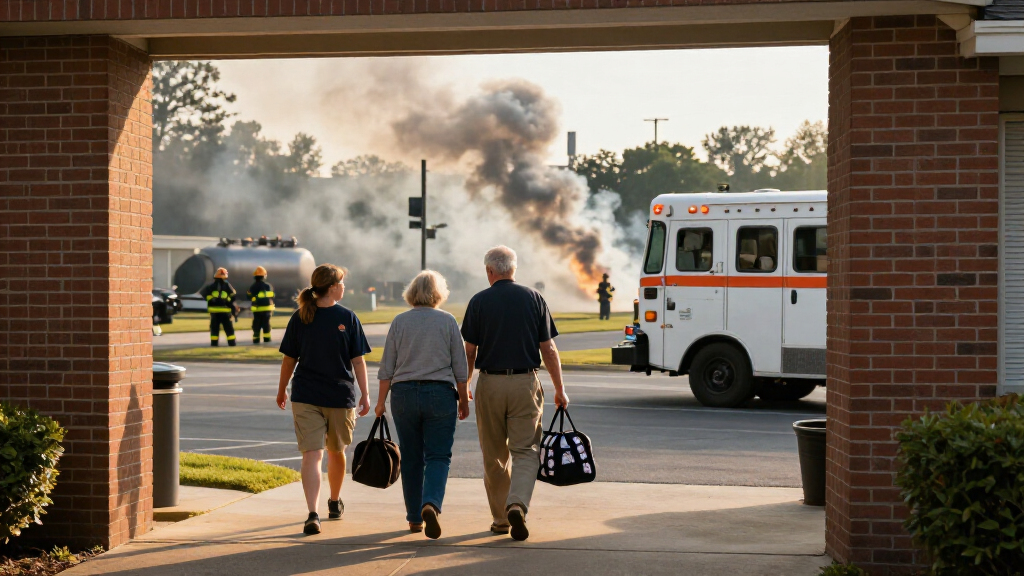
A ruptured tank containing glycidyl methacrylate continued releasing a white plume in Toledo, Ohio, on Wednesday, after an explosion prompted officials to evacuate nearly 1,000 people and advise more than 50,000 to shelter indoors. Mayor Wade Kapszukiewicz said authorities were letting the material vent because approaching the tank to stop the leak could put emergency crews at greater risk.

Turn quiet afternoons into listening time
- Thousands of audiobooks, podcasts and originals
- Listen on your phone, tablet or Echo — also offline
- Cancel anytime
The leak began Tuesday night at a chemical trucking company’s industrial facility. Videos showed the plume still rising early Wednesday afternoon, more than 14 hours after the leak began. Kapszukiewicz said drone monitoring showed the tank’s temperature falling and the plume diminishing, but it could take hours before the tank was safe to approach. The tank can hold 5,500 gallons of the chemical, the mayor said.
Authorities ordered residents within a one-mile radius to evacuate overnight. A shelter-in-place advisory covered a three-mile radius, affecting more than 50,000 people and extending to areas along Lake Erie and just across the Michigan state line. Toledo schools were closed Wednesday, and Stellantis stopped production at its nearby Jeep assembly plant.
City officials said reported symptoms so far were mainly eye and throat irritation. A sheriff’s deputy who responded to the blast later drove himself to a hospital after feeling unwell, according to city officials. Testing was underway to measure the chemical’s concentration in the air and assess whether it posed additional health risks. MC Tank Transport said the tank contained glycidyl methacrylate, an industrial chemical used in making some plastics, paints and coatings.
Evacuations Disrupt Toledo Homes and Work
The response affected residents across a broad area, not just people living close to the facility. Nearly 1,000 people were told to leave their homes, while the much larger shelter-in-place zone covered neighborhoods and prompted school closures and an industrial shutdown. The precautionary orders reflect officials’ concern about a possible release and the risk of another explosion, even as they said the situation was improving.
The incident also leaves residents waiting for clearer information about exposure. Officials said people had reported irritation and that air testing was in progress; they had not yet provided results establishing the chemical’s concentration across affected areas. The plume and odor caused concern beyond the formal advisory boundary, but officials said odor alone did not show whether the air was harmful.
Products Worth Considering

LEVOIT Vital 200S-P Smart Air Purifier for Large Rooms, White

Levoit Core 600S-P Smart Air Purifier for Large Rooms

Withings BPM Connect Wi-Fi and Bluetooth Blood Pressure Monitor
As an affiliate, we earn on qualifying purchases.
How Officials Chose to Let It Vent
According to the Ohio Environmental Protection Agency, the leak occurred because of an error during transfer of the material. The agency did not provide further details about the error in the source report. After the explosion, authorities were concerned the tank could explode again, Kapszukiewicz said. Emergency and hazardous-material crews were not approaching it because of that risk.
The company said it was working with the fire department and other emergency authorities, and its representatives were heading to Toledo. The city’s approach was to monitor the tank remotely while it released material, rather than send responders close to it to stop the leak. Officials described that as the safer option given the possibility of another explosion.
““There’s no question the situation is improving.””
— Toledo Mayor Wade Kapszukiewicz
Air Test Results Are Still Pending
Officials had not yet released readings showing the concentration of the chemical in the air or whether testing found additional health risks. The extent and duration of any exposure, including outside the advisory area, were also not established in the report. Residents raised concerns about chemical residue after overnight rain, but the available account did not report test results for homes, gardens, vehicles or other surfaces.
The precise cause of the transfer error, the amount of material released and the time needed to make the tank safe were not confirmed. The mayor said the plume was diminishing, but the tank was still venting Wednesday afternoon.
Monitoring and Testing Continue
City, state and federal environmental officials were working with emergency responders as drone monitoring and air testing continued. The next public guidance will depend in part on the test results and whether officials determine that conditions have changed enough to reduce or lift evacuation and shelter-in-place orders.
Kapszukiewicz said crews would wait until the tank was safe to approach; he did not give a firm time for that decision. Residents were advised to keep windows closed. The fire department said people experiencing symptoms should contact a medical professional, while health officials urged those with eye irritation or heavy breathing to take a shower. The source report did not specify when authorities would publish further test results or issue their next update.
Key Questions
What chemical was released in Toledo?
MC Tank Transport said the tank contained glycidyl methacrylate, an industrial chemical used in making some plastics, paints and coatings.
Who was told to evacuate or shelter indoors?
Nearly 1,000 residents within one mile of the site were told to evacuate. More than 50,000 people within a three-mile radius were advised to shelter in place, including some areas near Lake Erie and across the Michigan state line.
Why did officials let the tank keep venting?
Mayor Wade Kapszukiewicz said responders were not approaching the tank because of the risk of another explosion. Officials chose to let it release material while monitoring it remotely, which they considered less dangerous than trying to stop the leak immediately.
Are the health risks known?
Officials said reported symptoms so far were mainly eye and throat irritation, but testing was still underway to measure the chemical in the air and assess additional risks. The report did not include air-test results or confirm the extent of exposure.
When will the tank be safe to approach?
The mayor said it could take hours before the tank was safe to approach. No specific time was given, and the tank was still venting Wednesday afternoon.
Source: rss