
For a versatile everyday option, I name the Drive Medical Rollator Walker best overall: its seat and wheels support walking with a place to rest. The VOCIC Z21 stands out for larger wheels suited to varied outdoor surfaces, while the Lianjindun Toilet Safety Rails target safer sitting and standing at the toilet. The main tradeoff is choosing between a mobility device for walking and a task-specific aid for transfers, dressing, or household movement. Fit, balance, home layout, and whether another person provides support can matter as much as the product type. Continue for a comparison of all 15 picks and guidance on matching an aid to the task.

Turn quiet afternoons into listening time
- Thousands of audiobooks, podcasts and originals
- Listen on your phone, tablet or Echo — also offline
- Cancel anytime
Complete the kit


Key Takeaways
- Walking aids serve different environments: the Drive Medical rollator is the all-around pick, while the VOCIC Z21’s 8-inch all-terrain wheels better suit uneven outdoor routes.
- A seat adds a useful rest point but changes the tradeoff: rollators offer more support for longer outings, while a two-button folding walker may suit users who prioritize a simpler frame and do not need a seat.
- Transfers call for task-specific equipment: the gait belt is designed for assisted movement, while car handles and stand-assist rails address particular moments such as getting out of a vehicle or rising from furniture.
- Bathroom and bed aids need a fit check: toilet safety rails and bed rails depend on secure placement and compatibility with the surrounding fixture, not just a stated weight capacity.
- Small self-care tools fill a different gap: the long-reach toilet aid, shoe horn, and sock aid can support independence with dressing or hygiene but do not replace a walker or transfer support.
| Drive Medical Rollator Walker with Seat, 7.5 Inch Wheels, Blue |  | Best Overall Rollator | Wheel size: 7.5 inches | Weight capacity: 350 lb | Frame material: Steel | VIEW LATEST PRICE | See Our Full Breakdown |
| Vive Gait Belt Transfer Belt with 7 Handles |  | Best for Caregiver-Assisted Transfers | Materials: Nylon, plastic, and metal | Handle count: 7 padded handles | Waist fit: Up to 51 inches | VIEW LATEST PRICE | See Our Full Breakdown |
| Vive Car Handle Assist for Elderly |  | Best for Vehicle Entry and Exit | Compatibility: Most compact and midsized cars, trucks, and SUVs | Material: Composite | Weight capacity: Up to 300 lb | VIEW LATEST PRICE | See Our Full Breakdown |
| Fanwer Long-Reach Toilet Aid for Toilet Paper and Wipes |  | Best for Limited Reach During Toileting | Length: 14 inches | Materials: Plastic and rubber | Compatible materials: Toilet paper and pre-moistened wipes | VIEW LATEST PRICE | See Our Full Breakdown |
| Lianjindun Adjustable Toilet Safety Rails, 350 lb Capacity |  | Best Adjustable Toilet Support | Material: Corrosion-resistant aluminum | Finish and color: Powder coated; gray | Weight capacity: 350 lb | VIEW LATEST PRICE | See Our Full Breakdown |
| KingPavonini Adjustable Bed Rail for Seniors, 380 lb Capacity, Model BM03-1 |  | Best Bedside Support | Model: BM03-1 | Weight capacity: 380 lbs | Height adjustment: 17.6–20.9 inches | VIEW LATEST PRICE | See Our Full Breakdown |
| Portable Standing Aid with Non-Slip Handles, Blue |  | Best Portable Sit-to-Stand Aid | Material: Composite | Color: Blue | Length: 9.6 inches | VIEW LATEST PRICE | See Our Full Breakdown |
| Adjustable Couch Stand Assist for Seniors |  | Best for Sofa Transfers | Material: Steel | Design: Adjustable support frame with wrist-friendly grip | Installation: Fits beneath removable seat cushions | VIEW LATEST PRICE | See Our Full Breakdown |
| Phantawell Adjustable Long-Handled Shoe Horn and Dressing Aid |  | Best Dressing Aid | Length: 35.5 inches or 22.5 inches | Functions: Shoe horn, dressing stick, sock remover | Hook shape: S-shaped | VIEW LATEST PRICE | See Our Full Breakdown |
| VOCIC Z21 Rollator Walker for Seniors with Seat, 8-Inch All-Terrain Wheels |  | Best Rollator for Varied Terrain | Weight: About 22 lbs | Maximum user weight: 350 lbs | Wheel size: 8 inches | VIEW LATEST PRICE | See Our Full Breakdown |
| Drive Medical Two-Button Folding Walker with Wheels |  | Best for Steady, Supported Walking | Frame material: Aluminum | Weight capacity: 350 lb | Front wheel size: 5 inches | VIEW LATEST PRICE | See Our Full Breakdown |
| Kounatsuri Car Door Handle Assist, 2-Pack, Blue |  | Best for Vehicle Transfers | Quantity: 2 handles | Color: Blue | Load capacity: 400 lb | VIEW LATEST PRICE | See Our Full Breakdown |
| RMS Deluxe Sock Aid with Foam Handles |  | Best for Dressing Independence | Sock compatibility: Regular ankle, flat, knee, calf-length, athletic, and dress socks | Not compatible with: Compression socks, compression stockings, sheer anklets, or other very thin hosiery | Maximum foot width: 5 inches | VIEW LATEST PRICE | See Our Full Breakdown |
| Adjustable Stand Assist Aid for Seniors |  | Best for Sit-to-Stand Support | Maximum weight capacity: 350 lb | Adjustable height: 30–36 inches | Base: Four non-slip rubber feet | VIEW LATEST PRICE | See Our Full Breakdown |
| NIMOOD L1 Adjustable Stand Assist Rail for Couch and Chair |  | Best for Cushion-Fit Seating | Model: L1 | Maximum supported weight: 300 lb (136 kg) | Materials: Stainless steel and aircraft-grade aluminum | VIEW LATEST PRICE | See Our Full Breakdown |
More Details on Our Top Picks
Drive Medical Rollator Walker with Seat, 7.5 Inch Wheels, Blue
I’d rank this as the most versatile walking aid in this group for someone who wants both mobility support and a place to rest. Its padded seat and backrest make it more useful for outings than the Vive Car Handle Assist, which only helps with getting in and out of a vehicle. The 7.5-inch wheels, ergonomic handles, and locking hand brake support everyday movement indoors and outdoors, while the under-seat pouch keeps small essentials close.
The tradeoff is its steel frame: it supports up to 350 pounds, but may be heavy to lift when folded. Its solid wheels can also make more noise on hard floors than a smoother, quieter setup. I’d choose it over the more specialized aids here when walking and resting are the main needs, but not if frequent lifting or compact transport is the priority.
Pros:- Padded seat and fold-down backrest provide a place to rest during outings
- Steel frame has a listed 350 lb weight capacity
- Locking hand brake supports controlled stopping and parking
- Folding design and under-seat pouch add convenience for everyday use
Cons:- Steel construction may be heavy to lift when folded
- Solid casters can be noisy on hard surfaces
Best for: Seniors who can operate hand brakes and want a seated rest option, storage, and a rollator for routine indoor and outdoor trips.
Not ideal for: People who need to lift a walker into a vehicle often, or who want a lightweight aid for carrying between locations.
- Wheel size:7.5 inches
- Weight capacity:350 lb
- Frame material:Steel
- Seat:Padded with fold-down backrest
- Height adjustment:Lever
- Brake:Locking hand brake
- Storage:Under-seat pouch included
- Wheels and folding:Four wheels; foldable
Our verdict“Choose this rollator if you want walking support with an integrated seat and storage, and can manage its heavier steel frame.”
Vive Gait Belt Transfer Belt with 7 Handles
This belt has a distinct role: it gives a caregiver several grip points while helping someone move between positions. Its seven padded handles allow different hand placements, unlike the Drive Medical Rollator Walker, which supports independent walking but is not a transfer belt. The adjustable waist fit up to 51 inches and quick-release metal buckle make it a practical option for supported transfers at home or during care routines.
This is not a walking aid a senior can use alone; a caregiver must be present and know how to assist safely. The listed 350 lb capacity describes the belt’s stated support limit, not a replacement for an individualized transfer plan. I’d favor it over the Vive Car Handle Assist when help is needed across more than one transfer setting, but skip it if the person needs independent mobility or a fit beyond the stated waist range.
Pros:- Seven padded handles offer multiple caregiver grip positions
- Adjusts to fit waists up to 51 inches
- Metal buckle has a quick-release latch
- Listed weight capacity is 350 lb
Cons:- Requires a caregiver; it does not support independent transfers or walking
- No fit information is provided for waists above 51 inches
Best for: Caregivers assisting a senior with transfers who need multiple padded grip positions and a belt that fits waists up to 51 inches.
Not ideal for: Seniors seeking an independent walking aid, people without a caregiver to assist, or users whose waist exceeds 51 inches.
- Materials:Nylon, plastic, and metal
- Handle count:7 padded handles
- Waist fit:Up to 51 inches
- Belt width:4 inches
- Weight capacity:350 lb
- Buckle:Metal buckle with quick-release latch
- Guarantee:60 days
Our verdict“Choose this belt for caregiver-assisted transfers when its waist range fits, not as a substitute for a walker or independent support aid.”
Vive Car Handle Assist for Elderly
For a senior whose hardest mobility task is getting in or out of a vehicle, this compact handle addresses a more specific need than the Drive Medical Rollator Walker. It fits into a compatible vehicle’s U-shaped door latch, giving the user a cushioned, nonslip grip to hold while shifting position. Because it stores in a glove box or door compartment, it is easier to keep on hand than a full-size mobility aid.
That convenience depends on latch compatibility: the product description says it fits most compact and midsized cars, trucks, and SUVs, but buyers still need to check their vehicle. The 300-pound capacity is lower than the rollator’s stated 350 pounds, and this handle offers no support once the user is away from the car. I’d pick it over the caregiver-focused Vive Gait Belt for vehicle entry when the senior can use the handle independently, but not as a substitute for a walker or transfer assistance.
Pros:- Compact enough to store in a glove box or door compartment
- Cushioned, nonslip grip provides a handhold during vehicle entry and exit
- Compatible with most compact and midsized cars, trucks, and SUVs, according to the product description
- Listed weight capacity is up to 300 lb
Cons:- Requires a compatible U-shaped door latch
- Provides no support for walking away from the vehicle
- Listed capacity is lower than the Drive Medical Rollator Walker’s 350 lb capacity
Best for: Seniors who can shift themselves with a firm handhold and want a small aid for getting into and out of a compatible vehicle.
Not ideal for: People whose vehicle lacks a compatible U-shaped door latch, or anyone needing walking support after leaving the vehicle.
- Compatibility:Most compact and midsized cars, trucks, and SUVs
- Material:Composite
- Weight capacity:Up to 300 lb
- Grip:Cushioned, nonslip overlay
- Storage:Glove box or door compartment
- Warranty:60-day guarantee
Our verdict“Choose this portable handle for vehicle transfers if your car is compatible and you need a handhold rather than ongoing walking support.”
Fanwer Long-Reach Toilet Aid for Toilet Paper and Wipes
This tool is aimed at a personal-care task rather than walking or standing: its 14-inch reach helps users with limited mobility wipe from the front or back. The soft, flexible head holds toilet paper or pre-moistened wipes, and an actuator button releases the used material. Compared with the Lianjindun Adjustable Toilet Safety Rails, which provide hand support for sitting and standing, the Fanwer aid focuses on reach and hygiene rather than balance.
That narrow purpose is its strength, but it also sets clear limits. It does not steady a user while getting on or off the toilet, and the listed details do not give a weight capacity, adjustability, or cleaning instructions. I’d consider it alongside a safety frame when reach is the main challenge; I would not treat it as a replacement for rails or caregiver assistance when transfers are unsteady. Buyers should also confirm that its grip-and-release method suits their dexterity.
Pros:- 14-inch length extends reach for wiping from the front or back
- Flexible head holds toilet paper and pre-moistened wipes
- Actuator button helps release used paper or wipes
- Ergonomic handle is designed for easier gripping
Cons:- Does not provide balance or support when sitting down or standing up
- No weight capacity, adjustability, or cleaning details are listed
Best for: Seniors with limited shoulder, arm, or trunk reach who can manage the handle and actuator button during toileting.
Not ideal for: People who need hand support for toilet transfers, or users who cannot operate the release button reliably.
- Length:14 inches
- Materials:Plastic and rubber
- Compatible materials:Toilet paper and pre-moistened wipes
- Release mechanism:Actuator button
- Handle:Ergonomic
- Head:Soft and flexible
Our verdict“Choose this aid for toileting reach when the user can operate its handle, and pair it with separate transfer support if needed.”
Lianjindun Adjustable Toilet Safety Rails, 350 lb Capacity
These rails are the strongest choice here for someone who needs a stable handhold when lowering onto or rising from a toilet. The height and width adjustments help accommodate different users and bathroom layouts, while foam grips give the hands a more comfortable surface than a bare frame. Unlike the Fanwer Long-Reach Toilet Aid, which helps with wiping, this frame addresses the transfer itself; the two products solve separate problems and may suit the same bathroom.
The aluminum frame is listed at 3.46 kg and folds for storage, but its adjustable footprint still needs enough space around the toilet. The listing also gives an incomplete overall dimension, so I’d check fit carefully rather than rely on that measurement. Suction-cup rubber feet and a 350 lb capacity are stated features, but users should confirm stable placement on their bathroom floor. This is a better fit for home support than for a portable, task-specific toileting tool.
Pros:- Height adjusts from 24 to 31 inches and width from 20 to 25 inches
- Listed weight capacity is 350 lb
- Foldable aluminum frame has foam grips and suction-cup rubber feet
- Tool-free assembly and two spare rubber feet are included
Cons:- Listed overall dimensions appear incomplete, making fit harder to verify
- Frame requires space around the toilet and is not a toileting reach tool
Best for: Seniors who need adjustable arm support to sit down on or stand up from a toilet and have room for a freestanding frame.
Not ideal for: Bathrooms with very limited space, users seeking a compact reach aid, or buyers who need complete overall dimensions before confirming fit.
- Material:Corrosion-resistant aluminum
- Finish and color:Powder coated; gray
- Weight capacity:350 lb
- Height adjustment:24–31 inches
- Width adjustment:20–25 inches
- Foldable:Yes
- Assembly:Tool-free
- Item weight:3.46 kg
- Included components:Toilet safety frame; 2 spare rubber feet
Our verdict“Choose these rails if adjustable hand support for toilet transfers is your priority and you can verify the frame fits your bathroom.”
KingPavonini Adjustable Bed Rail for Seniors, 380 lb Capacity, Model BM03-1
I’d choose the KingPavonini bed rail for someone who needs a steady handhold when getting into or out of bed, rather than an aid for walking around the home. Its 17.6–20.9-inch adjustable height and compatibility with Twin through King beds give it more fitting flexibility than the Adjustable Couch Stand Assist for Seniors, which is made specifically for sofas with removable cushions. The padded, non-slip handle and 380-pound capacity add practical support, while tool-free installation may suit households that want a simpler setup. A storage pouch keeps small bedside items close at hand. The main limitation is firm: this rail is not compatible with adjustable beds. I’d also match its dimensions to the mattress and bed setup before choosing it, since bedside support depends on a secure fit.
Pros:- Supports up to 380 lbs
- Adjusts to fit Twin through King beds and mattresses 3–12 inches high
- Padded, non-slip handle offers a more comfortable grip
- Tool-free installation and included storage pouch
Cons:- Not compatible with adjustable beds
- Requires checking bed and mattress dimensions to confirm a suitable fit
Best for: Seniors or people recovering from surgery who need a bedside handhold on a compatible fixed bed and want tool-free installation.
Not ideal for: People using adjustable beds, or anyone who needs a mobility aid for walking between rooms rather than getting in and out of bed.
- Model:BM03-1
- Weight capacity:380 lbs
- Height adjustment:17.6–20.9 inches
- Horizontal extension:28.6–34.7 inches
- Compatible bed sizes:Twin, Twin XL, Full, Queen, King
- Compatible mattress height:3–12 inches
- Installation:Tool-free
- Adjustable beds:Not compatible
- Included accessory:Storage pouch
Our verdict“Choose this rail for adjustable bedside support on a compatible fixed bed; skip it if you use an adjustable bed or need help walking.”
Portable Standing Aid with Non-Slip Handles, Blue
For a person who can grip and pull but needs a little extra leverage, this portable standing aid is the most location-flexible choice in this group. At just 0.6 pounds, it can move between a chair, bed, wheelchair, and car seat instead of remaining fixed in one place like the KingPavonini Adjustable Bed Rail. Textured handles give the user a more secure surface to hold, and the listed maximum support weight is 420 pounds. That portability has a tradeoff: unlike the VOCIC Z21 Rollator Walker, it does not provide wheels, a seat, or support while walking. Its usefulness also depends on the user being able to grip and pull on the handles. I’d treat it as a simple transfer aid, not a substitute for a walker or hands-on assistance when standing is unsafe.
Pros:- Weighs just 0.6 pounds for easy carrying
- Textured, non-slip handles provide a more secure grip
- Can be used at multiple indoor and outdoor locations
- Listed maximum support weight is 420 lbs
Cons:- Requires the user to grip and pull on the handles
- Does not provide walking support, a seat, or a fixed handhold
Best for: Seniors who can grip and pull and want a lightweight aid they can carry between chairs, beds, wheelchairs, and car seats.
Not ideal for: People with weak grip or limited arm strength, or those who need steady support while walking rather than help rising from a seat.
- Material:Composite
- Color:Blue
- Length:9.6 inches
- Width:10.8 inches
- Weight:0.6 lbs
- Maximum support weight:420 lbs
- Handle type:Textured, non-slip
Our verdict“Pick this for portable help rising from different seats if the user has enough grip and arm strength to pull on its handles.”
Adjustable Couch Stand Assist for Seniors
I’d give this steel couch stand assist the sofa-specific role: it adds a handhold where a senior may need leverage to sit down or rise, without asking them to carry a separate aid between seats. Its adjustable frame can suit different heights and body types, while the wrist-friendly grip is aimed at making the hold more comfortable. Compared with the Portable Standing Aid with Non-Slip Handles, this is a more fixed home setup; it does not travel easily from a couch to a car or bedroom chair. That stability comes with a key fit restriction: installation requires removable seat cushions. The available product details also do not give a weight capacity or adjustment range, so I’d verify fit and suitability before buying. It’s a focused solution, not a general walking aid.
Pros:- Provides a dedicated handhold for sitting and standing at a couch
- Adjustable frame can accommodate different user heights and body types
- Steel construction
- Wrist-friendly grip is designed for comfortable holding
Cons:- Fits only beneath removable seat cushions
- Stays tied to the couch rather than serving as a portable aid
- Product details do not specify a weight capacity or adjustment range
Best for: Older adults who regularly need a handhold getting on and off a sofa with removable seat cushions.
Not ideal for: People with fixed or non-removable sofa cushions, or anyone looking for portable transfer help or walking support.
- Material:Steel
- Design:Adjustable support frame with wrist-friendly grip
- Installation:Fits beneath removable seat cushions
- Intended users:Older adults and people with limited mobility
Our verdict“Choose this for repeat transfers from a compatible sofa, but skip it if the cushions cannot be removed or you need a portable aid.”
Phantawell Adjustable Long-Handled Shoe Horn and Dressing Aid
The Phantawell dressing aid addresses a different mobility challenge from the walkers and transfer supports in this roundup: getting dressed with less bending and reaching. Its combination of a shoe horn, dressing stick, and sock remover gives it more uses than the RMS Deluxe Sock Aid with Foam Handles, which focuses on helping with socks. The two available lengths—35.5 and 22.5 inches—let users choose a reach that suits sitting or standing, and the S-shaped hook can help pull clothing or remove socks. This is a dressing tool, not a support rail: it won’t steady someone when rising or provide help while walking. Assembly is required, and the details do not specify the adjustment mechanism or how the two lengths are selected, so buyers should check that the configuration fits their needs.
Pros:- Combines shoe horn, dressing stick, and sock remover functions
- Two listed lengths support different reach needs
- S-shaped hook helps reach clothing and remove socks
- Smooth-edged construction is designed for comfortable handling
Cons:- Requires assembly
- Does not provide balance or support for standing and walking
- Product details do not explain how the two lengths are selected
Best for: Seniors who want one reach tool for shoes, clothing, and sock removal and prefer to dress with less bending.
Not ideal for: People who need support for standing or walking, or buyers seeking a dedicated sock aid with a specified adjustment system.
- Length:35.5 inches or 22.5 inches
- Functions:Shoe horn, dressing stick, sock remover
- Hook shape:S-shaped
- Assembly:Easy to assemble
Our verdict“Choose this multi-use dressing tool if bending is difficult, but look to a rail or walker for balance and transfer support.”
VOCIC Z21 Rollator Walker for Seniors with Seat, 8-Inch All-Terrain Wheels
Among these five picks, the VOCIC Z21 is the strongest choice for someone who needs walking support with the option to sit and rest. Its 8-inch puncture-proof wheels are designed for varied terrain, setting it apart from stationary aids such as the KingPavonini Adjustable Bed Rail and the Phantawell Dressing Aid. The adjustable seat and handles cover users from 4 ft 11 in to 6 ft 3 in, while the three-mode brakes let the user select free movement, deceleration, or a stop. At about 22 pounds, though, it may be difficult for some seniors or caregivers to lift into a vehicle. The foldable frame helps with storage and transport, but users should check that it is locked and that the brakes work before use. Its 350-pound limit is also below the standing aid’s listed capacity.
Pros:- Puncture-proof 8-inch wheels are designed for varied terrain
- Adjustable seat and handle heights fit a stated range of user heights
- Three brake modes provide free movement, deceleration, and stopping
- Folds for storage and transport and includes a padded seat and breathable backrest
Cons:- At about 22 lbs, it may be heavy for some users to lift
- Frame locking and brake function should be checked before use
- 350 lb maximum user weight is lower than the portable standing aid’s listed limit
Best for: Seniors who need walking support and a resting seat, want larger puncture-proof wheels for varied terrain, and fit the listed height range.
Not ideal for: People unable to lift or manage a roughly 22-pound rollator, users outside the stated height range, or anyone seeking a compact, stationary transfer aid.
- Weight:About 22 lbs
- Maximum user weight:350 lbs
- Wheel size:8 inches
- Tire type:Puncture-proof
- Folded dimensions:31.5 x 23.6 x 13.8 inches
- User height range:4 ft 11 in–6 ft 3 in
- Seat height:20–22 inches, 3 levels
- Handle height:31.5–36.6 inches, 5 levels
- Brake modes:Free, deceleration, and stop
Our verdict“Choose the Z21 if you need a seated rollator for varied terrain and fit its height and weight limits; skip it if lifting a 22-pound frame is difficult.”
Drive Medical Two-Button Folding Walker with Wheels
I’d rank this as the strongest fit here for someone who needs a walking aid rather than help with one specific task. Its aluminum frame supports up to 350 lb, while the 5-inch front wheels reduce the need to lift the walker with every step. At the rear, glide caps slide along the floor, so it offers a different feel from the Drive Medical Rollator Walker with Seat, which rolls on wheels and includes a seat for resting. The two push-button releases make folding more manageable for storage or transport, and the contoured grips add comfort during use. The tradeoff is that rear glide caps do not roll, and the listed information gives no height-adjustment range. I’d choose this for basic, supported movement, not for users who need a seat or continuous rolling.
Pros:- Lightweight aluminum frame supports up to 350 lb
- Front wheels help reduce lifting during forward movement
- Two push-button releases simplify folding
- Rear glide caps can move across multiple surfaces
Cons:- Rear glide caps slide rather than roll, which may not suit users seeking continuous rolling movement
- The available product details do not specify the height-adjustment range
Best for: Seniors who need a foldable walker for supported indoor mobility and can manage a walker that slides at the rear
Not ideal for: People who need a seat for rest breaks, prefer four rolling wheels, or require a known height range before choosing a frame
- Frame material:Aluminum
- Weight capacity:350 lb
- Front wheel size:5 inches
- Height adjustable:Yes; range not specified
- Folding mechanism:Two push-button releases
- Rear supports:Glide caps
- Hand grips:Contoured vinyl
Our verdict“Choose this walker for foldable, supported walking with front wheels, but pick the Drive Medical Rollator Walker with Seat if resting while out is a priority.”
Kounatsuri Car Door Handle Assist, 2-Pack, Blue
This is the most task-specific pick in the group: it gives a seated passenger a handhold at the car door when getting in or out. The forged-steel handle supports up to 400 lb, and its foam sleeve provides a more comfortable grip than a bare metal contact point. Two handles come in the pack, useful for keeping one in each vehicle or offering a spare. Unlike the Vive Car Handle Assist for Elderly, which is another car-entry aid in this roundup, this listing also specifies a seat-belt cutter and window breaker. Those emergency tools add utility, but they do not change the main compatibility limit: the handle only fits vehicles with U-shaped door latches. I’d check the latch shape before buying. This is a portable transfer aid, not a walking support or a substitute for help with severe balance problems.
Pros:- Two handles allow one to be kept in separate vehicles
- Forged-steel construction has a stated 400 lb load capacity
- Foam sleeve gives the hand a more comfortable grip
- Includes a seat-belt cutter and window breaker
Cons:- Works only with vehicles that have U-shaped door latches
- Provides support only at the vehicle door, not during walking or transfers elsewhere
Best for: Older adults who can transfer with a handhold and own a vehicle with a compatible U-shaped door latch
Not ideal for: People whose vehicle lacks a U-shaped latch or who need support while walking rather than getting into a car
- Quantity:2 handles
- Color:Blue
- Load capacity:400 lb
- Materials:Forged steel with composite materials
- Grip:Foam sleeve
- Compatibility:Vehicles with U-shaped door latches
- Emergency features:Seat-belt cutter and window breaker
Our verdict“Pick this two-pack for car transfers if the latch fits your vehicle; skip it if you need a general-purpose mobility aid.”
RMS Deluxe Sock Aid with Foam Handles
For seniors whose main mobility challenge is reaching their feet, this sock aid addresses a different need from the walkers and transfer rails in this roundup. Its flexible plastic shell holds a regular sock open while the user pulls it into place with the ropes, reducing the need to bend. The 38-inch overall length and adjustable rope knots let users tailor the reach to their seated position, while foam handles can be easier to grip than a small, hard handle. Compared with the Phantawell Adjustable Long-Handled Shoe Horn and Dressing Aid, this pick is specifically intended to help pull on socks rather than assist with footwear more broadly. The limits are substantial: it does not work with compression hosiery or very thin socks, and the foot opening is specified for widths up to 5 inches. I’d check both fit and sock type first.
Pros:- Helps users put on regular socks without bending to reach the foot
- Flexible shell is designed to accommodate weaker hand strength
- Foam handles provide a comfortable grip
- Rope length can be adjusted by tying new knots
Cons:- Not compatible with compression socks, compression stockings, or very thin hosiery
- Designed for foot widths of 5 inches or less
- Requires the user to position and pull the aid while seated
Best for: Seniors who can sit safely but have difficulty bending to put on regular socks
Not ideal for: People who wear compression stockings, sheer hosiery, or socks that require a foot opening wider than 5 inches
- Sock compatibility:Regular ankle, flat, knee, calf-length, athletic, and dress socks
- Not compatible with:Compression socks, compression stockings, sheer anklets, or other very thin hosiery
- Maximum foot width:5 inches
- Shell dimensions:9.5 x 5 x 3 inches
- Overall length:38 inches
- Handle material:Foam
- Rope length:Adjustable by tying new knots
Our verdict“Choose this sock aid if bending is the main dressing obstacle and your regular socks and foot fit the stated limits.”
Adjustable Stand Assist Aid for Seniors
This stand assist is for the moment of rising, not for walking around the home. Its 30–36-inch height adjustment helps position the padded handles for different users and seating heights, while four non-slip feet provide a grounded base during a sit-to-stand movement. It supports up to 350 lb and needs no permanent installation, making it more flexible to place than a fixed rail. The NIMOOD L1 Adjustable Stand Assist Rail is a more seat-specific alternative: it fits beneath qualifying cushions, but requires firm, removable cushions and is not suitable for recliners or lift chairs. This model avoids that cushion requirement, though the product data does not specify the seating or floor conditions needed for safe use. It is not a walker or rollator, and its handhold should not be treated as full-body walking support.
Pros:- Height adjusts from 30 to 36 inches
- Four non-slip rubber feet provide a stable base for sit-to-stand use
- Reinforced frame has a 350 lb maximum capacity
- Requires no permanent installation and includes a small storage pouch
Cons:- Not designed for walking support or use as a rollator
- Not recommended for people with severe balance issues
- Product details do not specify a seating or floor compatibility range
Best for: Seniors who can walk with separate support but need a stable handhold when rising from a chair, sofa, or bedside seat
Not ideal for: People with severe balance issues or those who need a walker, rollator, or full-body support while moving
- Maximum weight capacity:350 lb
- Adjustable height:30–36 inches
- Base:Four non-slip rubber feet
- Handles:Ergonomic padded handles
- Storage:Pouch for small essentials
- Installation:No permanent installation required
- Intended use:Sit-to-stand assistance
Our verdict“Choose this aid for a height-adjustable handhold beside a seat, but use a walker or rollator for support while walking.”
NIMOOD L1 Adjustable Stand Assist Rail for Couch and Chair
The NIMOOD L1 is the more tailored choice for getting up from a compatible cushioned couch or chair. Its adjustable width and handle height let users fit the rail to their seating setup, and padded dual handles offer two handholds as they rise. At 2.42 kg, it is also relatively light for repositioning. The tradeoff is that fit depends on the furniture: cushions must be removable, firm, and at least 4 inches thick. It is not suitable for recliners or electric lift chairs, so I’d favor the Adjustable Stand Assist Aid for Seniors when a broader range of seating is needed and cushion fit is uncertain. The L1’s 300 lb supported-weight limit is also lower than that model’s 350 lb capacity. This is a focused furniture aid, not a walking rail.
Pros:- Width-adjustable arms and height-adjustable handles support a more tailored fit
- Padded dual handles provide two gripping points
- Light 2.42 kg frame can be repositioned
- Designed specifically to assist with rising from compatible cushioned seating
Cons:- Requires firm, removable cushions at least 4 inches thick
- Not suitable for recliners or electric lift chairs
- 300 lb maximum supported weight is lower than the 350 lb Adjustable Stand Assist Aid for Seniors
Best for: Seniors who need leverage to rise from a couch or chair with firm, removable cushions at least 4 inches thick
Not ideal for: People using recliners, electric lift chairs, fixed or soft cushions, or seating that does not meet the cushion requirements
- Model:L1
- Maximum supported weight:300 lb (136 kg)
- Materials:Stainless steel and aircraft-grade aluminum
- Adjustability:Width-adjustable arms and height-adjustable handles
- Item dimensions:26 in W x 16.7 in H
- Item weight:2.42 kg
- Cushion requirement:Firm, removable cushions at least 4 in thick
- Warranty:Lifetime guarantee
Our verdict“Choose the L1 when your couch or chair meets its cushion requirements and you want an adjustable rail fitted to that seat.”
How We Picked
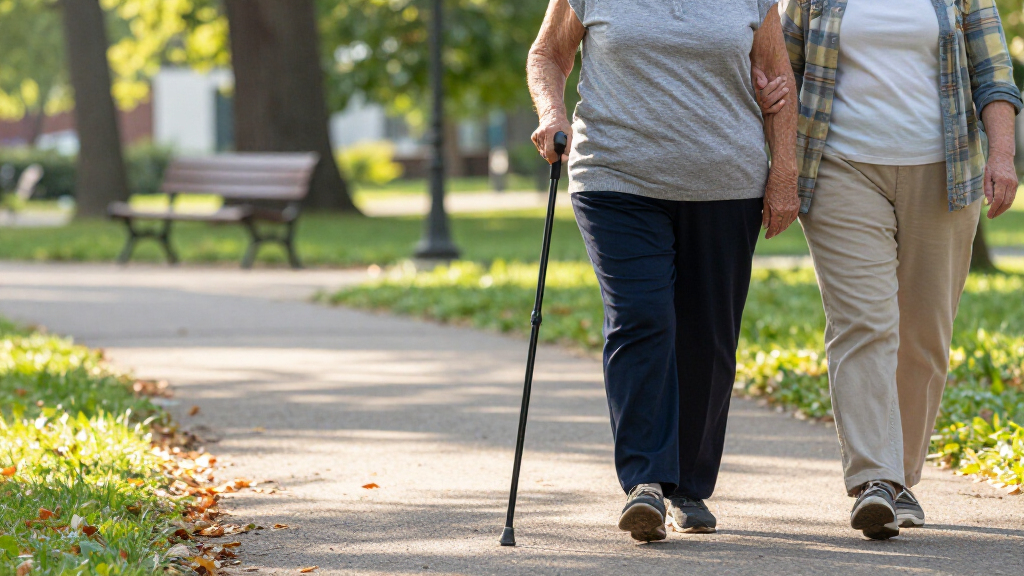
I ranked these mobility aids for seniors by how directly they address common mobility tasks, how understandable their use is, and how broadly useful they may be across everyday routines. I compared walking stability, seating, wheel size, folding or adjustability, support handles, and task-specific design. For home and transfer equipment, I also weighed placement needs and the importance of checking fit against the bed, chair, toilet, vehicle, or the user’s body.
The Drive Medical Rollator ranks first for its combination of walking support and a seat; the VOCIC Z21 follows for users who need larger wheels on varied surfaces. More specialized products rank lower in overall versatility, not because they lack value, but because they solve narrower tasks. I treat published capacity figures as product specifications rather than proof of suitability: a buyer should confirm fit, stability, and safe use with a clinician or caregiver when balance or transfer ability is uncertain.
Factors to Consider When Choosing Mobility Aids For Seniors
Choosing among these aids starts with the task that feels least safe or most tiring. I would match the device to that specific moment, then check whether it fits the user’s abilities and surroundings.
Match the Aid to the Task
Start by naming the exact difficulty: walking a distance, rising from a chair, getting into a car, or managing dressing and hygiene. A rollator or folding walker supports movement, while a toilet rail or couch stand assist is meant for a fixed transfer point. A long-handled dressing tool can reduce bending but will not provide balance support. Buying a general-purpose aid for a highly specific task can leave the original problem unchanged. If several tasks are difficult, prioritize the one with the greatest fall or injury risk and ask a clinician which aid fits it.
Check Balance, Grip, and Assistance Needs
Equipment that works for one person may be unsafe for someone with different balance, strength, coordination, or hand function. A rollator requires the user to control it and manage its brakes; a gait belt is intended for a helper to use during supported movement. Do not use a transfer aid as a substitute for a trained caregiver when the person cannot bear weight or follow instructions reliably. Hand pain or reduced grip can make handles hard to control even when the device appears stable. If ability changes from day to day, ask a physical or occupational therapist to assess the person and demonstrate safe use.
Measure the Space and Confirm Fit
Measure doorways, hall turns, storage areas, and the route to the bathroom before choosing a walking aid. For rails, compare the mounting or placement requirements with the bed frame, toilet, or chair; a rail that cannot sit securely is not a safe solution. Check seat height, handle reach, and whether the user’s feet can rest in a stable position during transfers. A stated weight capacity is only one specification and does not confirm that a product fits a particular person or setup. When dimensions or installation details are unclear, verify them with the manufacturer or a qualified professional before use.
Choose Features for the Surfaces and Routine
Wheel size, brakes, folding design, and a built-in seat affect where and how a walker is practical. Larger wheels may handle uneven paths more comfortably, while a simpler wheeled walker can be easier to store and maneuver indoors. Think about whether the person walks independently, needs frequent rests, or will travel in a car with the aid. Test turning space and brake access in the places the device will actually be used, rather than relying on a feature list alone. A feature that is rarely used can add bulk without improving the person’s daily routine.
Know When to Pay More—and When Not To
Paying more can make sense when a well-matched feature changes regular use, such as wheels suited to the person’s outdoor route or a stable rail for a frequently used transfer point. It is less useful to pay for versatility the person cannot safely operate or does not need. Simple dressing aids may address a narrow but meaningful obstacle without requiring a larger device. Avoid choosing solely by capacity claims or the number of handles; safe positioning and correct use matter more. Ask a clinician or supplier about setup, maintenance, and training when the aid bears weight or supports transfers.
Frequently Asked Questions
Should I choose a rollator or a folding walker?
I would base this on balance, walking habits, and whether the user needs a seat. A rollator such as the Drive Medical model offers a place to rest but requires reliable brake use and control of a wheeled frame. A folding walker may suit someone who wants a simpler frame for indoor support and does not need a built-in seat. The VOCIC Z21’s larger wheels may be a better match for outdoor routes with uneven surfaces. A physical therapist can help determine which design the user can manage safely.
Can a bed rail or stand-assist rail prevent falls?
No rail can guarantee that a fall will not happen. Its usefulness depends on correct placement, a compatible bed or chair, and the person’s ability to grip and use it safely. Check the product’s installation instructions and the surrounding space, and avoid placing a rail where it could create a gap or entrapment hazard. If the person is confused, moves unpredictably, or cannot follow instructions, ask a clinician about safer options. A rail should be part of a broader fall-prevention plan, not a replacement for one.
When is a gait belt appropriate for helping someone stand or walk?
A gait belt is generally a tool for a caregiver or trained helper to support a person during transfers or walking, not a device for independent use. The user must be able to participate, and the helper needs instruction on hand placement and body mechanics. It may be unsuitable when the person cannot bear weight, is in pain, or has medical conditions or devices that make belt placement unsafe. Do not pull on a person’s arms or use the belt without knowing the correct technique. Ask a nurse, therapist, or other qualified professional for a demonstration before relying on one.
Are car door handle assists interchangeable?
Not automatically. Car handle assists are designed to work with particular door-latch striker shapes and available space, so check the vehicle fit instructions before buying. A two-pack may be useful if the person needs an aid on both sides, but it does not make an incompatible vehicle suitable. The user also needs enough grip and arm strength to use the handle without twisting or pulling in an unstable position. If getting in or out remains difficult, a clinician or mobility specialist can suggest a safer transfer approach.
Do dressing aids replace help from a caregiver?
They can support independence with a specific task, but they do not replace help when a person cannot use them safely. A sock aid, long-handled shoe horn, or toilet aid may reduce bending and reaching, depending on the user’s hand control and coordination. Practice while seated in a stable position and stop if the tool causes strain or makes balance worse. For hygiene needs, confirm that the tool can be cleaned and used as intended. An occupational therapist can recommend an appropriate aid and teach a technique that fits the person’s abilities.
Conclusion
My best overall pick is the Drive Medical Rollator for people who want walking support plus a seat; the best for varied outdoor surfaces is the VOCIC Z21, with its larger all-terrain wheels. For a more focused home need, the Lianjindun toilet rails offer a task-specific option, while the Vive gait belt is aimed at assisted transfers rather than solo walking. I would call the best value the aid that safely solves the user’s most frequent problem without adding unused features, and the best for beginners a simple, well-fitted aid selected with professional guidance. For dressing and hygiene, choose the sock, shoe, or toilet aid that matches the exact task; for bed, couch, or car transfers, confirm fit and learn safe use before relying on a rail or handle.