This checklist is for older adults and caregivers who want everyday kitchen tasks to feel more manageable. It focuses on utensils, food preparation, cookware, reaching, standing, and opening jars.

Turn quiet afternoons into listening time
- Thousands of audiobooks, podcasts and originals
- Listen on your phone, tablet or Echo — also offline
- Cancel anytime
The sections follow those practical tasks, with one named pick in each slot. Each one highlights what to check before choosing, since comfort, grip, reach, and compatibility can vary from person to person.
Use the checklist to compare each item with the user’s routine and abilities. Consider hand comfort, storage space, and the movements involved, then prioritize the tasks that cause the most difficulty.
Easy-Grip Utensils
Utensils are used throughout meal preparation and eating, so grip and control can make a meaningful difference in daily comfort. The pick here is Weighted Utensils for Tremors and Parkinson’s, Stainless Steel Silverw. Before choosing, consider whether the user prefers a heavier utensil and can comfortably lift and guide it. Weight may feel stabilizing to one person and tiring to another, so match the feel to the individual rather than assuming heavier is always better.
Check the handle shape and diameter against the user’s grasp, including whether fingers can wrap around it without strain. Confirm which utensils are included and whether they suit the meals and tasks the person handles most often. A common mistake is focusing only on tremors while overlooking wrist comfort, reach to the mouth, or ease of cleaning. If possible, try one utensil first and observe how it feels during an ordinary meal. The most useful choice is the one that supports comfortable control across the user’s routine, not simply the one with a particular label.
What to look for:
- A handle size the user can grasp comfortably
- Weight that feels manageable through a full meal
- Utensil types suited to everyday meals
- A shape that supports the user’s wrist and grip
- Care instructions that fit the household routine
Weighted Utensils for Tremors and Parkinson’s, Stainless Steel Silverware Set, 4

This heavy stainless steel silverware set is designed to help individuals with tremors or Parkinson’s maintain independence during meals. The set includes a knife, fork, tablespoon, and soup spoon, all with weighted, non-slip handles for added stability.
Pros:
- Provides stability for individuals with tremors or weak grip
- Includes a travel bag for portability
- Made of high-quality stainless steel with a polished finish
- Easy to clean and dishwasher safe
Cons:
- Heavy weight may be tiring for some users
- Design may not suit those preferring lightweight utensils
- Limited to four-piece set, may need additional utensils
Best for: People who want to consider weighted utensils for everyday eating
Not ideal for: Anyone who finds heavier utensils tiring or difficult to guide
Bottom line: Match the utensil’s weight and handle feel to the user’s comfort before making it part of daily meals.
Electric Can Openers
Opening cans can involve gripping, turning, and coordinating several movements, which may be difficult for someone with limited hand strength or dexterity. The pick is Hamilton Beach Smooth Touch Electric Can Opener With Easy Push Down Le. Its name identifies it as an electric can opener with a push-down action; check the product details to understand how it operates and what can shapes it is intended to open. Consider where it will sit, whether the user can position a can independently, and whether the controls are easy to reach.
A common buying mistake is assuming an electric opener removes every handling step. The user may still need to place and steady the can, operate the opener, and handle the lid. Check the unit’s footprint against available counter space and look for clear cleaning and care guidance. Consider whether the user can follow the operating sequence safely, especially if another person will not always be nearby. If the intended cans vary in size or shape, confirm compatibility in the product information before choosing. A suitable opener should fit both the kitchen layout and the user’s abilities from setup through cleanup.
What to look for:
- Controls that are easy to see and reach
- A can-positioning process the user can manage
- Compatibility with the cans used at home
- Counter space and storage needs
- Clear cleaning and care instructions
Hamilton Beach Smooth Touch Electric Can Opener With Easy Push Down Lever
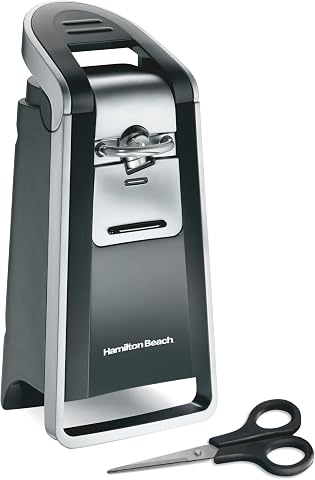
The Hamilton Beach Smooth Edge electric can opener cuts lids along the side, leaving smooth, touchable edges and eliminating sharp lid fragments. Its easy‑touch lever lets you open cans with one hand, and the extra‑tall design accommodates pop‑top and regular cans.
Pros:
- Leaves lids smooth and safe to touch
- One‑hand operation with easy‑touch lever
- Extra‑tall design fits pop‑top and regular cans
- Includes stainless steel scissors for boxes and bags
Cons:
- Cutting wheel may wear over time
- Bulky extra‑tall shape can take up counter space
Best for: People looking for an electric opener with a push-down action
Not ideal for: Anyone unable to position or steady cans without assistance
Bottom line: Check the operating steps and can compatibility against the user’s actual kitchen routine.
Lightweight Cookware
Cookware can be awkward to lift, carry, and maneuver, particularly when a pan contains food. This checklist’s pick is T-fal Ultimate Nonstick Cookware Set, 17-Piece, Onyx. Because it is a set, consider whether the user needs the included range of pieces and has room to store them. Check the product information for the weight and dimensions of individual items; a set name alone does not establish how light each piece will feel in use.
A common mistake is judging cookware by an empty pan’s feel while overlooking the added weight of food or water. Consider how the user moves cookware between the counter, stove, and sink, and whether the handles are comfortable to grasp. Confirm that the pieces suit the stove and cooking tasks at home, and review the care instructions for the household’s cleaning routine. Nonstick cookware can have specific use and care guidance, so read the manufacturer’s directions. If lifting is difficult, prioritize the pieces the person uses most and compare those individually. The right fit should support manageable handling as well as familiar cooking habits.
What to look for:
- Weight and dimensions of the pieces used most
- Handles that feel secure and comfortable
- Compatibility with the home’s stove
- Storage space for the set’s pieces
- Care instructions that match the household routine
T-fal Ultimate Nonstick Cookware Set, 17-Piece, Onyx

This 17-piece cookware set features heavy-gauge construction and a titanium nonstick coating designed to make cooking and cleanup easier. It includes a range of pans, saucepans, a Dutch oven, a steamer, and lids, plus a heat indicator on the frying pans.
Pros:
- Nonstick coating is designed to ease cooking and cleanup
- Heat indicator signals when frying pans are preheated
- Includes a broad range of cookware and a steamer
- Oven-safe and compatible with most stovetops
Cons:
- Not compatible with induction stovetops
- Lids have a lower oven-safe temperature than the cookware
Best for: Households that want to compare a multi-piece cookware set
Not ideal for: People who need only one or two pieces or cannot lift loaded pans
Bottom line: Check individual piece weight and stove compatibility before relying on the set for easier handling.
Reacher Grabbers
Reaching items on low shelves or the floor can challenge balance and mobility. The named pick is RMS Premium 7-Piece Hip and Knee Mobility Kit, which is described as a mobility kit rather than specifically as a reacher grabber. Check the included items carefully to confirm whether a grabber is part of the kit and whether its reach suits the kitchen tasks at hand. The product name alone does not establish the tools’ dimensions or how they work.
A common mistake is choosing a kit based on its category without checking each component. Look for the reacher’s length, grip style, and the kinds of objects it can handle, using the product details rather than assumptions. Consider whether the user can operate its trigger and hold objects steadily. A tool that is too long, difficult to control, or poorly suited to the objects being retrieved may create frustration. Also assess where it will be stored so it remains accessible without becoming a tripping obstacle. For heavier or hot kitchen items, consider whether reaching is appropriate at all; stable positioning and safe task planning matter alongside the tool. Confirm the kit’s contents and intended use before treating it as a kitchen reacher solution.
What to look for:
- Whether a reacher grabber is included in the kit
- The reach length listed for the tool
- A trigger and grip the user can operate
- Objects and tasks the tool is intended to handle
- A convenient storage spot that does not obstruct walking
RMS Premium 7-Piece Hip and Knee Mobility Kit

This mobility kit includes reachers, a leg lifter, sock aid, dressing stick, bath sponge, and shoe horn to support daily dressing, bathing, and item retrieval. It is designed to help people with limited mobility or joint conditions manage everyday tasks with less bending, twisting, and straining.
Pros:
- Includes seven tools for dressing, bathing, and retrieving items
- Two rotating reachers help access items at different distances and angles
- Designed to reduce bending and joint strain during daily tasks
Cons:
- The seven-piece kit may require storage space
- Designed for mobility assistance and may not suit people without these needs
Best for: People considering a mobility kit after checking its components
Not ideal for: Anyone needing a reacher grabber unless one is confirmed in the kit
Bottom line: Verify the kit contents and reacher specifications before choosing it for kitchen access.
Anti-Fatigue Mats
Time spent standing at a counter can make comfort and stable footing important considerations. The pick is House of Noa Nama Standing Mat – Anti-Fatigue Kitchen and Floor Mat, C. Before selecting it, check the mat’s dimensions against the area where the user prepares food and the space needed to move around it. Confirm the product details for thickness, surface, and care so they match the floor and the household’s routine.
A common mistake is choosing a mat that covers too much of a walkway or shifts underfoot. Consider how the user steps onto and off it, whether its edges are easy to notice, and whether it lies securely on the kitchen floor. The mat should not block cabinet doors, appliance access, or a mobility aid’s path. If the user uses a walker or other support, consider how the mat’s surface and edges interact with it. Check cleaning guidance for spills and everyday maintenance. A mat can be one part of a more comfortable work area, but it does not replace stable footwear or a safe standing setup. Prioritize secure placement and a size that suits the user’s actual preparation spot.
What to look for:
- Dimensions that fit the standing area
- A surface that feels stable underfoot
- Edges that do not obstruct walking or mobility aids
- Placement that leaves cabinet and appliance access clear
- Care instructions suited to kitchen spills
House of Noa Nama Standing Mat – Anti-Fatigue Kitchen and Floor Mat, Cushioned &

The House of Noa Nama Standing Mat provides ergonomic support with 3/4-inch thick high-density foam, reducing fatigue during long periods of standing. Its versatile design makes it suitable for kitchens, workspaces, and home offices, offering comfort, style, and durability.
Pros:
- Provides excellent anti-fatigue support for prolonged standing
- Versatile use for kitchens, desks, and workspaces
- Stylish, modern design that blends with any decor
- Easy to clean and spill-resistant
Cons:
- May be too thick for some under-cabinet spaces
- Limited color options
Best for: People who spend time standing at a kitchen counter
Not ideal for: Anyone whose walking path or mobility aid would catch on its edges
Bottom line: Measure the work area and check secure placement before adding a mat to the kitchen.
Automatic Jar Openers
Tight lids can be difficult to manage when grip strength or hand comfort is limited. The pick is Black+Decker Lids Off Jar Opener, White. Its name identifies it as an automatic jar opener; use the product details to confirm how it operates, the jar sizes it accommodates, and the setup it requires. Consider whether the user can position jars and controls without assistance and whether the device will fit on the counter or in storage.
A common mistake is assuming one opener handles every lid and jar. Check the stated size range and any instructions about jar shape, lid condition, or placement. Consider the full sequence, including bringing the jar to the device, securing it, and removing it afterward. The user should be able to manage these steps comfortably, or know when help is needed. Review cleaning and care guidance, especially for a device used around food. If jars vary widely at home, compare the listed compatibility with the actual containers the person opens. An automatic opener is most useful when it suits the user’s grip and setup needs as well as the jars in the pantry.
What to look for:
- Jar and lid sizes listed as compatible
- Setup steps the user can manage
- Controls that are easy to reach and understand
- Counter or storage space for the device
- Cleaning and care instructions
Black+Decker Lids Off Jar Opener, White
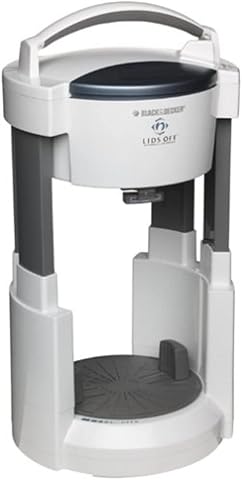
The Black+Decker Lids Off Jar Opener is an electric device designed to easily loosen lids on various jars, including large pasta sauce jars and baby food jars. It features soft cushion grips, adjustable height, and a large release button, making jar opening effortless for those with weak hands or arthritis.
Pros:
- Easy to operate with one button for effortless jar opening
- Suitable for jars of various sizes and types
- Collapsible design for space-saving storage
- Ideal for people with weak grip or arthritis
Cons:
- Not suitable for very narrow-neck bottles or tall jars of juice
- Requires electrical power, limiting portability
- May not fit jars with diameters over 4.5 inches
Best for: People who want an automatic option for opening jars
Not ideal for: Anyone whose jars fall outside the device’s stated compatibility
Bottom line: Compare the device’s operating steps and jar range with the containers used at home.
Start with the task that causes the most difficulty, then prioritize changes that address it directly. Check fit and compatibility before adding items: handle comfort for utensils, operating steps for openers, individual cookware pieces, verified kit contents, and safe mat placement. This task-first order can help keep the checklist focused on what the user will actually use.
Kitchen routines differ, and a small adjustment can be easier to evaluate than changing several things at once. Involve the person who will use each item, review product details together, and choose what feels workable in their own space. With careful matching to daily habits, this checklist can support a more comfortable approach to kitchen tasks.