
To create a senior-friendly home entry, install ramps with a gentle slope, sturdy handrails, and slip-resistant surfaces for safety and ease of access. Use threshold ramps to bridge gaps at doorways and transition strips to create smooth, level passages over uneven floors or thresholds. These features reduce tripping hazards, promote independence, and improve overall safety. If you continue exploring, you’ll discover practical tips to enhance your home’s accessibility even further.
Key Takeaways
- Ramps provide safe, gentle slopes with handrails and slip-resistant surfaces to facilitate easy entry for seniors with mobility aids.
- Threshold ramps bridge high or uneven door thresholds, making transitions smoother and reducing tripping hazards.
- Transition strips create seamless, level surfaces over uneven flooring or thresholds inside and outside the home.
- Properly installed ramps, threshold ramps, and transition strips enhance safety, independence, and overall accessibility for seniors.
- Thoughtful design and secure installation of these features minimize fall risks and support safe, confident home entry.
Are you looking for ways to make your home’s entry safer and more accessible for seniors? If so, focusing on mobility aids, safety features, and simple modifications can dramatically improve safety and independence. The key is to eliminate obstacles that might cause falls or discomfort, especially as mobility can decline with age. Installing ramps, threshold ramps, and transition strips are essential steps to creating a senior-friendly entryway that promotes confidence and reduces hazards.
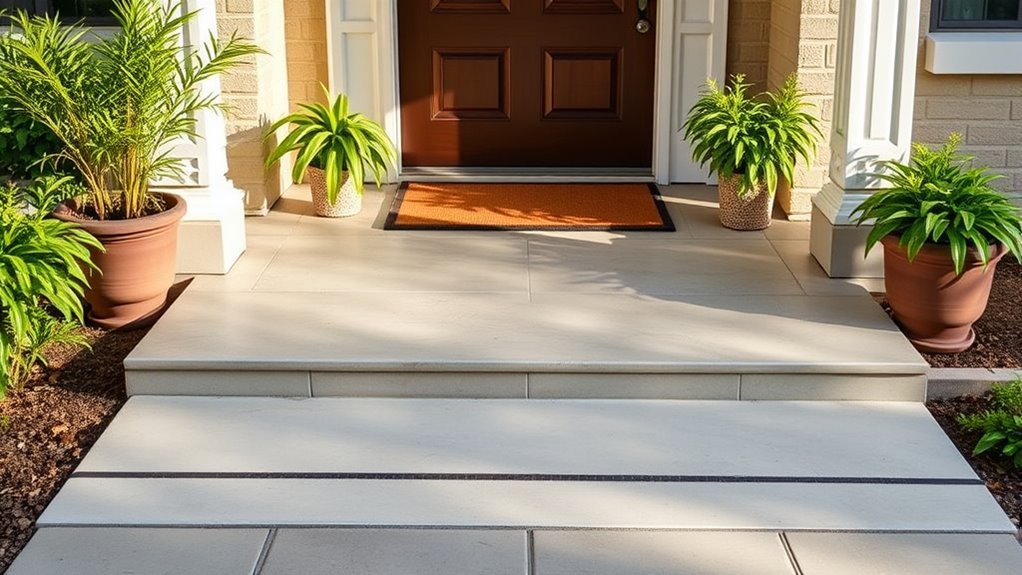
Ramps are one of the most effective safety features you can add, especially if stairs pose a challenge. They provide a smooth, inclined surface that makes it easier for seniors using mobility aids like walkers, canes, or wheelchairs to enter and exit the home safely. When choosing a ramp, ensure it has a gentle slope and sturdy handrails on both sides for extra support. The surface should be slip-resistant to prevent accidents, even in wet conditions. Properly installed ramps not only improve accessibility but also give seniors a sense of independence, knowing they can come and go without assistance. Additionally, considering proper ramp design can ensure safety and compliance with accessibility standards.
Ramps with gentle slopes and sturdy handrails enhance safety and independence for seniors.
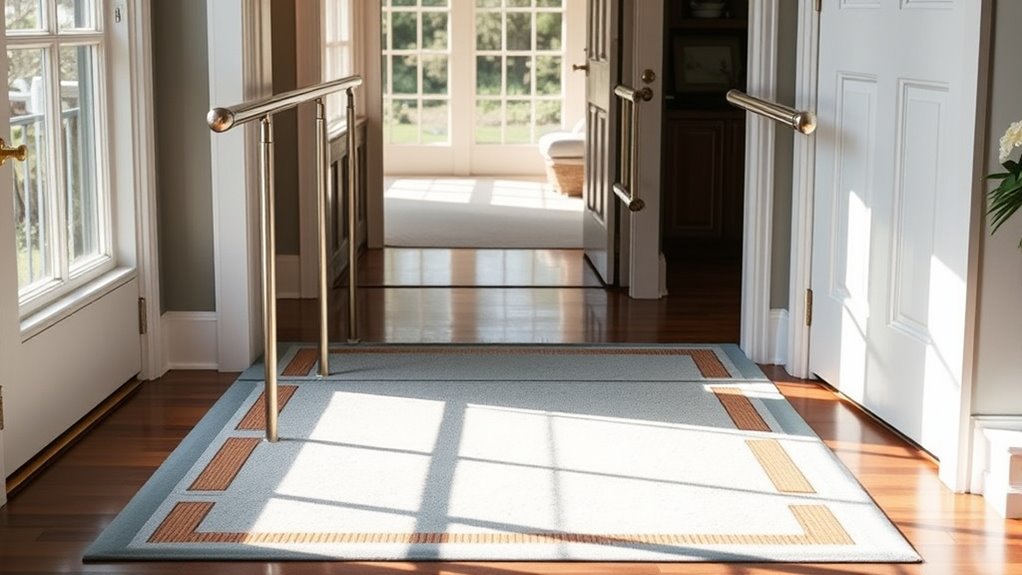
Threshold ramps are another essential safety feature. These are smaller, portable ramps designed to bridge the gap between the outdoor ground and the door threshold. They’re especially useful if your entry has a high or uneven threshold that makes it difficult for mobility aids to pass over smoothly. Threshold ramps are easy to install and remove, making them a flexible option for homes with multiple entry points. When choosing one, make sure it fits snugly against the door frame and provides a level transition to prevent tripping hazards.
Transition strips are equally important for creating a seamless and safe entryway. These strips are used to cover uneven flooring or thresholds inside and outside the home, reducing trip risks. For example, if your entry has a difference in height between the porch and the interior flooring, a transition strip can smooth out that gap. They come in various materials, including rubber, vinyl, or aluminum, and should be securely fastened to prevent movement. Properly installed transition strips serve as a gentle incline or level surface, making it easier for seniors to navigate without stumbling.
Frequently Asked Questions
How Do I Choose the Right Ramp Material for My Home?
You should choose a ramp material based on ramp safety and material durability. Consider concrete or metal for long-lasting strength and stability, especially if you need a sturdy, weather-resistant option. If you prefer something lightweight and easy to install, durable plastic or composite materials work well. Always guarantee the material you pick offers good traction and withstands outdoor conditions to keep your home safe and accessible.
Are There Temporary Ramp Options for Visitors or Short-Term Use?
Like a Swiss Army knife, temporary ramps are versatile for short-term solutions. You can find portable options made of lightweight materials like aluminum or rubber, perfect for visitors or brief stays. These ramps are easy to set up and remove, making them ideal for short-term use. Just guarantee they meet safety standards and are stable to prevent accidents, giving everyone smooth, accessible entry without a permanent commitment.
Can Ramps Be Installed Outdoors in All Weather Conditions?
Yes, ramps can be installed outdoors in all weather conditions if you use weather-resistant materials like treated wood, composite, or metal with protective coatings. Follow outdoor installation guidelines to guarantee stability and safety, such as anchoring securely and considering drainage. Regular maintenance helps prevent wear from rain, snow, or sun exposure. Properly installed, your outdoor ramp will remain durable and safe, providing reliable access regardless of weather.
What Maintenance Is Required for Threshold Ramps?
You should regularly clean your threshold ramps with a damp cloth to remove dirt and debris. Check for any damage or loose parts and guarantee the non-slip surfaces are intact to prevent accidents. To prevent rust, especially if they’re metal, apply a rust-resistant coating or paint as needed. Keep them dry in wet weather, and inspect periodically to maintain safety and durability for everyday use.
Are There Building Code Regulations for Home Entry Ramps?
Yes, building code regulations for home entry ramps vary, so you should check local building codes and ADA compliance standards. These rules guarantee ramps are safe, accessible, and meet specific dimensions and slope requirements. You’re responsible for verifying that your ramps adhere to these regulations before installation. Consulting local authorities or a professional can help you ensure your home entry ramps are compliant and safe for everyone.
Conclusion
Creating a senior-friendly home entry with ramps, threshold ramps, and transition strips makes your loved one’s daily life safer and more comfortable. Some might worry about the cost or installation hassle, but the long-term benefits far outweigh these concerns. Investing now guarantees independence and peace of mind for both you and your loved ones. Plus, many options are affordable and easy to install—making a safer, more accessible home within reach for everyone.