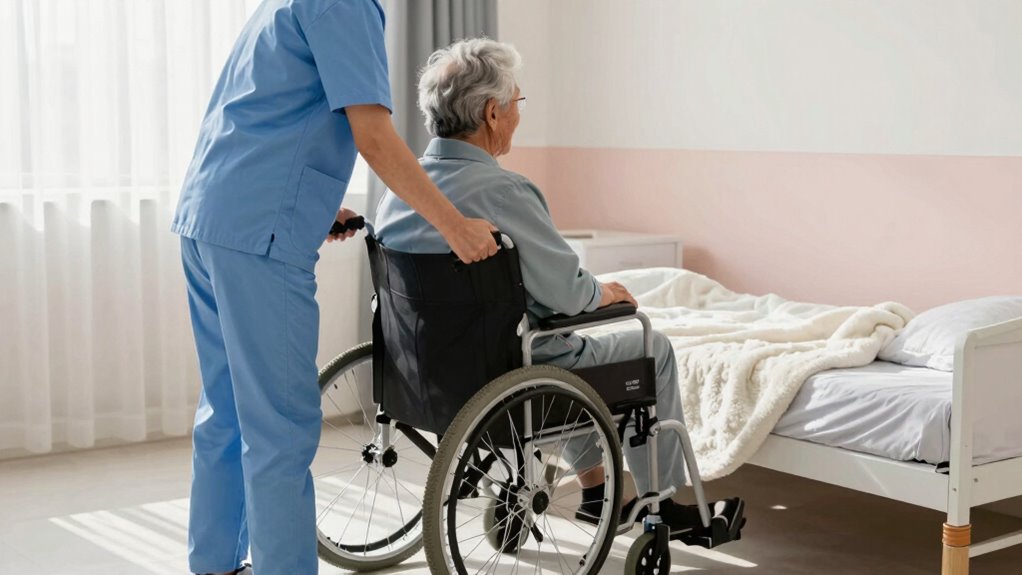

To make bed transfers safer, assess the senior’s mobility level and choose the right assistive devices like transfer belts, slide sheets, or hoyer lifts. Always prepare the bed at waist level and clearly explain each step to guarantee cooperation. Use proper body mechanics, support the senior securely, and communicate throughout the process. Rushing increases risk, so prioritize safety and comfort. Keep learning more tips to help protect both yourself and your senior.
Key Takeaways
- Use appropriate assistive devices like transfer belts, slide sheets, or hoyer lifts based on the senior’s mobility level.
- Ensure bed height is at waist level and communicate clearly with the senior throughout the transfer.
- Maintain proper body mechanics, such as keeping a straight back and bending knees, during transfers.
- Continuously check that assistive devices are securely secured before moving.
- Encourage the senior’s participation and provide support to promote safety and independence.
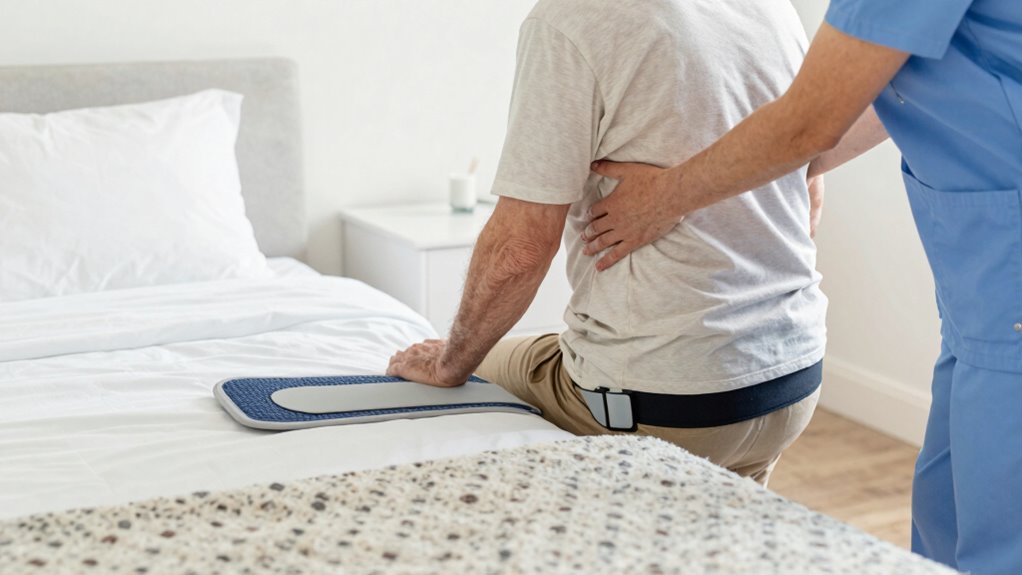
Transferring seniors safely from bed can be challenging for both caregivers and older adults, but with the right techniques and precautions, you can reduce the risk of falls and injuries. The key is to understand how to use assistive devices effectively and apply proper transfer techniques. Assistive devices, such as transfer belts, slide sheets, or hoyer lifts, are designed to make the process safer and easier. Before starting, always assess the senior’s mobility level and choose the appropriate device. For example, a transfer belt provides a secure grip without causing discomfort, while a slide sheet helps reduce friction when repositioning a person who has limited mobility. Using these tools correctly minimizes strain on both you and the senior, preventing unnecessary injuries.
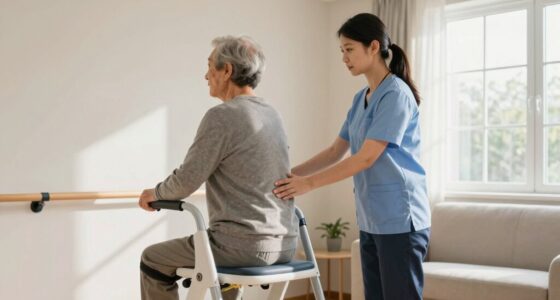
When it comes to transfer techniques, preparation is essential. Begin by ensuring the bed is at an appropriate height—usually at your waist level—to facilitate a smooth transfer. Always explain what you’re about to do, so the senior feels informed and comfortable. Encourage the senior to assist as much as possible, like placing their hands on your shoulders or signaling when they’re ready. Proper body mechanics are fundamental; keep your back straight, bend your knees, and use your leg muscles rather than your back to lift or pivot. This reduces the chance of injury and preserves your strength.
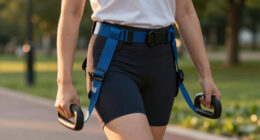
As you proceed, make sure your footing is stable. Position yourself close to the senior, supporting their gait or trunk securely. If you’re using a transfer belt, place it snugly around their waist, ensuring it’s not too tight but secure enough to hold. When pivoting or moving, turn your entire body rather than twisting your torso, which helps maintain balance and safety for both of you. For those with limited strength, consider using assistive devices like a hoyer lift, which can do the heavy lifting with minimal effort and risk. Always double-check that the device is properly secured before proceeding. Additionally, incorporating proper training can greatly improve safety during transfers. Regular practice and familiarity with transfer techniques also boost confidence and reduce accidents.
Throughout the transfer, communicate continuously, encouraging the senior and informing them of each step. If at any point something feels unsafe or uncomfortable, pause and reassess. Never rush; importance is paramount. With consistent practice of proper transfer techniques and the thoughtful use of assistive devices, you make the process safer, more comfortable, and less stressful for everyone involved. Your attention to detail and gentle approach will foster confidence and promote independence for the senior, while protecting your own health and safety.

Vive Gait Belt (300lbs) Transfer Belt with Handles – Medical Nursing Safety Patient Assist – Bariatric, Elderly, Handicap, Physical Therapy – PT Gate Strap Quick Release Metal Buckle, Grabbing Teeth
EASY MOVEMENT & TRANSFERS FROM A TRUSTED BRAND: Safely assist patients or loved ones with ease using our…
As an affiliate, we earn on qualifying purchases.
As an affiliate, we earn on qualifying purchases.
Frequently Asked Questions
What Are Common Mistakes to Avoid During Bed Transfers?
You should avoid rushing during bed transfers, which can cause slips or falls. Guarantee proper footwear is worn to prevent slipping, and always use appropriate transfer aids like gait belts or slide sheets to maintain control. Don’t lift or pivot without support, and never ignore the senior’s comfort or safety signals. These precautions help prevent accidents and make transfers smoother for both you and the senior.
How Do I Recognize When a Transfer Is Unsafe?
When a bed transfer feels like walking a tightrope, it’s a sign you should pause. Recognize unsafe transfers by watching for senior mobility barriers like dizziness, weakness, or unsteadiness, and be wary of bed transfer myths that suggest it’s always easy. If your loved one shows signs of fatigue, pain, or confusion during the move, stop immediately—these are clear signals that the transfer isn’t safe.
Are There Specific Transfer Techniques for Different Disabilities?
Yes, there are specific transfer techniques tailored to different disabilities. You should use assistive devices like gait belts, slide sheets, or transfer boards when appropriate. Transfer training helps you learn safe methods for each situation, ensuring the senior’s safety and your comfort. For example, someone with limited strength may benefit from a slide sheet, while a person with balance issues may require support from a gait belt.
How Can I Prepare the Bed for Safer Transfers?
You can prepare the bed for safer transfers by setting the bed height to a comfortable level, ideally waist height, to reduce strain. Use transfer aids like slide sheets or transfer boards to make sliding easier and minimize effort. Clear the area of obstacles, guarantee the mattress is secure, and position pillows or supports as needed. These steps help create a safer, more efficient environment for both you and the senior during transfers.
What Emergency Steps Should I Take if a Transfer Goes Wrong?
When a transfer falters like a delicate thread, your quick emergency response becomes the safety net. Stay calm, call for help immediately, and support the senior gently to prevent injury. Use your training to assess the situation without causing further harm. Remember, injury prevention is key, so always keep emergency numbers handy. Your swift action can turn a crisis into a manageable incident, safeguarding both their well-being and peace of mind.
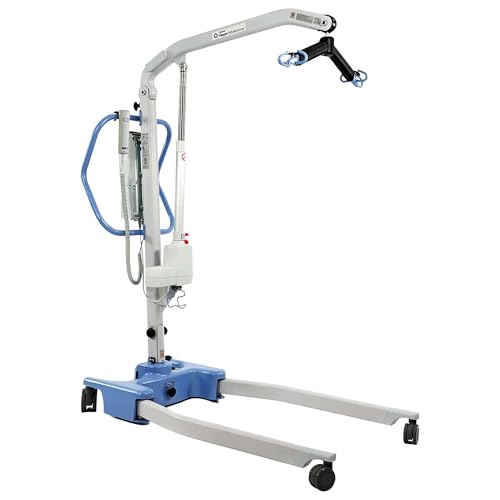
Joerns Hoyer Advance Portable Patient Lift | Electric Power | Lightweight and Robust | Safe Working Load 340 Lbs
HIGHLY COMPACT & PORTABLE: No tools are required to fold this Hoyer lift to transport or to store….
As an affiliate, we earn on qualifying purchases.
As an affiliate, we earn on qualifying purchases.
Conclusion
By following these safety tips, you can greatly reduce the risk of falls and injuries during bed transfers. Remember, nearly 80% of falls happen in the home, often during transfers, so taking precautions makes a real difference. With proper technique and support, both you and your loved one stay safer and more confident. Prioritize safety, communicate clearly, and stay patient—your efforts can create a more secure environment for everyone involved.

YHK Tubular Slide Sheet for Patient Transfer, Washable Reusable Flat Slide Sheet, Safetysure Transfer Slide for Moving Bedridden Patients, Slides for Cars, Hospital Bed, Home Care (28.3" x 28.3")
Material: YHK's tubular slip sheet adopts ultra-low friction polyester fabric, the fabric is very soft, the patient contact…
As an affiliate, we earn on qualifying purchases.
As an affiliate, we earn on qualifying purchases.

Runboll Adjustable Bed Lift Frame for Seniors with Remote Control, Height Adjustable Bed for Easy Access and Comfort, Twin
【Multi-Functional Electric Lift Design】Experience the ultimate in comfort with our adjustable bed for seniors. The electric lift design…
As an affiliate, we earn on qualifying purchases.
As an affiliate, we earn on qualifying purchases.