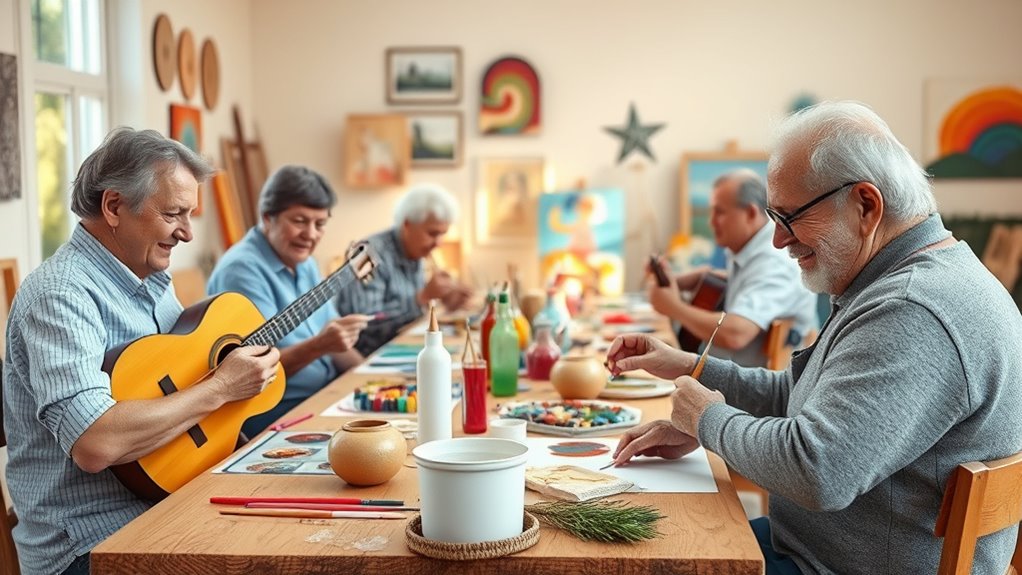

Music and art therapy provide seniors with meaningful ways to express themselves, boost their mood, and improve emotional well-being. You can engage in activities like singing, improvising, drawing, or painting, which require no special skills and are easy to access. These creative outlets help reconnect with past experiences, reduce stress, and foster social bonds. Keep exploring how combining these therapies can support your health and happiness every step of the way.

Get comfort and care essentials delivered free — and shop member deals
- Fast, free delivery on millions of items
- Access to Prime Big Deal Days deals on October 6–7
- Prime Video, Amazon Music and more included
Key Takeaways
- Music and art therapy provide seniors with emotional expression, stress reduction, and mood boosting through personalized, engaging activities.
- Techniques include singing, improvisation, painting, and collage, fostering creativity without requiring artistic skills.
- Combining auditory and visual stimuli enhances relaxation, memory recall, and overall mental well-being.
- These therapies promote social connection and reduce loneliness through group participation and shared expression.
- Accessible and adaptable, music and art therapy support seniors’ emotional health without the need for special equipment.
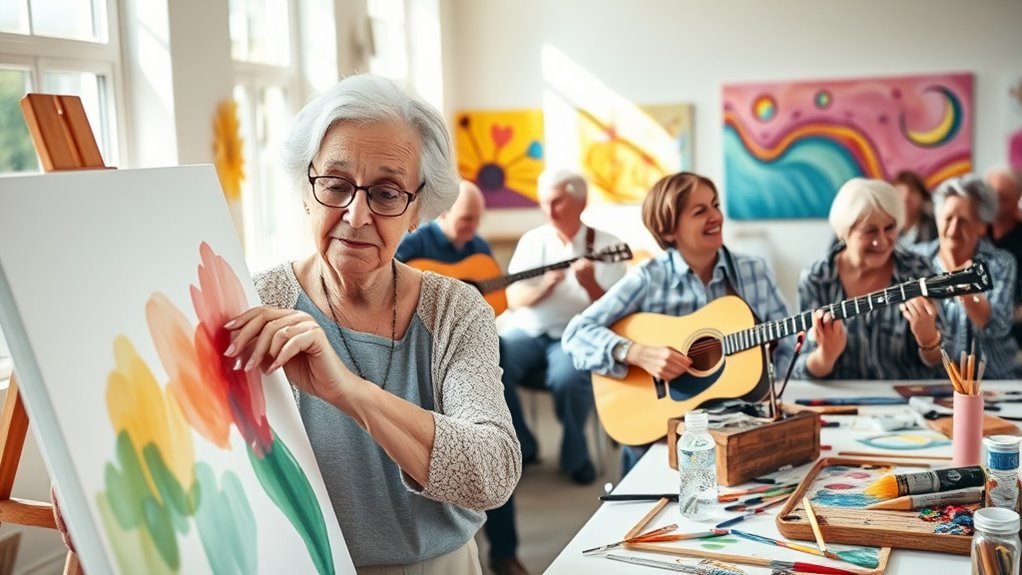
Music and art therapy are powerful tools that help individuals express emotions, reduce stress, and promote healing. If you’re exploring ways to improve your well-being or support a loved one’s mental health, understanding how these creative outlets work can be eye-opening. When engaging in music therapy, you’re not just listening to melodies; you’re actively participating in a process that taps into your emotions and memories. This approach often involves techniques like singing, improvising with instruments, or listening to curated playlists designed to evoke specific feelings. These music therapy techniques are tailored to meet individual needs, encouraging self-expression in ways that words sometimes cannot. For seniors, this can mean reconnecting with past experiences or simply finding joy in the rhythm, which boosts mood and reduces feelings of loneliness.
Similarly, art therapy techniques focus on creating visual art to explore and process emotions. You don’t need to be an artist to benefit from art therapy. Instead, it encourages free expression through drawing, painting, or collage-making. These activities allow you to communicate thoughts and feelings that might be difficult to articulate verbally. Engaging in art therapy can serve as a calming activity, helping you manage stress and anxiety. It also fosters a sense of achievement and purpose, which is especially important for seniors facing cognitive or emotional challenges. Whether you’re working on a personal project or participating in group art sessions, the act of creating becomes a therapeutic process that promotes mindfulness and emotional release.
Combining music and art therapy offers a holistic approach to senior health, where both auditory and visual stimuli work together to enhance well-being. For example, listening to soothing music while painting can deepen relaxation and foster a meditative state. The beauty of these therapies lies in their adaptability; you don’t need special skills or equipment—just the willingness to explore and express yourself. Participating in structured workshops or informal sessions can help you build new social connections, which further benefits mental health. As you engage in these creative activities, you’ll likely notice improvements in mood, memory, and overall resilience. Both music therapy and art therapy techniques empower you to take an active role in your healing process, making them valuable tools for maintaining and enhancing senior health.
As an affiliate, we earn on qualifying purchases.
Frequently Asked Questions
Can Music and Art Therapy Improve Cognitive Function in Seniors?
Yes, music and art therapy can improve cognitive function in seniors. These therapies stimulate neuroplasticity benefits, helping the brain form new connections and strengthen existing ones. They also boost emotional well-being, reducing stress and depression. By engaging in creative outlets, you may notice better memory, focus, and overall mental clarity. Regular participation keeps your brain active and resilient, making it an enjoyable and effective way to support cognitive health as you age.
Are These Therapies Suitable for Seniors With Physical Disabilities?
Think of these therapies as bridges that connect you to self-expression. They’re often suitable for seniors with physical disabilities when adapted with techniques like modified instruments or accessible art supplies. Using adaptive techniques and accessibility considerations, therapists tailor activities to your abilities, ensuring you can participate comfortably. So, yes, music and art therapy can be inclusive, fostering creativity and well-being regardless of physical challenges.
How Do I Start a Music or Art Therapy Program for My Loved One?
To start a music or art therapy program for your loved one, first explore local community centers or healthcare providers that offer funding or grants for such programs. Customize activities to match their interests and physical abilities, ensuring they’re engaging yet manageable. Collaborate with certified therapists who can tailor sessions effectively. This personalized approach boosts participation, making therapy enjoyable and beneficial for their overall well-being.
What Qualifications Should Therapists Have for Senior-Focused Sessions?
Think of selecting a therapist like choosing a trusted guide through a garden. You should look for qualifications requirements such as a therapist certification in music or art therapy, specifically with experience in senior care. Make sure they have proper credentials from accredited programs. A qualified therapist understands seniors’ unique needs, adapts activities accordingly, and fosters a supportive environment, helping your loved one thrive through creative expression.
Are There Any Risks or Side Effects Associated With These Therapies?
There are minimal risks with music and art therapy, but you should consider emotional impact and physical safety. Sometimes, engaging with certain music or art can stir strong emotions, so it is crucial to work with trained therapists who monitor your reactions. Additionally, make sure activities are adapted to your physical abilities to prevent any strain or injury. Overall, these therapies are safe when guided by qualified professionals attentive to your well-being.
As an affiliate, we earn on qualifying purchases.
Conclusion
Remember, a picture is worth a thousand words, and music can heal the soul. By embracing music and art therapy, you open doors to better senior health, boosting mood, memory, and overall well-being. These creative outlets remind you that staying engaged keeps your mind sharp and your spirit alive. Don’t underestimate their power—sometimes, the simplest forms of expression can make the biggest difference. So, keep creating and singing, because it’s never too late to nurture your health through art.
painting and drawing kits for seniors
As an affiliate, we earn on qualifying purchases.
As an affiliate, we earn on qualifying purchases.
therapeutic musical instruments for elderly
As an affiliate, we earn on qualifying purchases.
As an affiliate, we earn on qualifying purchases.
Halloween Picks
halloween
As an affiliate, we earn on qualifying purchases.