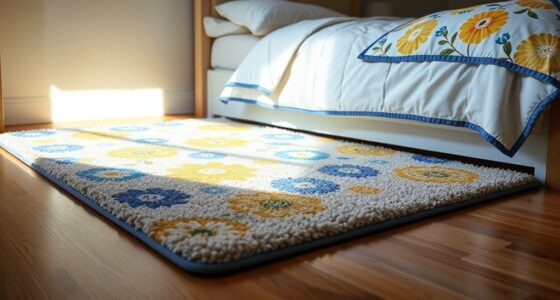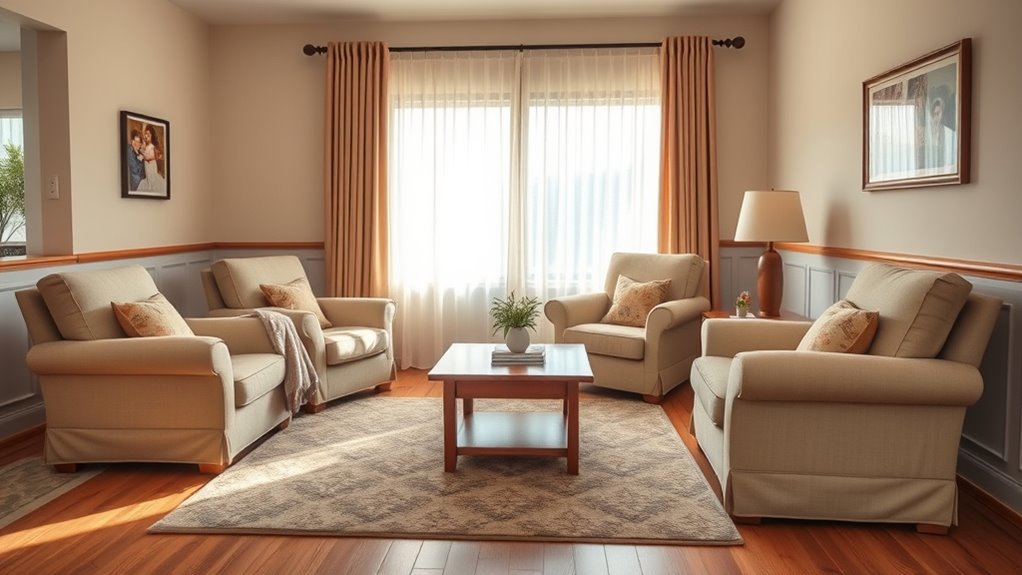

To create a cozy, safe living room for elderly family members, start by checking safety features like handrails, non-slip rugs, and good lighting. Choose supportive furniture with appropriate height and comfort, and keep pathways clear and clutter-free. Incorporate technology such as smart lighting and emergency alerts, and use warm decor and calming music to foster relaxation. Keep these tips in mind, and you’ll discover many more ways to make the space both inviting and secure.
Key Takeaways
- Install safety features like grab bars, sturdy handrails, and non-slip rugs to prevent falls and enhance mobility.
- Choose ergonomic, supportive furniture with appropriate height and armrests for comfort and safety.
- Maximize lighting with natural, ambient, and adjustable options to improve visibility and reduce accidents.
- Organize and declutter the space regularly to keep walkways clear and minimize tripping hazards.
- Incorporate assistive devices and smart technology for remote monitoring, emergency alerts, and ease of control.
Assessing and Improving Safety Features in the Living Room
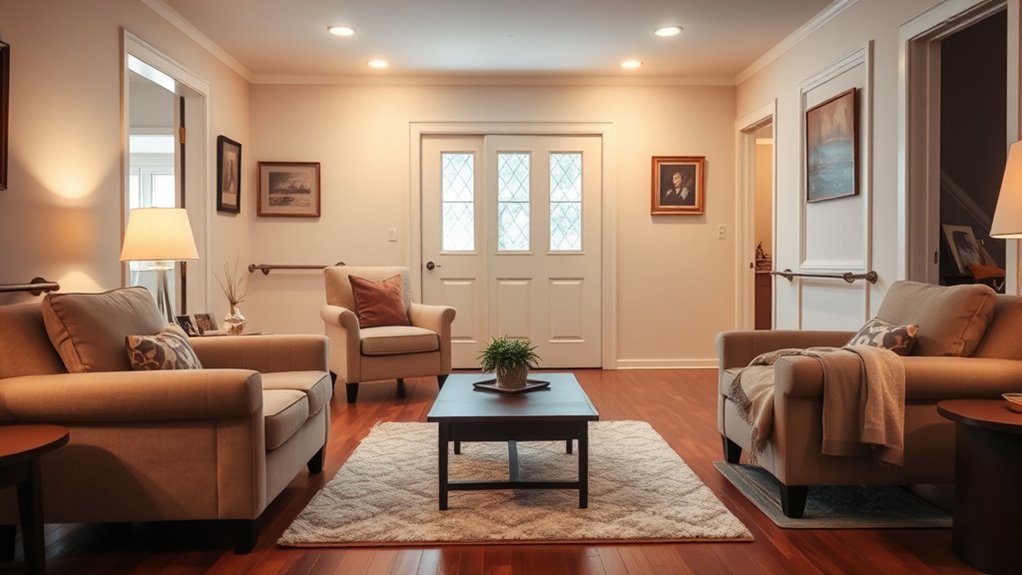
To create a safer living room for your elderly family members, start by thoroughly evaluating the current safety features. Check for potential fire hazards, such as overloaded outlets or unsecured cords, and ensure smoke detectors are functional and within easy reach for testing. Fire safety is vital; consider installing a fire extinguisher nearby and practicing fire drills. Ventilation improvements also matter—good airflow reduces indoor pollutants and prevents stuffiness, which can impact health. Open windows regularly or use air purifiers to maintain fresh air. Remove clutter that could block exits or cause trips, and secure rugs with non-slip pads. By addressing fire safety and ventilation, you create a healthier, more secure environment for your loved ones to enjoy with peace of mind. Additionally, incorporating projector safety features can help prevent accidental damage or injuries during use. Regularly inspecting electrical wiring and ensuring that outlets are not overloaded further enhances safety measures. Considering elderly-specific safety devices can also provide added peace of mind and ensure comprehensive protection. Incorporating smart home safety technology can further enhance monitoring and emergency response capabilities.
Choosing Comfortable and Supportive Furniture

After guaranteeing safety features and fire precautions are in place, selecting the right furniture becomes key to creating a comfortable and secure living space for your elderly loved ones. Focus on pieces with ergonomic design to support their posture and reduce strain. Choose chairs and sofas with firm yet plush padding, such as memory foam, which molds to their body, providing extra comfort and pressure relief. Opt for chairs with armrests to assist with sitting and standing, and ensure furniture height is appropriate—neither too low nor too high. Avoid furniture with sharp edges or unstable bases. Incorporating ergonomic design principles can also enhance overall comfort and safety in the space. free floating furniture arrangements can also enhance accessibility and ease of movement within the space. Additionally, selecting furniture with adjustable features allows for personalized comfort and adaptability as their needs change. Considering appropriate furniture height can further prevent strain and improve independence. Integrating supportive furniture that adapts to their needs ensures a safer and more comfortable environment. By prioritizing ergonomic design and memory foam cushions, you help your loved ones enjoy a cozy, supportive environment that promotes independence and reduces discomfort.
Enhancing Lighting for Better Visibility
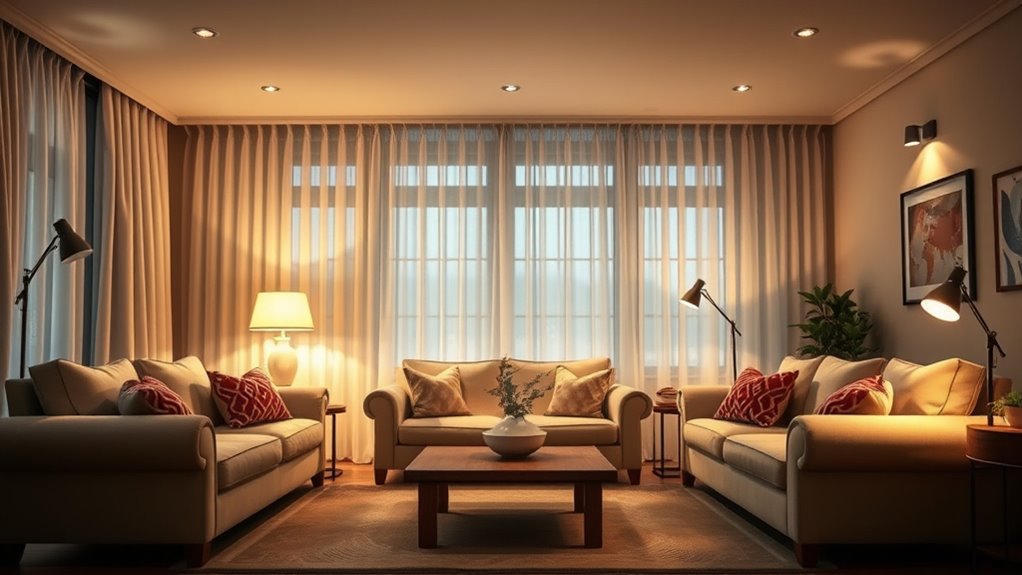
Proper lighting plays an essential role in helping your elderly family members move safely around the living room. To enhance visibility, combine natural light with ambient lighting. During the day, keep curtains open to let in sunlight, which is gentle and energy-efficient. In the evening, add soft overhead lights or lamps to create a warm, inviting atmosphere. Use adjustable fixtures so they can control brightness as needed. Consider the layout below:
| Time of Day | Light Source | Purpose |
|---|---|---|
| Daylight | Natural light | Brightens space naturally |
| Evening | Overhead ambient | Provides overall illumination |
| Night | Bedside lamps | Safe navigation at night |
| Cloudy days | Additional lamps | Compensates for low natural light |
| Dimming options | Adjustable fixtures | Customizable brightness |
This combination ensures clear visibility and safety, reducing fall risks. Additionally, incorporating lighting controls such as dimmers or remote-operated fixtures can further improve ease of use for elderly individuals. Implementing automated lighting systems can also help in maintaining appropriate lighting levels without manual adjustments, which not only enhances safety but also adds to their comfort and independence. Introducing energy-efficient lighting options can further reduce costs and environmental impact while maintaining adequate illumination. Incorporating smart lighting technology can provide even greater convenience and tailored lighting experiences for seniors.
Minimizing Clutter and Organizing Spaces
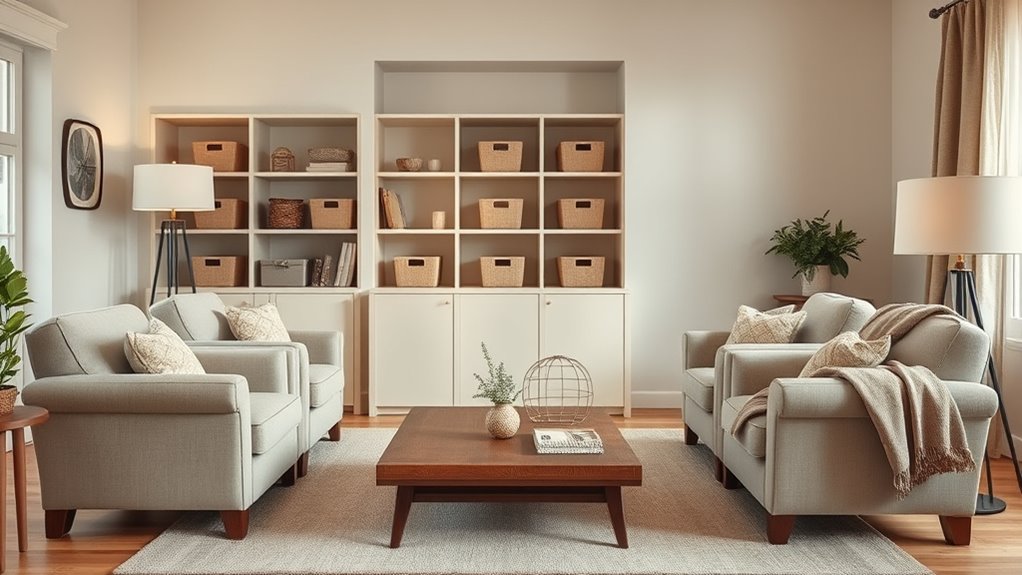
Keeping walkways clear and free of obstacles is essential for safety. Using smart storage solutions helps reduce clutter and keeps essentials within easy reach. Regular decluttering sessions ensure the space remains organized and comfortable for your loved ones. Incorporating evidence‑informed guidance into your organizing efforts can help you identify the most effective strategies for maintaining a safe environment. Additionally, implementing simple routines can help maintain these organizational systems over time. Considering the cost‑effectiveness of different storage options can further support your efforts to create a safe and cozy living room. Exploring space optimization techniques can maximize the use of available area and improve overall safety. Consulting home safety guidelines can provide additional insights into designing a secure environment for elderly family members.
Clear Pathways and Walkways
Ensuring clear pathways and walkways is essential for creating a safe living environment for elderly family members. Keep floors free of clutter, cords, and furniture that could cause tripping. Use non-slip rugs in high-traffic areas to prevent slipping, especially on smooth surfaces. Install sturdy handrails and grab bars along hallways and near stairs or bathrooms to offer support and stability. Regularly check that walkways are unobstructed and well-lit, reducing the risk of accidents in low-light conditions. Incorporating home safety features like motion-activated lighting can further enhance visibility and security. It’s also beneficial to consider the heat distribution properties of your flooring materials, choosing options that minimize temperature fluctuations that could cause discomfort or slips. Additionally, selecting flooring with proper insulation can help prevent cold spots that might lead to slips or discomfort. Being mindful of the flooring’s heat retention can help maintain a consistent and comfortable environment for your loved ones. By minimizing obstacles and adding supportive features, you help your loved ones move confidently and comfortably throughout the living room.
Use of Storage Solutions
Using effective storage solutions can make a significant difference in creating a safe and clutter-free living room for your elderly family members. Storage bins are a practical way to keep smaller items organized and out of sight, reducing tripping hazards. Label the bins for easy identification, so they can quickly find what they need without rummaging through clutter. Shelving units provide vertical storage, maximizing space and keeping frequently used items within reach. Place items you use daily on lower shelves for easy access, and store less-used belongings higher up. Regularly review and reorganize your storage to prevent clutter buildup. Incorporating science‑backed knowledge about organization can further enhance safety and efficiency. Additionally, understanding ergonomic principles can help you arrange items in a way that minimizes strain and effort during retrieval. With these simple solutions, you create a more open, safe, and inviting environment that promotes comfort and independence for your loved ones.
Regular Decluttering Sessions
Regular decluttering sessions help maintain a safe and organized living room for your elderly loved ones. By regularly removing unnecessary items, you reduce tripping hazards and create clear pathways. Use these sessions to organize essentials like medication reminders and memory aids, ensuring they’re easy to find and access. Keep frequently used items within reach and store infrequently used objects out of the way. Decluttering also helps you identify and replace any damaged or outdated equipment that could pose safety risks. Incorporate labels and designated spots for important items, making it easier for your loved one to locate what they need without confusion. Consistent organization fosters independence and peace of mind, knowing the living space remains safe, tidy, and supportive of their daily routines.
Incorporating Assistive Devices and Technology
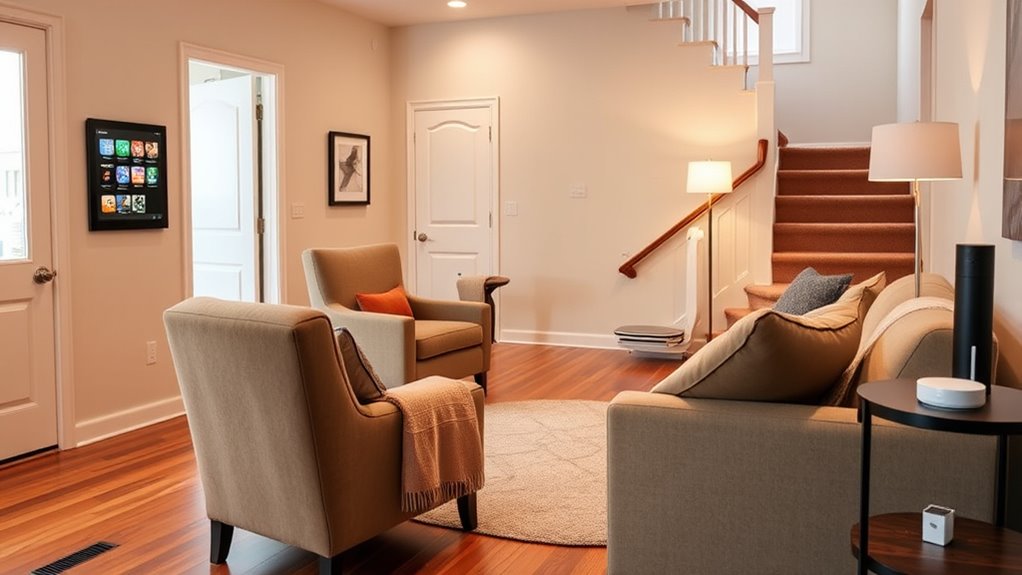
Incorporating smart home automation and emergency alert systems can make your living room safer and more convenient for your elderly loved ones. These devices allow for easy control of lights, thermostats, and communication with help when needed. By choosing the right technology, you create a more secure and comfortable environment for them.
Smart Home Automation
Smart home automation can considerably enhance safety and convenience for elderly family members by seamlessly integrating assistive devices and technology. With voice control, they can easily operate lights, thermostats, and appliances without needing to move around or reach for switches, reducing fall risks. Remote access allows caregivers or family members to monitor and adjust settings from anywhere, providing peace of mind. For example, you can check if the lights are on or adjust the temperature remotely, ensuring the living environment stays comfortable and safe. Automation can also include scheduled routines, like turning on lights at dusk or off at bedtime, promoting independence. By simplifying daily tasks, smart home automation creates a more secure, accessible, and cozy living space for your elderly loved ones.
Emergency Alert Systems
Emergency alert systems play a crucial role in guaranteeing your elderly loved ones can quickly summon help when needed. Medical alert systems, such as wearable pendants or bracelets, provide immediate access to emergency response plans. When pressed, these devices connect your loved one to trained responders who can assess the situation and dispatch help promptly. Incorporating these systems into your living room creates a sense of security and independence. Make sure the alert system is easy to operate and tested regularly. Clear signage and accessible emergency contact information further enhance safety. By integrating emergency alert systems, you guarantee your loved ones can receive timely assistance, reducing anxiety for both them and you. This proactive approach promotes a safe, cozy environment where your family member feels confident and protected.
Creating a Warm and Inviting Atmosphere

Creating a warm and inviting atmosphere begins with thoughtful choices in lighting, colors, and decor that make your elderly loved ones feel comfortable and at home. Soft, warm lighting creates a cozy ambiance, while calming colors like earth tones or pastels foster relaxation. Incorporate seasonal decorations to add a touch of festivity and familiarity throughout the year, making the space feel lively and personalized. Playing gentle ambient music in the background enhances the sense of calm and encourages conversation. Keep decor simple and clutter-free, ensuring easy navigation and safety. These small touches help your loved ones feel welcomed and cared for, transforming the living room into a space where they can relax, enjoy, and truly feel at home.
Frequently Asked Questions
How Can I Ensure My Living Room Is Wheelchair Accessible?
You can guarantee your living room is wheelchair accessible by removing obstacles and arranging furniture to create clear pathways, ideally at least 36 inches wide. Incorporate mobility aids like ramps if needed, and ensure emergency exits are easily reachable. Use low-pile rugs or remove rugs altogether to prevent tripping hazards, and keep essential items within easy reach, making the space both safe and comfortable for your elderly family members.
What Materials Are Safest for Elderly-Friendly Flooring?
You’d think choosing flooring would be straightforward, but safety comes first. Opt for non-slip tiles to prevent falls and add cushioned mats in high-traffic areas for extra comfort. These materials are truly the safest for elderly family members, offering stability and cushioning. Avoid slick surfaces, and prioritize softness without sacrificing durability. With these choices, you create a space that’s both cozy and secure—because safety should never be an afterthought.
How Do I Prevent Falls on Carpeted Surfaces?
To prevent falls on carpeted surfaces, you should secure area rugs with non-slip pads or anti-slip mats underneath to prevent slipping. Regularly inspect carpets and rugs for wear or loose edges, fixing them promptly. Make certain the carpet is firmly attached to the floor and keep pathways clear of clutter. Good lighting also helps, so your elderly family members can see potential tripping hazards clearly.
Are There Specific Colors That Improve Elderly Navigation?
Bright, warm colors like soft yellows, light blues, and gentle greens can help elderly navigate more easily. Using color psychology and visual contrast, you make key areas stand out, preventing confusion or accidents. Stick to high-contrast combinations for doorways, stairs, and furniture to guide their eyes effortlessly. When you create this visual roadmap, you’re giving them a clearer path — a simple step that makes a big difference.
How Can I Incorporate Sensory Elements for Comfort?
You can incorporate sensory elements for comfort by using sensory lighting, which provides soft, adjustable illumination to reduce glare and create a calming atmosphere. Add textured decor like plush rugs, soft blankets, and tactile wall art to stimulate touch and warmth. These elements make the space more inviting and accessible, helping your elderly family members feel relaxed and secure while steering or spending time in the living room.
Conclusion
By implementing these simple yet effective tips, you’ll transform your living room into an oasis so cozy and safe, it’s like wrapping your loved ones in a giant, comforting hug. Every detail, from secure furniture to warm lighting, creates a sanctuary where your elderly family members feel truly protected and loved. With these thoughtful touches, you’re not just improving a space—you’re crafting a haven so inviting, it’ll be the envy of even the warmest homes in the neighborhood.