
To adjust to your CPAP machine, focus on ensuring a proper fit by tightening or loosening straps gradually for comfort and a good seal. Experiment with airflow settings and humidity to reduce dryness and discomfort. If the mask feels too tight or causes skin irritation, try different styles or seek professional advice. Consistent use and small tweaks will help you adjust more comfortably. Keep exploring these tips to improve your sleep experience even further.
Key Takeaways
- Gradually adjust mask straps for a snug yet comfortable fit to prevent leaks and irritation.
- Experiment with airflow and pressure settings, consulting your provider for optimal comfort.
- Use adjustable headgear and try different mask styles to improve fit and reduce discomfort.
- Increase humidity levels if you experience dryness or throat irritation during use.
- Practice consistent nightly use and review settings regularly to enhance comfort and therapy effectiveness.

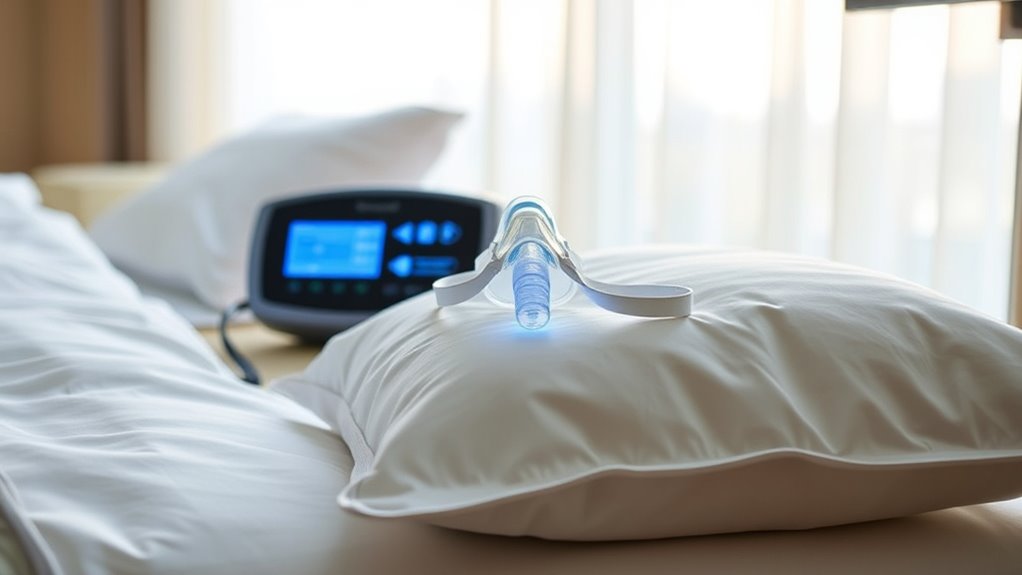
Sleep apnea is a common sleep disorder that causes your breathing to repeatedly stop and start during sleep, leading to poor rest and daytime fatigue. If you’re new to using a CPAP machine, one of the most important steps is ensuring a proper mask fit. A mask that fits well creates a secure seal, preventing air leaks that can disrupt your sleep. If your mask is too loose, you might notice air escaping around the edges, which can cause dryness, skin irritation, or a noisy environment that disturbs your partner. Conversely, a mask that’s too tight can cause discomfort, pressure points, or skin irritation. Take time to adjust the straps gradually, making small changes until you find a snug yet comfortable fit. Many masks come with adjustable headgear, so don’t hesitate to experiment with different settings to maximize comfort and effectiveness.
Once you have a good mask fit, focus on airflow adjustment. Modern CPAP machines often have settings to customize airflow, helping you breathe comfortably throughout the night. If you feel like you’re struggling to exhale or the airflow feels too forceful, consult your healthcare provider or the machine’s manual to modify the pressure settings. Some devices feature automatic pressure adjustments, which can help ease you into a comfortable breathing rhythm. When you first start therapy, it’s normal to experience some discomfort or feelings of suffocation, but these often improve as you get used to the machine. If you find the airflow feels too strong or causes throat dryness, you can try increasing the humidity setting if your machine has one. Proper airflow adjustment is crucial for a successful sleep experience, so don’t hesitate to fine-tune these settings as you go. Becoming familiar with mask fit and airflow adjustment can significantly improve your comfort and adherence to therapy.
Getting used to your CPAP machine takes patience, especially when it comes to mask fit and airflow. It’s common to need several nights to adapt fully. Keep in mind that consistent use is key to managing sleep apnea effectively. If you experience persistent discomfort, skin irritation, or issues with airflow, reach out to your healthcare provider. They can help you troubleshoot, suggest alternative mask styles, or adjust machine settings to improve your comfort. Remember, the goal is to find the right combination of mask fit and airflow adjustment that allows you to sleep peacefully and wake up refreshed. With a little patience and some adjustments, you’ll be on your way to better sleep and healthier living.
Frequently Asked Questions
Can I Use My CPAP Machine During Travel?
Yes, you can use your CPAP machine during travel. Just bring a portable device designed for travel, which is lightweight and easy to carry. Remember to pack your power adapter and make sure your destination has compatible outlets. Follow travel tips like carrying your supplies in carry-on luggage and using a travel bag to protect your machine. This way, you stay comfortable and compliant with your sleep therapy wherever you go.
How Do I Clean and Maintain My CPAP Equipment?
You should clean your CPAP equipment regularly to guarantee peak performance and hygiene. Follow your manufacturer’s cleaning routines, which typically involve daily washing of the mask and weekly cleaning of the hose and water chamber with mild soap and water. Don’t forget to replace filters as recommended. Proper equipment maintenance helps prevent infections and prolongs your device’s lifespan, making your therapy more effective and comfortable.
Are There Alternative Treatments for Sleep Apnea?
Looking for alternatives to CPAP? You might consider lifestyle changes like weight loss, quitting smoking, or sleeping on your side to reduce apnea episodes. Surgical options, such as UPPP or jaw advancement devices, can also help open airways. These alternatives vary in effectiveness, so consult your doctor to explore what’s best for your specific condition. Sometimes, combining treatments offers the best results for managing sleep apnea.
What Should I Do if I Experience Skin Irritation?
If you experience skin irritation, first check your mask fit to make certain it’s not too tight or loose. Adjust the straps for a comfortable, snug fit without causing pressure. Use a gentle, hypoallergenic barrier like a barrier cream or padding if irritation persists. Regularly clean your mask and skin. If irritation continues, consider trying different mask styles or materials, and consult your healthcare provider for further advice.
How Long Does It Take to See Improvements?
Think of your adjustment period like planting a seed—it takes time to see the blooms. Usually, you’ll notice symptom relief within a few days to a week, but full benefits can take up to a month. Patience is key. The more consistently you use your CPAP, the quicker you’ll experience improved sleep quality and reduced apnea symptoms. Keep at it, and relief will come with time.
Conclusion
Adjusting to your CPAP machine might feel like climbing Mount Everest at first, but remember, every night you persevere, you’re conquering a giant for better sleep and health. Stick with it, stay patient, and celebrate small victories along the way. Soon, you’ll wonder how you ever slept without it—your improved breathing and energy will transform your life. Keep going—you’re stronger than you think, and this machine is your ally in reclaiming restful nights.