
To improve indoor air quality for seniors with respiratory issues, use air purifiers with HEPA and activated carbon filters suited for your room size, and run them continuously. Adding indoor plants like snake plants or peace lilies can naturally filter toxins and boost air quality. Keep your home well-ventilated and clean, dusting regularly to reduce allergens. Combining these tips creates a healthier space, helping your loved ones breathe easier and feel more comfortable—discover more strategies to enhance air quality inside.
Key Takeaways
- Use HEPA-filter air purifiers in main living areas and bedrooms to remove airborne pollutants.
- Incorporate indoor plants like snake plants and peace lilies to naturally filter toxins.
- Maintain good ventilation by opening windows or using exhaust fans regularly.
- Keep surfaces clean by dusting and vacuuming to reduce allergen buildup.
- Choose devices suitable for room size and replace filters as recommended for optimal air quality.
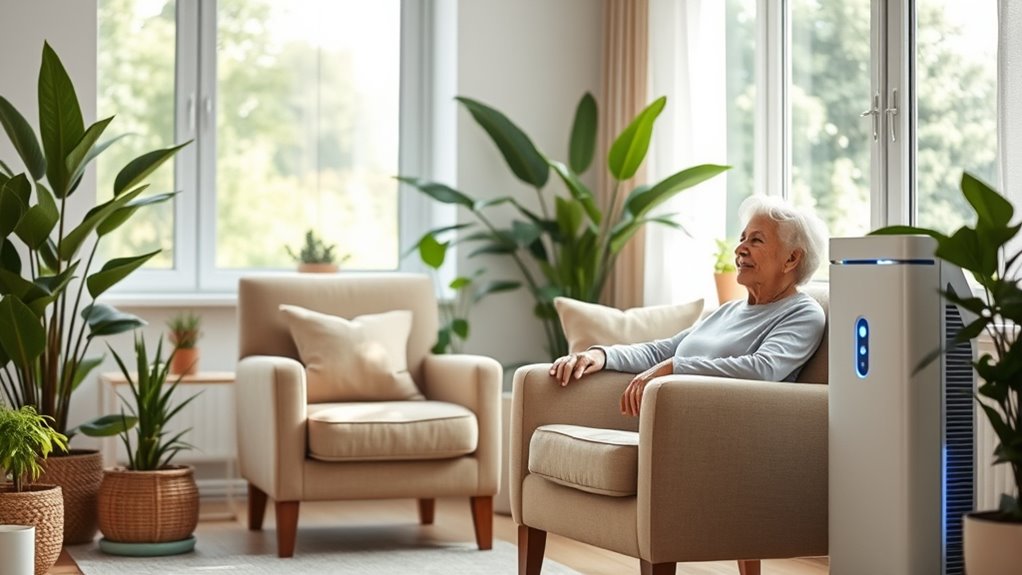
As seniors spend most of their time at home, maintaining good air quality becomes vital for their health and well-being. Respiratory issues can be aggravated by indoor pollutants, dust, and allergens, making it essential to create a cleaner environment. One effective way to do this is by choosing the right air purifier recommendations. When shopping for an air purifier, look for models with HEPA filters, which can trap airborne particles like pollen, pet dander, and dust mites. Some purifiers also come with activated carbon filters that reduce odors and volatile organic compounds (VOCs). Selecting a device suited to your room size guarantees maximum efficiency, and setting it to run continuously can help maintain consistent air quality throughout the day. Regularly replacing filters is equally important to keep the purifier functioning effectively.
Maintaining good air quality with HEPA filters and regular filter replacements supports seniors’ respiratory health indoors.
Beyond gadgets, incorporating indoor plants offers a natural boost to indoor air quality. Many indoor plants, such as snake plants, peace lilies, and pothos, are known for their ability to filter toxins and improve humidity levels. These plants absorb pollutants through their leaves and roots, helping to reduce airborne chemicals from cleaning products, furniture, and other household items. Plus, caring for plants adds a calming routine that benefits mental health. Their presence can make a space feel more inviting and less sterile, which is especially important for seniors who spend extended periods indoors. Not only do plants purify the air, but they also increase oxygen levels, making the environment more invigorating and easier to breathe. Incorporating air quality improvement techniques can further enhance the overall indoor environment.
Combining air purifier recommendations with indoor plant benefits creates a thorough approach to improving air quality. For example, placing an air purifier in the bedroom or living area, paired with a few well-chosen indoor plants, can considerably reduce allergens and pollutants. This combination helps seniors breathe easier, reducing coughing, wheezing, and other respiratory symptoms. Remember, good ventilation also plays a critical role—opening windows when possible or using exhaust fans can help circulate fresh air. Maintaining a clean home by regularly dusting and vacuuming minimizes the buildup of allergens and dust mites, further supporting respiratory health.
In essence, safeguarding indoor air quality is about more than just one solution; it’s a mix of smart device choices, natural air filters, and good habits. By following tailored air purifier recommendations and embracing the benefits of indoor plants, you can create a healthier, more comfortable home environment. This proactive approach not only improves breathing but also enhances overall well-being, making your home a safer sanctuary for your health.
Frequently Asked Questions
How Often Should Air Filters Be Replaced in Senior Homes?
You should replace air filters every 30 to 60 days, depending on the air filter lifespan and your home’s conditions. Regular replacement guarantees peak air quality and reduces respiratory issues for seniors. If your home has pets, smokers, or high dust levels, consider replacing filters more frequently, around every 30 days. Check your filter’s manufacturer’s recommendations and monitor for signs of dirt or reduced airflow to determine the right replacement frequency.
Are There Specific Air Purifiers Recommended for Seniors?
You should look for air purifiers with HEPA filters and activated carbon, as they effectively capture allergens, pollutants, and odors. Did you know that HEPA filters can remove up to 99.97% of airborne particles? These features are especially beneficial for seniors with respiratory issues, helping to improve indoor air quality and reduce symptoms. Choose models specifically designed for sensitive environments and guarantee regular filter replacements for peak performance.
Can Houseplants Improve Indoor Air Quality Effectively?
Houseplants can improve indoor air quality through natural filtration, but their plant detox benefits are limited. They remove some toxins and increase humidity, which may help ease respiratory issues. However, don’t rely solely on plants; combine them with proper ventilation and air purifiers for better results. Choose low-maintenance, non-toxic plants like pothos or snake plants for safer, natural filtration that supports a healthier home environment.
What Are the Signs of Poor Indoor Air Quality in Seniors?
You might notice seniors experiencing frequent coughing, shortness of breath, or headaches, which indicate poor indoor air quality. Keep an eye out for musty odors or visible mold, as these signs can signal mold growth and poor air conditions. Using air quality sensors helps detect pollutants early, while mold prevention measures reduce risks. Addressing these signs promptly guarantees a healthier environment, especially for seniors with respiratory issues.
How Do Humidity Levels Affect Respiratory Health in Seniors?
Imagine a gentle mist wrapping your home, balancing moisture levels and keeping air comfortable. When humidity control is just right—around 40-50%—it helps seniors breathe easier by reducing irritants like mold and dust mites. Too much moisture causes dampness and mold, worsening respiratory issues, while too little dries out airways. Proper humidity levels support healthier lungs, easing breathing and creating a more comfortable, safe environment for seniors.
Conclusion
By taking simple steps like using air purifiers and keeping your home clean, you can substantially improve your air quality. Some might think it’s too much effort, but these small changes make a big difference in breathing easier and feeling more comfortable. Imagine waking up every day with fresh, clean air supporting your health—it’s worth it. Prioritize your well-being today, and enjoy the comfort of a healthier, safer home.