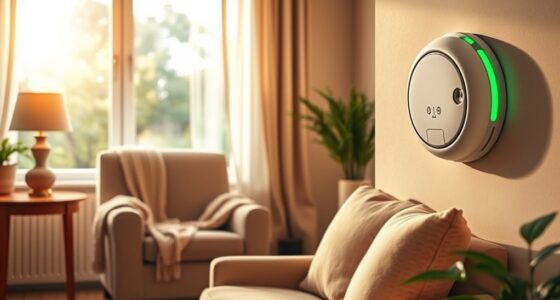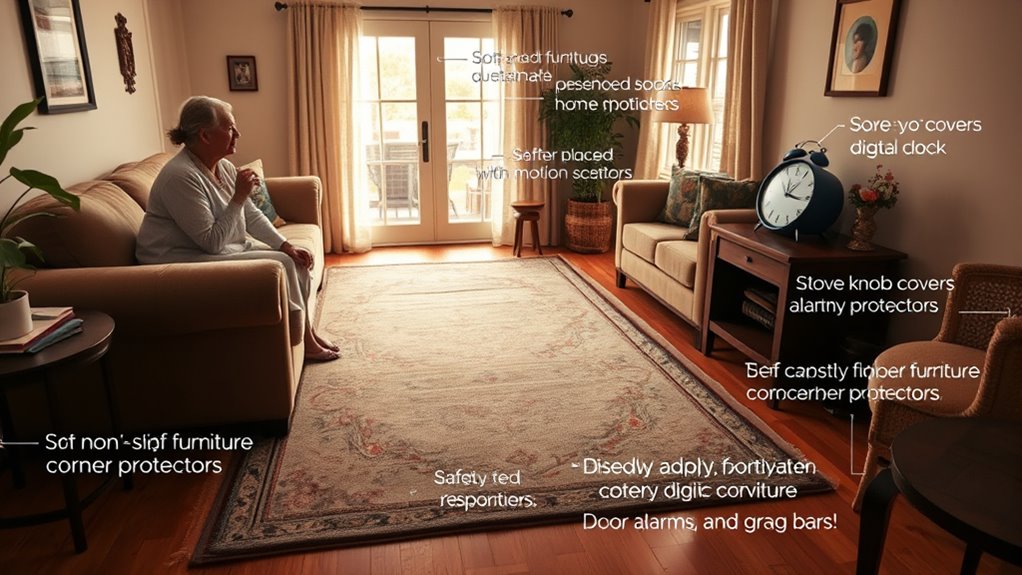

To adapt your home for Alzheimer’s, start by removing hazards like loose rugs, clutter, and sharp objects. Improve lighting, add visual cues, and secure doors and cabinets to prevent wandering and accidents. Install safety gadgets like door alarms, grab bars, and non-slip mats, and consider technology such as sensors and wearable alerts for extra security. Making these adjustments helps your loved one stay safe while maintaining independence—keep exploring for more practical safety tips and gadgets.

Turn quiet afternoons into listening time
- Thousands of audiobooks, podcasts and originals
- Listen on your phone, tablet or Echo — also offline
- Cancel anytime
Key Takeaways
- Remove tripping hazards, secure rugs, and improve lighting with contrast to prevent falls.
- Install safety devices like door alarms, stove shut-off timers, and grab bars for enhanced security.
- Use visual cues such as clear signage and color contrasts to aid navigation and reduce confusion.
- Lock cabinets and doors to prevent access to dangerous items or wandering.
- Implement wearable alerts and smart sensors to monitor activity and provide real-time safety notifications.
Alzheimer's home safety door alarms
As an affiliate, we earn on qualifying purchases.
As an affiliate, we earn on qualifying purchases.
Assessing and Identifying Potential Hazards in the Home

Before making any modifications, it is essential to walk through your home and look for potential hazards that could pose risks to someone with Alzheimer’s. Start by evaluating clutter management; clutter can cause confusion or trips, so keep walkways clear and surfaces organized. Check that emergency exits are unobstructed and easily accessible, as quick escape routes are critical in emergencies. Look for objects that might be tempting or dangerous, like sharp tools or small items that could be swallowed. Note areas with poor lighting or uneven flooring that could cause falls. By thoroughly inspecting each room, you can identify hazards early and create a safer environment. Incorporating safety checklists can further enhance overall safety and give caregivers peace of mind. Additionally, understanding home safety regulations can help ensure your modifications meet necessary standards for safety and accessibility. Conducting home hazard assessments regularly can help maintain a safe environment as needs change over time.
As an affiliate, we earn on qualifying purchases.
Modifying the Environment for Enhanced Safety
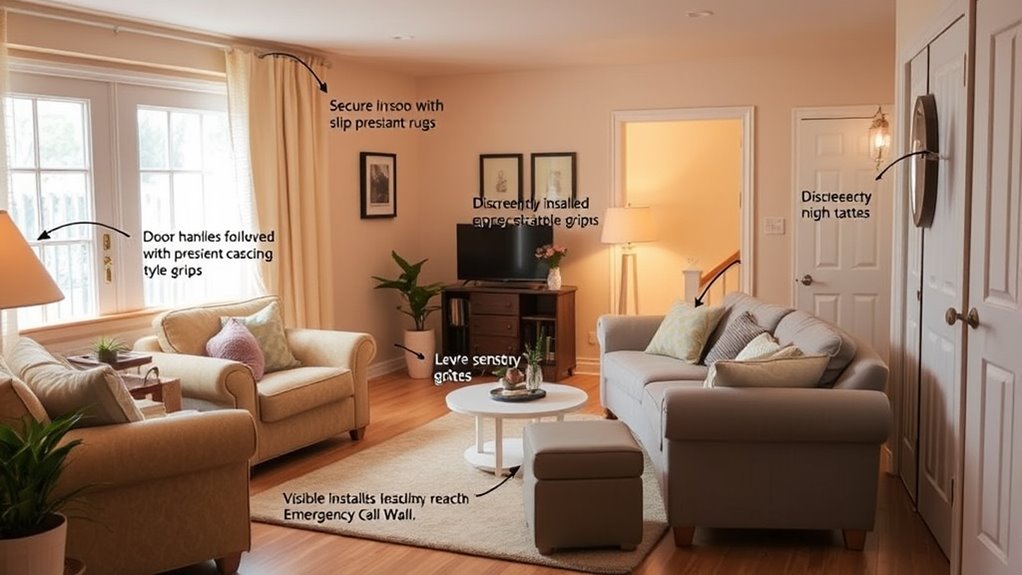
To enhance safety at home, start by removing tripping hazards like loose rugs and clutter. Installing secure locks on doors and cabinets helps prevent wandering and access to dangerous items. Bright lighting throughout the house guarantees better visibility, reducing the risk of accidents. Additionally, considering family photoshoot fails can remind caregivers to create a calm, distraction-free environment that minimizes confusion for individuals with Alzheimer’s. Incorporating natural pool features such as native plants and natural filtration can also promote a more tranquil and safe living space. Understanding field‑of‑view and imaging‑scale examples from deep-sky imaging can inspire caregivers to plan spaces thoughtfully, ensuring clear sightlines and reducing confusion. Paying attention to environmental considerations, like water conservation and fire safety, further contributes to a secure and sustainable home environment. Implementing hazard identification strategies can help caregivers recognize potential risks before they cause harm.
Remove Tripping Hazards
Removing tripping hazards is a crucial step in making your home safer for someone with Alzheimer’s. Clear walkways, especially garden pathways, reduce the risk of falls. Ensure rugs are secured or eliminated to prevent slipping. Keep clutter off floors and cords out of walkways. Pay special attention to stair safety by installing handrails and ensuring steps are even and well-lit. Use non-slip mats on stairs and in bathrooms. Regularly inspect your environment for loose tiles or debris that could cause trips. Here’s a quick overview:
| Area | Hazard | Solution |
|---|---|---|
| Garden pathways | Uneven or slippery surfaces | Add non-slip surfaces or gravel |
| Stairs | Lack of grip or visibility | Install handrails and bright lighting |
| Living spaces | Loose rugs or clutter | Secure rugs and clear walkways |
| General floors | Cords or small objects | Remove or secure cords and clutter |
Additionally, ensuring proper color contrast between floors, walls, and furniture can help individuals with visual impairments navigate more safely. Incorporating environmental modifications like better lighting and contrast can further enhance safety. Enhancing home safety assessments regularly can also help identify new hazards as needs evolve.
Install Secure Locks
Installing safe locks on doors and windows adds an important layer of safety for someone with Alzheimer’s. Choose lock mechanisms that are difficult to open without a key or special tool, preventing accidental exits. Consider locks that look like regular hardware but have a hidden or child-proof feature to deter wandering. You can also install locks higher up on doors or use keypad entry systems for added control. Keep emergency exits accessible for safety, but make sure they’re secure enough to prevent unsupervised escapes. Regularly check and maintain the locks to ensure they work properly. This combination of secure lock mechanisms helps keep your loved one safe while allowing you to respond quickly in an emergency. Additionally, environmental safety measures such as door alarms or sensors can provide extra protection and peace of mind.
Use Bright Lighting
Bright lighting is essential for creating a safe and easily navigable environment for someone with Alzheimer’s. Proper lighting helps reduce confusion and prevents falls. Use ample, evenly distributed light sources to eliminate dark spots and shadows. Incorporate color contrast in key areas, like doorframes, stairs, and furniture, to help distinguish different surfaces and objects. This contrast guides their movement and reduces disorientation. Additionally, glare reduction is crucial; harsh, direct lighting can cause discomfort and make it harder to see clearly. Use softer, diffused lights and avoid reflective surfaces that increase glare. Adequate illumination also supports overall visual perception, which is vital for navigating safely. Ensuring proper lighting can also improve safety by minimizing accidents caused by poor visibility. Good lighting quality is essential for visual perception, helping your loved one recognize objects and read signs more easily. By optimizing lighting conditions, you make your home safer and more comfortable, helping your loved one maintain independence while minimizing hazards. Implementing smart lighting systems that adjust brightness automatically can further enhance safety and convenience.
As an affiliate, we earn on qualifying purchases.
Essential Safety Devices and Equipment

To guarantee safety in a home adapted for someone with Alzheimer’s, it’s vital to incorporate specific safety devices and equipment. Start by creating custom safety checklists that address your loved one’s unique needs, ensuring no hazards are overlooked. Essential safety devices include door alarms, stove shut-off timers, and grab bars in the bathroom. Installing these items helps prevent accidents and provides peace of mind. Additionally, participating in caregiver training programs equips you with the knowledge to respond effectively to emergencies and manage safety equipment properly. Regularly reviewing your safety checklists and updating equipment as needed ensures your home remains secure. Incorporating sound design principles can also enhance auditory cues and alerts within the home, further supporting safety. Properly home modifications tailored to cognitive impairments can significantly reduce risks and promote independence. Employing networking and communication systems can improve emergency response times and facilitate better caregiver coordination. Implementing alarm systems that are easy to operate can alert you promptly to any issues, increasing overall safety. By combining tailored safety devices with proper training, you create a safer environment that promotes independence while minimizing risks. Additionally, understanding the importance of home safety assessments can help identify potential hazards before they cause harm.
As an affiliate, we earn on qualifying purchases.
Innovative Technology Solutions for Monitoring and Alerts
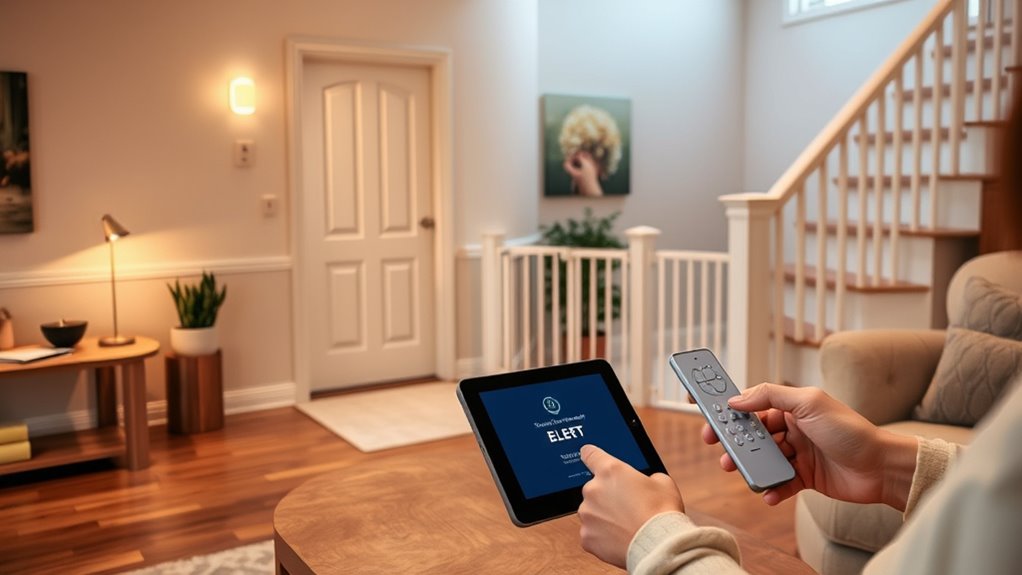
Innovative technology solutions have revolutionized how caregivers monitor loved ones with Alzheimer’s, providing real-time alerts and increased safety. Wearable alerts, such as pendants or wristbands, notify you immediately if your loved one wanders or leaves a designated area. Smart sensors installed around the home detect movement, track activity, and identify unusual patterns that might signal a problem. These devices work seamlessly, offering instant notifications to your smartphone or monitoring system, so you can respond quickly. They also help reduce anxiety by giving you peace of mind, knowing you’ll be alerted to any potential hazards. By integrating wearable alerts and smart sensors into your loved one’s environment, you create a safer, more connected home that supports independence while keeping safety at the forefront.
Creating a Comfortable and Supportive Living Space
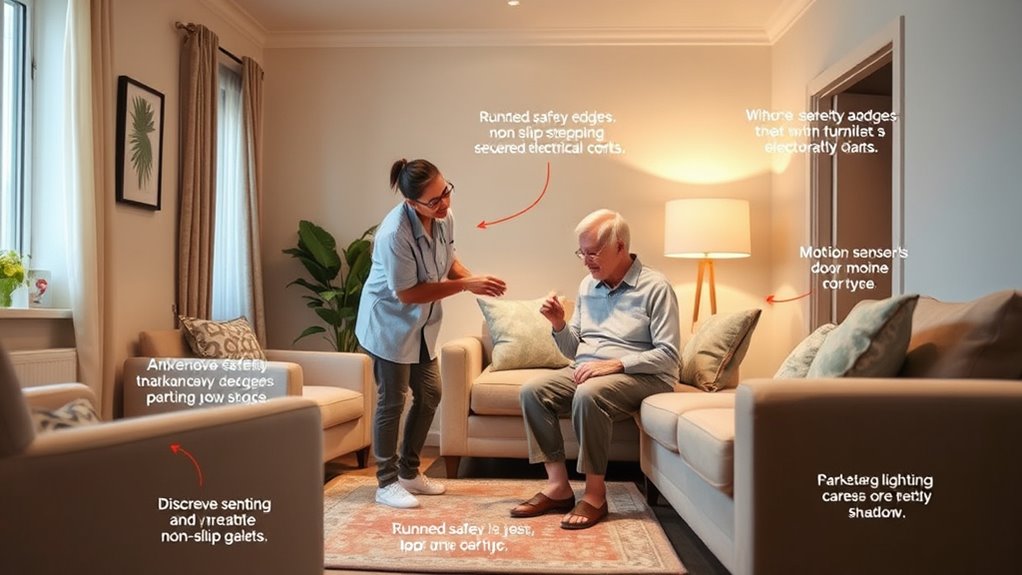
To create a comfortable and supportive living space, start by simplifying the room layout to reduce confusion and prevent accidents. Improving lighting and clear signage helps your loved one navigate safely and feel more independent. Small changes like these can make a big difference in their daily comfort and security.
Simplify Room Layout
Simplifying the room layout is essential for creating a safe and calming environment for someone with Alzheimer’s. Start by arranging furniture to allow clear pathways, minimizing tripping hazards. Keep frequently used items within easy reach to reduce frustration and confusion. Clutter reduction is vital; remove unnecessary objects that can cause distraction or accidents. Use furniture with rounded edges to prevent injuries if falls occur. Avoid overcrowding by limiting the number of pieces in each room, which helps create a more open, accessible space. Consistent placement of furniture and personal items helps your loved one recognize familiar spaces and navigate more confidently. By streamlining the room layout, you foster a safer, more comfortable environment that supports independence and reduces anxiety.
Enhance Lighting and Signage
Proper lighting and clear signage play essential roles in making your loved one’s environment safer and more navigable. Bright, even lighting reduces shadows and glare, helping your loved one see their surroundings clearly. Use color contrast to distinguish doorways, stairs, and furniture, which acts as visual cues that guide movement and prevent falls. Brightly lit pathways and well-placed signs with simple symbols or words help them recognize important areas like the bathroom or exits. Avoid clutter that can obscure visual cues or create confusion. Consistent lighting and prominent signage make it easier for your loved one to orient themselves, reducing anxiety and promoting independence. These small adjustments create a more comfortable, supportive living space that encourages safe navigation.
Tips for Maintaining Independence While Ensuring Safety

Balancing independence with safety can be challenging, but making small adjustments around the home can help you or your loved one stay autonomous while reducing risks. Focus on creating a supportive environment for memory care by organizing daily routines and simplifying tasks. Use visual cues and clear signage to aid navigation, enhancing cognitive support and reducing confusion. Keep frequently used items within easy reach to promote independence in daily activities. Installing safety devices like door alarms or motion sensors can alert you to potential hazards without restricting movement. Encouraging independence while maintaining safety involves ongoing assessment and gentle guidance, ensuring your loved one feels empowered without unnecessary risks. These simple steps foster dignity, promote cognitive engagement, and help sustain their quality of life.
Frequently Asked Questions
How Can I Involve the Person With Alzheimer’s in Safety Modifications?
You can involve the person with Alzheimer’s by including them in safety discussions and decisions, which helps them feel valued. Engage family members to observe their daily routines and identify potential hazards together. Ask for their input on safety modifications, making adjustments gradually. This approach fosters cooperation, maintains independence, and guarantees the safety measures suit their needs, ultimately creating a safer, more supportive environment for everyone.
Are There Specific Safety Tips for Outdoor Areas and Gardens?
Think of your garden as a safe haven, with garden borders guiding your loved one’s steps like gentle arms. Install outdoor lighting to illuminate pathways, creating a welcoming glow that wards off shadows and confusion. Keep pathways clear, secure loose stones, and add sturdy handrails where needed. These safety tips help your loved one enjoy outdoor spaces confidently, turning your garden into a peaceful retreat rather than a risky maze.
How Do I Handle Emergencies or Unexpected Incidents at Home?
When emergencies happen, stay calm and act quickly by having an emergency preparedness plan in place. Keep emergency contacts, medical info, and a list of nearby hospitals accessible. Offer emotional support by reassuring your loved one and maintaining a soothing environment. Regularly review safety protocols, practice emergency drills, and make certain all family members know their roles. This proactive approach helps you respond effectively and provides comfort during unexpected incidents.
What Legal Considerations Should I Keep in Mind When Modifying My Home?
When modifying your home, you should consider your liability insurance to cover potential accidents and guarantee you’re protected financially. Additionally, review your property rights to confirm you have the legal authority to make changes, especially if you’re renting or sharing ownership. Consult with a legal professional to understand permits and regulations, and document all modifications to avoid disputes later. This proactive approach keeps your home safe and legally compliant.
How Can I Balance Safety With Preserving the Person’s Independence?
You might worry safety measures will infringe on personal privacy, but you can balance safety with independence by involving your loved one in decisions and respecting their boundaries. Use discreet safety gadgets and create a secure environment that still allows for personal space. Open communication helps maintain dignity, and setting clear caregiver boundaries guarantees both safety and respect, empowering your loved one while protecting their well-being.
Conclusion
Adapting your home for Alzheimer’s is vital for safety and comfort. Did you know that over 60% of dementia-related injuries happen at home? By evaluating hazards, installing safety devices, and embracing innovative tech, you can create a secure environment that supports independence. Remember, small changes can make a big difference in safety and peace of mind—for your loved one and yourself. Stay proactive, and prioritize safety to guarantee a better quality of life.
Fall Picks
fall essentials
As an affiliate, we earn on qualifying purchases.