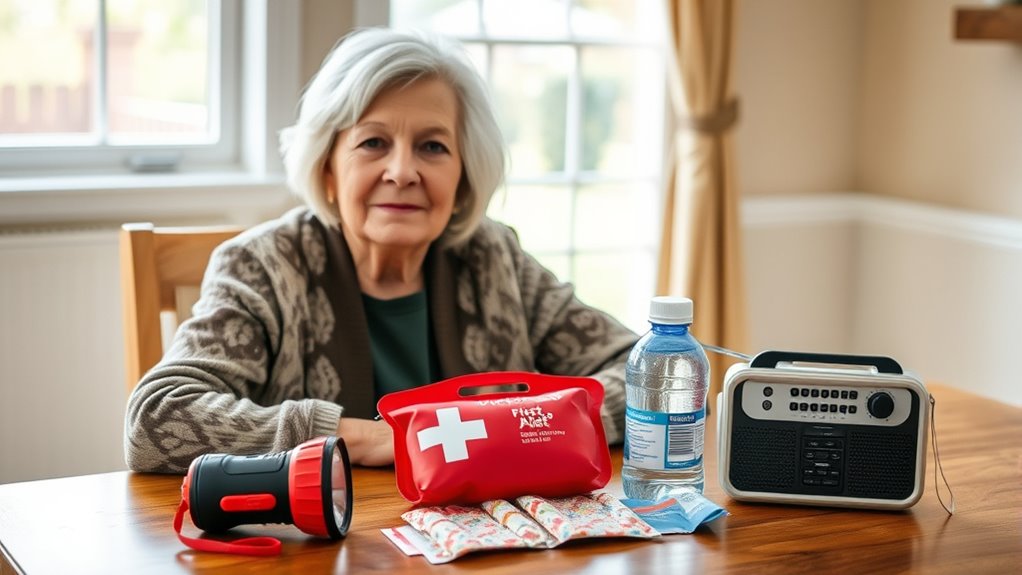
To prepare for emergencies, gather essential supplies like battery-powered or hand-crank flashlights, backup power sources, and easy-to-use communication devices. Keep a well-stocked first aid kit, necessary medications, non-perishable food, and water stored safely. Add personal comfort items, hygiene supplies, and safety equipment such as grab bars and mobility aids. Staying organized and updated guarantees you’re ready for any situation. Continue exploring to discover more detailed tips for keeping yourself safe and connected.
Key Takeaways
- Stock battery-powered flashlights, extra batteries, and reliable communication devices like satellite phones for emergencies.
- Keep organized medical kits, medications, and medical alert systems to ensure quick access and safety.
- Store non-perishable food, water, and hygiene essentials in accessible locations for sustained independence.
- Carry personal ID, emergency contacts, and keep records updated to facilitate quick assistance.
- Use user-friendly, durable safety tools such as hand-crank flashlights and portable generators to maintain power and safety.
Essential Medical Supplies and Medications
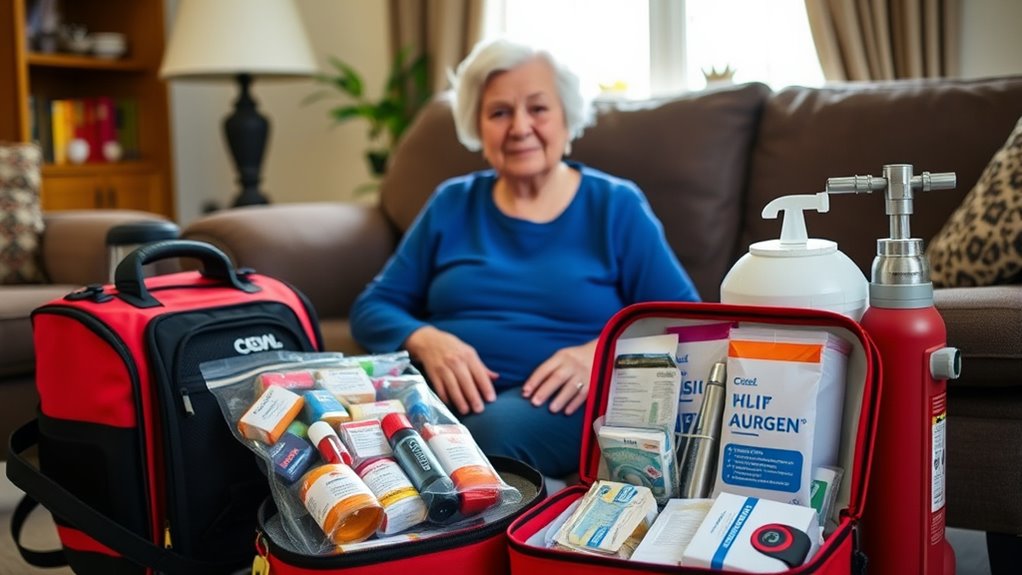
Having the right medical supplies and medications on hand is crucial for seniors during emergencies. Proper medication management ensures you can access all essential prescriptions quickly, preventing missed doses or adverse effects. Keep a well-organized kit with your medications, including copies of prescriptions and a list of allergies. Consider using medical alert systems that can notify caregivers or emergency services if you need help, especially if you’re alone. These systems often include wearable devices or buttons you can press to summon assistance immediately. Regularly review your supplies to replace expired items and update medication lists. Being prepared with these essentials helps you maintain your health and safety during unexpected events, giving you peace of mind when it matters most. Additionally, understanding medication safety and proper storage techniques can prevent accidental ingestion or spoilage of medications. Incorporating emergency contact information in your safety plan ensures help can be quickly summoned when needed. To further enhance your safety, familiarize yourself with home safety features and ensure your environment is as secure as possible. Maintaining awareness of wave and wind conditions can also be vital during certain emergencies, especially for outdoor or coastal environments.
Emergency Contact and Personal Identification Information

Keeping your emergency medical supplies organized is important, but equally essential is ensuring that your emergency contact and personal identification information are readily accessible. In a crisis, first responders need quick access to who to notify and verify your identity. You should carry a card or bracelet with critical details, including your emergency contact and personal identification information. Keep a list in a secure but accessible location, like your wallet or purse. Make sure your emergency contact is someone nearby or trusted who can provide fundamental information about your health and needs. Having this info handy can save valuable time and reduce stress during emergencies. Additionally, clear communication of your medical details can facilitate faster and more accurate assistance from emergency personnel. Regularly updating your personal information records ensures that responders have the most current details in case of an emergency. Incorporating Vetted safety tips can further enhance your preparedness and response during unexpected situations. Staying informed about first responder protocols can help you better understand how to cooperate effectively when help arrives. Being familiar with the proper documentation and procedures can improve the efficiency of your emergency response.
Battery-Powered and Hand-Crank Flashlights
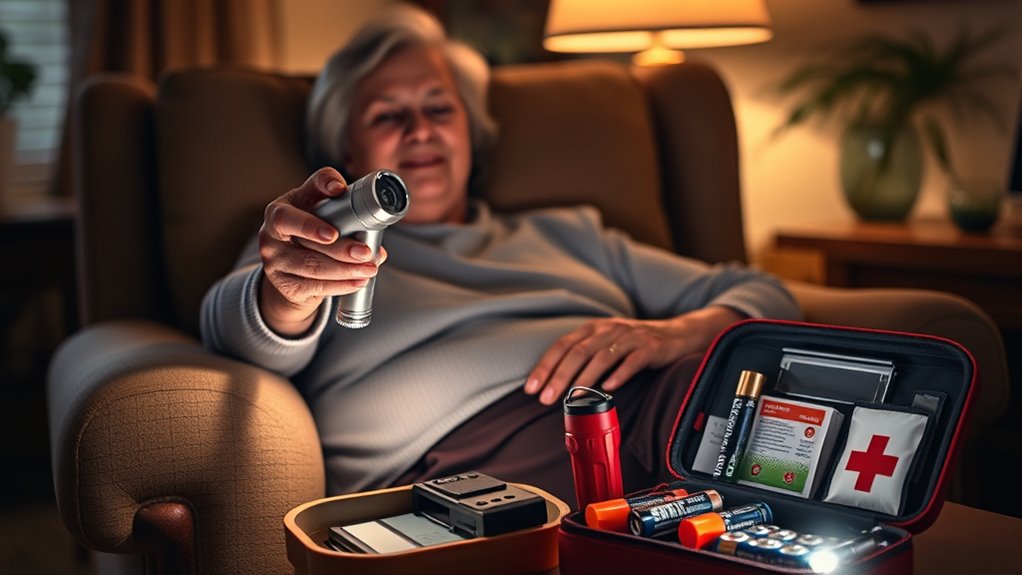
Battery-powered and hand-crank flashlights are essential for staying safe during power outages. They’re easy to operate and can be relied on to work when you need them most. Choosing models with long-lasting batteries ensures you won’t be left in the dark unexpectedly. For added peace of mind, select flashlights with safe installation practices to prevent accidents and ensure reliable operation. Additionally, selecting models that incorporate reliable power sources can help maintain consistent illumination during emergencies. Opting for flashlights with durable construction can also ensure they withstand rough handling during stressful situations, especially when considering ventilation considerations if the flashlight is used indoors for extended periods. Incorporating easy-to-use switches can further enhance safety and convenience during stressful moments.
Reliability During Power Outages
When the power goes out unexpectedly, relying on battery-powered or hand-crank flashlights makes certain you won’t be left in the dark. These reliable light sources are essential, especially if your home has a generator backup system. Keep flashlights in accessible spots, and test them regularly to verify they work. Consider using surge protectors for your electronic devices to prevent damage when power is restored. Having extra batteries on hand guarantees continuous illumination. A hand-crank flashlight can be used without batteries, offering independence during extended outages. Store these supplies in your emergency kit, so you’re prepared when needed. Proper fire safety measures and hygiene also help prevent infection risks that could complicate emergency situations. Additionally, choosing a reliable backup power source such as Battle Born Batteries can ensure sustained energy for critical devices. Robust energy-efficient solutions can greatly enhance your emergency preparedness. Incorporating emergency power planning into your safety strategy ensures you stay safe and confident, knowing you can navigate safely through any power failure.
Ease of Use Options
Are you looking for lighting options that are simple to operate during a power outage? Battery-powered and hand-crank flashlights are excellent choices because they’re easy to use and dependable. Many models feature voice-activated devices, allowing you to turn them on or off without fumbling in the dark. Look for flashlights with easy open packaging, so you can quickly access your light source without frustration. These options don’t require complicated setups or batteries that are hard to replace, making them ideal for seniors who prefer straightforward solutions. Hand-crank models are especially useful because they generate power without batteries, providing peace of mind if supplies are low. Overall, choosing user-friendly flashlights ensures you can quickly illuminate your space when it matters most. Understanding pool terminology and safety practices can help you discover new solutions that enhance safety and ease of use during emergencies. Incorporating reliable lighting sources into your emergency kit can make a significant difference in maintaining safety and independence. Additionally, selecting user-friendly emergency tools ensures that even those with limited strength or dexterity can operate them effectively.
Long-Lasting Power Source
Having a reliable power source is essential during emergencies, especially for seniors who depend on light to stay safe. Battery-powered and hand-crank flashlights ensure you can see without electricity. Consider devices with solar chargers that recharge during the day, providing ongoing power. Portable generators can also keep your lights and essential appliances running when the grid fails. You might also store extra batteries for quick replacements or choose models with long-lasting LED bulbs. Hand-crank options are great because they don’t rely on batteries and can be powered manually. Keep these tools accessible in your emergency kit to guarantee you’ll have light when you need it most. Staying prepared with versatile, long-lasting power sources helps you maintain safety and independence during outages. Proper wiring and regular maintenance of backup devices can further enhance reliability during power interruptions, especially for outdoor environments where access to electrical infrastructure may be limited.
First Aid Kit and Basic Healing Supplies
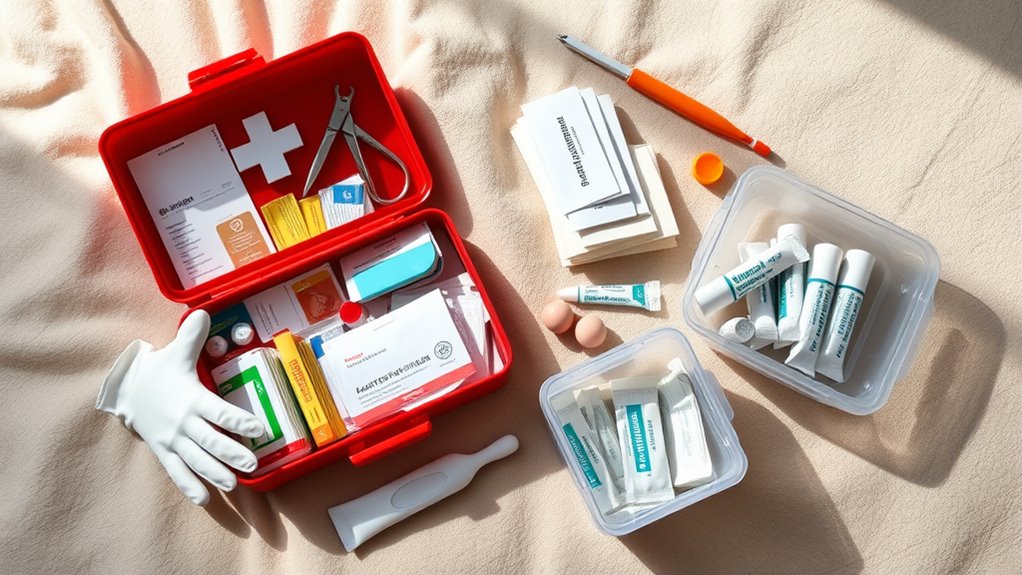
Having a well-stocked first aid kit is vital for emergencies, so you should include essential items like bandages, antiseptics, and pain relievers. Make sure you store these supplies in a accessible, organized container that’s easy to find when needed. Regularly check and replace supplies to keep your kit ready for any situation.
Essential First Aid Items
A well-stocked first aid kit is essential for seniors to respond quickly to minor injuries and emergencies. Having the right supplies on hand helps you manage situations until professional help arrives. Basic healing supplies should include items like antiseptic wipes, adhesive bandages, gauze pads, tweezers, and medical tape. These tools support your emergency response skills and enable prompt action. Additionally, consider including gloves, scissors, and antibiotic ointment. Taking first aid training improves your confidence and ability to handle injuries effectively. Remember, being prepared means you’re ready to act swiftly and safely, reducing complications and promoting quicker recovery. Keep your first aid supplies accessible and regularly check their condition to ensure everything is in working order when you need it most.
Proper Storage and Maintenance
To guarantee your first aid kit and basic healing supplies remain effective, it’s essential to store them properly and perform regular maintenance. Good storage organization ensures that items stay accessible and protected from damage or spoilage. Keep your supplies in a cool, dry place away from direct sunlight, and use clearly labeled containers or kits. Establish a maintenance schedule to check expiration dates, replace used or expired items, and verify that all supplies are in good condition. Regularly inspecting your first aid kit prevents missing or unusable items during emergencies. By keeping your supplies well-organized and maintaining them diligently, you ensure they’re reliable and ready when you need them most, providing peace of mind during unexpected situations.
Non-Perishable Food and Water Storage
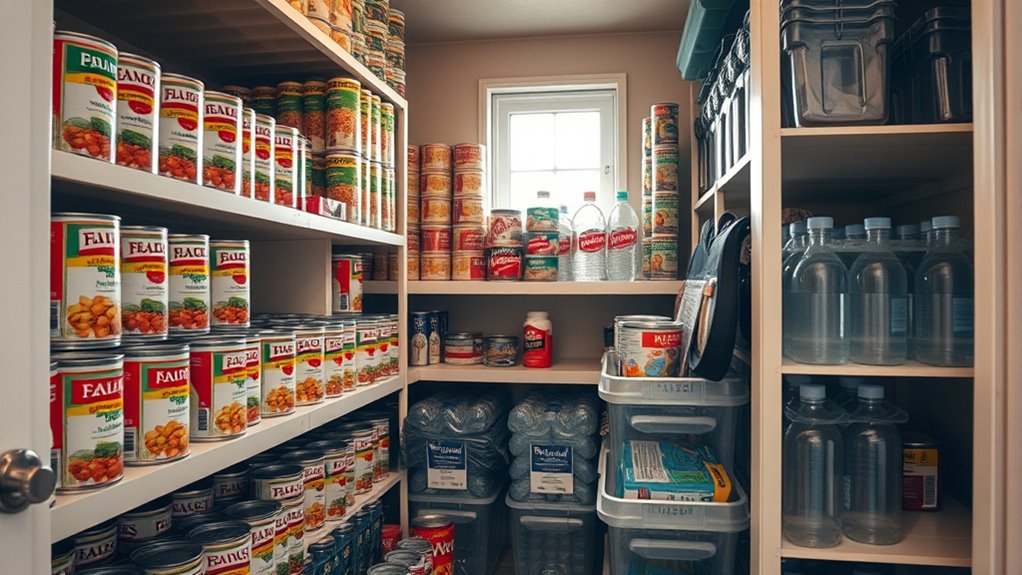
Why is it essential to have non-perishable food and water stored in emergency preparedness? In emergencies, access to fresh food and clean water may be limited. Having a supply ensures you can stay nourished and hydrated without relying on external help. Stocking canned goods provides long-lasting nutrition, while water containers keep water safe and portable. You’ll need enough supplies to last several days. Consider these items:
- Canned soups and vegetables
- Bottled water and water containers
- High-energy snacks like nuts and granola bars
- Ready-to-eat meals
- Manual can openers
Maintaining a stock of non-perishable food and water helps you stay safe and comfortable during emergencies, giving you peace of mind knowing your basic needs are covered when help isn’t immediately available.
Communication Devices and Backup Power Sources
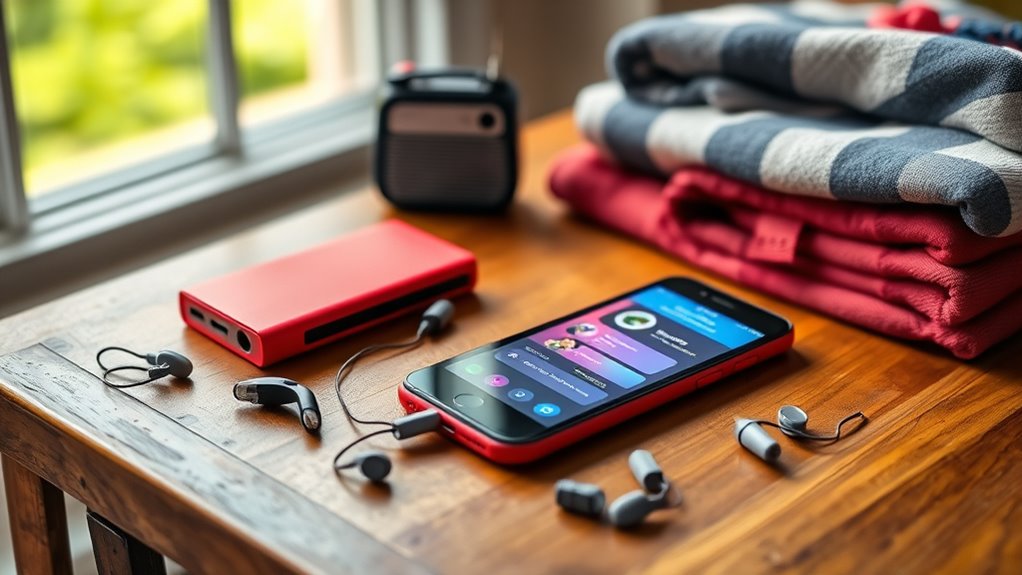
Having reliable communication devices and backup power sources is crucial during emergencies because they guarantee you can stay connected with loved ones and emergency services when power outages occur. Satellite phones are a smart choice, as they work even when traditional cell networks fail. Keep one charged and accessible in your emergency kit. Portable chargers are also essential; they can power your cell phone or other devices when electricity isn’t available. Regularly test and recharge these devices to ensure they’re ready when needed. Store backup batteries and extra chargers in a designated, easy-to-reach place. By preparing these tools, you guarantee continuous communication, reducing stress and helping you coordinate quickly during a crisis. Stay connected, stay safe, and always be ready.
Personal Comfort Items and Hygiene Supplies

During emergencies, maintaining personal comfort and hygiene is essential for your well-being and peace of mind. Having the right comfort accessories and hygiene essentials guarantees you stay clean and relaxed during stressful situations. Pack items like soft, breathable clothing and a small blanket to keep warm. Include personal care items such as gentle soap, hand sanitizer, and moist wipes for quick hygiene. Don’t forget simple comfort accessories like earplugs or a sleep mask for rest. A toothbrush, toothpaste, and facial tissues also help you stay fresh. These supplies help preserve your dignity and comfort when access to regular routines is disrupted. By preparing these essentials in advance, you ensure you’re ready to face emergencies with confidence and ease.
Safety Equipment and Home Modifications
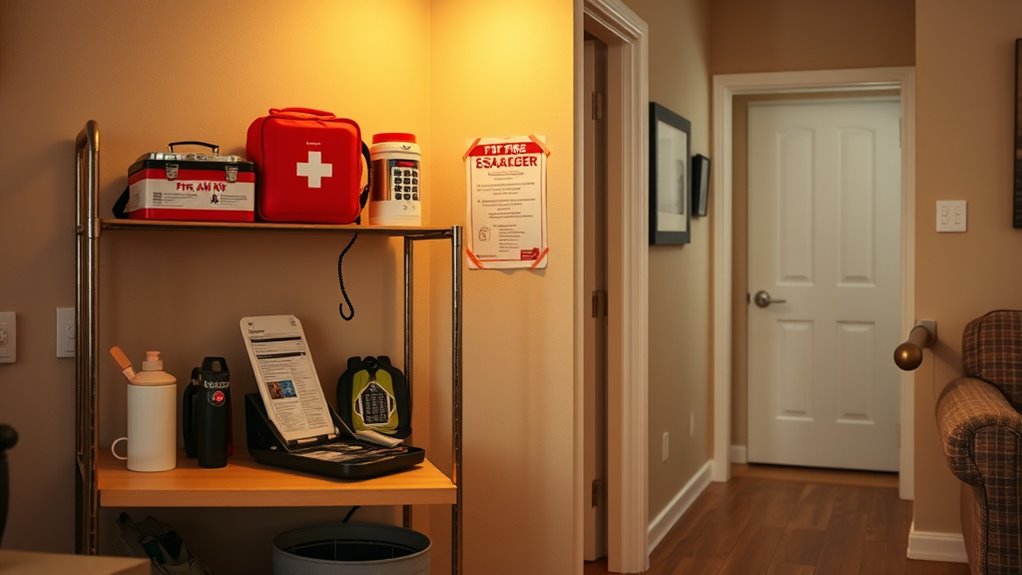
Ensuring your home is equipped with the right safety features can substantially reduce the risk of injury during emergencies. Start by evaluating your home safety and making necessary modifications, like installing grab bars in bathrooms and non-slip mats in key areas. These simple upgrades help prevent falls, a common concern for seniors. Incorporate mobility aids such as walkers or handrails to enhance stability and ease movement. Keep pathways clear of clutter to avoid tripping hazards. Consider adding emergency lighting in hallways and staircases to ensure visibility during power outages. By making these home safety improvements and using mobility aids effectively, you create a safer environment that supports independence and reduces emergency risks. Staying proactive in home modifications can make a significant difference during stressful situations.
Frequently Asked Questions
How Often Should Seniors Update Their Emergency Supplies?
You should review your emergency supplies at least every six months. Conduct a supply check to make certain everything is in good condition and stocks haven’t run low. During your stockpile review, replace expired items like food, water, and medications. Regular updates help you stay prepared for any emergency, giving you peace of mind. Set reminders on your calendar to stay consistent with these reviews and keep your safety supplies up to date.
What Are the Best Emergency Communication Apps for Seniors?
Sure, because everyone loves being glued to their phones during a crisis, right? The best emergency communication apps for seniors include those that easily connect with emergency contacts and provide quick alerts. Apps like Red Cross Emergency, Life360, and bSafe offer simple interfaces and reliable communication devices. They help you stay connected and informed, ensuring your loved ones can reach you fast when seconds count.
How Can Seniors Prevent Falls During Power Outages?
To prevent falls during power outages, you should focus on home safety by keeping walkways clear and well-lit using battery-operated lights. Use mobility aids like canes or walkers to maintain balance and stability. Regularly check your environment for hazards, secure loose rugs, and install handrails in key areas. Staying alert and prepared guarantees you move safely, even when the power’s out, reducing your fall risk effectively.
What Legal Documents Should Seniors Prepare for Emergencies?
Think of legal documentation as your safety net during emergency planning. You should prepare essential documents like a durable power of attorney, living will, and healthcare directives. These papers guarantee your wishes are respected and loved ones can act on your behalf if needed. Keep copies in a waterproof, easy-to-access spot, and inform trusted family members about their locations. This proactive step keeps your emergency planning thorough and your peace of mind intact.
How Do I Involve Seniors in Emergency Preparedness Planning?
You can involve seniors in emergency preparedness planning by encouraging family involvement and discussing safety education together. Sit down with them to create a plan, ask about their preferences, and review safety supplies. Make it an ongoing conversation, so they feel empowered and confident. Engaging them actively helps verify they’re prepared and comfortable with the plan, reducing stress during emergencies and fostering a sense of security.
Conclusion
Being prepared is like having a safety net that keeps you steady during life’s storms. When my neighbor faced a power outage, her stocked supplies and quick actions kept her safe and comfortable. Just as a sturdy bridge supports a crossing, having these essentials guarantees you can weather emergencies with confidence. Taking these steps now helps you stay secure and independent, turning uncertainty into peace of mind for you and your loved ones.