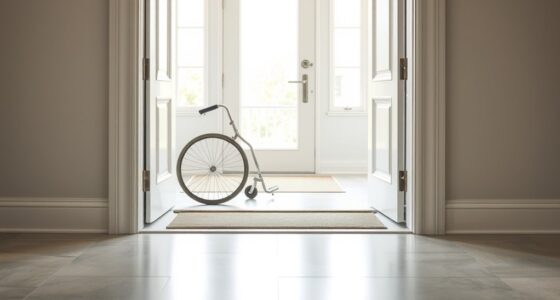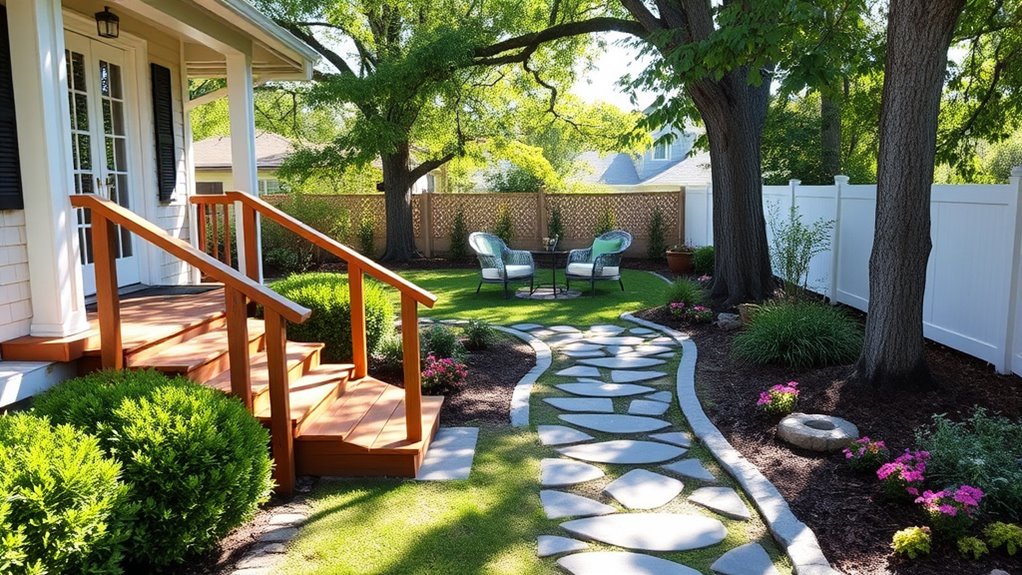

To make your yard and entrance senior-friendly, guarantee pathways are wide, firm, and slip-resistant, with smooth surfaces and clear edges for visibility. Add outdoor lighting along pathways and near entrance steps to prevent accidents, using energy-efficient fixtures that are easy to maintain. Incorporate handrails, low-profile edging, and unobstructed routes for added safety. Properly maintained and thoughtfully designed outdoor spaces help support independence and reduce fall risks—discover more ways to enhance safety around your home.
Key Takeaways
- Ensure pathways are wide, firm, non-slip, and free of obstacles, with clear edges for easy navigation.
- Install evenly spaced outdoor lighting to illuminate walkways, stairs, and entrance areas for better visibility.
- Incorporate safety features like handrails, low-profile edging, and smooth, even surfaces to prevent falls.
- Regularly inspect and maintain outdoor pathways and lighting to address hazards promptly.
- Use contrasting colors and materials to clearly define pathways and boundaries, aiding visibility and safety.
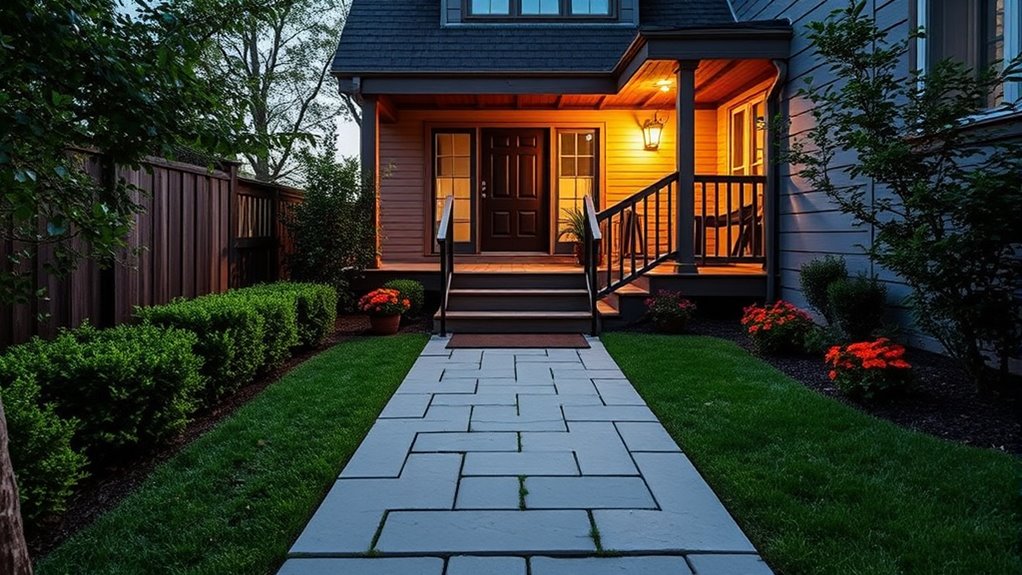
Creating a safe yard and entrance is fundamental for seniors to maintain independence and prevent accidents. When designing your outdoor space, focus on making pathways clear, smooth, and easy to navigate. Garden pathways are essential components of senior-friendly yards; they should be wide enough to accommodate mobility aids like walkers or wheelchairs. Use firm, non-slip materials such as textured concrete, brick, or paved stones to guarantee stability underfoot. Keep pathways straight whenever possible, avoiding sharp turns or uneven surfaces that could cause trips or falls. Regularly inspect and maintain your pathways, removing any debris, leaves, or obstructions that could pose hazards. Clearly defining the edges of your garden pathways with contrasting colors or materials can help seniors see their boundaries more easily, reducing the risk of stepping off the path and tripping. Additionally, make certain there’s sufficient space for easy maneuvering, especially if multiple people or mobility devices will use the area simultaneously. Incorporating outdoor safety features like handrails or low-profile edging can further enhance stability and confidence while walking. Outdoor lighting plays a pivotal role in enhancing safety during evening hours or early mornings. Proper lighting not only improves visibility but also deters intruders, making your yard more secure. Install pathway lights along garden pathways to illuminate potential hazards, ensuring they’re spaced evenly and at a height that provides ideal visibility without blinding. Consider using solar-powered or low-voltage lighting options, which are energy-efficient and easy to install. Motion-activated lights are especially helpful, as they turn on automatically when someone approaches, providing instant illumination without the need to fumble for switches. Make sure entrance areas are well-lit, with porch or step lights that brighten stairs and doorways. This minimizes the chance of missteps when entering or exiting the house. Keep outdoor lighting fixtures clean and in good working order, replacing bulbs promptly if they burn out.
Frequently Asked Questions
How Can I Prevent Falls on Uneven Outdoor Surfaces?
To prevent falls on uneven outdoor surfaces, you should apply non-slip coatings to walkways and steps to improve traction. Installing sturdy handrails along staircases and uneven paths offers extra support. Keep the yard clear of obstacles and ensure surfaces are level and well-maintained. Regularly check for cracks or loose paving stones, and address them promptly. These measures help create a safer outdoor environment, reducing the risk of falls.
What Are the Best Lighting Options for Senior Safety?
Think of your yard as a lighthouse guiding your way; solar lanterns and motion sensors are perfect for this. You should install solar lanterns along pathways to provide consistent, eco-friendly light. Motion sensors can activate brighter lights when needed, deterring falls and intruders. These options guarantee your outdoor space is safe and well-lit, giving you confidence to enjoy your yard without worries.
How Often Should Outdoor Safety Features Be Inspected?
You should inspect outdoor safety features monthly to guarantee they remain in good condition. Regular checks allow you to identify weatherproofing measures that may need reinforcement, especially after storms or harsh weather. Additionally, inspect for any wear or damage that could compromise emergency preparedness, like loose handrails or uneven surfaces. Staying vigilant helps prevent accidents, keeps your yard safe, and ensures all safety measures function properly when needed most.
Are There Specific Plants to Avoid Near Walkways?
You should avoid planting toxic plants and prickly bushes near walkways—these can surprise you with painful scratches or harmful effects. Imagine the risk lurking just a step away, especially for seniors. Sharp, thorny bushes or toxic plants like oleander or foxglove are best kept at a safe distance. Keeping walkways clear of these dangers guarantees safe, stress-free outdoor excursions, giving you peace of mind every time you step outside.
What Tools Can Assist Seniors in Yard Maintenance?
You can use gardening tools like ergonomic shovels, long-handled pruners, and lightweight rakes to make yard work easier. Assistive devices such as kneeling pads, garden carts, and height-adjustable workbenches help reduce strain and improve safety. These tools and devices enable you to maintain your yard effectively while minimizing risk of falls or injuries, ensuring you stay active and independent outdoors.
Conclusion
By making simple adjustments, your yard and entrance become as welcoming as a warm hug. Clear pathways, sturdy handrails, and good lighting turn your outdoor space into a safe haven where you can relax and enjoy. Think of your yard like a well-tended garden—beautiful and inviting, but also protected and secure. With these easy updates, you’ll create a safe outdoor environment that feels like a comforting embrace every time you step outside.