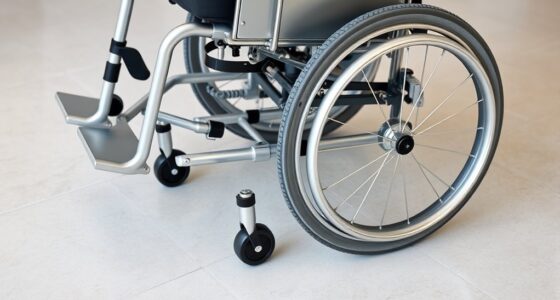
To decide whether your loved one needs a cane or a walker, assess their mobility, strength, and balance. Canes are great for mild support and narrow spaces, while walkers offer more stability for those who need help with balance or have difficulty walking. Consider their environment and personal preferences too. If they walk with confidence but stumble occasionally, a cane might suffice. For more detailed guidance, you’ll learn what trials and adjustments can help determine the best fit.
Key Takeaways
- Assess your loved one’s balance, stability, and mobility challenges during daily activities and walking tasks.
- Consider environmental factors like narrow doorways or cluttered spaces that may influence device choice.
- Evaluate safety features needed, such as non-slip tips, adjustable height, and locking brakes, for stability and security.
- Consult a healthcare professional for proper assessment, fitting, and personalized recommendations on mobility aids.
- Trial different devices to determine comfort, confidence, and suitability before making a final decision.
Understanding the Differences Between Canes and Walkers
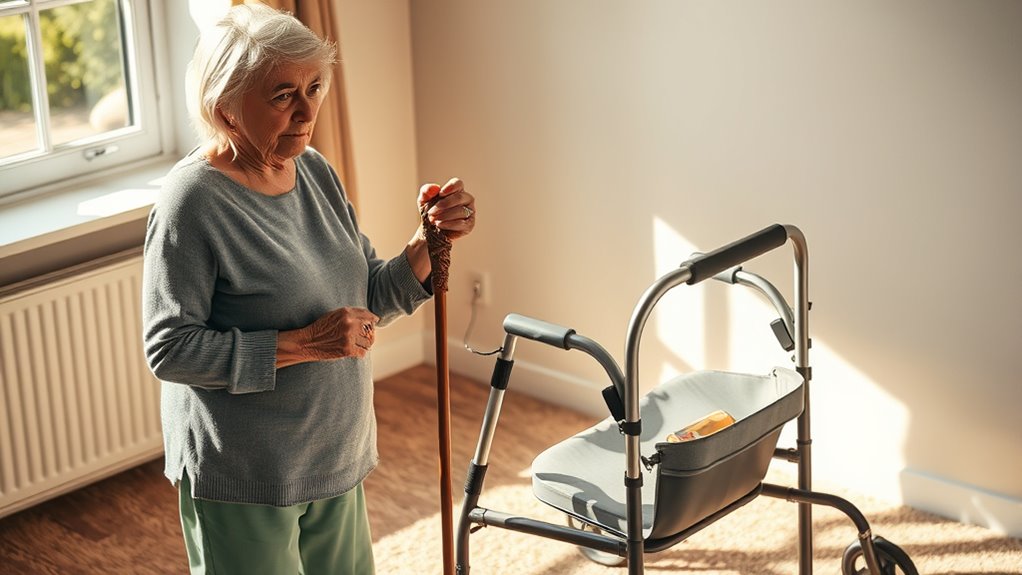
Have you ever wondered how to choose between a cane and a walker? The key differences lie in design aesthetics and cost considerations. Canes offer a sleek, lightweight look that blends easily with everyday styles, making them a discreet choice. Walkers, on the other hand, tend to be bulkier and more utilitarian, which can impact their visual appeal. When it comes to cost, canes are generally more affordable, especially basic models, making them accessible for many budgets. Walkers can be pricier due to their sturdiness and additional features like seats or storage. Your choice depends on your loved one’s preferences for appearance and budget constraints. Balancing these factors helps ensure they get a mobility aid that’s both functional and comfortable. Additionally, understanding projector technology can help you make more informed decisions when selecting aids with advanced features. Being aware of safety features in modern mobility aids can further enhance your loved one’s independence and security. For instance, some models incorporate stability enhancements that reduce the risk of falls and improve confidence during use.
Assessing Mobility Needs and Daily Activities

Understanding your loved one’s mobility needs and daily activities is essential to choosing the right aid. First, observe how they move throughout the day and which tasks pose challenges. Do they need support for short walks or help with standing? This observation can reveal patterns that indicate whether a mobility aid is appropriate. This insight guides assistive device selection, ensuring the chosen aid matches their safety and comfort levels. Consider their routine activities—are they mostly indoors or outdoors? Do they require stability or just balance support? Recognizing specific daily challenges can help tailor the selection process more effectively. Conducting a performance assessment can provide additional insights into their mobility limitations and strengths. Engaging a healthcare professional for a comprehensive mobility evaluation can further clarify their needs. Involving caregiver support during assessments can provide valuable perspectives on what works best. Accurately evaluating these factors helps prevent unnecessary strain and promotes independence. Integrating modern assistive devices into their daily routine can enhance their safety and quality of life. By understanding these details, you can select an aid that aligns with their specific needs, making daily life safer and more manageable.
Recognizing Signs That Indicate the Need for Support

You may notice mobility challenges becoming more frequent or noticeable during daily tasks. If balance or stability issues cause you to stumble or hesitate, it’s a clear sign you might need support. Recognizing these signs early helps you make informed decisions about using aids like a cane or walker. Additionally, observing physical recovery and how well you can perform aquatic exercises can provide further insight into your mobility needs. Monitoring home safety factors such as clutter or uneven surfaces can also help identify potential hazards that may necessitate mobility assistance. Staying informed about innovative assistive devices and how they incorporate nanotechnology can also enhance mobility solutions tailored to individual needs. For example, smart mobility aids equipped with sensors and adaptive features represent the latest advancements in assistive technology.
Mobility Challenges Emerge
As mobility begins to decline, subtle signs can indicate that support may soon be necessary. You might notice your loved one hesitating before walking or needing more time to complete daily tasks. They may start to prefer furniture with ergonomic design to reduce strain or show interest in accessories that match their aesthetic preferences. Watch for these signs:
- Frequent loss of balance or near falls
- Reluctance to stand or walk long distances
- Difficulty managing stairs or uneven surfaces
- Complaints of joint or muscle pain when moving
- Preference for supportive devices that blend seamlessly with their style
- The importance of supportive devices that offer both ergonomic benefits and aesthetic appeal can greatly enhance their quality of life.
Recognizing these cues early helps you choose the right support, ensuring comfort and safety. Supportive devices should align with their aesthetic preferences while providing ergonomic benefits to encourage independence.
Balance and Stability Issues
When subtle signs of declining mobility appear, balance and stability often become the first to be affected. You might notice your loved one hesitating before standing, using furniture for support, or wobbling when walking. These issues can be linked to weight management, as excess weight puts strain on joints and impacts balance. Medication management is also essential, since some medications cause dizziness or weakness. If these signs persist, it’s a clear indication that support might be needed to prevent falls. Early intervention with a cane or walker can improve stability and confidence. Keep a close eye on their gait and response to medication adjustments, and consult healthcare professionals to develop a plan that enhances safety and mobility. Recognizing early warning signs can help address mobility issues before they lead to serious injuries, especially when considering balance and stability as critical factors. Additionally, incorporating professional architectural solutions can help modify living spaces to better support mobility and reduce fall risks. Being aware of the mobility aids available can also empower families to choose the most appropriate support devices for their loved ones.
Evaluating Balance and Strength Levels
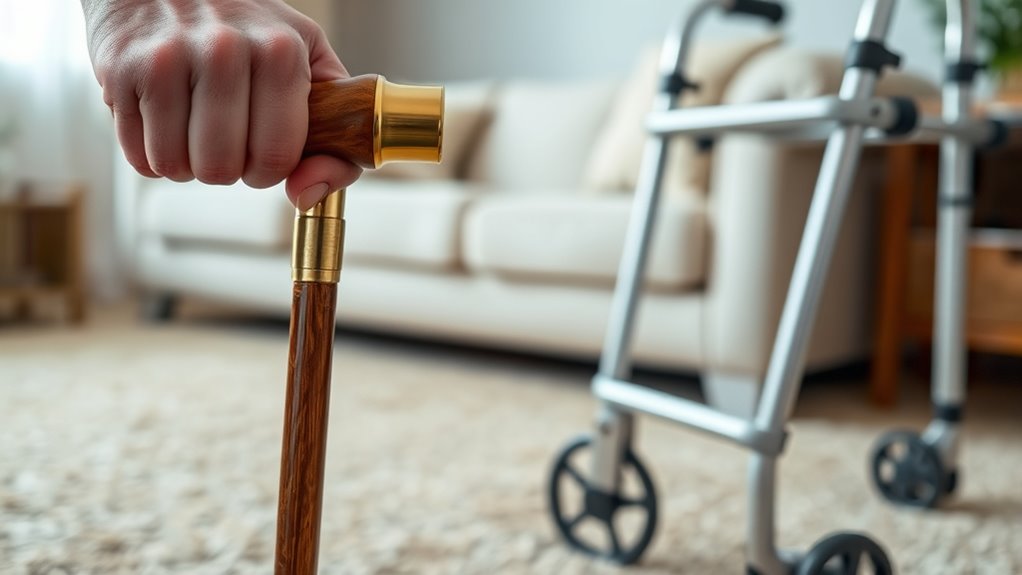
To determine if you need extra support, start by evaluating your gait to see how steady it is. Check your muscle strength to identify any areas of weakness, and pay attention to specific balance challenges you might face. These steps help you understand your overall stability and decide whether a cane or walker is right for you. Additionally, considering essential oils for balance may provide some support in improving your stability and confidence. Incorporating balance-enhancing practices into your routine can further contribute to your safety. Being aware of air quality factors in your environment can also influence your overall sense of balance and well-being. Recognizing physical therapy options tailored to your needs can optimize your mobility and confidence. Understanding your personality traits can help identify personal strengths and weaknesses that impact your confidence and coordination.
Assessing Steady Gait
How can you tell if someone has a steady gait? During a gait assessment, observe their walking pattern carefully. A steady gait means consistent steps, minimal swaying, and even weight transfer. Look for signs of imbalance or hesitation that may indicate the need for walking aids. Here are key points to contemplate:
- Confidence and fluidity in each step
- Ability to maintain balance without support
- Symmetry between left and right sides
- No excessive side-to-side movement
- Consistent step length and speed
- Recognizing Free Floating tendencies can help identify subtle balance issues that might not be immediately apparent. Understanding gelato flavors and their textures can also be a fun way to engage someone during assessments, as it encourages relaxed movement and comfort.
A gait assessment helps determine if a cane or walker is appropriate, based on their balance and strength levels. Proper evaluation ensures your loved one uses the right walking aid for safety and independence.
Checking Muscle Strength
Evaluating muscle strength is essential to understanding a person’s ability to maintain balance and stability while walking. You should observe muscle tone and how well they perform strength training exercises. Weak muscles can cause instability, increasing fall risk.
Assess their grip strength, leg power, and ability to stand from a seated position. Use this table to guide your observations:
| Muscle Group | Signs of Weakness |
|---|---|
| Leg muscles | Difficulty standing, shuffling |
| Core muscles | Poor posture, balance issues |
| Arm muscles | Struggling with support or lifting |
| Overall tone | Flaccidity or stiffness |
Regular strength training can improve muscle tone, boosting confidence and safety during mobility.
Identifying Balance Challenges
Evaluating balance challenges is a crucial step in determining a person’s mobility safety. You should observe how they maintain stability during daily activities and note any recent falls or near-falls. Consider that issues may stem from arthritis management problems or neurological assessments indicating nerve or brain function concerns. To identify balance challenges effectively, look for:
- Difficulty standing steadily or shifting weight
- Frequent loss of balance when turning or reaching
- Unsteady gait or shuffling steps
- Complaints of dizziness or vertigo
- Signs of muscle weakness or joint pain
Engaging in simple tests, like standing on one leg, can reveal deficits. Recognizing these signs helps determine whether a cane or walker is better suited, ensuring safety and independence.
Considering Safety Features and Stability
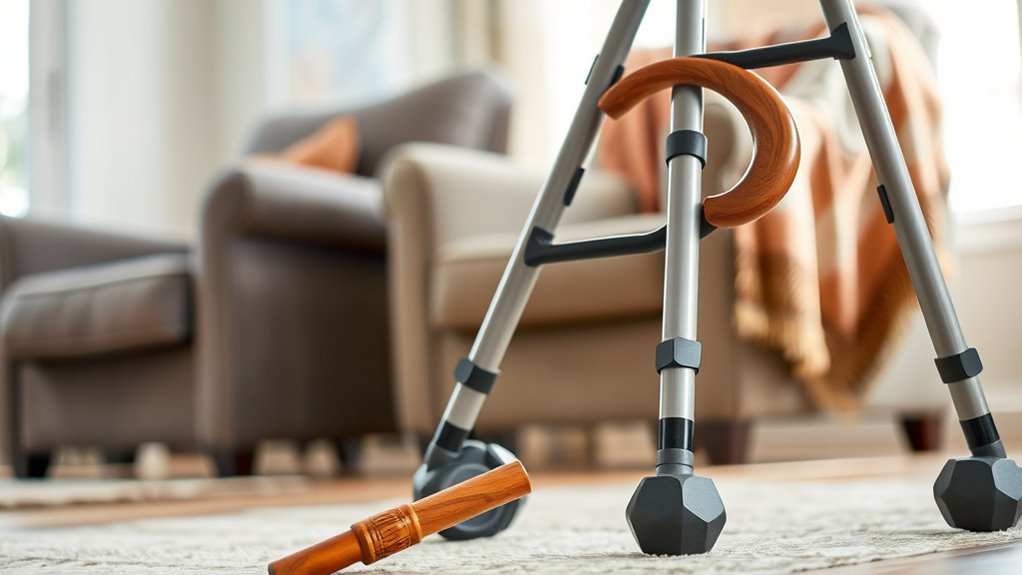
When choosing between a cane and a walker, safety features and stability are critical factors to weigh. You want to make sure your loved one feels secure and confident using their mobility aid. Walkers generally offer more stability with their broad base and supportive frame, reducing the risk of falls. Look for features like non-slip tips, adjustable height, and locking brakes to enhance safety. Aesthetic preferences might influence their comfort and willingness to use the device, so choose a style they find appealing. Cost considerations also matter; walkers tend to be more expensive but provide greater stability, while canes are more affordable and lightweight. Prioritizing safety features ensures your loved one maintains mobility without compromising their safety.
The Impact of Environment and Living Space
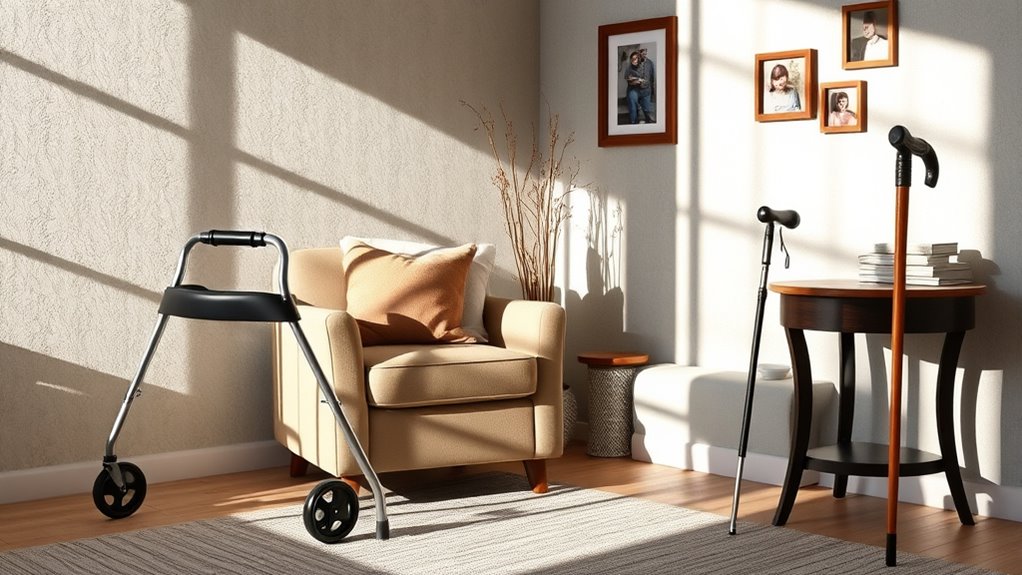
How your living space is arranged plays a crucial role in choosing between a cane and a walker. If your loved one’s environment has narrow doorways or cluttered pathways, a walker provides better stability. Conversely, a cane offers more flexibility in tight spaces. Consider necessary home modifications, such as removing rugs, installing grab bars, or widening doorways, to enhance safety. Think about caregiver support—if your loved one needs frequent help, a walker can reduce reliance on assistance. Also, evaluate furniture placement to ensure clear walking routes. Adequate lighting and accessible storage further prevent accidents. Ultimately, tailoring mobility aids to fit your loved one’s environment promotes independence and safety, making the living space an essential factor in the decision-making process.
Comfort and Ergonomics for Long-Term Use
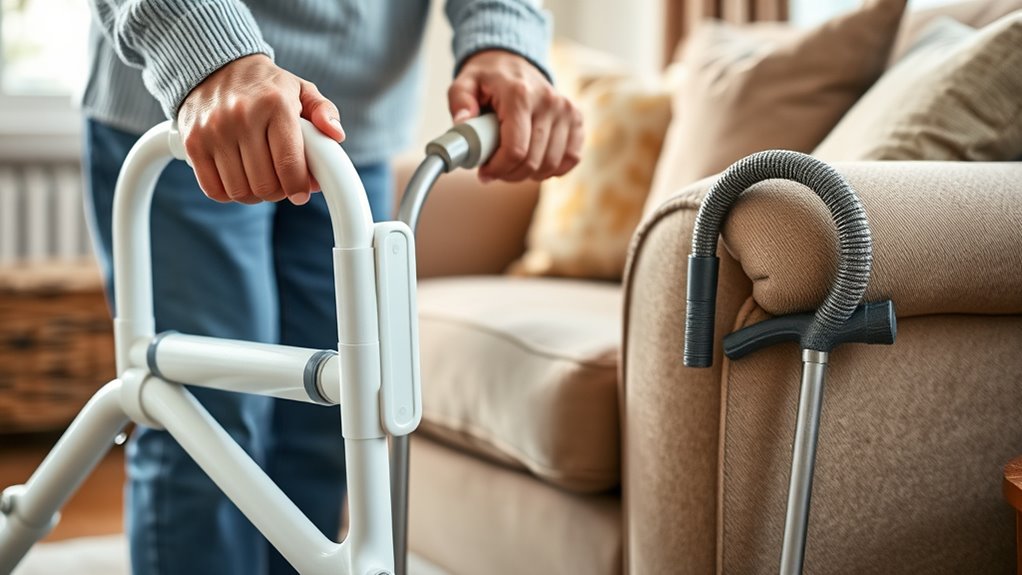
Choosing a mobility aid that’s comfortable and ergonomic can make a significant difference in your loved one’s daily life, especially over the long term. An ergonomic design guarantees proper posture and reduces fatigue, making movement easier and less painful. Comfort features like padded grips, adjustable height, and cushioned footrests enhance usability and encourage consistent use. When selecting between a cane or walker, consider these factors:
| Feature | Importance |
|---|---|
| Ergonomic design | Supports natural movement and posture |
| Comfort features | Minimize discomfort during extended use |
| Adjustability | Customizes fit for individual needs |
Focusing on ergonomics and comfort ensures your loved one stays active and independent longer.
Consulting Healthcare Professionals for Advice
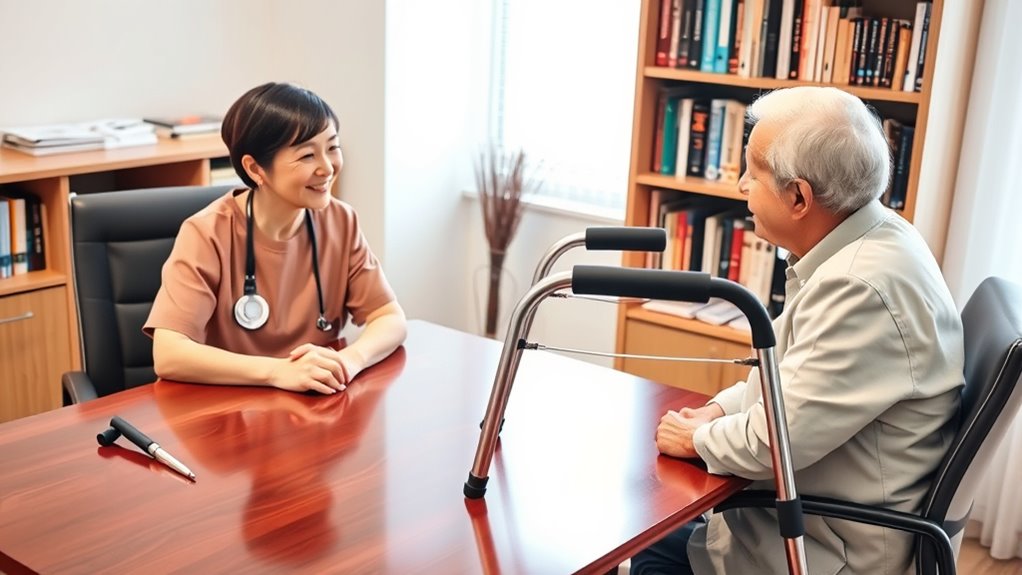
Talking to healthcare professionals helps you understand your specific mobility needs and assess any medical conditions that might affect your choice. Their advice guarantees you select the right device for your situation and long-term health. Don’t skip this step—expert guidance is key to making a safe, informed decision.
Assessing Medical Conditions
When determining whether a cane or walker is appropriate, consulting healthcare professionals is vital. They can evaluate your loved one’s medical conditions to recommend the best mobility aid. Factors such as balance issues, muscle strength, and joint stability all influence the decision. A healthcare provider will assess critical areas like stair navigation and indoor safety to prevent falls.
Consider asking your doctor about:
- Balance and coordination challenges
- Strength limitations affecting stair navigation
- Risk of falls indoors
- Need for additional support or stability
- Specific medical diagnoses impacting mobility
This professional insight ensures you choose an aid that aligns with their health needs, promoting safety and independence at home.
Understanding Mobility Needs
Understanding your loved one’s mobility needs requires expert advice from healthcare professionals who can evaluate their specific condition. They assess physical strength, balance, and walking patterns to determine the most suitable mobility aids. Healthcare providers consider assistive technology, such as specialized canes or walkers, to enhance safety and independence. By consulting professionals, you ensure your loved one receives tailored recommendations that match their unique challenges. Proper evaluation helps identify whether a simple cane suffices or if a walker provides better stability. Remember, choosing the right mobility aid isn’t just about convenience—it’s about safety and improving quality of life. Getting expert input ensures you make an informed decision that best supports your loved one’s mobility and overall well-being.
Professional Recommendations Importance
Choosing the right mobility aid isn’t something you should decide on alone. Consulting healthcare professionals ensures you get tailored advice, especially when considering prosthetic devices or wheelchair selection. They assess your loved one’s specific needs, mobility limitations, and safety concerns.
Key reasons to seek professional input include:
- Accurate assessment of mobility requirements
- Proper fitting for comfort and safety
- Recommendations on suitable prosthetic devices
- Guidance on selecting between a cane, walker, or wheelchair
- Expert advice on adjusting aids for daily use
Professionals help navigate options, preventing mismatched choices that could cause discomfort or falls. Their expertise guarantees your loved one receives the most appropriate, safe, and effective mobility aid, fostering independence and confidence.
Trial and Adjustment: Testing Different Options

Trying out different canes or walkers helps you find the best fit for your needs. When testing options, pay attention to ergonomic design, ensuring handles feel comfortable and reduce strain. Adjust the height to match your height precisely, which can prevent discomfort or injury. Don’t overlook aesthetic considerations; choosing a device that looks appealing can boost confidence and make usage feel less stigmatizing. Take your time to try various styles and features, like different grips or frame shapes. Walk around with each option to assess stability and ease of movement. Remember, what works well for someone else might not suit you, so be patient and open to experimentation. Trial and adjustment are key steps toward finding the most comfortable and functional mobility aid.
Supporting Independence While Ensuring Safety

After selecting and adjusting your mobility aid, focusing on how it supports your independence while keeping you safe is essential. Adaptive devices like canes and walkers enable you to move confidently without over-relying on caregiver assistance. To maximize safety and independence, consider:
- Properly fitting your device to your height and stride
- Using adaptive devices designed for specific needs
- Practicing safe walking techniques regularly
- Staying aware of your surroundings
- Seeking guidance from a healthcare professional
Balancing independence and safety involves understanding your limits and adapting your device accordingly. Remember, the right mobility aid enhances mobility without sacrificing security, empowering you to stay active while minimizing risk. With the right support, you can maintain your independence safely.
Frequently Asked Questions
How Do I Choose Between a Cane and a Walker for My Loved One?
You should choose a cane or walker based on your loved one’s mobility and balance needs. A cane offers more independence and is easier to maneuver, especially if ergonomic design and aesthetic options are priorities. A walker provides greater stability for those with significant mobility challenges. Consider their comfort, style preferences, and the environment they’ll use it in to make an informed decision that supports their safety and confidence.
Are There Specific Safety Standards I Should Look for in Mobility Aids?
You should look for mobility aids that meet durability standards and prioritize material safety. Check if the product complies with recognized safety certifications, ensuring it’s sturdy enough for daily use. Opt for aids made from high-quality, non-toxic materials that won’t pose health risks. Always verify that the device has passed safety tests, providing confidence that your loved one will stay safe and supported during mobility.
How Often Should Mobility Equipment Be Replaced or Upgraded?
Did you know that most mobility aids should be replaced every 3 to 5 years? Durability considerations play a key role in determining replacement frequency. You should regularly inspect your loved one’s equipment for signs of wear, such as cracks or loose parts. If you notice any issues, it’s time to upgrade. Staying proactive guarantees safety and comfort, so don’t wait too long before replacing or upgrading mobility equipment.
Can My Loved One Use Both a Cane and a Walker Interchangeably?
Yes, your loved one can use both a cane and a walker interchangeably, especially with dual mobility options and accessory choices. Switching between them allows for better support depending on the activity or environment. Dual mobility enables seamless use of both devices, giving flexibility. Accessory options, like grips or baskets, enhance comfort and convenience. Always guarantee proper fitting and consult a healthcare professional to determine when and how to switch effectively.
What Are the Costs Associated With Different Types of Mobility Aids?
The costs of mobility aids vary depending on the type. Insurance coverage can help reduce expenses, especially for high-quality or specialized devices. Basic canes are usually affordable, while walkers tend to cost more upfront. Keep in mind maintenance costs too, like replacing parts or batteries for powered aids. Research different options and check your insurance to find the most cost-effective solution that fits your loved one’s needs.
Conclusion
Choosing between a cane and a walker isn’t just about comfort—it’s about safety and independence. Believe it or not, studies show that the right support can markedly reduce fall risk and boost confidence. Trust your instincts and consult healthcare professionals to find the best fit. Remember, the right mobility aid isn’t a sign of weakness but a step toward maintaining your loved one’s dignity and freedom every day.