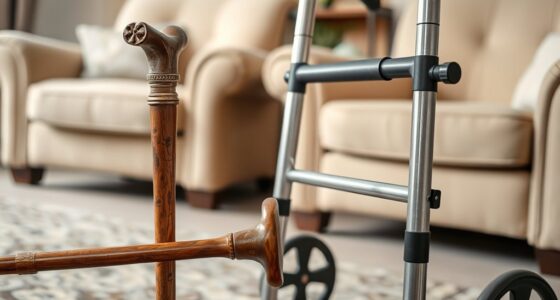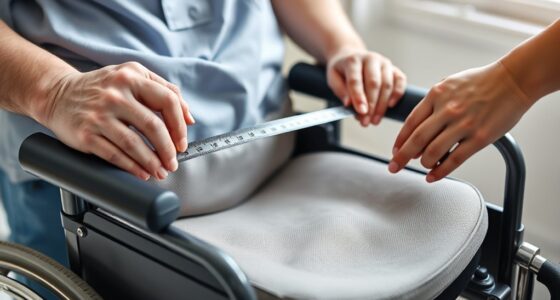

If you find yourself struggling to walk steadily, feeling unsteady even with a cane, or experiencing increased joint pain that makes balance worse, it’s time to contemplate a walker or rollator. When your mobility aid no longer keeps you safe or helps maintain your independence, signs like frequent falls, muscle fatigue, or difficulty performing daily activities indicate you need more support. Keep going to learn how to identify these signs early and stay safe.
Key Takeaways
- You’re experiencing frequent falls or near-misses despite using a cane.
- Your current mobility aid no longer provides enough stability or support.
- Walking becomes unsteady, unbalanced, or causes pain interfering with daily activities.
- You feel fatigued quickly or need multiple breaks when walking longer distances.
- Your safety or independence is compromised due to worsening gait or joint pain.

If you find yourself struggling to walk steadily or feeling unsteady on your feet, it might be time to contemplate a walker or rollator. These devices can provide essential support when balance issues start to interfere with your daily life. You may notice that your legs feel shaky or that you’re unable to keep your balance without assistance, making even simple tasks challenging. Perhaps you’ve also been experiencing joint pain, especially in your hips, knees, or ankles, which can further destabilize you and complicate walking. When joint pain becomes persistent, it often limits your mobility and increases the risk of falls, signaling that a more supportive device might be necessary.
Struggling to walk steadily? Consider a walker or rollator for added support and stability.
You might find yourself avoiding activities you once enjoyed because walking has become more difficult and uncomfortable. If you’re constantly worried about losing your balance or slipping, it’s a clear sign that your current mobility aids aren’t enough. A cane might have helped initially, but as your condition progresses, you could notice that it no longer provides enough stability. This is especially true if your balance issues are worsening or if joint pain makes standing or walking for extended periods painful. Using a walker or rollator can help distribute your weight evenly, reducing pressure on painful joints and giving you better control over your movements.
Another sign is fatigue. When your muscles tire quickly during walking, it’s often a result of compensating for instability or pain. This exhaustion can make walking even more hazardous. If you find yourself needing frequent breaks or feeling exhausted after short distances, it’s worth considering a walker or rollator. These devices offer extra support, helping you conserve energy and prevent falls. Additionally, if you notice that your gait feels unsteady or uneven, it indicates that your current aid isn’t enough to keep you safe. A walker or rollator can improve your posture and gait, providing a stable frame that encourages safer walking habits.
Ultimately, your safety should always come first. If balance issues, joint pain, fatigue, or unsteady gait are making everyday activities difficult or dangerous, it’s time to explore options beyond a cane. A properly chosen walker or rollator not only enhances stability but also restores a sense of independence, allowing you to move confidently and comfortably. Recognizing these signs early can prevent falls and injuries, giving you peace of mind and encouraging continued mobility.
Frequently Asked Questions
Can I Switch Between a Cane and a Walker Easily?
Yes, you can switch between a cane and a walker easily, especially if you use adjustable canes with customizable cane adjustments. Just make certain your walker has compatible accessories for comfort and stability. Before switching, check that each device suits your current needs, and consider consulting a healthcare professional for proper guidance. Adjusting the height and adding suitable walker accessories can make transitions smoother and safer for you.
Are Rollators Suitable for Outdoor Use Only?
Rollators are suitable for outdoor use, especially on urban terrain. They’re designed with weather resistance, so they handle rain or uneven surfaces better than indoor models. You can confidently take your rollator outside for errands, walks, or errands, knowing it’s built to withstand various weather conditions. Just make certain you choose one with sturdy wheels and good suspension for a smooth ride across different outdoor surfaces.
How Do I Choose the Right Size of Walker?
Did you know that choosing the correct walker size can reduce your fall risk by up to 50%? To find the right size, adjust the height so your elbows bend slightly at about a 15-20 degree angle. Check the weight capacity to make certain it supports your weight comfortably. A properly fitted walker provides stability, so take time to measure your height and consider the device’s weight limits before purchasing.
Is a Walker or Rollator Covered by Insurance?
Insurance coverage for walkers or rollators depends on your policy and medical necessity. You should check with your insurance provider to see if they include these devices, as many do when your healthcare provider documents the medical necessity. Usually, you’ll need a prescription from your doctor. Keep in mind that coverage varies, so contacting your insurer directly helps ensure you understand your benefits and any out-of-pocket costs.
What Safety Features Should I Look for in a Walker?
You should look for safety features like sturdy hand brakes, non-slip tips, and adjustable height settings in your mobility aids. These safety considerations help prevent falls and improve stability. A walker with a wide base and good weight capacity offers extra support, while features like reflective surfaces increase visibility. Prioritizing these safety features guarantees you stay secure and confident while using your walker, reducing the risk of accidents.
Conclusion
Just like a trusty ship needs a sturdy sail to navigate stormy seas, your body sometimes needs extra support to stay steady. If you notice signs that a cane isn’t enough, it’s like realizing your vessel needs a bigger sail to catch the wind. Embracing a walker or rollator isn’t giving up—it’s equipping yourself to sail smoothly through life’s challenges. Remember, the right support can turn turbulent waters into calm seas, guiding you safely forward.