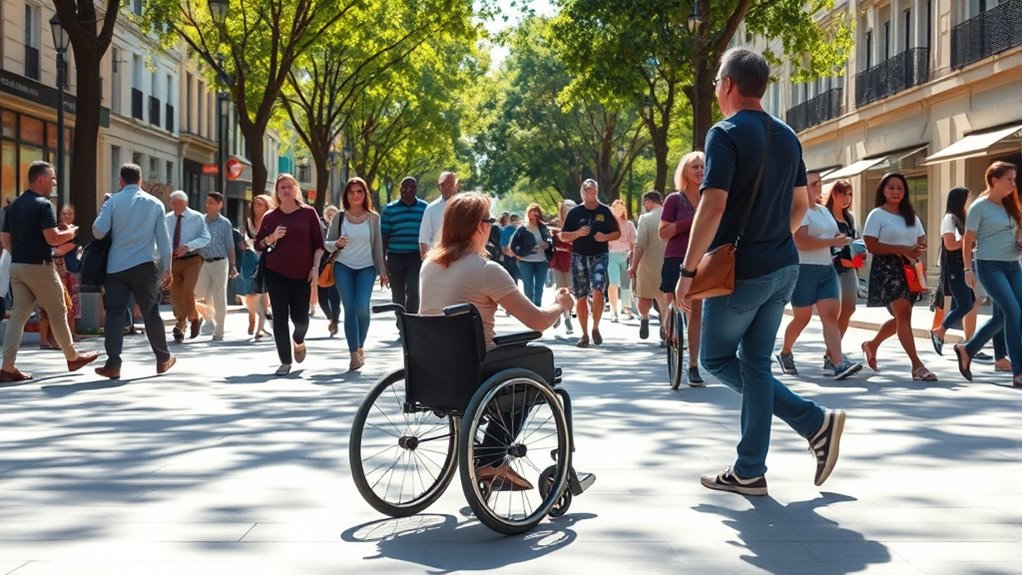

When maneuvering crowded places with your mobility aid, stay aware of your surroundings and move at a steady, comfortable pace. Politely ask others to make space with simple gestures like “excuse me” or gentle taps. Keep your aid close and stable to avoid accidents, and respect others’ personal space. Clear communication and patience help everyone feel comfortable. For more tips to navigate crowds confidently and respectfully, keep exploring helpful strategies.
Key Takeaways
- Politely ask others to move or step aside using gentle words or gestures when encountering tight spaces.
- Keep your mobility aid close and stable to prevent accidental bumps or falls.
- Communicate clearly with others by saying “excuse me” or tapping gently before navigating through crowds.
- Maintain awareness of your surroundings to avoid collisions and ensure safety for yourself and others.
- Be patient and respectful, advocating for accessible infrastructure if crowded environments hinder safe navigation.

Using mobility aids like canes, walkers, or wheelchairs can help people move comfortably and safely, but it’s important to remember that they’re essential tools for independence. When maneuvering crowded places, understanding how to interact respectfully with others and how the environment supports your mobility is vital. Accessible transportation options are designed to make travel easier, whether you’re using public transit, shuttles, or ride-sharing services. These systems often feature low-floor buses, designated spaces, and priority seating to ensure safety and comfort. Knowing your rights and available services can help you plan your journey better and reduce stress during travel.
Public space design plays a crucial role in making crowded areas more navigable for everyone, especially for those relying on mobility aids. Many cities are working to improve accessibility by installing curb cuts, tactile paving, and wider pathways, which make movement smoother and safer. When you’re in a busy area, look for designated zones or clear pathways that accommodate mobility devices. These features not only facilitate easier movement but also signal a community’s commitment to inclusivity. If the environment isn’t well-designed, it can be frustrating or even dangerous, so advocating for better infrastructure can lead to meaningful improvements. Additionally, accessible infrastructure can significantly enhance mobility and safety for all users.
In crowded settings, it’s helpful to be aware of your surroundings and to communicate clearly with others. When you’re approaching or passing through tight spaces, a polite “excuse me” or a gentle tap on someone’s arm can clarify your intentions and help prevent accidental collisions. As you maneuver through crowds, keep your mobility aid close and stable, and try to stay aware of nearby pedestrians who might not notice your presence. Maintaining a steady pace and avoiding sudden movements can also prevent mishaps.
Respecting others’ personal space is equally important. While it might seem obvious, it’s easy for others to unintentionally block your path or invade your space, especially in busy environments. If someone is blocking your way, a polite gesture or a brief request for space can often resolve the issue. Remember, many people may not be familiar with mobility aids or the needs of those who depend on them, so patience and clear communication go a long way.
Ultimately, maneuvering crowded places with mobility aids requires a mix of awareness, respectful interaction, and understanding of accessible infrastructure. By leveraging available transportation options and advocating for better public space design, you help create a more inclusive environment where everyone can move confidently and independently, regardless of the crowd.
Frequently Asked Questions
How Should I Inform Others About My Mobility Needs Politely?
You should use polite communication to inform others about your mobility needs by briefly explaining your situation when necessary. Employ clear disclosure strategies, like mentioning your mobility aid upfront or politely requesting assistance if needed. Remember, being open and respectful helps others understand your needs without feeling uncomfortable. Confidently communicating your needs ensures smoother interactions and makes traversing crowded places easier for everyone involved.
What Should I Do if Someone Blocks My Path Intentionally?
If someone blocks your path intentionally, handle the confrontation calmly and assertively. Politely ask them to move, explaining your situation if needed. Maintain patience and avoid escalating the situation; sometimes, a gentle reminder is all it takes. If they refuse, seek help from a nearby staff member or security. Your calm approach keeps the situation under control and shows respect while ensuring your needs are met.
Are There Specific Times to Avoid Crowded Public Transportation?
Peak hours are best to avoid if you want to steer clear of crowded public transportation, as these times tend to be the busiest. Off-peak times, typically early mornings or late evenings, offer a calmer experience. While peak hours flood buses and trains with passengers, off-peak times provide more space and comfort. Planning your travel around these periods helps you navigate more smoothly and comfortably, especially when managing mobility aids.
How Can I Discreetly Signal if I Need Assistance?
You can discreetly signal if you need assistance by using subtle cues like making eye contact with staff or fellow passengers, or gently raising your hand. Carrying a small card with a polite assistance request can also be effective, especially in noisy or crowded settings. Using these discreet signals helps communicate your needs respectfully without drawing unnecessary attention, ensuring you receive help comfortably when required.
What Are Best Practices for Sharing Space With Pedestrians in Tight Areas?
Think of maneuvering tight areas as dancing with a partner—you need smooth moves and awareness. To share space with pedestrians, always prioritize wheelchair accessibility by staying to the side and moving at a steady pace. Use pedestrian courtesy, like making eye contact and politely signaling your intentions, to prevent surprises. Keep your movements predictable, respect others’ space, and be patient—everyone’s goal is a harmonious flow through the crowd.
Conclusion
Moving through crowded spaces with a mobility aid can feel like dancing through a lively crowd. Remember, a little patience and kindness go a long way—think of it as sharing a friendly dance partner. By respecting others’ space and offering a smile, you help create a more harmonious environment for everyone. With these simple gestures, you’ll glide effortlessly through bustling places, turning challenges into moments of connection and understanding.