

To travel with a mobility scooter or wheelchair, you should start by checking airline, cruise, or transit policies and notifying your providers early. Disassemble and secure your device properly using padding and straps, and keep batteries in safe cases. During security checks, inform staff and follow procedures carefully. Upon arrival, reassemble and inspect your device for any damages. For a smooth journey and more detailed tips, continue exploring how to prepare, secure, and navigate various travel scenarios.
Key Takeaways
- Fully charge batteries, secure loose accessories, and clean your device before travel to prevent damage and ensure safety.
- Contact airlines or cruise lines early to confirm policies, assistance options, and necessary documentation.
- Disassemble parts carefully, protect components with padding, and label all parts for safe handling during transit.
- Follow security procedures: inform TSA, remove personal items, and secure your device properly during screening.
- After arrival, reassemble your mobility device, inspect for damage, and use accessible storage or assistance for onboard needs.
Preparing Your Mobility Device for Travel

Before you hit the road, it’s essential to thoroughly prepare your mobility device to guarantee safe and smooth travel. Start with battery maintenance: fully charge your scooter or wheelchair the night before your trip, and ensure the battery is in good condition. Check for any corrosion or loose connections, and consider bringing a spare if allowed. Proper storage solutions are equally important; remove or secure loose accessories and fold or disassemble parts as needed to prevent damage. Protect your device during transit by covering it with a protective cover or padding. Clean your mobility device to avoid dirt and debris affecting its performance. Additionally, understanding how to properly store and maintain your mobility device can extend its lifespan and ensure it remains safe to use during your travels. To maximize safety, familiarize yourself with transportation regulations for mobility devices specific to your travel mode. Being aware of device safety standards can help prevent issues during transit and ensure compliance with transportation policies. Regular inspection and maintenance can further prevent unexpected malfunctions and ensure optimal performance throughout your journey. Incorporating adaptive technology features can also enhance your travel experience by improving accessibility and comfort.
Checking Airline Policies and Booking Assistance
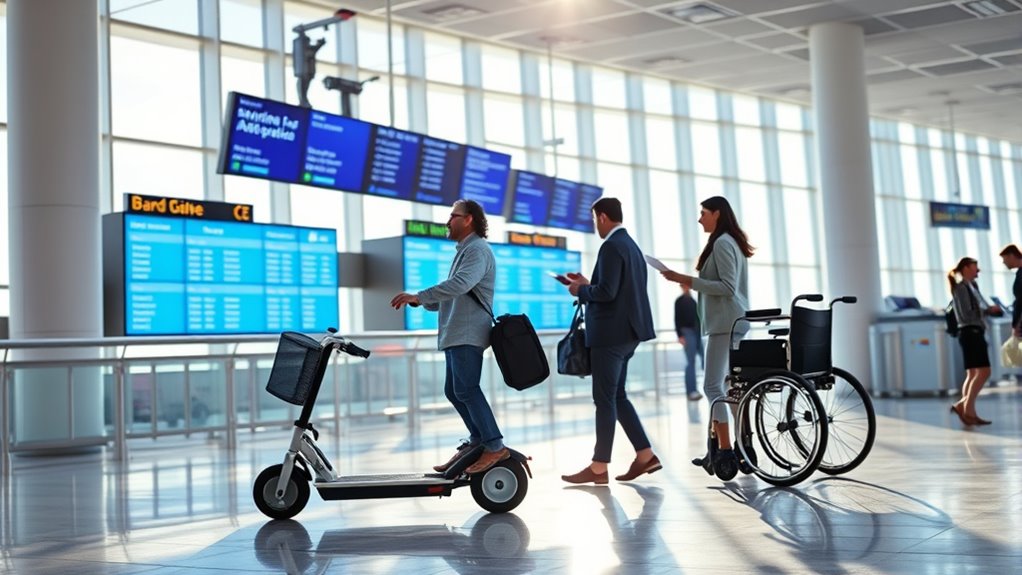
To guarantee a smooth travel experience, you need to carefully review airline policies regarding mobility devices and accessible travel. Start by checking the airline’s luggage policies for mobility scooters or wheelchairs, including size, weight limits, and whether they count as checked or carry-on items. Contact the airline early to request booking assistance; many offer specialized support for passengers with disabilities. Confirm how your device will be handled during check-in and boarding, and ask if you need to provide any documentation. Understanding these policies upfront helps prevent surprises at the airport. Additionally, inquire about any fees or restrictions related to your mobility device. Being proactive ensures that your travel plans go smoothly and that your device will be safely accommodated throughout your journey. Familiarizing yourself with electric power generation options can also be useful if you rely on portable energy sources during travel. Knowing your disability rights can empower you to advocate effectively during the booking process. Researching accessible transportation options in your destination can further ensure a seamless travel experience. It’s also helpful to review airline customer service policies for handling special assistance requests. Moreover, being aware of safety protocols related to mobility devices can help you prepare for any emergencies during travel.
Disassembling and Packaging Your Scooter or Wheelchair
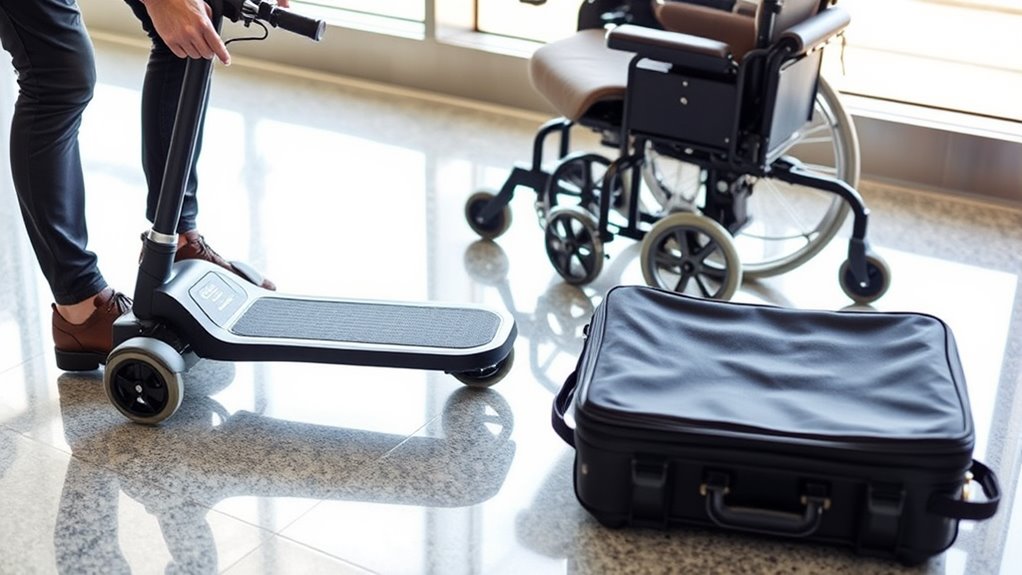
Disassembling and packaging your scooter or wheelchair properly guarantees it stays protected during travel. Start with the disassembling process, carefully removing parts like the seat, batteries, and handlebars. Follow your device’s manual to avoid damaging components. Use appropriate packaging materials such as bubble wrap, foam padding, and sturdy boxes to cushion each part. Secure loose elements to prevent shifting during transit. Wrap delicate parts separately and label all disassembled components clearly. Ensure batteries are stored according to airline regulations, often in protective cases. Proper packaging reduces the risk of damage and makes reassembling easier at your destination. Additionally, understanding the Free Floating concept helps optimize the arrangement of your packed items to prevent movement and potential damage. Taking the time to plan your packaging effectively can significantly improve your travel experience and safeguard your mobility device throughout your journey. Considering proper weight distribution can also help maintain stability during transit and minimize handling risks. Being aware of transportation regulations for mobility devices ensures compliance and a smoother check-in process. Incorporating smart packing techniques can further protect your device and streamline the unpacking process.
Securing Your Device During Transit

Securing your mobility device properly during transit is essential to guarantee it arrives in working condition. Use safety straps or securing straps to keep your scooter or wheelchair firmly in place. When loading onto a vehicle or aircraft, attach straps to anchor points designed for transportation. Tighten the straps enough to prevent movement but avoid damaging your device. Check that all wheels, arms, and parts are stable and won’t shift during transit. If you’re using a vehicle with a cargo area, secure the device to the floor or sidewalls to prevent sliding. Regularly inspect the straps for wear or slackness before and during transit. Incorporating proper device securing techniques can prevent damage and facilitate safe handling. Using appropriate securing methods ensures your device remains stable throughout your journey. Properly secured, your device will stay safe and intact, ready to serve you once you reach your destination. Incorporating field recording techniques can help you document your journey and any issues encountered during transit to ensure proper handling and care. Additionally, keeping a detailed inspection record can assist in identifying and addressing potential transport-related problems promptly. Implementing preventative maintenance before travel can also reduce the risk of issues arising during transit.
Navigating Security Checks at Airports
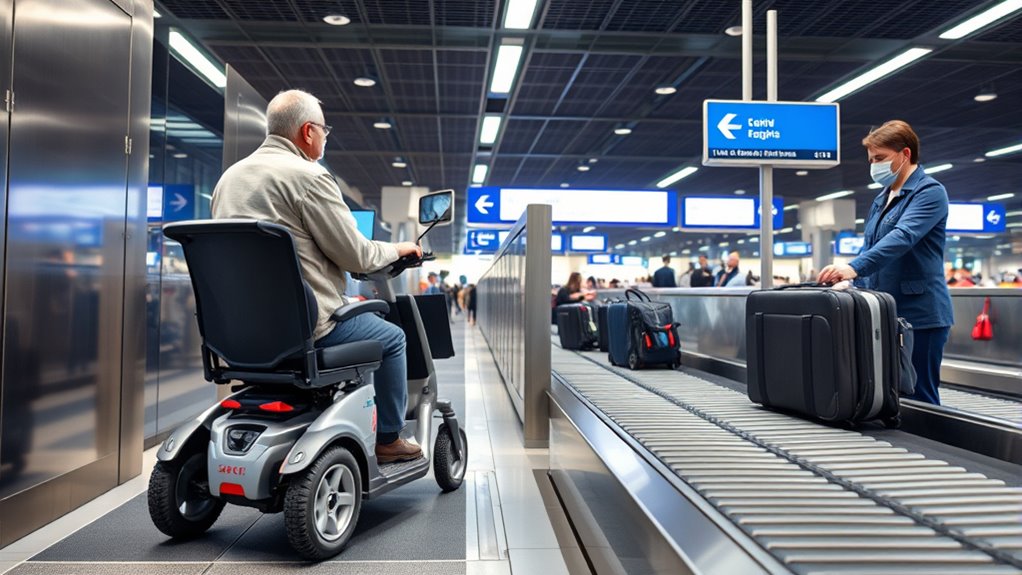
Managing security checks at airports can feel overwhelming, but being prepared makes the process smoother. Familiarize yourself with security procedures beforehand, so you know what to expect. Inform the TSA officers about your mobility device early in the process; they’re trained to assist. You can request airport assistance to help you through security, ensuring you’re guided efficiently. Be ready to remove any personal items from your pockets and follow instructions for screening your device, if needed. Keep your device’s batteries and accessories easily accessible. Staying aware of sauna heater safety and proper electrical wiring can help prevent mishaps during setup at home. Staying informed about electrical safety protocols can also contribute to a safer setup environment. Stay patient and polite, and don’t hesitate to ask for help if you need it. Proper planning and clear communication with airport staff will help you manage security checks with confidence and ease. Understanding security procedures can also help reduce stress during travel. Being aware of accessible travel tips ensures a smoother experience for travelers with mobility devices. Additionally, reviewing mobility device regulations can prevent unexpected delays or issues during the security process.
Transporting Your Device by Car or Rental Vehicle
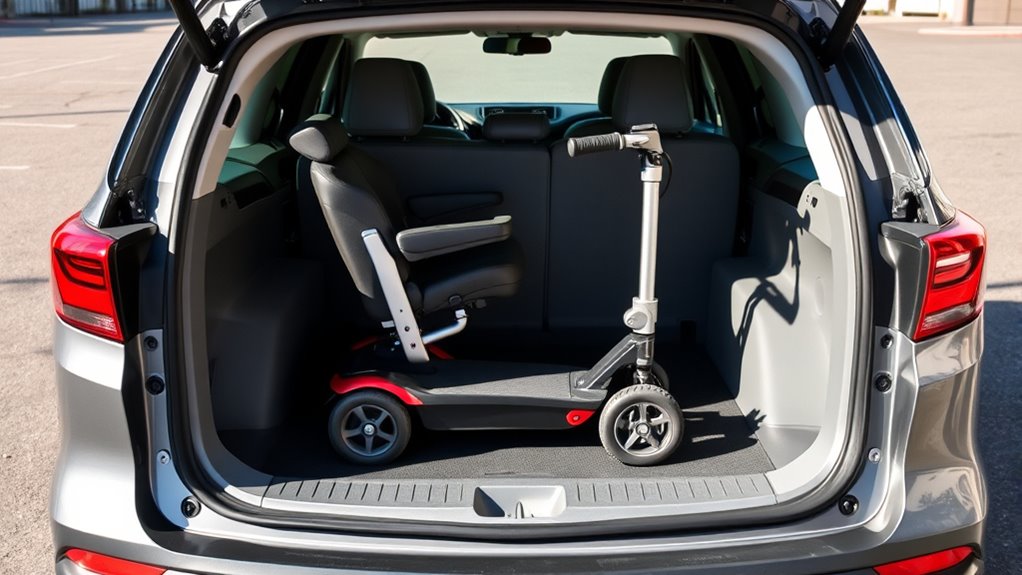
Transporting your mobility device safely in a car or rental vehicle requires careful planning to guarantee protection and convenience. Before your trip, verify the vehicle’s maintenance is up to date, especially brakes and securement points, to prevent any damage during transit. Use proper straps and securement systems designed for mobility devices to keep your device stable. It’s also wise to check your travel insurance coverage, confirming it includes protection for your mobility device in case of accidents or theft. Pack any essential accessories and tools you might need for adjustments or emergencies. By preparing your vehicle and understanding your insurance, you minimize risks and ensure your device remains in good condition throughout your journey. Proper planning makes traveling with your mobility device smoother and stress-free.
Planning for Accessibility on Cruises and Ships

When planning a cruise, make sure to explore accessible cabin options that meet your needs. Check if port accessibility services can assist you during embarkation and disembarkation, and confirm that onboard mobility assistance is available. Being proactive guarantees a smoother, more enjoyable sailing experience.
Accessible Cabin Options
Choosing the right accessible cabin can substantially enhance your cruise experience, ensuring comfort and independence throughout your journey. When selecting a cabin, look for accessible cabin options designed with your needs in mind. These cabins often feature wider doorways, lower beds, and accessible bathroom facilities to accommodate mobility devices comfortably. Pay attention to cabin design, ensuring there’s enough space to maneuver your scooter or wheelchair easily. Some ships offer cabins specifically tailored for accessibility, which include grab bars, roll-in showers, and lowered switches. Confirm that the cabin’s layout suits your mobility requirements before booking. By choosing an appropriately designed accessible cabin, you’ll enjoy greater comfort and independence, making your cruise more enjoyable and stress-free from start to finish.
Port Accessibility Services
Have you considered how accessible port facilities can impact your cruise experience? Port accessibility services are essential for smooth movements from ship to land. Before your trip, check if the port offers services like hotel accessibility assistance, ensuring your arrival and departure are hassle-free. Many ports provide trained staff to assist with boarding ramps, wheelchair lifts, and other mobility needs. Additionally, inquire about train station assistance if you plan to explore inland destinations. Knowing that support is available can ease concerns about steering unfamiliar, potentially crowded port areas. Planning ahead ensures you can fully enjoy your cruise without unexpected obstacles, making your journey more comfortable and stress-free. Being proactive about port accessibility helps you focus on the adventure that awaits beyond the ship.
Onboard Mobility Assistance
To guarantee a comfortable and enjoyable cruise experience, it’s important to plan for onboard mobility assistance in advance. Many ships offer assistive technology and support for mobility aids, but knowing what’s available helps you navigate easily. Contact the cruise line beforehand to confirm accessibility services, such as accessible cabins, elevators, and ramps. You can also arrange for staff assistance during boarding, disembarking, and daily activities.
Consider these key preparations:
- Confirm availability of mobility aids and assistive technology onboard
- Request accessible dining and entertainment options
- Verify elevator accessibility and location
- Arrange for assistance during shore excursions
- Pack extra batteries or chargers for electronic mobility aids
Ensuring Proper Storage and Charging During Travel
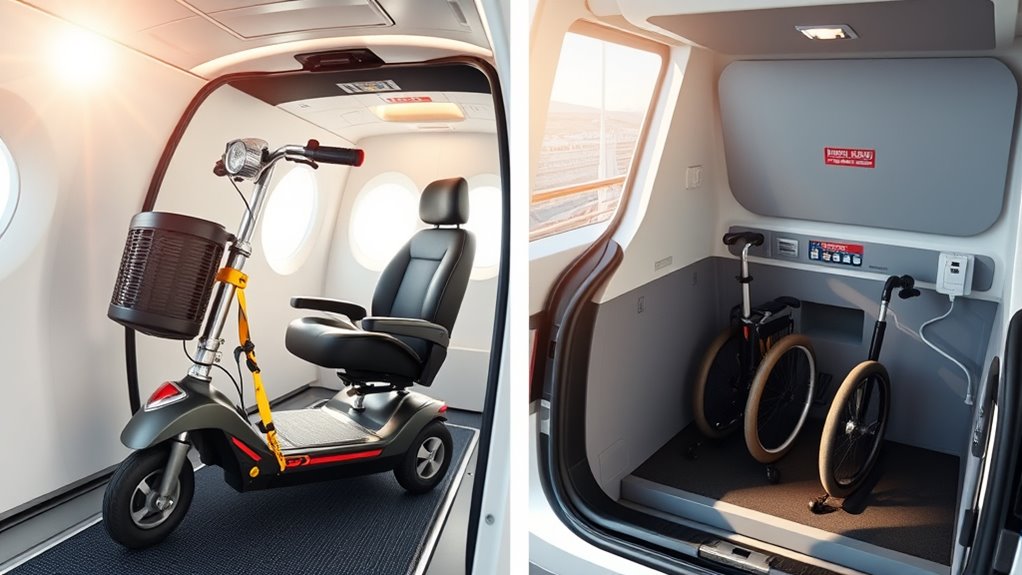
Make certain your mobility device is securely stored in designated compartments to prevent damage during travel. Always check that batteries are safe and properly maintained to avoid hazards. When you arrive, charge your device promptly to ensure it’s ready for your next outing.
Securing Storage Compartments
Are you confident that your mobility device’s storage compartments are secure before you hit the road? Ensuring proper secure storage keeps your device safe and prevents damage during travel. Check that all device compartments are firmly closed and locked to avoid accidental openings. Use straps or bouches to secure loose accessories or batteries, preventing movement that could cause harm. Label your compartments clearly, so handlers know which areas to handle with care. Keep chargers and spare parts in designated, secure spots to avoid misplacement. Regularly inspect the locks and latches for wear or damage.
- Verify all locks are engaged before departure
- Use additional straps for added security
- Keep a checklist of compartment contents
- Avoid overloading device compartments
- Store fragile items carefully and securely
Maintaining Battery Safety
Ensuring your mobility device’s batteries are stored and charged safely during travel helps prevent accidents and prolongs their lifespan. Proper battery maintenance requires following safety precautions, like avoiding overcharging and exposing batteries to extreme temperatures. When traveling, keep batteries in a cool, dry place, and disconnect them if possible. Visualize the storage options below:
| Storage Location | Temperature Range | Safety Precautions |
|---|---|---|
| Vehicle trunk or cabin | 20-25°C | Keep away from direct sunlight |
| Carry-on luggage | Room temperature | Avoid crushing or puncturing |
| Charging station | Stable, ventilated | Use manufacturer-approved chargers |
| Spare batteries | Cool, dry place | Store separately from metallic objects |
Following these tips guarantees your batteries remain safe, functional, and ready for your journey.
Charging Upon Arrival
When you arrive at your destination, it’s important to prioritize proper storage and charging of your mobility device’s batteries. Ensuring good battery maintenance helps extend battery life and keeps your device ready for use. Look for accessible charging stations ahead of time, especially on planes, cruises, or in hotels. Always inspect your batteries for any signs of damage before charging. Use the correct charger and avoid overcharging, which can harm the battery’s health. Keep batteries in a cool, dry place during storage. If possible, charge the batteries to full capacity before leaving or upon arrival to ensure maximum range. Proper charging upon arrival ensures your device remains reliable, safe, and ready for your next journey.
Tips for Managing Mobility Devices on Public Transit
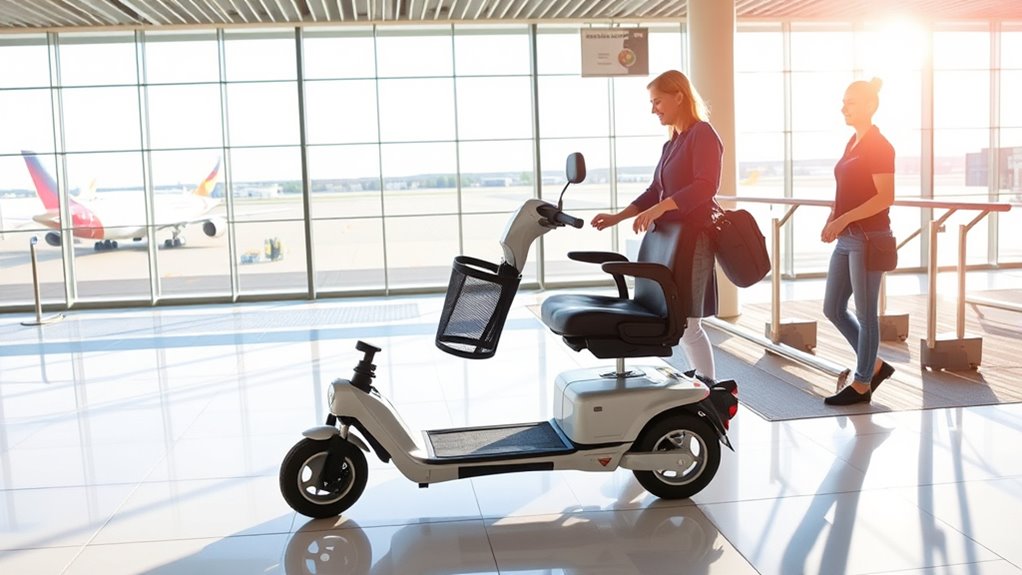
Managing mobility devices on public transit requires planning and awareness to guarantee a smooth experience. Familiarize yourself with public transit etiquette, such as offering priority seating information and being courteous to other passengers. Always check accessible transportation options ahead of time, including designated spaces for wheelchairs or scooters. When boarding, communicate clearly with transit staff or fellow passengers if needed, and secure your device properly to prevent movement during transit. Keep your device close enough for easy access, but be mindful of others’ space. Respect posted signs and instructions about priority areas. By being prepared and considerate, you ensure a safer, more comfortable ride for yourself and others. Staying informed about accessible features helps you navigate public transit confidently and efficiently.
Recovering and Reassembling Your Device Upon Arrival
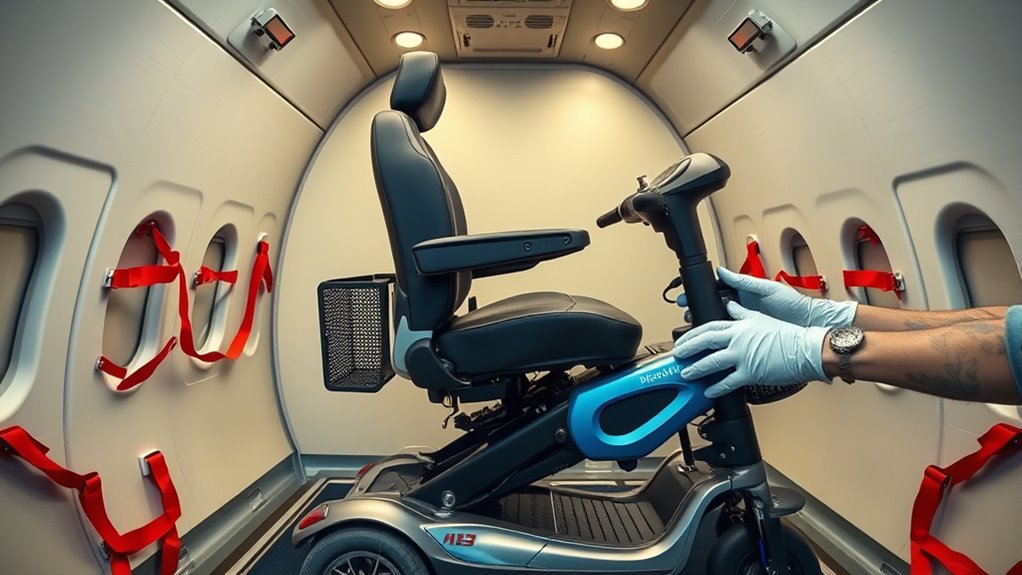
After arriving at your destination, it’s important to carefully recover and reassemble your mobility device to guarantee safety and functionality. Follow proper reassembly procedures to prevent damage and assure your device operates smoothly. Begin by inspecting your device for any signs of wear or damage sustained during travel. Check all connections, batteries, and moving parts, performing basic device maintenance as needed. Reattach any removed components securely, following manufacturer instructions. Test the device before use, ensuring it responds correctly and functions safely. Keep a toolkit or repair supplies handy for quick fixes. Regular device maintenance after travel helps prolong your device’s lifespan and maintains ideal performance. Proper reassembly not only guarantees safety but also assures your mobility device remains dependable during your trip.
Frequently Asked Questions
How Can I Ensure My Mobility Device Remains Undamaged During Long-Distance Travel?
To keep your mobility device undamaged during long-distance travel, regularly check your battery maintenance and guarantee it’s fully charged before departure. Secure your device properly, avoiding impacts, and protect it with a sturdy cover or padding. Keep it clean by wiping down surfaces to prevent dirt or corrosion. Handling it with care, securing it well, and performing routine checks will help prevent damage and ensure your device stays in top condition during your trip.
Are There Specific Accessories or Modifications Recommended for Air Travel Compatibility?
You should consider device modifications that meet airline regulations, guaranteeing your mobility device is compatible with air travel. Look for accessories like foldable or collapsible parts, and check if your device can be disassembled easily for transport. Always verify airline-specific policies beforehand, and carry any necessary documentation. These steps help prevent damage, streamline check-in, and ensure a smooth journey with your mobility device.
What Should I Do if My Mobility Device Malfunctions During Transit?
If your mobility device acts up mid-transit, don’t panic—think of it as a temporary hiccup on your journey. Quickly alert airline or transportation staff, who can guide you through emergency protocols. They’ll help you access device repairs or arrange for assistance. Keep essential contact info and spare parts handy. Staying calm and proactive guarantees you’re back on the move swiftly, turning a setback into just a bump in the road.
How Can I Arrange for On-Site Assistance at Airports or Ports?
You should request airport assistance or port support in advance to guarantee smooth travel. Contact your airline or cruise line early, specify your needs, and confirm arrangements. When arriving, arrive early to meet support staff who can help with wheelchair navigation, boarding, and logistics. Using these services guarantees you receive dedicated help, making your journey more comfortable and stress-free. Always double-check your arrangements before departure to avoid surprises.
Are There Insurance Options Available for Mobility Devices During Travel?
Yes, you can find insurance options that offer device protection for your mobility devices during travel. These plans often provide coverage for damage, theft, or loss, giving you peace of mind on your trip. Check with specialized travel insurance providers or your existing policy to verify your mobility scooter or wheelchair is covered. Always read the fine print to confirm the coverage details and any exclusions before purchasing.
Conclusion
Traveling with your mobility device is like steering your own ship through uncharted waters—you set the course, face the waves, and arrive at new horizons. With careful preparation and awareness, you turn obstacles into opportunities, transforming each journey into a voyage of independence. Your device becomes a trusted companion, symbolizing freedom and resilience. Embrace each trip as a voyage of discovery, where your determination navigates you toward new destinations and endless possibilities.