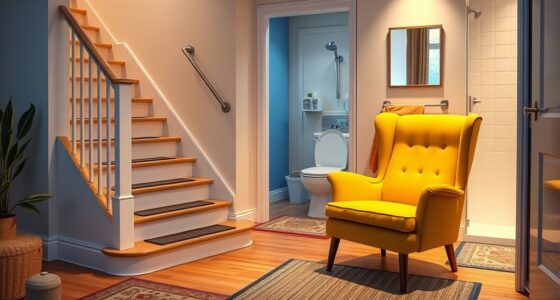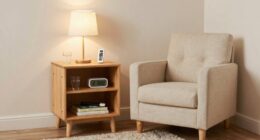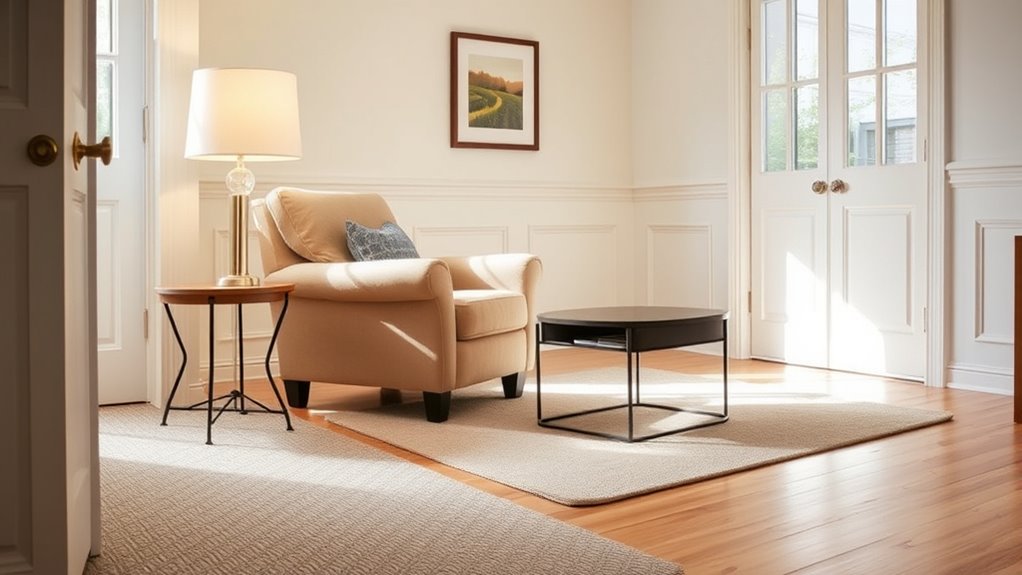

To prevent senior falls, start by evaluating your home for hazards and ensuring pathways are clear and wide, ideally at least 36 inches. Position furniture to create stable, accessible routes, and use non-slip pads or rugs with secure edges. Keep frequently used items nearby, and add safety devices like grab bars where needed. Proper lighting and strategic placement of seating also help. Continuing to explore these steps can help you make your space safer and more navigable.

Turn quiet afternoons into listening time
- Thousands of audiobooks, podcasts and originals
- Listen on your phone, tablet or Echo — also offline
- Cancel anytime
Key Takeaways
- Arrange furniture to create wide, unobstructed pathways of at least 36 inches for easy navigation.
- Secure or eliminate loose rugs and carpets to prevent tripping hazards.
- Position frequently used items within easy reach to reduce unnecessary movement and stretching.
- Use stable, non-slip furniture with broad bases and low centers of gravity to prevent tipping.
- Reassess and adjust furniture placement regularly to maintain clear routes and adapt to changing needs.
Products Worth Considering

Bowflex PR1000 Home Gym

OMRON Complete 2-in-1 Upper Arm Blood Pressure Monitor with EKG
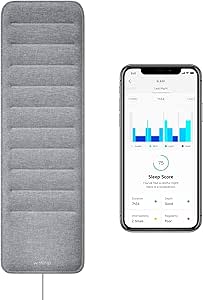
Withings Sleep Under-Mattress Sleep Tracking Pad
As an affiliate, we earn on qualifying purchases.
Assessing Key Areas for Safety Improvements
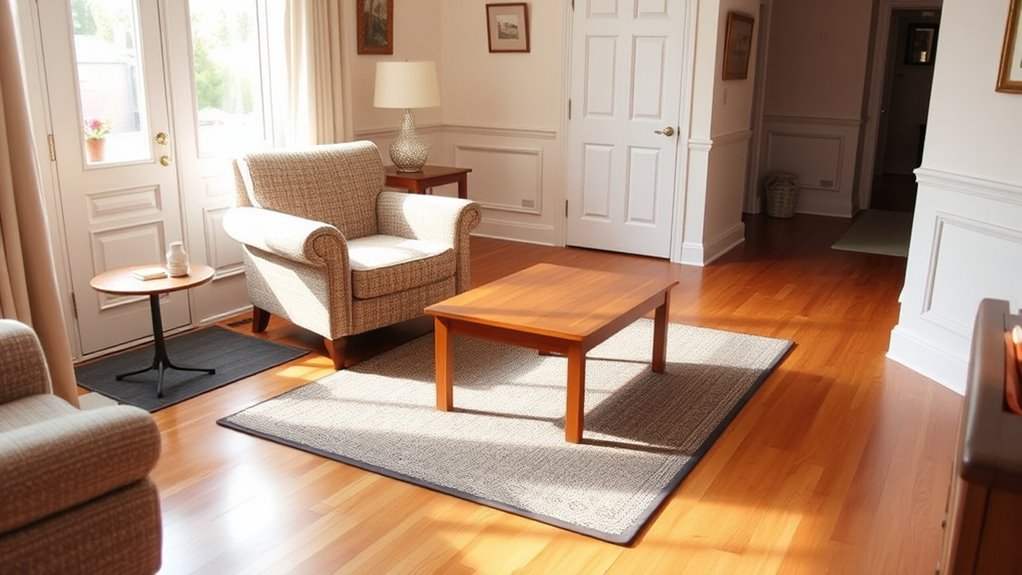
To effectively prevent falls, you need to identify the areas in your home where hazards are most likely to cause accidents. Start by examining high-traffic zones and cluttered spaces. Pay special attention to area rug placement, making sure rugs are secure and flat to prevent slips. Avoid rugs with curled edges or loose fibers that could cause tripping. Additionally, consider the placement of wall-mounted furniture; make certain it’s anchored properly so it won’t tip or fall if bumped. Clear pathways by removing unnecessary furniture or obstacles that could block your movement. Keep cords and small objects out of walkways. Incorporating home safety assessments can help identify hidden hazards you may overlook. Regularly checking for and addressing furniture stability issues ensures your environment remains safe. Conducting home hazard inspections periodically can reveal new risks as your needs and environment change. Utilizing landscaping techniques to create even surfaces and reduce uneven terrain can further minimize fall risks. Creating a well-lit environment and adding night lighting can also greatly improve visibility at night, reducing the chances of trips and falls. By evaluating these areas, you create a safer environment that minimizes the risk of falls and improves overall mobility within your home.
Creating Clear Pathways Throughout Living Spaces
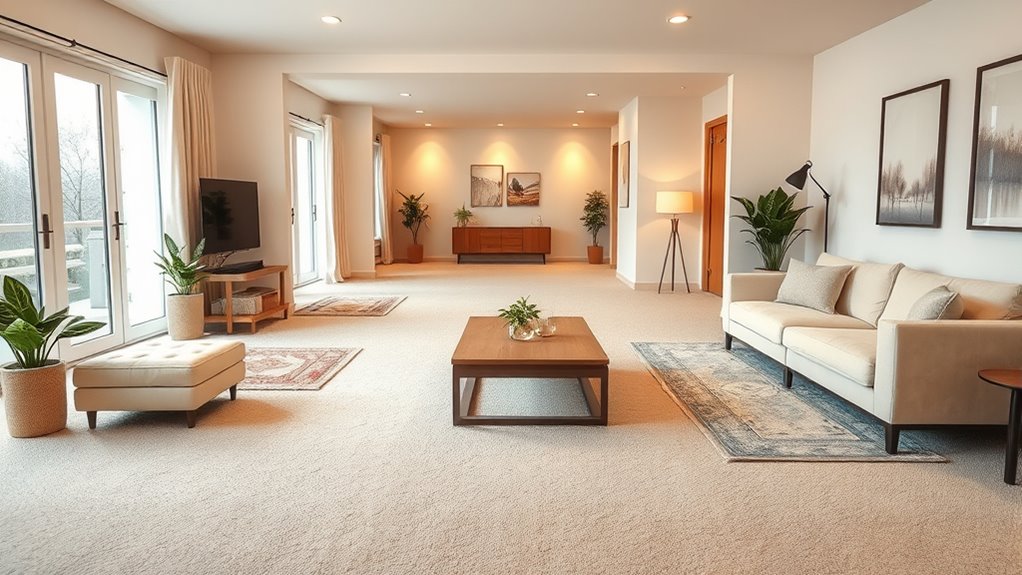
Creating clear pathways throughout living spaces helps reduce the risk of falls and makes your home safer and more accessible. Remove or secure throw rugs to prevent tripping hazards, as loose edges can cause slips. Avoid placing decorative accents like bulky vases or furniture in walkways, which can create obstacles. Keep furniture arranged to leave wide, open routes between rooms and key areas like the bathroom and kitchen. Clear clutter from hallways and doorways, and regularly check that pathways remain free of items after cleaning or rearranging. Good lighting also helps you see potential hazards. Incorporating fabric decorating markers can be a creative way to label or color-code pathways for added visibility. simple organizational systems can also help monitor and alert you to potential hazards in real-time. Regularly inspecting your home for potential trip hazards and promptly addressing them can further enhance safety. Using visual cues such as contrasting colors or tactile markers can improve pathway visibility, especially in low-light conditions. By maintaining unobstructed pathways, you create a safer environment where movement is easier and fall risks are minimized.
Choosing and Positioning Furniture for Stability
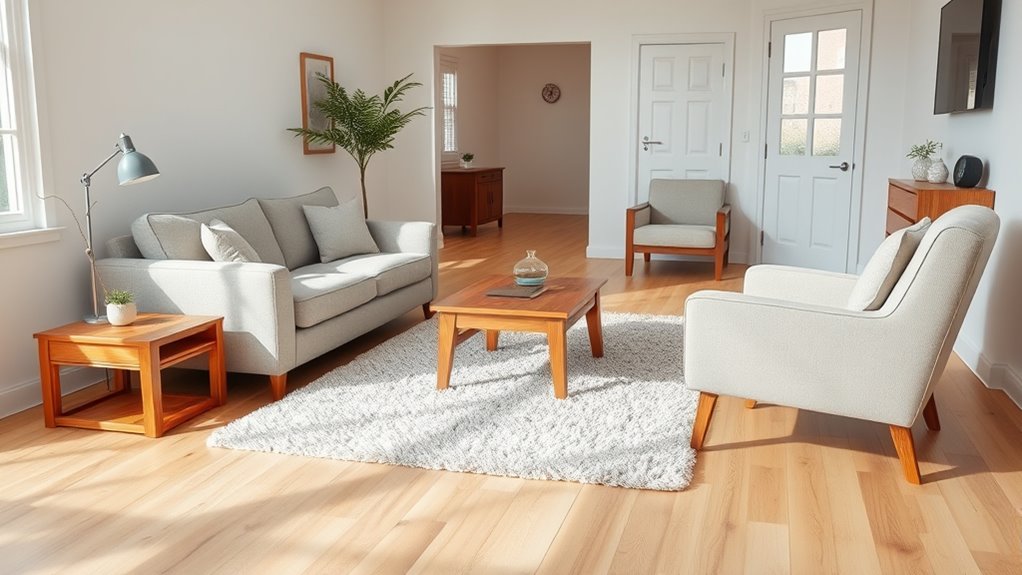
To reduce the risk of falls, choose furniture made from stable, non-slip materials that won’t shift easily. Position frequently used items close to entrances and main walkways for easy access. Keeping pathways clear guarantees you can move safely without tripping over obstacles or unstable furniture. Additionally, selecting furniture with easy-to-clean surfaces helps maintain a safe environment by minimizing hazards from spills or dirt. Incorporating visual cues can also assist seniors in navigating spaces more confidently, further preventing accidents. Being aware of global chaos like major outages reminds us of the importance of contingency planning for safety and continuity. Considering the horsepower of electric dirt bikes can inspire innovative solutions for mobility and safety enhancements in home environments. Paying attention to home safety principles ensures a comprehensive approach to fall prevention and overall well-being.
Select Stable Furniture Materials
Choosing stable furniture materials is essential for creating a safe environment for seniors. You want furniture that is sturdy, durable, and less likely to tip or break. When selecting pieces, consider furniture styles that prioritize stability, such as solid wood or metal frames. Avoid glass or lightweight materials that can easily shift. Incorporate decorative accents that enhance safety, like non-slip feet or rounded edges. To guarantee stability, look for furniture with broad bases and low centers of gravity. Here are some tips:
- Opt for furniture with non-slip pads or rubber feet
- Choose sturdy materials like hardwood or metal
- Avoid overly ornate or lightweight designs that may be unstable
- Understanding foster care payments can help families plan for safe, accessible furniture investments.
- Additionally, selecting furniture with low center of gravity helps prevent tipping over, increasing safety for seniors.
- Regularly inspecting and maintaining furniture ensures that it remains safe and stable over time.
- Considering furniture stability standards can further ensure that the furniture meets safety requirements and minimizes fall risks.
- Incorporating stability-enhancing features such as reinforced joints or anti-tip devices can also improve overall safety.
Place Items Near Entrances
Placing frequently used items near entrances helps create a safer and more accessible environment for seniors. Effective entranceway organization ensures essential items like keys, shoes, or walking aids are within easy reach, reducing the need to search or reach awkwardly. Keep pathways clear and ensure doorway accessibility by positioning furniture and storage close to the entrance, minimizing obstacles. This setup allows seniors to move smoothly when entering or leaving, decreasing the risk of trips and falls. Use low-profile storage or hooks for everyday items so they’re visible and accessible without cluttering the space. Proper placement of these items not only enhances safety but also promotes independence, making daily routines easier and reducing hazards at key *passage* points in the home. Proper placement of furniture and accessories is essential for creating a safe and navigable environment. Additionally, choosing ergonomic and supportive furniture can further reduce strain and prevent falls in frequently used areas. Incorporating home safety assessments can help identify specific risks and optimize furniture placement for maximum safety. Regularly reviewing and adjusting the arrangement based on vetted wave and wind considerations can also help maintain a secure environment.
Ensure Clear Pathways
Ensuring clear pathways in your home is essential for preventing falls among seniors. Remove clutter and keep walkways wide enough for easy navigation. Be mindful of area rugs, which can be tripping hazards if not secured or if they slide. Avoid placing decorative accents in high-traffic areas that could obstruct movement. Instead, focus on furniture placement that creates open, unobstructed routes. Consider these tips:
- Use non-slip pads under area rugs to prevent slipping
- Arrange furniture to keep main pathways at least 36 inches wide
- Limit decorative accents in hallways and walkways to avoid obstacles
Ensuring Proper Lighting to Avoid Obstacles
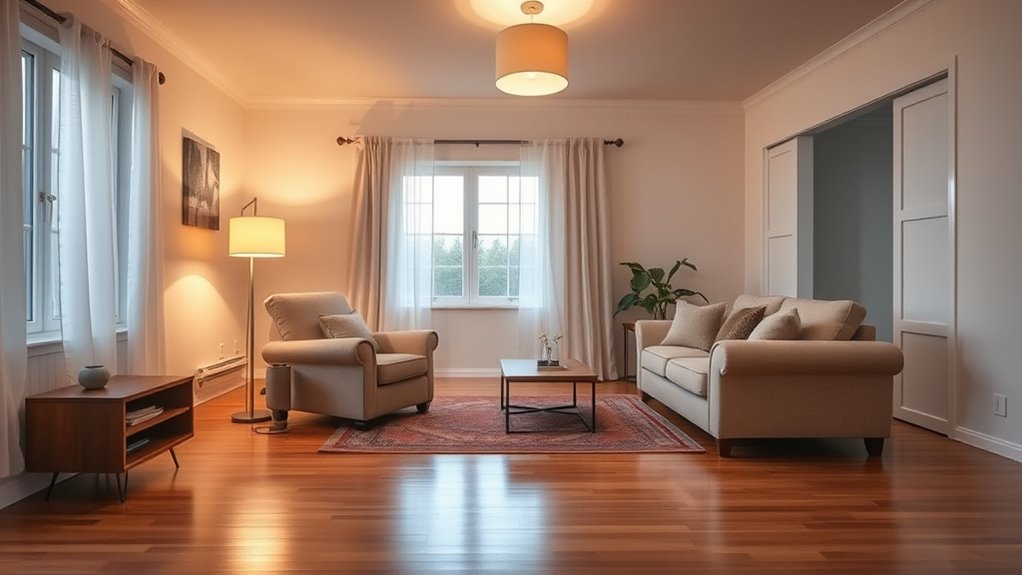
Since poor lighting can create shadows and hide obstacles, it’s essential to make sure your space is well-lit. Proper task lighting helps illuminate key areas like stairways, hallways, and corners, reducing the risk of tripping. Use bright, focused lights at eye level or on specific tasks to enhance visibility. Shadow reduction is also vital; avoid placing lights behind objects that cast dark areas. Consider installing adjustable fixtures or using multiple light sources to eliminate dark spots. Keep light bulbs fresh and replace any that flicker or dim. Ensuring adequate lighting creates a safer environment by making hazards more visible and minimizing shadows, helping you or your loved ones navigate spaces confidently and safely.
Arranging Seating to Promote Ease of Movement
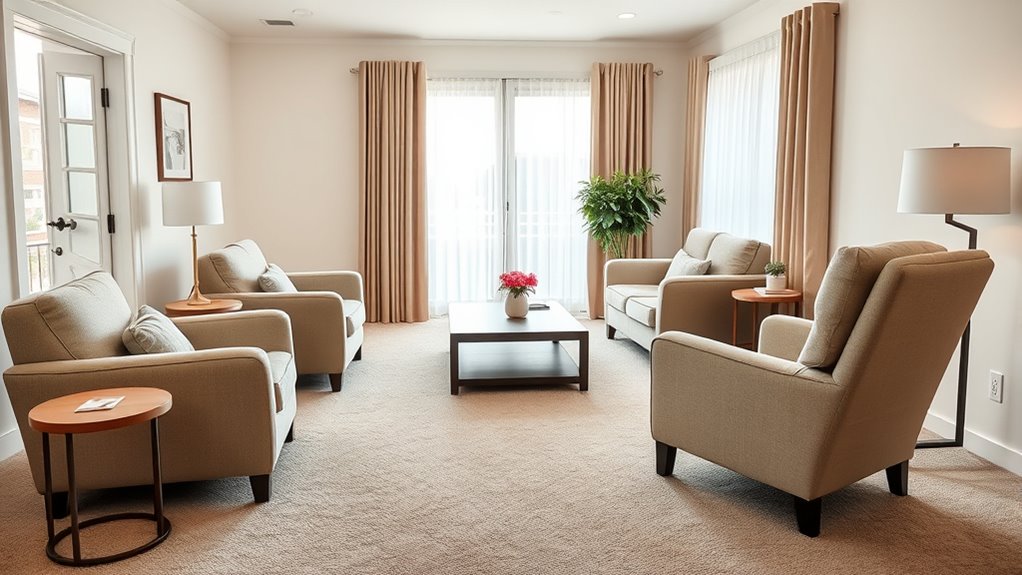
You should arrange seating so pathways remain clear and easy to navigate. Place chairs and sofas strategically to avoid blocking doorways or walkways. This way, movement stays smooth and safe, reducing the risk of falls.
Clear Pathways for Access
Creating clear pathways for access is essential to reducing fall risks among seniors. You want to guarantee that walkways are free from clutter and obstacles, making it easier to move safely. Remove or reposition large furniture pieces that block direct routes. Be cautious with area rugs, as they can be tripping hazards; secure or eliminate them if they’re loose or thick. Keep decorative accents minimal, so they don’t clutter walkways or cause confusion. To promote ease of movement, consider these tips:
- Keep pathways wide enough for easy navigation, ideally at least 36 inches.
- Avoid placing furniture or decorative accents in high-traffic areas.
- Regularly check that rugs are secure and not prone to slipping.
Prioritizing open, unobstructed pathways helps seniors move confidently and safely through their spaces.
Strategic Seating Placement
Strategic seating placement plays a essential role in promoting ease of movement and reducing fall risks for seniors. Position chairs and sofas near main walkways, ensuring easy access without obstruction. Use color coordination to distinguish seating areas, making navigation intuitive. Incorporate decorative accents that contrast with flooring or walls to improve visibility. Properly placed seating encourages seniors to rest without blocking pathways or creating clutter. Here’s a layout example:
| Seating Area | Color Coordination | Decorative Accents |
|---|---|---|
| Living Room | Bright cushions against neutral walls | Potted plants for contrast |
| Dining Area | Coordinated tablecloths and chairs | Wall art to define the space |
| Entryway | Light-colored seating | Mirror for visibility |
| Reading Nook | Warm-toned armchair | Floor lamp for safety |
This setup promotes safe, easy movement while enhancing aesthetic appeal.
Securing or Removing Hazardous Items and Clutter
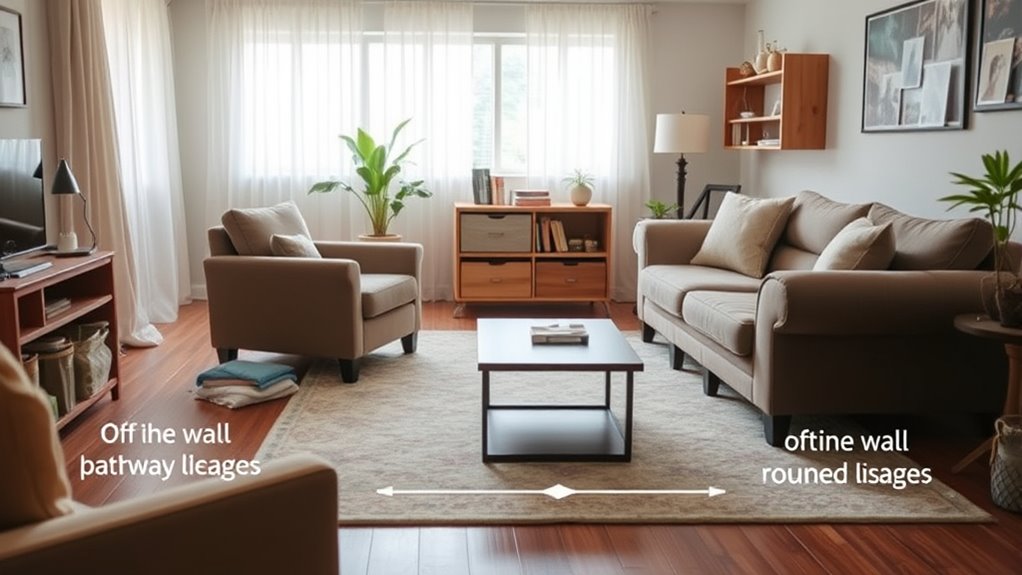
To reduce the risk of falls, it’s vital to secure or remove hazardous items and clutter from walkways and common areas. Clutter can cause trips, while slippery surfaces and loose rugs increase slipping hazards. To keep your space safe, consider:
- Securing or removing loose rugs that can slip or bunch up
- Clearing walkways of clutter, cords, and unnecessary furniture
- Using non-slip mats on slippery surfaces like tile or hardwood floors
These simple steps make your environment safer and reduce fall risks. Regularly inspect areas for loose rugs or spills and address them immediately. Keeping walkways clear and stable minimizes tripping hazards and ensures safe movement throughout your home. Taking these precautions helps seniors avoid unnecessary falls and injuries.
Utilizing Assistive Devices and Safety Aids Effectively
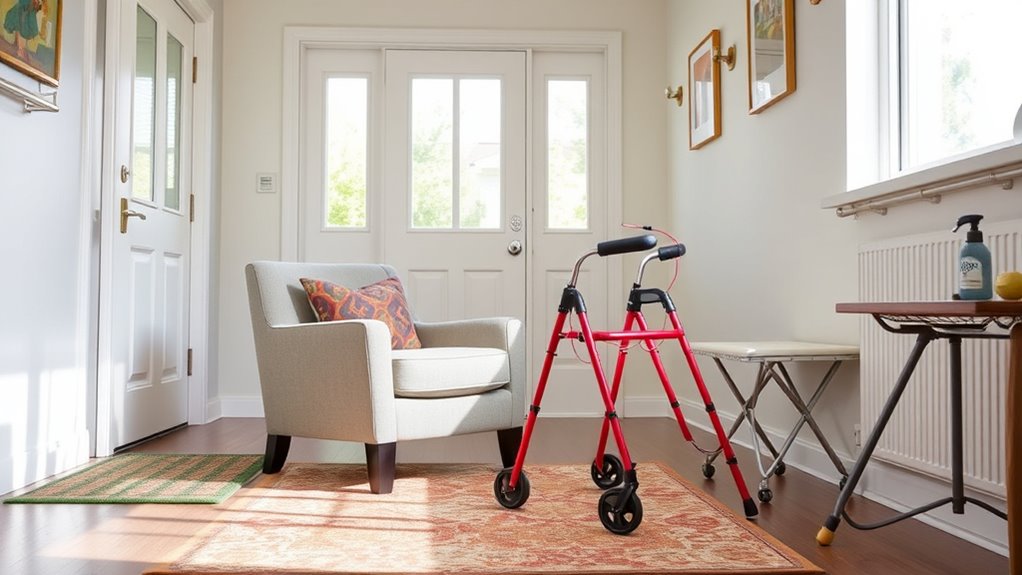
Using assistive devices and safety aids properly can considerably reduce fall risks in your home. Mobility aids like walkers, canes, and grab bars provide stability and support where it’s needed most. Make sure these devices are correctly fitted and in good condition for maximum effectiveness. Visual cues, such as contrasting tape on steps or edges, help seniors identify hazards and navigate safely. Place these cues strategically around high-risk areas like staircases and hallways. Regularly check that mobility aids are accessible and in working order. Educate yourself and your loved ones on how to use safety aids correctly to prevent accidents. Proper utilization of these tools creates safer pathways, helping seniors maintain independence while minimizing fall hazards.
Regularly Reviewing and Adjusting Furniture Layouts
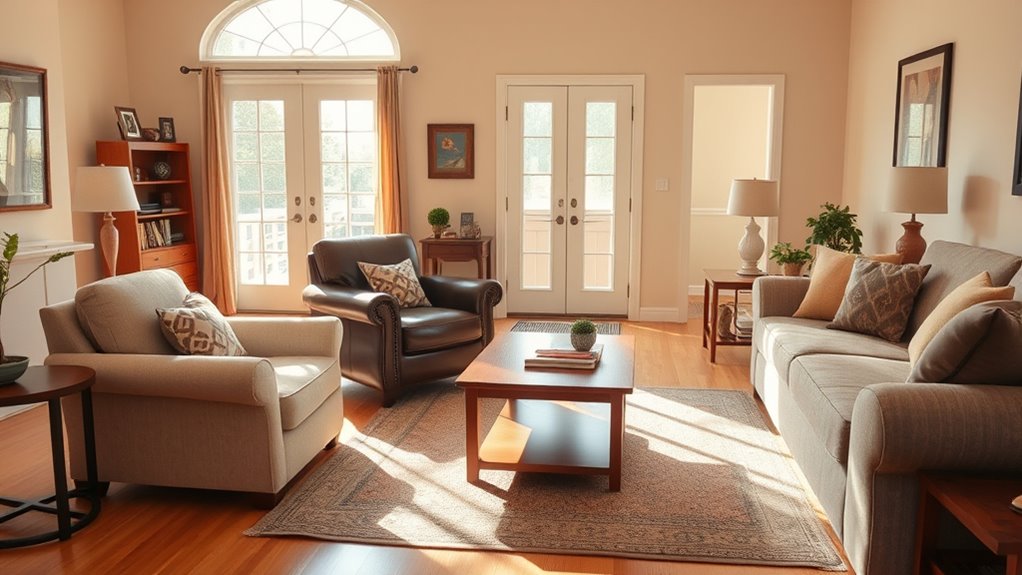
Regularly reviewing and adjusting your furniture layout is essential for creating a safe environment that minimizes fall risks. As your needs change, so should your space. Consider how decorative accents and color schemes can improve visibility and contrast, helping you navigate more easily. To keep your layout safe and inviting:
- Rearrange furniture to maintain clear pathways, avoiding cluttered or tight spaces.
- Use contrasting colors for furniture and flooring to enhance visibility.
- Incorporate decorative accents that highlight hazards or edges, making them more noticeable.
Periodic reviews guarantee your environment adapts to your mobility and visual needs. Small changes, like repositioning a chair or updating decor, can make a significant difference in preventing falls and creating a welcoming, safe home.
Frequently Asked Questions
How Can I Identify Hidden Hazards in My Home for Seniors?
You can identify hidden hazards in your home by thoroughly inspecting each room for clutter removal, ensuring pathways are clear and free of obstacles. Enhance lighting in dim areas to improve visibility and reduce tripping risks. Look for loose rugs, cords, or uneven flooring that could cause falls. Regularly check for sharp edges or unstable furniture, and ask seniors for feedback on any areas they find unsafe, making necessary adjustments promptly.
What Are the Best Materials for Slip-Resistant Flooring?
You should consider non-slip tiles or rubber flooring for safer surfaces. Non-slip tiles provide good traction and are easy to clean, making them ideal for bathrooms and kitchens. Rubber flooring offers excellent slip resistance and absorbs impact, perfect for areas prone to spills or falls. Both materials help reduce the risk of slips and falls, creating a safer environment for seniors. Choose the one that best fits your space and needs.
How Often Should Furniture Arrangements Be Reassessed?
Just like a gardener tends to their plants, you should regularly review your furniture layout to guarantee safety. Reassess your arrangement every six months or after significant changes, incorporating seasonal layout adjustments if needed. Regular safety reviews help identify potential hazards early, maintaining a secure environment. Staying proactive ensures your space remains both functional and safe, reducing fall risks and giving you peace of mind in your home.
Are There Specific Colors That Improve Visibility for Seniors?
Yes, using high-contrast colors can considerably improve visibility for seniors. Choose furniture and decor with bold color contrast against the background, like dark furniture against light walls. Make certain lighting brightness is adequate to highlight pathways and obstacles without causing glare. These adjustments help seniors easily distinguish objects, reducing fall risk. Regularly reevaluate lighting and color choices to maintain ideal visibility and safety in their living space.
How Can I Train Seniors to Navigate New Furniture Layouts Safely?
You can train seniors to navigate new furniture layouts safely by starting with mobility training, focusing on balance and coordination. Encourage the use of assistive devices like canes or walkers to boost confidence. Walk through the space together, highlighting clear pathways, and practice turning and stopping safely. Reinforce safety tips regularly, and gradually increase complexity. Consistent guidance helps seniors adapt smoothly, reducing fall risks and promoting independence.
Conclusion
By carefully arranging your furniture and keeping pathways clear, you create a safer home for seniors. Regularly review your layout and make adjustments as needed—after all, safety isn’t a one-time fix. Are you ready to transform your space into a fall-proof sanctuary? Small changes can make a big difference in preventing accidents and promoting independence. Take these steps today, and enjoy peace of mind knowing your loved ones are safer at home.