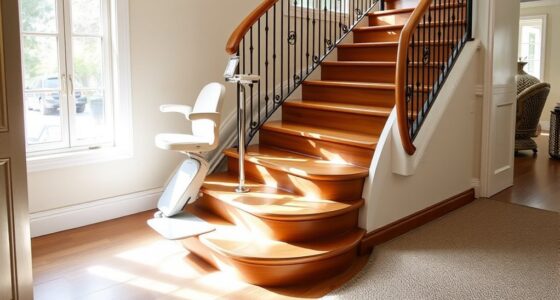
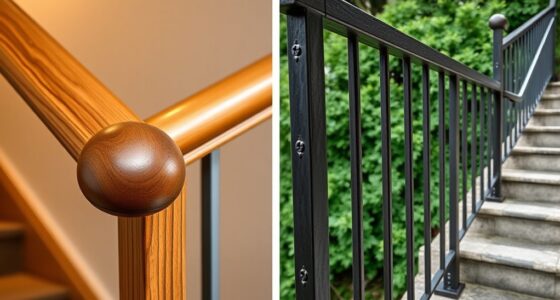
To adapt your home for wheelchair users, widen doorways to at least 32 inches and install gently sloped ramps with slip-resistant surfaces and handrails for safe access. Arrange furniture to create open pathways, allowing a 60-inch turning radius, and place everyday items within easy reach. Modify kitchens with lower countertops and accessible appliances. Ensuring proper lighting, safety features, and clear routes helps promote independence—discover more tips to optimize your space effortlessly.
Key Takeaways
- Widen doorways to at least 32 inches and install ramps with gentle slopes and slip-resistant surfaces for safe wheelchair access.
- Arrange furniture to ensure clear pathways, maintaining a 60-inch turning radius and removing clutter for easy navigation.
- Lower countertops, install pull-out shelves, and use accessible appliances at appropriate heights for kitchen modifications.
- Incorporate handrails on ramps and stairways, and ensure proper lighting and electrical safety standards throughout the home.
- Focus on creating a safe, functional environment that promotes independence with ergonomic design and future accessibility considerations.
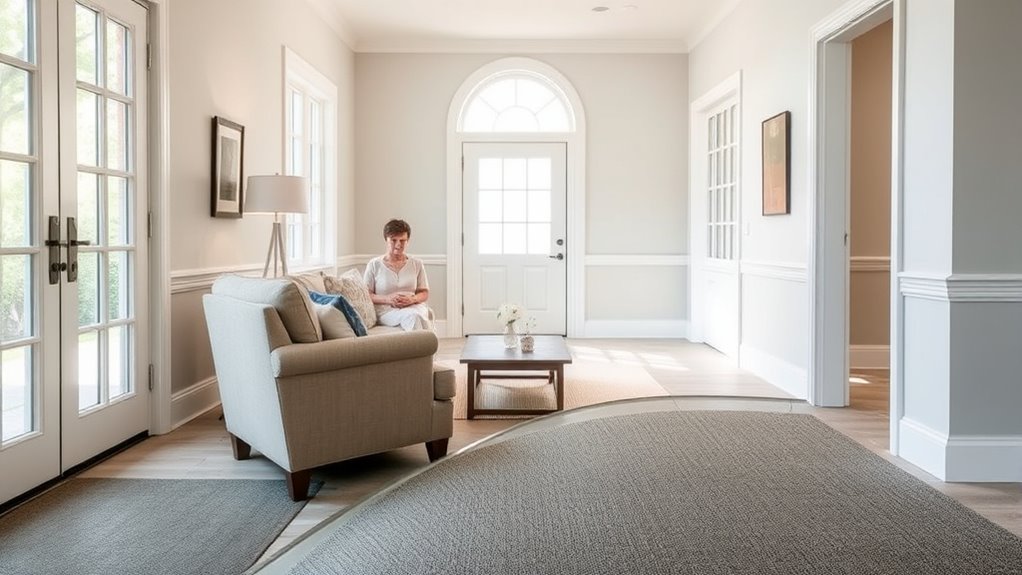
Moving into the kitchen, modifications here can dramatically improve independence. Lowering countertops and cabinets to accessible heights allows wheelchair users to prepare meals comfortably. Installing pull-out shelves and lazy Susans makes reaching for ingredients and utensils easier. A wheelchair-friendly sink should have space underneath to allow for comfortable access, along with lever-style faucet handles. You might also want to think about installing a side-opening oven or a microwave at counter height to eliminate the need for dangerous reaching or bending. Clear, open pathways between appliances and work areas are essential, so removing unnecessary clutter and guaranteeing enough space for turning is vital. These kitchen modifications not only enhance safety but also empower the user to handle daily tasks independently. Ensuring proper load calculations and electrical safety when installing new appliances is crucial for a safe and functional kitchen space.
Frequently Asked Questions
How Do I Choose the Right Width for Doorways?
You should choose doorways that are at least 32 inches wide, based on accessibility standards, to comfortably accommodate wheelchairs. Measure your current doorways and add extra space if needed, ensuring easy maneuverability. Keep in mind that wider doorways, around 36 inches, offer even more ease of access. Always verify doorway measurements against local accessibility standards to make sure your home remains safe and functional for wheelchair users.
What Materials Are Best for Wheelchair Ramps?
You should choose durable materials like concrete, fiberglass, or steel for wheelchair ramps, as they withstand weather and daily use. These materials guarantee long-lasting durability and safety. Also, consider the ramp slope; a gentle slope (1:12 ratio) is essential for safety and ease of use. Avoid flimsy or slippery surfaces, and opt for textured finishes to prevent slipping, ensuring comfort and security for wheelchair users.
How Can I Modify Existing Furniture for Wheelchair Accessibility?
You can modify existing furniture for wheelchair accessibility by creating custom furniture with adaptable designs. For example, add lower shelves or remove bulky armrests to increase space and ease of transfer. Consider using lightweight, modular pieces that you can reconfigure as needed. You might also install removable or adjustable components, making your furniture more functional and comfortable. These tweaks help guarantee your home stays accessible and tailored to your needs.
Are There Portable Solutions for Temporary Home Modifications?
Imagine sliding a sturdy ramp over your doorstep or setting up a lightweight, portable transfer bench in your bathroom—these are perfect temporary modifications. Portable solutions like foldable ramps, removable thresholds, and adjustable furniture allow you to adapt your home quickly and easily. They’re designed for convenience, so you can create accessible spaces without permanent changes, making your environment flexible and accommodating whenever you need it.
What Are the Cost Considerations for Home Adaptations?
Home adaptations can vary in cost, so you should consider your home insurance coverage and explore renovation grants that might help offset expenses. Budget for modifications like widened doorways, ramps, and accessible furniture, and check if your insurance supports these changes. Grants often provide financial assistance for essential upgrades, reducing your out-of-pocket costs. Planning ahead guarantees your home remains both functional and affordable for wheelchair accessibility.
Conclusion
By making these simple changes, you’ll transform your home into an unstoppable fortress of accessibility—so smooth, so seamless, that even a superhero in a wheelchair could navigate effortlessly! With wider doorways, gentle ramps, and smart furniture placement, you’re not just adapting your space; you’re creating a sanctuary where independence reigns supreme. Don’t settle for less—build a home so welcoming and functional, it could outshine any palace in the world!