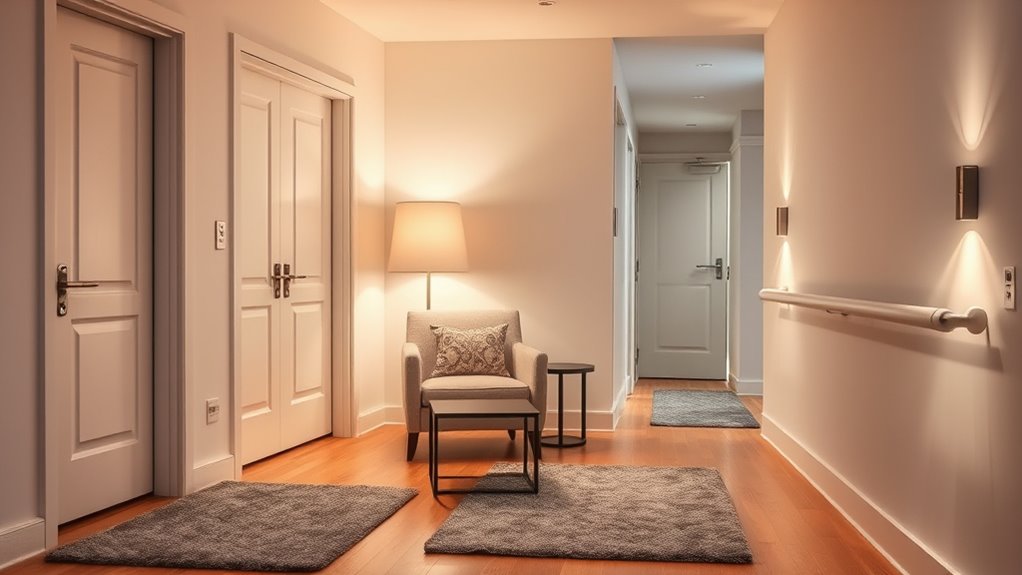

To adapt a rental home for senior safety, you should install mobility aids like grab bars, canes, and non-slip mats, especially in bathrooms and near stairs. Keep pathways clear and add safety features such as smoke detectors and emergency alarms. Make sure exits are accessible and always have an emergency kit nearby. Regularly check safety devices and educate yourself on their use. If you explore further, you’ll find more practical tips to create a secure, hazard-free environment.
Key Takeaways
- Install portable safety devices like grab bars and non-slip mats without damaging walls or flooring.
- Keep pathways clear of clutter and furniture to ensure safe mobility and easy access.
- Use rental-friendly solutions such as suction cups or adhesive mounts for safety aids.
- Ensure emergency exits are accessible and unobstructed, with visible emergency contact information.
- Regularly inspect and maintain safety features, including alarms and mobility aids, to ensure optimal functionality.

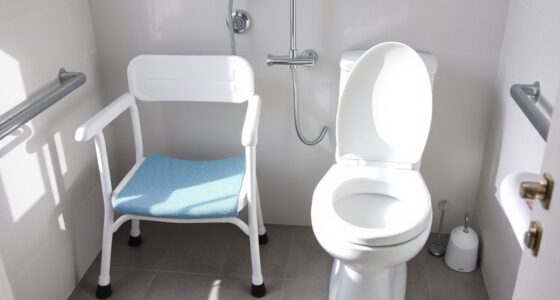
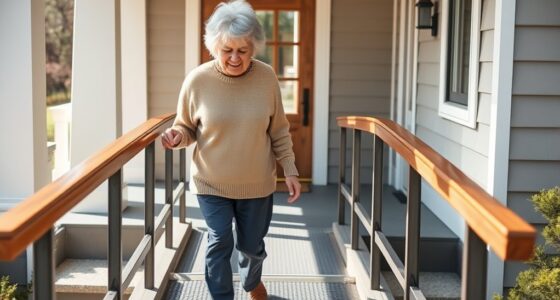
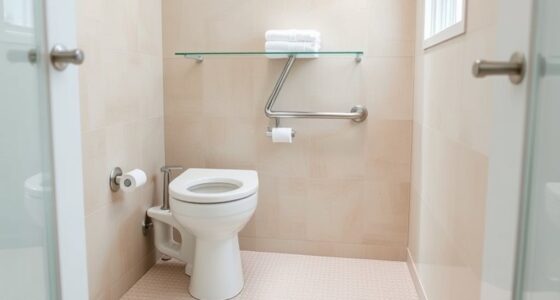
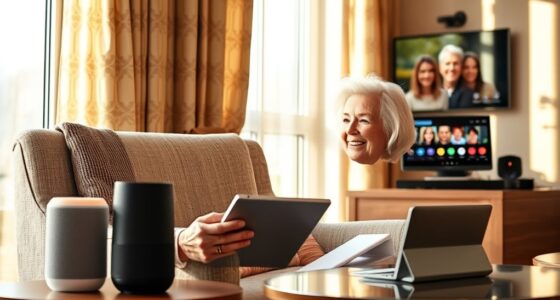
Making your rental home safer for seniors is essential as you prioritize their comfort and independence. One of the most effective ways to do this is by integrating mobility aids into the space. Mobility aids, such as walkers, canes, or grab bars, provide seniors with the support they need to move around safely. Installing grab bars in key areas like the bathroom and near stairways can prevent falls and give seniors more confidence in their daily routines. Portable mobility aids can also be helpful, especially if the senior moves between different parts of the home or visits other locations. Keep pathways clear of clutter to guarantee these aids serve their purpose effectively, reducing the risk of trips and falls. Remember, the goal is to create a space that promotes ease of movement while minimizing hazards. Incorporating home safety features can further enhance protection and independence for seniors. Emergency preparedness is another essential aspect you’ll want to address when adapting a rental home for senior safety. Guarantee that emergency exits are easily accessible and free of obstructions at all times. Keep a well-stocked emergency kit in an accessible location, including essentials like water, non-perishable snacks, a flashlight, batteries, and a first aid kit. Consider installing a loud alarm system or a personal alert device that the senior can easily activate if needed. Make sure they know how to use it and that emergency contact numbers are clearly posted somewhere visible. It’s also wise to establish a communication plan with neighbors, friends, or family members so someone can quickly respond if an emergency arises. Additionally, consider adding smoke detectors and carbon monoxide alarms if they’re not already installed, testing them regularly to guarantee they work properly. Having a plan for emergencies, from medical incidents to fires, helps seniors feel more secure and prepared, which is critical for their peace of mind.

TAILI Shower Grab Bar, 2 Pack 12 Inch Suction Grab Bars for Bathtubs and Showers for Elderly, Shower Handle for Seniors Bathroom Safety Grip, No Drilling Removable,Grey
Matters need Attention: Only suitable for tiles measuring 4×4 inches or larger. For the safety of the seniors…
As an affiliate, we earn on qualifying purchases.
As an affiliate, we earn on qualifying purchases.
Frequently Asked Questions
Can I Make Permanent Modifications to a Rental Property for Senior Safety?
You generally can’t make permanent modifications to a rental property without the landlord’s approval, as your lease agreement usually restricts such changes. Instead, focus on temporary modifications like removable grab bars or portable ramps, which you can install and remove easily. Always communicate with your landlord before making any modifications, and get written permission to avoid potential issues or disputes later on.
Are There Legal Restrictions on Installing Safety Features in a Rental?
You can’t just do whatever you want; legal restrictions on installing safety features in a rental depend on your lease agreement. Some landlords might have rules or restrictions, and liability concerns could arise if modifications cause damage. Always check your lease and get your landlord’s permission before installing safety features. Playing it by the book guarantees you avoid trouble, and you’ll be safer and more secure in the long run.
How Do I Ensure My Landlord Approves Safety Modifications?
To make certain your landlord approves safety modifications, review your lease agreement first. Then, communicate clearly by explaining the benefits of the safety features for your well-being and the property’s value. Always request landord approval before making any changes, preferably in writing. Being transparent and respectful helps build trust, making it more likely your landlord will support your efforts to improve safety in your rental home.
What Are Affordable Options for Senior Safety Adaptations?
You can explore affordable options like temporary solutions and DIY safety modifications to enhance senior safety. Use non-permanent fixes such as non-slip rugs, grab bars that stick with suction cups, or rearranged furniture for better stability. These options are cost-effective, easy to implement, and don’t require permanent changes, making them perfect for rentals. Just verify you check with your landlord before making any modifications, even temporary ones.
Can Safety Upgrades Affect My Security Deposit?
Safety upgrades like installing security cameras and emergency alarms can impact your security deposit, but it depends on your landlord’s policies. If you remove these upgrades before moving out and restore the home to its original condition, you might get your deposit back. However, if modifications are permanent or damage occurs, your landlord could deduct costs. Always check your lease and communicate with your landlord before making safety improvements.

Stair Treads for Wooden Steps 15pcs – 8x30in Carpet Stairs Runner Indoor Non-Slip Stair Mats for Kids Elders and Pets
❤Comfortable & Noise Reducing – 15-Piece Stair Treads Carpet is made of polyester, High-density wool blends on the…
As an affiliate, we earn on qualifying purchases.
As an affiliate, we earn on qualifying purchases.
Conclusion
By making simple modifications, you turn your rental into a fortress of safety, protecting your loved ones from falls and accidents. These changes aren’t just small tweaks—they’re the difference between a secure home and a potential disaster waiting to happen. Think of your space as an impenetrable castle, where every step is safe and confident. With a little effort, you create a haven so secure, it’s like having a personal safety net that catches you before you even fall.
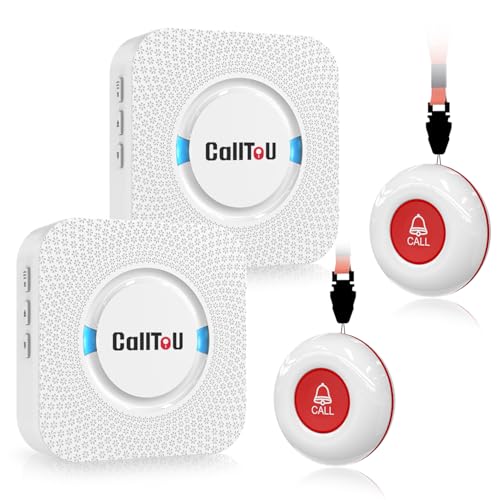
CallToU Wireless Caregiver Pager Smart Call System 2 SOS Call Buttons/Transmitters 2 Receivers Nurse Calling Alert Patient Help System for Home/Personal Attention Pager 500+Feet Plugin Receiver
[ Wireless Guard ] 2 Receiver 2 Call Button. Allow caregivers and residents to be free while ensuring…
As an affiliate, we earn on qualifying purchases.
As an affiliate, we earn on qualifying purchases.

ZAWELIYO Suction Cup Handle, Anti Slip Safety Handrail with Strong Grip for Bathroom Kitchen Glass Door
Offering immediate installation, this safety hand grip can be mounted and removed without leaving marks. It is ideal…
As an affiliate, we earn on qualifying purchases.
As an affiliate, we earn on qualifying purchases.