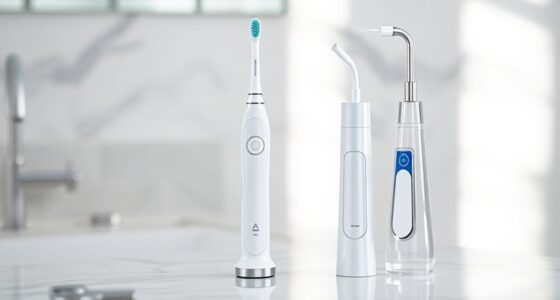

Hearing aid dryers and dehumidifiers are essential tools that protect your investment by removing moisture from your devices. They prevent problems like static, reduced sound quality, and potential damage from humidity, sweat, or rain. Regular use helps extend your hearing aid’s lifespan, maintain its performance, and guarantee hygiene. Investing in one is cost-effective over time, keeping your hearing aids in top condition. Keep exploring to discover how the right equipment can make a difference for your hearing health.
Key Takeaways
- They effectively remove internal moisture, extending hearing aid lifespan and maintaining optimal performance.
- Using dryers and dehumidifiers reduces risks of corrosion, mold, and damage caused by humidity.
- Regular use ensures clearer sound quality and prevents costly repairs or replacements.
- Advanced models with sensors optimize moisture removal, increasing efficiency and device safety.
- Investing in quality dehumidifiers offers long-term savings by protecting your hearing aids from humidity-related issues.

Hearing aid dryers and dehumidifiers are essential tools for maintaining your devices and ensuring ideal performance. When it comes to moisture control, these tools play a crucial role in preventing damage caused by excess humidity. Moisture is one of the leading factors that can impair the functionality of your hearing aids, leading to reduced sound quality, static, or complete failure. By regularly using a hearing aid dryer or dehumidifier, you actively protect your investment and keep your devices functioning at their best.
Device maintenance involves more than just cleaning the external parts; it requires managing internal moisture that can accumulate during daily use. Sweat, humidity, and even rain can introduce moisture into your hearing aids, which over time, can cause corrosion or damage to sensitive electronic components. Dryers and dehumidifiers work by drawing out this moisture, helping to extend the lifespan of your hearing aids. They provide a controlled environment that removes humidity efficiently, reducing the risk of mold buildup or corrosion that can compromise your device’s performance.
Using a hearing aid dryer or dehumidifier is straightforward and highly effective. After a day of use, simply place your hearing aids in the device and turn it on. Most models use gentle heat and airflow to evaporate trapped moisture without harming delicate parts. Some advanced units even incorporate UV sterilization, which helps eliminate bacteria and earwax buildup, contributing to better hygiene and overall device health. Consistent use ensures that moisture doesn’t linger inside your hearing aids, which can otherwise lead to frequent repairs or replacements.
It’s also worth noting that investing in a quality dehumidifier can save you money in the long run. Proper moisture control minimizes the chances of costly repairs and ensures your hearing aids maintain their optimal functionality over time. Regular device maintenance with a dehumidifier becomes a simple yet vital habit that guarantees your hearing aids are always ready to deliver clear sound and reliable performance. Whether you’re outdoors, living in a humid climate, or just want to safeguard your devices, a hearing aid dryer offers peace of mind and helps preserve the lifespan of your investment.
Additionally, selecting a dehumidifier with features like moisture sensors can enhance its effectiveness by automatically adjusting operation based on the environment, ensuring optimal moisture removal without over-drying.
As an affiliate, we earn on qualifying purchases.
Frequently Asked Questions
How Often Should I Use a Hearing Aid Dryer?
You should use a hearing aid dryer daily to prevent moisture buildup and maintain hygiene. Regular drying helps reduce the risk of bacteria and mold, keeping your hearing aids in ideal condition. After each use, turn on the dryer for about 10-15 minutes, especially if you sweat or live in a humid environment. Consistent use guarantees moisture prevention and prolongs your device’s lifespan.
Are There Different Types of Dehumidifiers for Hearing Aids?
Don’t put all your eggs in one basket, and yes, there are different types of dehumidifiers for hearing aids. You can choose from desiccant-based or electronic models, both designed for moisture prevention. Be mindful of battery safety, as some dehumidifiers are battery-operated. Using the right type helps keep your hearing aids dry, functioning properly, and extends their lifespan, ensuring you get the best sound quality every day.
Can Dry Air Damage My Hearing Aids?
Dry air generally won’t damage your hearing aids if you’re using moisture prevention techniques properly. However, extremely dry air can cause some materials to become brittle over time. To protect your device, regularly use hearing aid dryers and dehumidifiers for device maintenance, which help prevent moisture buildup and keep your hearing aids functioning well. Always follow your audiologist’s recommendations for ideal care and longevity.
What Are Signs My Hearing Aids Need Drying?
If your hearing aids start squealing like a malfunctioning robot or emit a damp, musty smell, moisture buildup is likely taking over. You might notice reduced sound quality, static, or difficulty hearing clearly—clear signs your hearing aid needs drying. Regular hearing aid maintenance, including drying after exposure to sweat or rain, prevents moisture damage and keeps your devices performing at their best. Don’t ignore these signs, or you risk long-term harm.
Do Dehumidifiers Extend Hearing Aid Lifespan?
Yes, dehumidifiers extend your hearing aid lifespan by preventing moisture buildup, which can damage internal components. Using a dehumidifier regularly is a crucial part of device maintenance, helping you avoid costly repairs and ensuring peak performance. By protecting your hearing aids from excess moisture, you keep them functioning longer and maintain better sound quality, ultimately saving you money and hassle over time.
As an affiliate, we earn on qualifying purchases.
Conclusion
Investing in hearing aid dryers and dehumidifiers isn’t just about maintenance—it’s about protecting your investment and ensuring your hearing aids perform their best. Think of them as the shield against moisture, the silent guardians that keep your devices dry and reliable. Without them, moisture can sneak in and cause damage, like rust on a sword. Don’t leave your hearing aids vulnerable; equip yourself with the right tools and keep your hearing sharp and clear.
As an affiliate, we earn on qualifying purchases.
As an affiliate, we earn on qualifying purchases.