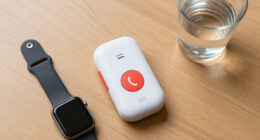
Using canes and walkers can greatly support your stroke recovery by providing stability, balance, and confidence as you regain mobility. Canes are helpful for short distances and improving balance, while walkers offer broader support for initial stages of weakness. Choosing the right device depends on your needs and progress, and with patience, you’ll see improvements in walking ability over time. Keep exploring, and you’ll discover how to maximize your recovery journey.
Key Takeaways
- Canes and walkers support stability and balance during gait training, helping stroke survivors regain confidence in walking.
- The choice of device depends on individual strength, coordination, and safety needs, assessed by a physical therapist.
- Walkers offer more support for those with significant weakness, while canes are suitable for those who can walk with minimal assistance.
- Gradually reducing reliance on assistive devices signals progress toward independent walking and improved mobility.
- Proper use, consistency, and patience are essential to maximize recovery and restore walking abilities after a stroke.

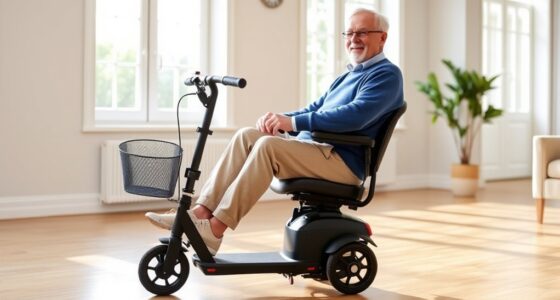
Recovering from a stroke can be a challenging journey, but with the right assistive devices, regaining mobility becomes possible. These devices play a pivotal role in your recovery process, especially during gait training, which helps you relearn how to walk safely and confidently. Assistive devices such as canes and walkers are designed to provide stability, support, and balance as you rebuild your strength and coordination. When you start gait training, your physical therapist may recommend specific devices based on your current abilities, aiming to gradually increase your independence. Using a cane, for example, offers a simple way to improve balance while walking, giving you a sense of security and reducing the risk of falls. As you progress, you might switch to a walker, which provides a broader base of support, especially if you struggle with weight-bearing or have considerable weakness on one side. These devices are not just tools; they are essential to your rehabilitation, helping you practice proper walking mechanics and regain confidence in your movement. Understanding the different types of assistive devices and how they function can help you make informed choices during your recovery.
Choosing the right assistive device depends on your unique needs and the severity of your impairment. Your therapist will assess your strength, coordination, and balance to recommend the most appropriate equipment. For some, a cane might be sufficient for short distances or when they feel steady enough to walk independently. For others, a walker could be necessary for more stability during initial stages of recovery. It’s important to remember that these devices are meant to support your gait training, not replace the effort needed to regain strength. They serve as stepping stones, helping you gradually improve your walking ability and build endurance. As you become more comfortable and stable, your therapist may encourage you to reduce reliance on these devices and walk independently, which is a key milestone in stroke rehabilitation. Incorporating assistive device selection into your therapy plan can optimize your progress and safety.
Throughout your recovery, keep in mind that patience and consistency are essential. Using assistive devices correctly and regularly during gait training can markedly impact your progress. Focus on proper posture, weight distribution, and stride as advised by your healthcare team. Over time, you’ll notice improvements in balance, coordination, and confidence, making walking less of a challenge. Remember, these devices are tools to support your journey back to mobility, enabling you to practice walking safely and effectively. With perseverance and the right equipment, you’re well on your way to walking again and reclaiming your independence.

HONEYBULL Walking Cane for Men & Women, Foldable, Free Standing Cane, Black
- Support for Seniors and Injured: Assist elderly and injured persons easily
- Foldable and Lightweight: Compact, travel-friendly aluminum design
- Adjustable Height: Fits users from 5' to 6'5"
As an affiliate, we earn on qualifying purchases.
As an affiliate, we earn on qualifying purchases.
Frequently Asked Questions
How Do I Choose the Best Cane or Walker for My Specific Needs?
To select the best cane or walker for your needs, consider your height and mobility level. Look for an ergonomic grip for comfort and better control. Check the weight capacity to make sure it’s sturdy enough for you. Test different models to see which feels most stable and easy to maneuver. Consulting with a healthcare professional can help you choose the right device tailored to your specific recovery needs.
Are There Any Risks Associated With Using Mobility Aids During Stroke Recovery?
Using mobility aids can increase falls risk if not used correctly, so you should be cautious. Relying too much on them might lead to dependency concerns, making you less confident in your abilities over time. To minimize risks, verify your aids are properly fitted and use them as advised by your healthcare team. Staying aware of your limits and practicing safe techniques helps you recover safely and regain independence.
How Long Should I Typically Use a Cane or Walker Post-Stroke?
You should typically use a cane or walker for a few weeks to several months, depending on your progress. Duration guidelines vary based on your recovery, so your healthcare provider will create personalized timelines to guarantee safe and effective mobility. Keep using your aids until you regain enough strength and balance to walk confidently without them, but always follow your therapist’s advice for the best outcome.
Can Using a Cane or Walker Slow Down the Rehabilitation Process?
Using a cane or walker doesn’t necessarily slow down your rehabilitation; instead, it can help you regain confidence and address balance challenges safely. Relying on assistive devices guarantees you stay steady, preventing falls and promoting independence. However, it’s important to work with your therapist to gradually reduce dependence on these aids as your strength and balance improve, ensuring you progress toward full independence without risking setbacks.
What Additional Therapies Complement the Use of Mobility Aids?
Think of your recovery as sailing a ship; just using a cane or walker is like steadying the helm. To truly navigate, you need additional tools. Balance training acts as your compass, guiding stability, while occupational therapy is your crew, helping you regain daily skills. These therapies work together, complementing mobility aids, and accelerating your journey toward independence and confident walking again.
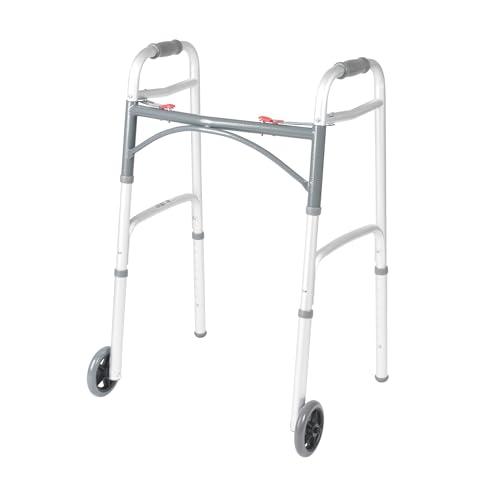
Drive Medical Two-Button Folding Walker with Wheels, Height Adjustable
- Enhanced Mobility Assistance: Dual push-button release with 5-inch wheels
- Lightweight Durable Construction: Made from strong aluminum, supports up to 350 lb
- Multi-Surface Compatibility: Smooth-rolling front wheels for various surfaces
As an affiliate, we earn on qualifying purchases.
As an affiliate, we earn on qualifying purchases.
Conclusion
As you step forward with your cane or walker, imagine a new horizon unfolding before you. Feel the steady support beneath your hand, guiding you past lingering doubts into a brighter, more confident tomorrow. Each stride becomes a symbol of strength regained, a gentle reminder that movement is possible again. With every step, you paint a picture of resilience and hope, moving boldly towards a future where independence and vibrancy light your way.

JivaJot Stand Assist Aid for Elderly, Portable Walking Support, Gray
- Designed for Walking Support: Provides steady support for walking and standing
- Stable and Lightweight: Offers balanced support without bulk
- Height Adjustable: Customizable height for natural posture
As an affiliate, we earn on qualifying purchases.
As an affiliate, we earn on qualifying purchases.

Urban Poling ACTIVATOR® Walking Poles for Balance and Rehabilitation – 1 Pair – Ergonomic CoreGrip™ Handles – Adjustable, Collapsible, and Lightweight for Stability and Recovery in Silver/Red
- Designed for Rehab and Recovery: Supports rehabilitation and long-term conditions
- Lightweight and Durable: Made with high-grade aluminum, weighs 1.44 lb
- Supports Up to 250 lb: Maximum user weight capacity of 250 lb
As an affiliate, we earn on qualifying purchases.
As an affiliate, we earn on qualifying purchases.