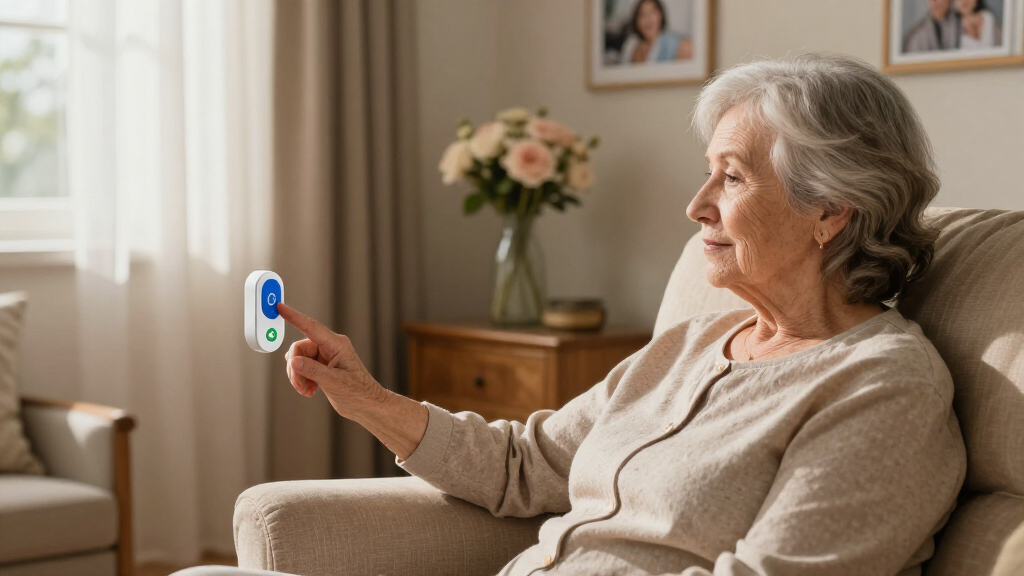
The best easy-to-use emergency alert system for most homes is the Caregiver Pager with 2 Call Buttons and 2 Pagers, because it pairs a genuinely simple button press with enough range and volume to work across a typical house, with no subscription or app setup required. If you want coverage outside the home, the ADT On-The-Go Emergency Medical Alert adds cellular connectivity and professional monitoring, while the SecuLife Medical Alert Pendant brings fall detection and GPS tracking for seniors who wander or live alone. The core tradeoff in this category is simplicity versus coverage: basic pager systems are nearly foolproof and free after purchase, but they only work when a caregiver is nearby to hear the alert, whereas monitored systems work anywhere but add monthly fees and charging routines. Battery type, waterproofing, and range claims also vary widely and matter more than most buyers expect. Keep reading for the full breakdown of all 14 systems and which one fits your situation.
Complete the kit


Key Takeaways
- Most of the 14 products are caregiver pagers, not true emergency systems — they alert a person in the house rather than summoning help, which is fine for family caregiving but risky for seniors living alone.
- Only two picks (ADT On-The-Go and SecuLife) offer real outside-the-home protection, and the main cost difference is a monthly monitoring fee versus a one-time pager purchase under $50.
- Range claims of 1000+ feet only hold true in open air; inside a house with walls and appliances, expect roughly half the advertised distance, so extra receivers matter more than bigger range numbers.
- Waterproof call buttons separated the top pagers from the rest — bathroom falls are the most common home emergency, and several cheaper models can’t be mounted in a shower.
- WiFi/app-based pagers like the No-Monthly-Fee App model add remote notification for free, but require stable WiFi, a smartphone, and more setup — the opposite of what “easy-to-use” means for many seniors.


| easy-to-use emergency alert system | Range |
|---|---|
| Caregiver Pager with 2 Call Bu | — |
| CallToU Bell Call Button for E | 500+ ft open area |
| Wireless Caregiver Pager SOS C | 1000 feet (open area) |
| CallToU Caregiver Wireless Pag | Over 500 feet |
| ADT On-The-Go Emergency Medica | — |
| WiFi Caregiver Pager & Call Bu | — |
| Wireless Caregiver Pager Dual | Over 1000 feet in open areas |
| FullHouse Caregiver Pager Wire | 1000 feet |
| Wireless Caregiver Pager SOS C | 1000+ feet (open areas) |
| Panic Button Alarm Remote Sire | — |
| SecuLife Medical Alert Pendant | — |
| Wireless Caregiver Pager Call | — |
| FullHouse Caregiver Pager Wire | Up to 1000 feet in open air |
| CallToU Wireless Caregiver Pag | — |
More Details on Our Top Picks
Caregiver Pager with 2 Call Buttons and 2 Pagers for Home Care
This option stands out for including two pagers in the box, which almost no budget system offers. If two family members share caregiving shifts, both can carry a pager without paying extra or pairing a second device — something the CallToU Bell Call Button setup doesn’t address with its plug-in-only receiver approach. Setup is genuinely simple: batteries are included, and the buttons work out of the package with adjustable volume and alert tones. The tradeoff is that everything runs on AA batteries, including the pagers, so there’s a maintenance rhythm to manage. Compared with the ADT On-The-Go, there are no monthly fees, but also no connection to emergency services — this is a caregiver summoning tool, not a monitored medical alert. For the price, though, the two-pager flexibility is hard to beat.
Pros:- Two pagers and two call buttons included at a budget price
- Batteries included for true plug-free setup
- Adjustable volume and alert tones up to 90 dB
- Up to 500 feet of wireless range for typical homes
Cons:- Battery-only system means ongoing AA replacement for both pagers and buttons
- Range can drop below 500 feet with walls and interference
- No monitoring or emergency service connection — alerts only reach nearby caregivers
Best for: Families where two caregivers share responsibility for a loved one and want simultaneous pager alerts without a subscription
Not ideal for: Anyone living alone who needs emergency response — this only alerts nearby caregivers, not professionals
- Power Source:4 AA alkaline batteries (included)
- Maximum Range:500 feet / 150 meters
- Alert Volume:Up to 90 dB
- Control Method:Touch
- Mounting Type:Wall mount
- Included Components:2 call buttons, 2 portable pagers
Our verdict“This pick makes the most sense for two-caregiver households that want simultaneous, fee-free alerts on a budget.”
CallToU Bell Call Button for Elderly Wireless Caregiver Pager Alert System
Where the Caregiver Pager with 2 Call Buttons relies on battery-powered pagers, this CallToU system leans on plug-in receivers that never need charging or battery swaps — a meaningful quality-of-life difference for whole-home coverage. The IP55 waterproof buttons can be mounted in bathrooms or outdoors, and the 110 dB maximum volume with flashing visual alerts makes it workable for hearing-impaired households in a way the cheaper two-pager kit doesn’t attempt. With 55 chimes and an expandable design, it scales as needs grow. The tradeoffs are real: the stated 500+ foot range applies to open areas, so a multi-story house with thick walls may need an extra receiver, and the buttons themselves still require 12V batteries. Compared with the ADT On-The-Go, there’s no GPS or professional monitoring — but also no monthly bill.
Pros:- Plug-in receivers eliminate battery maintenance for the alerting side
- IP55 waterproof buttons safe for bathrooms and outdoor mounting
- Volume up to 110 dB with flashing light for hearing-impaired users
- Expandable system with 55 ringtones and no WiFi or monthly fees
Cons:- 500+ ft range is open-area rated; walls and floors can shorten it
- Call buttons require 12V battery replacements over time
- Receiver must be plugged into an outlet, limiting placement flexibility
Best for: Caregivers covering a large or multi-room home who want waterproof call points and loud, plug-in receivers that never run out of charge
Not ideal for: Active seniors who leave the house — there’s no portable pager, GPS, or connection to emergency services
- Range:500+ ft open area
- Waterproof Rating:IP55
- Ringtones:55 chimes
- Volume:5 levels, up to 110 dB
- Batteries:4 x 12V (included)
- Dimensions:3.74 x 3.54 x 3.54 inches
- Weight:14.9 ounces
Our verdict“This is the right choice for whole-home coverage where loud, always-powered receivers and bathroom-safe buttons matter more than portability.”
Wireless Caregiver Pager SOS Call Button for Elderly Monitoring, Waterproof Transmitter & Receiver
The headline here is range: a 1000-foot operating range that doubles what the CallToU Bell Call Button and the two-pager Caregiver kit deliver. For sprawling single-story homes, yards, or care facilities, that extra reach means fewer dead zones and fewer relay receivers to buy. The buttons are water and dust resistant, and the system supports multiple transmitters and receivers, so it can grow from a bedroom button into a facility-wide network. Customization is solid too, with 55 tones and five volume levels. But that reach comes with caveats a buyer should weigh: the 1000-foot figure applies to open areas only, obstacles cut it down substantially, and the documentation is thin on battery life, so expect some guesswork on replacement scheduling. This model is better suited to bigger properties than apartment dwellers, who would be paying for range they’ll never use.
Pros:- 1000-foot range — roughly double most competitors in this lineup
- Waterproof and dust-resistant construction for durable placement
- Supports multiple transmitters and receivers for expansion
- 55 ringtones and 5 volume levels for customization
Cons:- Range drops sharply with walls, floors, and interference
- No published battery life or replacement guidance
- Manual setup and placement trial-and-error around the home
Best for: Owners of large homes, yards, or small care facilities who need maximum wireless coverage between call points and receivers
Not ideal for: Apartment or small-home residents — the extra range is wasted money, and battery details are undocumented
- Range:1000 feet (open area)
- Waterproof:Yes
- Music Tones:55
- Volume Levels:5
- Expandable:Yes — multiple transmitters and receivers
- Use Cases:Home, hospital, care facility
Our verdict“Buy this if your property is big enough that a 500-foot system leaves dead zones; skip it if a standard home kit already covers your space.”
CallToU Caregiver Wireless Pager System with 2 Pagers and 2 Call Buttons
This is the most complete package for the way most families actually provide care: a plug-in receiver for the home base, a portable USB pager for the moving caregiver, and two waterproof call buttons for the loved one. Compared with the Caregiver Pager with 2 Call Buttons, the USB pager is a clear upgrade — it recharges instead of eating AAs, and it adds a vibration mode that’s genuinely useful when a caregiver is in a noisy kitchen or wearing earbuds. The system pairs with up to 30 call buttons, so it handles multi-room and multi-person scenarios better than most kits here. It isn’t flawless: the 500-foot range suits small-to-medium homes rather than large properties, and the receiver and pager both depend on power access. But for balancing flexibility, cost, and simplicity, this pick makes the most sense for the widest range of families.
Pros:- Combines plug-in receiver and portable USB pager in one kit
- Vibration mode alerts caregivers in noisy environments
- Pairs with up to 30 call buttons for extensive expansion
- Waterproof call buttons with 55 receiver ringtones and 18 pager tones
Cons:- 500-foot range limits it to small and medium-sized homes
- Receiver and pager both require power access for charging
- No specific waterproof rating published for the buttons
Best for: Most families caring for a senior at home who want one stationary receiver plus one portable, rechargeable pager with room to expand
Not ideal for: Large multi-story properties where 500 feet of range leaves gaps, or anyone who needs professional emergency monitoring
- Included:1 plug-in receiver, 1 portable USB pager, 2 waterproof call buttons
- Range:Over 500 feet
- Volume:5 adjustable levels
- Ringtones:55 on receiver, 18 on USB pager
- Expandability:Pairs with up to 30 call buttons
- Special Modes:Vibration alert on pager
Our verdict“The best all-around choice for typical home caregiving — flexible, expandable, and rechargeable where it counts.”
ADT On-The-Go Emergency Medical Alert for Seniors, All-in-One
Every other product in this roundup alerts a nearby caregiver. This one alerts trained professionals, 24/7, anywhere in the country — that’s a fundamentally different product category, and the price reflects it. With built-in GPS and cellular service, the ADT On-The-Go works at the grocery store or on a walk, not just within 500 feet of a receiver like the CallToU Caregiver Wireless Pager. The single-device design with a lanyard means no buttons to mount and no receivers to plug in — a senior wears it and presses one SOS button. The tradeoffs: a monthly monitoring plan is required, so the cost compounds over years, and the optional automatic fall detection won’t catch 100% of falls, so the button press remains the primary safeguard. For seniors who live alone or leave home regularly, though, this is the only option here that summons actual emergency help.
Pros:- 24/7 professional monitoring with immediate emergency dispatch
- Built-in GPS and LTE cellular for protection away from home
- All-in-one wearable design with no separate receivers or accessories
- Optional automatic fall detection adds a hands-free safety layer
Cons:- Requires an ongoing monthly monitoring subscription
- Fall detection cannot guarantee catching every fall
- Only 4.2/5 customer rating with limited review data so far
Best for: Seniors who live alone or are active outside the home and need professional emergency response, not just caregiver alerts
Not ideal for: Budget-conscious families with a full-time caregiver at home — the monthly fee buys coverage they don’t need
- Monitoring:24/7 professional emergency monitoring
- Connectivity:LTE cellular with built-in GPS
- Water Resistance:IP57
- Design:All-in-one wearable with lanyard and cradle charger
- Optional Feature:Automatic fall detection
- Warranty:ADT Premium Protection Plan
- Model:MD5
Our verdict“Worth the subscription for independent or active seniors who need real emergency response anywhere — overkill if a caregiver is always within pager range.”
WiFi Caregiver Pager & Call Button with App Alerts, No Monthly Fee, 4 SOS Call Buttons + 1 Receiver
This pick stands out for something none of the pager-only systems can do: it sends real-time smartphone alerts through a free app, so a daughter three states away knows Mom pressed the button. Compared with the Dual Receiver Home Alert System, which only sounds a chime inside the house, this one covers families where the caregiver isn’t always on premises. The tradeoff is dependency on Wi-Fi and the Tuya Smart app — if the router goes down or the family dislikes app ecosystems, alerts stop. SMS and phone-call alerts also sit behind an optional subscription, which slightly undercuts the “no monthly fee” pitch. With four waterproof buttons and a 328-foot range, it works well for whole-home coverage, though that range is noticeably shorter than the 1000-foot pagers in this guide.
Pros:- Real-time app alerts with family sharing for remote caregivers
- Four waterproof call buttons cover multiple rooms
- Plug-and-play setup with no required monthly fees
- Wi-Fi plus 433MHz pairing for dependable delivery
Cons:- Useless without Wi-Fi and a compatible smartphone
- SMS and phone-call alerts require an optional subscription
- 328-foot range is the shortest in this lineup
Best for: Adult children coordinating care remotely who want app notifications and multiple family members alerted at once
Not ideal for: Homes without reliable Wi-Fi or seniors whose caregivers won’t manage a smart-home app
- Compatible Devices:Smartphone via Tuya Smart / Smart Life app
- Control Method:App, push button
- Maximum Range:328 feet
- Waterproof Rating:IP53
- Buttons Included:4 SOS transmitters + 1 receiver
- Monthly Fees:None required; optional subscription for SMS/call alerts
Our verdict“Choose this if your caregiving happens from a distance and app notifications matter more than raw range.”
Wireless Caregiver Pager Dual Receiver Home Alert System, 1000+ Feet Range, 2 Transmitters + 2 Receivers
Two plug-in receivers and two portable transmitters make this the strongest option for multi-floor or sprawling homes, where a single receiver might be missed in a back bedroom. Unlike the WiFi Caregiver Pager’s 328-foot ceiling, this system reaches over 1000 feet in open areas, and the dual-receiver layout means a chime sounds in two locations at once — a real advantage over single-receiver kits like the FullHouse pager. The 38 selectable melodies let families pick a tone that’s distinct from the doorbell. The tradeoffs are practical rather than deal-breaking: transmitters run on 12V batteries that eventually die, receivers occupy wall outlets, and there are no smartphone notifications at all — if nobody is home, nobody is alerted.
Pros:- Dual receivers let alerts sound in two rooms simultaneously
- 1000+ foot open-area range beats app-based rivals
- 38 customizable melodies distinguish it from doorbells
- No monthly fees or subscriptions ever
Cons:- No app or remote notification capability
- Transmitters require 12V battery replacements
- Receivers must occupy wall outlets
Best for: Caregivers living with a senior in a large or multi-story home who need alerts in two places at once
Not ideal for: Remote family members expecting phone notifications — this system is chime-only
- Range:Over 1000 feet in open areas
- Melodies:38 selectable tones
- Components:2 transmitters + 2 receivers
- Transmitter Power:12V battery (included)
- Receiver Power:100V–240V AC plug-in
- Product Dimensions:2.8 x 2.8 x 0.65 inches
- Item Weight:8.1 ounces
Our verdict“The most sensible choice when the caregiver is in the house but can’t hear a single chime from everywhere.”
The FullHouse wins on wearability: a CR2032-powered button light enough to wear on a lanyard, with three mounting styles — neck, wall, or door — that make it more adaptable than the bulkier Panic Button Siren, which is really a wall unit with a remote. Its IP55 splash resistance edges out the WiFi Caregiver Pager’s IP53, so bathroom-adjacent placement is less risky, though full immersion is still off the table. With 52 melodies and five volume levels, customization lands between the Dual Receiver system’s 38 tones and the SOS Call Button kit’s 55. The compromise is a single-receiver setup — larger households will hear one chime in one place, which is exactly what the dual-receiver alternative solves. Battery life on the coin cell also demands occasional checking.
Pros:- Featherweight wearable button with neck lanyard included
- Three mounting options for flexible placement
- IP55 splash resistance beats lesser waterproof ratings
- 52 melodies and 5 volume levels for personalization
Cons:- Single receiver limits whole-home audibility
- Coin-cell battery needs periodic replacement
- Splash-proof only — not submersible
Best for: Seniors who want a lightweight button they can wear around the neck or mount where they need it most
Not ideal for: Large homes needing alerts in multiple rooms, since it ships with one receiver
- Range:1000 feet
- Waterproof Rating:IP55 (splash-proof)
- Melodies:52
- Volume Levels:5
- Battery:1 CR2032 (included)
- Control Method:Touch
- Mounting Options:Wall mount, door mount, neck lanyard
Our verdict“The best pick when the priority is a button the senior will actually keep on their body all day.”
Wireless Caregiver Pager SOS Call Button for Elderly Monitoring, Waterproof with 1000+ Feet Range
For sheer hardware-per-dollar, this kit is hard to beat: two waterproof transmitters and two plug-in receivers, plus mounting tape, screws, and a hanging rope all in the box — the same dual-receiver coverage as the Dual Receiver Home Alert System, typically at a friendlier price. It even tops the melody count at 55. What sets it apart philosophically is that it needs no Wi-Fi whatsoever, making it the most foolproof option for tech-averse households; there’s no app to configure and no router to reboot, unlike the WiFi Caregiver Pager. The flip side of that simplicity is isolation — no smart-home integration and no way to reach anyone outside earshot. Pairing additional units is also a manual process, and the 1000+ foot figure shrinks considerably once walls get involved.
Pros:- Two transmitters and two receivers included at a value price
- 55 ringtones — the widest selection in this batch
- No Wi-Fi required for truly simple operation
- Water- and dust-resistant buttons with full mounting hardware included
Cons:- Adding more units requires manual pairing
- Advertised range drops noticeably indoors
- No smartphone or smart-home connectivity
Best for: Budget-conscious families who want two buttons and two receivers without Wi-Fi or apps
Not ideal for: Anyone wanting smart-home integration or alerts that reach beyond the house
- Range:1000+ feet (open areas)
- Waterproof:Yes (water and dust resistant)
- Music Tones:55
- Volume Levels:5
- Components:2 transmitters + 2 plug-in receivers
- Included Accessories:Hanging rope, double-sided tape, screws
- Connectivity:RF wireless, no Wi-Fi needed
Our verdict“The smart buy when you want maximum buttons and receivers for the money and zero technology friction.”
Panic Button Alarm Remote Siren Emergency Alert System for Elderly
This one takes a different approach from every pager here: instead of quietly notifying a caregiver, it blasts a 120 dB siren with light alerts meant to scare off an intruder and summon neighbors. Compared with the FullHouse pager’s gentle chime, this is a security tool, not just a caregiving tool — useful for seniors living alone who worry about break-ins or falls outside the home. The remote works up to 500 feet away, and volume and alarm duration are adjustable so it isn’t deafening every time. But the tradeoffs are real: it’s the shortest-range option in this roundup, it eats four AA batteries, and there’s no stated weather resistance, so garage or patio placement is risky. It also won’t notify anyone discreetly — every activation is loud and public.
Pros:- 120 dB siren with sound and light for maximum attention
- Adjustable volume and alarm duration
- Lightweight remote with lanyard for carrying
- Simple touch operation with wall-mountable base
Cons:- 500-foot range is the shortest in this lineup
- Requires 4 AA battery replacements over time
- No waterproofing or weather resistance
Best for: Seniors living alone who want a loud deterrent against intruders, not just a caregiver chime
Not ideal for: Discreet caregiving situations where a loud siren would distress or embarrass the senior
- Siren Loudness:120 dB
- Maximum Range:500 feet
- Control Method:Touch (remote panic button)
- Batteries:4 AA (included)
- Mounting Type:Wall mount
- Alarm Features:Sound and light alarm, adjustable volume and duration
- Dimensions:5.12″L x 5″W x 2.76″H
Our verdict“Pick this for personal security deterrence; pick a pager if the goal is quietly reaching a caregiver.”
SecuLife Medical Alert Pendant for Seniors with Fall Detection and GPS Tracking
This option stands out for being the only product in this lineup that works away from home. Unlike the pager-style systems, which depend on someone being within earshot of a receiver, the SecuLife uses GPS tracking and cellular two-way calling to reach help anywhere there’s signal — a fundamentally different tier of protection. The automatic fall detection matters most: a senior who is unconscious can’t press a button, and no caregiver pager can cover that scenario. Geo-fencing and a year of location history add real value for wander-prone users. The tradeoff is structural: a $20 monthly subscription forever, and the pendant is more complex than a one-button pager. Compared with the CallToU Wireless Caregiver Pager, you’re trading simplicity and zero fees for genuine independence and 24/7 coverage.
Pros:- Automatic fall detection summons help even if the user is incapacitated
- GPS tracking with geo-fence alerts works outside the home, unlike pager systems
- IP67 waterproof rating survives showers, where falls commonly happen
- Up to 6-day battery life reduces daily charging anxiety
Cons:- Requires a $20/month subscription for the life of the device
- More complex setup and operation than simple one-press caregiver pagers
Best for: Active seniors who leave the house alone and family members who need fall detection and real-time location monitoring
Not ideal for: Budget-conscious buyers who only need in-home coverage — the monthly fee buys features they’d never use
- Fall Detection:Automatic
- GPS Tracking:Yes, with geo-fence zones
- Waterproof Rating:IP67
- Battery Life:Up to 6 days
- Subscription Cost:$20 per month
- Connectivity:2-way calling
- Location History:1 year
Our verdict“This pick makes the most sense for seniors who live independently and need protection beyond the four walls a pager can cover.”
Wireless Caregiver Pager Call Button for Elderly at Home/Personal
For shoppers who just need a basic press-to-call button without recurring costs, this is the most straightforward entry point in the batch. The 1000-foot range matches pricier options like the FullHouse Caregiver Pager, and the loud 110dB alert with adjustable volume and multiple tones covers the basics well. What you give up is refinement: the description is thin on waterproofing and battery details, so bathroom use — where many caregiver pagers earn their keep — is a gamble. The wall-mountable, plug-in receiver is simple to set up but anchors the caregiver to an outlet. Compared with the CallToU Wireless Caregiver Pager, you get fewer buttons and receivers for less money, which is exactly the right trade if one room and one caregiver describe your situation.
Pros:- No monthly fees — one purchase covers everything
- 1000-foot wireless range rivals more expensive pagers
- Multiple ringtones and adjustable volume up to 110dB
- Compact 4-inch receiver can be wall-mounted or carried
Cons:- Receiver must stay plugged into an outlet, limiting where it can be used
- No stated waterproofing, ruling out safe bathroom use
Best for: Caregivers on a tight budget who need a simple one-button alert for a single room or apartment
Not ideal for: Anyone needing bathroom or shower coverage — water resistance is unverified, unlike the splash-proof FullHouse
- Maximum Range:1000 feet
- Alert Volume:110 dB
- Control Method:Push button
- Mounting:Wall mount
- Power:5V plug-in receiver
- Dimensions:4″L x 2″W x 2″H
Our verdict“A no-frills, low-cost way to get a reliable in-home call button — as long as you don’t need wet-area coverage.”
FullHouse Caregiver Pager Wireless Emergency Call Button for Elderly
This model earns its place by solving the most common real-world problem in caregiver paging: the bathroom. Falls cluster in showers, and the FullHouse’s splash-proof call button can be mounted where the budget Wireless Caregiver Pager shouldn’t go. Add 52 melodies, five volume levels, and LED visual alerts — helpful when a caregiver is wearing headphones or the TV is loud — and you have a more complete in-home package than most rivals. The caveat is honest labeling: splash-proof is not immersion-proof, so shower-wall mounting is fine but submersion isn’t. Like the CallToU system, the receiver needs an outlet, and range drops in real homes with walls. This is better suited to dedicated home caregiving than the SecuLife pendant, which is overkill — and over-priced — if the caregiver is always nearby.
Pros:- Splash-proof button is safe for bathroom and shower-adjacent mounting
- LED visual alerts in addition to audio for noisy households
- 52 melodies and 5 volume levels for easy customization
- 1000-foot open-air range for larger single-level homes
Cons:- Button is splash-proof only, not fully immersible in water
- Receiver requires a wall outlet, restricting caregiver placement
Best for: In-home caregivers who need a call button that safely works in bathrooms and showers
Not ideal for: Users needing outdoor or away-from-home protection — this system only works within the home with a nearby receiver
- Range:Up to 1000 feet in open air
- Waterproof Rating:Splash proof, not immersible
- Melodies:52 tunes
- Volume Levels:5 levels, up to 110 dB
- Power:Plug-in receiver, portable panic button
- Alerts:Audio and LED
Our verdict“The strongest pick for day-to-day home caregiving where bathroom coverage and loud, flexible alerts matter most.”
CallToU Wireless Caregiver Pager with Call Button and Medical Alert System
What separates the CallToU from every other pager here is sheer kit size: two call buttons and three receivers in one box. If a caregiver could be in the kitchen, bedroom, or garage, three receivers mean the alert follows them without re-plugging anything — a genuine advantage over single-receiver options like the FullHouse or the budget Wireless Caregiver Pager. The buttons are waterproof and dustproof, so bathroom mounting is on the table, and they run on included 12V batteries rather than charging. The honest tradeoff: range is rated at 500+ feet, half the FullHouse’s open-air claim, and indoor walls cut it further, so very large homes or detached spaces may get dead zones. Still, for a typical multi-story house with two care recipients or two key rooms, this configuration is hard to beat at the price.
Pros:- Two buttons and three receivers cover multiple rooms and users from one kit
- Waterproof and dustproof buttons suit bathroom and outdoor-adjacent use
- Buttons run on included replaceable batteries — no charging routine
- 55 ringtones and volume up to 110dB with neck-strap or wall mounting
Cons:- 500+ ft range is half what competing pagers claim
- All three receivers need outlets, and button batteries eventually need replacing
Best for: Households with multiple caregivers or a two-story home where alerts need to reach several rooms at once
Not ideal for: Very large properties or detached outbuildings — the 500-foot range falls short of 1000-foot rivals
- Call Buttons:2
- Receivers:3
- Maximum Range:500+ ft (150 meters)
- Waterproof / Dustproof:Yes / Yes
- Ringtones:55 options
- Max Volume:110 dB
- Button Power:2 x 12V alkaline batteries (included)
Our verdict“The smart choice when the problem is coverage across rooms and caregivers rather than raw range.”
How We Picked
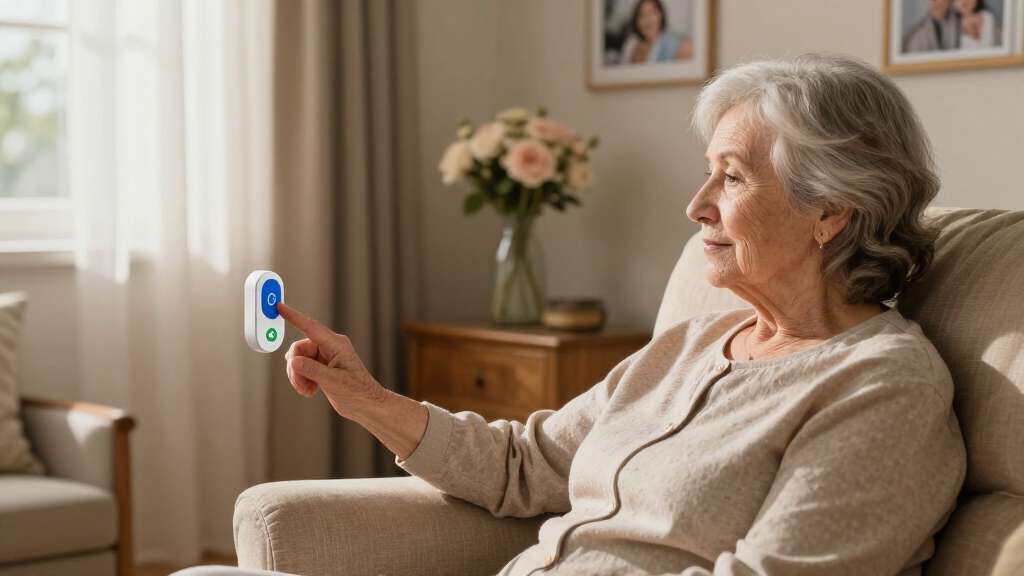
I evaluated each system against what actually determines ease of use in an emergency: how many steps it takes from press to alert, whether a senior with limited dexterity, vision, or memory can operate it without help, and how forgiving the hardware is when things go wrong. That meant favoring big, wearable buttons over tiny keyfobs, preferring systems that work out of the box over ones needing an app or WiFi configuration, and checking whether the receivers are loud and portable enough for a caregiver to actually hear them in a real house.
Beyond usability, I weighed range under realistic indoor conditions, waterproofing for bathroom use, battery life and replacement cost, and total cost of ownership — because a “cheap” pager that eats coin cells every month isn’t cheap. Systems that add monitoring, GPS, or fall detection were judged on whether those extras justify their recurring fees for the intended user. The ranking reflects a simple principle: the best system is the one a specific person will reliably use, so each pick is positioned around a buyer situation rather than a spec sheet.
Factors to Consider When Choosing Easy-to-use Emergency Alert Systems
Before choosing among these 14 systems, it helps to understand the bigger picture: what kind of emergency you’re actually preparing for, who will respond, and how much ongoing effort the system demands. The wrong choice usually isn’t a bad product — it’s a good product matched to the wrong situation.Caregiver Pager or Monitored Medical Alert: Know the Difference
This is the single most consequential decision, and many buyers get it wrong. A caregiver pager — which describes ten of the fourteen products here — only works if someone is within earshot of the receiver to respond. If your parent lives alone, the best pager on this list will not summon an ambulance. Monitored systems like the ADT and SecuLife picks connect to a cellular network and a response center, which is why they carry monthly fees. A useful middle ground is the WiFi app-based pager, which can notify a family member across town for free, though it depends entirely on your internet staying up. Match the system to who will actually respond within minutes, not to who could theoretically respond.
Range Ratings Are Optimistic — Plan for Half
Manufacturers test range in open air, which no house resembles. Interior walls, appliances, metal ductwork, and floors can cut a 1000-foot claim to 300–500 feet or less, and basements are the worst offenders. The practical fix isn’t buying the biggest range number; it’s adding receivers. Systems with two receivers let you place one on the main floor and one in a bedroom or garage, and cheap plug-in receivers can be daisy-chained for long or multi-story homes. When comparing models, treat range as a tiebreaker, not a headline feature, and prioritize the ones that let you expand with extra receivers later.
Button Design Matters More Than You Think
In a real emergency, the person pressing the button may be on the floor, disoriented, or have tremors and arthritis. Small keyfob-style transmitters are easy to lose and hard to grip; large wearable pendants and wall-mounted call buttons with a big press surface are far more reliable. Wearability is the other half of the equation — a button on a lanyard or wristband is used consistently, while one left on a nightstand is useless when someone falls in the kitchen. Look at how the button attaches, whether it’s waterproof enough for the shower, and whether the press requires force that a frail user can generate.
Watch the Hidden Cost of Batteries
Many budget pagers ship with coin cells that last six months to a year, and replacements across multiple buttons and receivers add up quietly. Some models use rechargeable transmitters, which cost more upfront but eliminate that recurring expense — the tradeoff is remembering to charge them, and a dead rechargeable button is as useless as a dead coin cell. A common mistake is buying the cheapest system, then discovering that proprietary batteries or poorly-sealed battery compartments fail after the first bathroom splash. Check whether the batteries are standard sizes you can buy anywhere, and set a calendar reminder for replacement regardless of the type.
Avoid Over-Buying Features for a Reluctant User
Fall detection, GPS, medication reminders, and smartphone apps all sound valuable, but every added feature increases the chance an older adult will reject the device entirely — and a rejected device provides zero protection. If your parent is skeptical of technology, a single-button pager with no app, no charging, and no pairing steps will outperform a feature-rich pendant sitting in a drawer. Conversely, if the user is comfortable with a phone and lives an active life, GPS tracking and fall detection earn their monthly fee quickly. Buy for the user’s tolerance, not for your own peace-of-mind wishlist.
Test Before You Trust It
Whatever you buy, run a real test from every room, the bathroom, the yard, and anywhere the user regularly goes — and repeat it monthly. Battery strength fades, receivers get unplugged by vacuum cleaners, and signal dead zones only reveal themselves under real conditions. For monitored systems, ask the provider how to run a test call without triggering a dispatch. The best habit is tying a test to something routine, like a weekly pill organizer refill. A system that was verified once at installation is a system you’re guessing about.
Frequently Asked Questions
Do any of these systems work if my parent lives alone?
Only the monitored options — the ADT On-The-Go and SecuLife pendant — genuinely protect someone living alone, because they connect to a cellular network and a response center rather than relying on a nearby caregiver. The WiFi app-based pager is a partial solution: it can alert you at work for free, but only if your home internet and their phone are both working, and only if you can actually respond or call for help quickly. Every other pager in this roundup assumes a caregiver is within receiver range. If you can’t be there within a few minutes of an alert, budget for the monthly fee — it’s the difference between notification and rescue.
Are the no-monthly-fee pagers really free to own?
Mostly, yes, but with two caveats. First, battery replacement is a real recurring cost — coin cells across multiple buttons and receivers can run $20–40 a year, and rechargeable models trade that cost for a charging routine. Second, some systems lock you into proprietary replacement buttons or receivers, so a single lost transmitter can mean rebuying a whole kit. The safest no-fee picks use standard batteries (CR2032, AAA) and sell components individually. Compared with monitored systems at $25–50 per month, though, a pager pays for itself within the first month or two.
How many call buttons and receivers do I actually need?
A good baseline is one wearable button per at-risk person plus one wall-mounted button in the bathroom, matched by receivers in the two rooms where the caregiver spends the most time. Falls cluster in bathrooms, bedrooms, and stairways, so a waterproof shower button is worth more than a second wearable for the same person. On the receiver side, two is usually the sweet spot — one carried or clipped on, one plugged in where you sit or sleep. More buttons than that mostly adds battery cost and pairing confusion; scale up only if the home is large or has a basement or detached area where alerts might not carry.
Is fall detection worth the extra monthly cost?
It depends on the user’s fall history and willingness to wear the device. Fall detection shines for people who have already fallen once, who have balance or blood-pressure issues, or who might be unable to press a button after a stroke or a bad fall — that’s when automatic detection is lifesaving. The tradeoffs are real: it requires near-constant wearing (usually on a pendant, not a wristband, for accuracy), it occasionally false-alarms, and it raises the monthly fee. If your parent can reliably press a button and is conscious in an emergency, a simple manual system is cheaper and less intrusive. If they can’t — or you lie awake worrying about it — the SecuLife-style pendant earns its fee.
Can these systems work in a nursing home or assisted living facility?
Simple wireless pagers work well there, and several picks in this roundup are marketed specifically for nursing care — a caregiver carries the receiver while the resident uses the call button, with no facility WiFi or permissions needed. Check the facility’s policy first, because some require their own call system and a few restrict outside transmitters due to signal interference with medical equipment. Multi-user settings are another consideration: models with 38+ melody or tone options let different residents’ buttons sound distinct on shared receivers. Monitored cellular systems generally work too, but confirm cellular coverage inside the building, since thick concrete construction can block signals in some facilities.
Conclusion
For most families, the Caregiver Pager with 2 Call Buttons and 2 Pagers is the best overall choice — it’s simple enough for any senior to operate, expandable, and free of ongoing costs. Budget-conscious buyers should look at the CallToU Bell Call Button or the Wireless Caregiver Pager Dual Receiver, which deliver dependable alerts and long range for well under the price of a single month of monitored service. On the premium end, the ADT On-The-Go offers professional monitoring and true anywhere coverage, while the SecuLife pendant is the standout for specific needs like fall detection and GPS wandering protection. If you want simplicity with a touch of remote capability, the WiFi app-based pager bridges the gap for free — as long as the user is comfortable with the setup. Whichever route you take, buy for the person who will press the button, test the system in every room, and remember that the most expensive feature is one that goes unused.