
TL;DR

Turn quiet afternoons into listening time
- Thousands of audiobooks, podcasts and originals
- Listen on your phone, tablet or Echo — also offline
- Cancel anytime
NASM-certified trainer and nutrition coach Kylie Hansen says using a GLP-1 has changed how she thinks about exercise: she now prioritizes building strength rather than working out to move the scale. In a Fit&Well interview, she recommended goblet squats, walking lunges and controlled dumbbell punches, while stressing that exercise choices should fit each person’s abilities.
Personal trainer Kylie Hansen, who says she has had bariatric surgery and currently uses a GLP-1 medication, told Fit&Well that weight loss has shifted her exercise focus from moving the scale to building strength. She shared three exercises she personally favors—goblet squats, walking lunges and dumbbell punches—and said medication has not removed the need to choose to exercise or work on healthy habits.
Hansen is a NASM-certified personal trainer and nutrition coach. In the Fit&Well interview, she described her training choices as shaped by her own experience with weight loss and a history of spinal surgery. She said she likes dumbbell workouts and gym machines, whose added stability gives her more confidence lifting heavier weights. Her recommendations are personal preferences, not a one-size-fits-all exercise prescription.
Her first pick is the goblet squat, typically performed for two to three sets of eight to 12 repetitions, with 60 to 90 seconds of rest. Hansen said squats work several muscle groups, particularly the quadriceps and glutes, while also engaging other muscles that help stabilize the body. She highlighted the range of ways to adapt the movement, from standing up from a chair to holding a dumbbell, so people can choose a version that suits their current ability.
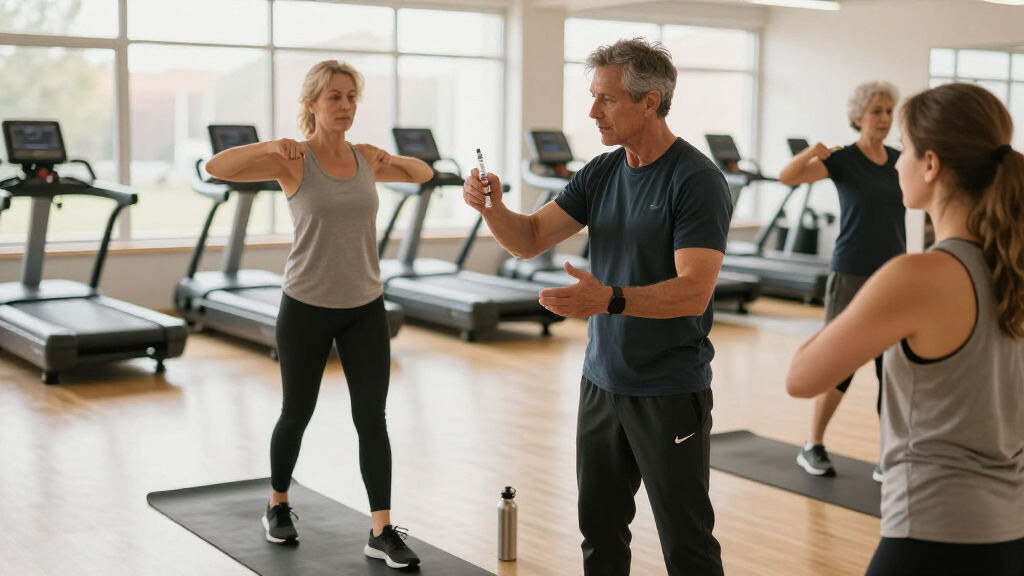
Hansen also likes walking lunges, which she said challenge each side of the body and involve balance and coordination. The source gives a suggested two to three sets of eight to 10 repetitions per side. People who find the walking version uncomfortable or unsteady can try a supported or stationary lunge, while those ready for more resistance can hold dumbbells. Her third choice, a controlled dumbbell punch, is performed with light weights for 20 to 30 seconds. Hansen said it can be an accessible way to start moving, but should not replace progressively loaded exercises such as squats, lunges, presses or rows.
Why Hansen Prioritizes Strength
Hansen’s account highlights a distinction relevant to people using weight-loss medication: weight loss and strength-building are different goals. She said she is less interested in exercise solely to burn calories or make the scale move, and more focused on gaining muscle and staying capable of activities she enjoys as she ages. That is her stated motivation; the interview does not provide clinical evidence about how GLP-1 medications affect muscle or prescribe a specific workout for medication users.
Her comments also illustrate how a change in appetite or weight-loss experience may affect a person’s motivation. Hansen said the medication helps her eat less and that seeing the scale move can make her mind tell her she does not need to do anything else. She described having to challenge that thought and continue making decisions about exercise and nutrition. The practical point in her account is that medication has not made exercise habits automatic.
The three movements offer examples of ways to approach strength and movement at different levels, but they are not tailored to every health history or ability. Hansen’s own history of spinal surgery is part of why she selects movements that feel natural to her. Readers with health concerns or limitations should seek guidance from an appropriately qualified professional before changing their exercise routine.
As an affiliate, we earn on qualifying purchases.
Hansen’s Training Approach
The Fit&Well report centers on Hansen’s personal experience rather than a clinical study or new medication guidance. She told the outlet she has had bariatric surgery, currently uses a GLP-1, and works as a trainer and nutrition coach. The source does not name the medication, give a dose, or describe a treatment timeline.
Hansen said she does not believe there is one perfect way to strength train. Her advice was to find movements that work for an individual, start at an appropriate level and create opportunities to get stronger over time. For squats, for example, she described a progression that could begin with getting up from a chair and later include bodyweight or weighted variations. The interview presents this as her approach, not a formal program or a recommendation specific to all GLP-1 users.
“Seeing the scale go down and building a strong, healthy body are not the same thing.”
— Kylie Hansen, speaking to Fit&Well
As an affiliate, we earn on qualifying purchases.
Limits of the Interview
The report does not identify Hansen’s specific GLP-1 medication, how long she has used it, or whether her experience is typical of other people taking these drugs. It also does not report clinical measurements, research findings or medical advice about exercise while on GLP-1 treatment. The effects of medication and exercise can vary, and the interview cannot establish cause and effect between the drug and changes in her motivation or training.
It is also unclear whether Hansen’s suggested sets, repetitions and exercise variations are appropriate for any individual reader. Her previous spinal surgery and her own assessment of what feels comfortable inform her choices. The article does not assess readers’ health, strength, balance or injury risks.
light dumbbell punch exercise equipment
As an affiliate, we earn on qualifying purchases.
As an affiliate, we earn on qualifying purchases.
Applying the Advice Safely
The source does not announce a follow-up study, program or next milestone. Hansen’s recommendations remain practical examples from a personal interview: choose movements suited to your current ability, start with manageable versions and progress when appropriate. She presents dumbbell punches as a lighter movement, not a substitute for progressively loaded strength work.
For readers considering exercise changes while using a GLP-1 or living with a prior injury or other health condition, the next step may be to discuss their plans with a qualified health professional or an appropriately credentialed exercise professional. Hansen’s experience offers one perspective, but the interview does not replace individualized guidance.
stability gym machines for seniors
As an affiliate, we earn on qualifying purchases.
As an affiliate, we earn on qualifying purchases.
Key Questions
How has using a GLP-1 changed Hansen’s approach to exercise?
Hansen told Fit&Well she is now less focused on exercising to burn calories or move the scale and more interested in building strength. She also said the medication can make her feel less motivated to exercise because the scale may move without what feels like extra effort.
Which three exercises does Hansen recommend?
She named goblet squats, walking lunges and dumbbell punches. They are exercises she personally likes, not a required or individually tailored program for everyone who uses a GLP-1.
What easier options does the report describe?
For squats, Hansen described starting with standing up from a chair and progressing to other versions as appropriate. For lunges, the report suggests a supported or stationary lunge if walking lunges feel uncomfortable or unsteady.
Does Hansen say dumbbell punches replace strength training?
No. She described punches with light dumbbells as a way to make movement feel approachable and said they should be treated as a lighter resistance exercise, not a replacement for progressively loaded movements such as squats, lunges, presses or rows.
Is this workout advice for everyone taking GLP-1 medication?
No. The interview reports Hansen’s personal experience and does not provide individualized medical or exercise advice. People with health conditions, injuries or questions about exercising while on medication should consult a qualified professional.
Source: rss
Halloween Picks
halloween
As an affiliate, we earn on qualifying purchases.