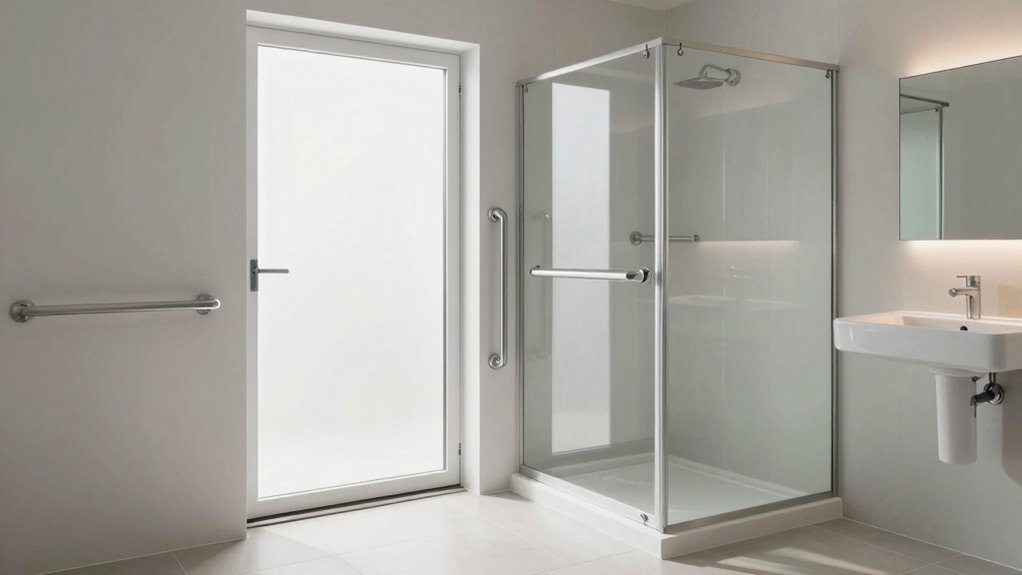
As your mobility changes, it’s essential to prioritize safety and accessibility around your bathroom. You should secure sturdy grab bars near the toilet and shower, widen doorways for easier access, and choose slip-resistant flooring. Keep fixtures easy to operate and maintain good lighting for clarity. Regularly inspect for damage and adapt your layout as needed. Focusing on these improvements helps maintain independence and reduces fall risks—discover more ways to make your bathroom safer as you go.
Key Takeaways
- Regularly reassess bathroom layout to accommodate evolving mobility needs and modify fixtures or pathways accordingly.
- Install grab bars and accessible fixtures at appropriate heights to support independence and safety.
- Ensure clear, obstacle-free pathways and widen doorways for mobility aids like wheelchairs or walkers.
- Use slip-resistant flooring and proper lighting to prevent falls and improve visibility at all times.
- Incorporate natural elements and safety cues to enhance environment awareness and comfort over time.
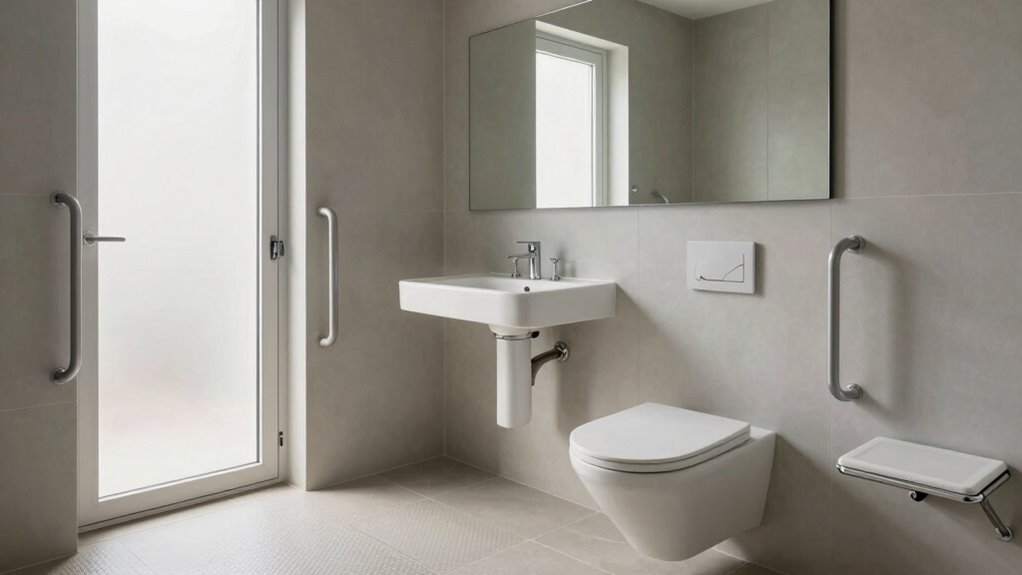
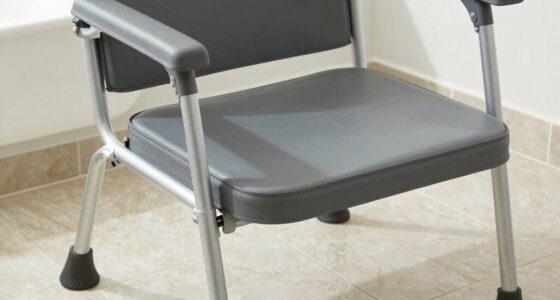
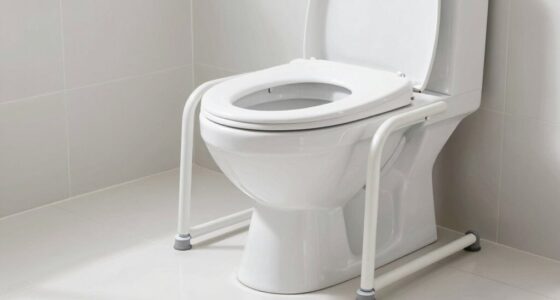
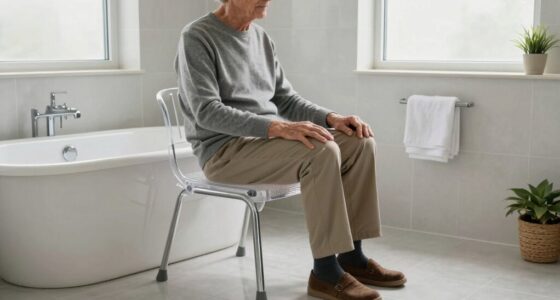
Accessible bathroom design is essential for ensuring everyone can maintain independence and safety in their daily routines. As your mobility changes, your bathroom needs may evolve, making it necessary to rethink how you approach access and safety. One of the most critical aspects is toilet safety. You want to feel confident that you can safely use the toilet without risking falls or injury. Installing grab bars around the toilet is a simple yet effective way to enhance safety and support. These bars provide a sturdy handhold, giving you leverage when sitting down or standing up. When choosing grab bars, consider their placement carefully: they should be within easy reach from a seated position and at a comfortable height to provide maximum support. Not only do they improve safety, but they also help you maintain independence longer, reducing reliance on caregivers. Incorporating landscaping with natural elements can also improve the overall safety and aesthetic of your bathroom environment. Thinking about bathroom access as your mobility changes also means evaluating the overall layout. Clear pathways are essential; you should have enough space to move freely without obstacles. If space feels tight, consider removing or repositioning furniture and fixtures that might block your movement. A wider doorway can make a significant difference, especially if you’re using mobility aids like a walker or wheelchair. Installing a barrier-free or roll-in shower can also make bathing easier and safer, eliminating the need to step over a high threshold. These modifications, while seemingly small, drastically improve your ability to use the bathroom comfortably and safely. Regular inspection of fixtures and flooring helps prevent accidents caused by wear or damage. Additionally, flooring safety is crucial, as slip-resistant surfaces significantly lower the risk of falls. Choosing flooring materials with non-slip properties can further enhance safety in wet environments. Properly maintained lighting systems are equally important, as they ensure visibility and reduce hazards caused by poor illumination. Bright, well-placed lighting helps you see clearly and avoid accidents. Night lights are also a good addition, providing enough illumination at night without being blinding. When thinking about accessibility, consider lever-style faucet handles and easy-to-operate fixtures, which require less strength and dexterity than traditional knobs. These adjustments make everyday tasks more manageable and reduce frustration. Additionally, understanding auditory processing can help you recognize safety cues or alarms in your environment more effectively, contributing to overall safety. Finally, think about the long-term durability of your modifications. Quality grab bars, slip-resistant flooring, and sturdy fixtures ensure your bathroom remains safe over time. Regularly inspecting these features for wear and tear allows you to maintain a safe environment. By proactively adapting your bathroom setup with safety in mind, you help preserve your independence, reduce risks, and create a space that feels secure and welcoming as your needs evolve.
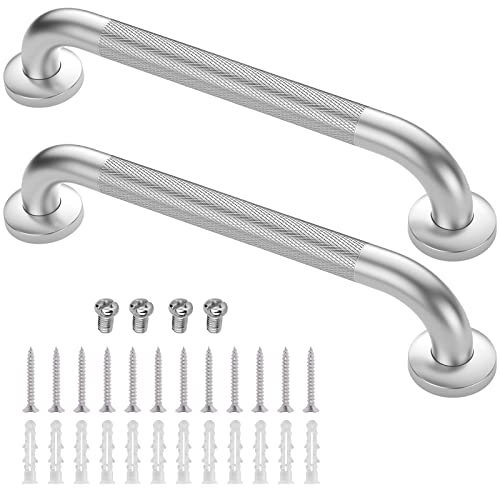
Grab Bars for Shower, 2 Pack 16 Inch Anti-Slip Safety Shower Handle for Senior, Stainless Steel Shower Grab Bars, Handicap Elderly Bathtub and Toilet Bathroom Assist
SUPERB MATERIAL: The shower grab bars for seniors is made of stainless steel which is waterproof, rustproof and…
As an affiliate, we earn on qualifying purchases.
As an affiliate, we earn on qualifying purchases.
Frequently Asked Questions
How Do I Assess My Current Bathroom Accessibility Needs?
You should start by evaluating your daily routines and noting any difficulties with current bathroom features. Consider universal design principles, like grab bars or walk-in showers, that could improve safety and comfort. Think about assistive devices, such as raised toilet seats or handheld showers, that might be necessary now or in the future. Testing these options helps you determine what works best for your mobility needs and guarantees your bathroom remains accessible.
Are There Specific Legal Requirements for Accessible Bathrooms?
You’re facing a challenge that feels like scaling Mount Everest—don’t worry, legal requirements for accessible bathrooms are clear. These include compliance with Accessibility Standards like the ADA, which mandate features such as grab bars, sufficient door widths, and accessible sinks. Local building codes may add specific rules. By understanding these regulations, you guarantee your bathroom meets legal standards, creating a safe, inclusive space that’s accessible for everyone.
What Affordable Modifications Can Improve Bathroom Safety?
You can improve bathroom safety with budget-friendly solutions like installing grab bars, non-slip mats, and lever-style faucets. These modifications enhance safety by reducing fall risks and making daily tasks easier. Consider replacing traditional toilet seats with raised ones for added comfort. Adding good lighting is also a simple safety enhancement. These affordable upgrades help you maintain independence while ensuring your bathroom remains a safe, accessible space as your mobility needs change.
How Can I Involve Family in Bathroom Accessibility Planning?
Did you know that family support can markedly boost confidence during accessibility changes? To involve your family, openly discuss your needs and concerns, encouraging their input and ideas. Invite them to participate in planning modifications and doing safety checks together. Their emotional support provides reassurance, making the shift smoother. Active family involvement fosters a shared sense of responsibility and guarantees your bathroom remains a safe, accessible space tailored to your evolving needs.
When Should I Consider Professional Consultation for Bathroom Upgrades?
You should consider professional consultation for bathroom upgrades when you notice ongoing difficulty or safety concerns, especially if planning for future needs. Professionals can help you incorporate universal design principles that make your bathroom more adaptable, accommodating changing mobility. By future-proofing your space now, you guarantee safety and accessibility as your needs evolve, preventing costly modifications later and providing peace of mind for you and your family.

TEESHLY Bathtub Mats for Shower Tub, Extra Long Non-Slip 39 x 16 Inch Bath Mat with Drain Holes and Suction Cups, BathMat for Bathroom with Machine Washable (Clear Grey)
NON-SLIP LARGE BATH MAT: The superior bath and shower mat is 39 x 16 inch for maximum coverage,…
As an affiliate, we earn on qualifying purchases.
As an affiliate, we earn on qualifying purchases.
Conclusion
As your mobility changes, your approach to bathroom access evolves. Embrace adaptions, seek solutions, and stay proactive. Stay aware, stay prepared, and stay empowered. Remember, your comfort depends on your choices, your safety depends on your planning, and your independence depends on your confidence. By adjusting your mindset and environment, you create a space that supports your needs. Ultimately, it’s about maintaining dignity, fostering independence, and choosing resilience every step of the way.

Nuvium Aluminum Threshold Ramps for Doorways, 31" L x 25.4" W, Wider Platform Anti-Slip Portable Ramps for Wheelchairs, Door Threshold Ramp for Wheelchair, Scooter, Strollers, Cart, Walkers, Pets
Multi-Purpose Applications: Nuvium's versatile mobile ramp effortlessly assists wheelchairs, mobility scooters, strollers, and two-wheeled vehicles over stairs and…
As an affiliate, we earn on qualifying purchases.
As an affiliate, we earn on qualifying purchases.

Collapsible Shower Dam – Water Threshold Barrier Stopper for Curb Free Shower/Easy Wheelchair Roll In/Use with Weighted Curtain for Full Splash Guard/Neutral/Radius End Caps/ 42"
✅ Highly Inert and Temperature Resistant: A Shower Water Guard made of silicone rubber offers excellent temperature resilience,…
As an affiliate, we earn on qualifying purchases.
As an affiliate, we earn on qualifying purchases.