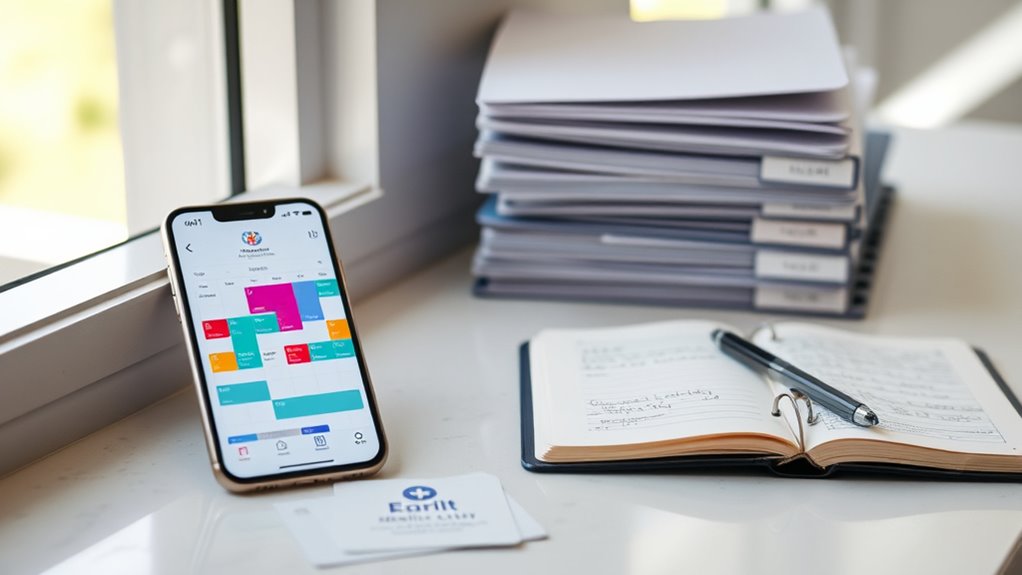

To stay organized with medical appointments, use a digital calendar or planner that’s easy to access and update regularly. Keep all your insurance paperwork, cards, and receipts in one place, and verify coverage before visits. Maintain a current medication list and use reminders for refills. Review your schedule weekly to prevent missed appointments or errors. Staying organized can reduce stress and improve health management—keep going to discover even more helpful tips.

Turn quiet afternoons into listening time
- Thousands of audiobooks, podcasts and originals
- Listen on your phone, tablet or Echo — also offline
- Cancel anytime
Key Takeaways
- Use a digital or physical calendar to track and regularly review upcoming appointments.
- Keep all insurance documents and medication lists organized in a dedicated, accessible location.
- Set reminders 1-2 days before appointments to prepare and avoid last-minute stress.
- Update medication and insurance information immediately after any changes or appointments.
- Conduct weekly schedule reviews to prevent conflicts and ensure all paperwork and details are current.

Have you ever struggled to keep track of medical appointments or felt overwhelmed by scheduling conflicts? If so, you’re not alone. Managing multiple appointments, especially when dealing with insurance claims and medication management, can quickly become stressful. Staying organized is essential to guarantee you get the care you need without unnecessary hassle. One of the first steps is setting up a reliable system to track your appointments. Whether you prefer a digital calendar or a traditional planner, make sure it’s easily accessible and always up to date. Regularly review your schedule and set reminders a day or two before each appointment. This helps prevent last-minute surprises and ensures you’re prepared with any necessary documents or questions.
When it comes to insurance claims, organization becomes even more critical. Keep all relevant paperwork in one place—digital copies or physical files—so you can quickly access your insurance cards, claim forms, and receipts. Before each appointment, verify your coverage and understand what services are covered to avoid surprises on the bill. Some insurance providers offer apps that track claims and payments, which can be a helpful way to stay informed about your coverage status. Staying proactive about insurance claims not only reduces stress but also speeds up reimbursement processes, so you’re not left sorting through confusing paperwork at the last minute. Additionally, understanding the importance of color accuracy in home cinema projectors can help you select the right device for your entertainment setup.
Medication management is another crucial aspect of handling medical appointments effectively. Keep a detailed list of all your medications, including dosages and schedules, and update it regularly. Use a pill organizer to prevent missed doses and bring this list to each appointment. If your doctor adjusts your medication, make sure to update your records immediately. Having a clear medication list also simplifies insurance claims, especially when you need to submit proof of prescriptions or discuss medication coverage with your provider. Additionally, set reminders on your phone to refill prescriptions before they run out, preventing gaps in your treatment. Proper medication management ensures your health remains stable and helps avoid complications that could lead to additional appointments or hospital visits.
Finally, establish a routine of reviewing your schedule weekly. Check upcoming appointments, confirm insurance details, and update your medication list as needed. This habit keeps everything current and minimizes the chances of missed appointments or paperwork errors. Remember, staying organized isn’t just about convenience; it’s about taking control of your health and ensuring you receive the best possible care. By keeping track of insurance claims and managing medications efficiently, you’ll find that handling medical appointments becomes less stressful and more manageable.
digital medical appointment calendar
As an affiliate, we earn on qualifying purchases.
As an affiliate, we earn on qualifying purchases.
Frequently Asked Questions
How Can I Reschedule Appointments Efficiently?
To reschedule appointments efficiently, first check the appointment confirmation details and familiarize yourself with the rescheduling policies. Contact your healthcare provider promptly, preferably via phone or online portal, to request a new date and time. Clearly communicate your needs, and confirm the new appointment. This proactive approach guarantees smooth rescheduling, minimizes confusion, and keeps your medical care on track without unnecessary delays.
What Should I Do if I Miss an Appointment?
Missing an appointment is like losing your way in a dense forest. First, call your healthcare provider promptly to inform them and reschedule. Follow up with any necessary procedures, like confirming new appointment dates or providing updates on your condition. Keep track of your missed appointment and stay proactive to avoid further disruptions. Being organized helps guarantee your health stays on track, even when plans change unexpectedly.
How Do I Prepare for a Medical Appointment?
To prepare for a medical appointment, start by organizing your medical records and noting down any symptoms, questions, or concerns. Bring a list of current medications and previous treatments. Review your medical history and update your records if needed. This consultation preparation guarantees you communicate clearly with your healthcare provider and get the most out of your appointment. Being organized helps you stay focused and confident during your visit.
How Can I Manage Multiple Healthcare Providers?
Did you know that nearly 60% of patients struggle to coordinate multiple healthcare providers? To manage this effectively, prioritize clear patient communication by keeping a detailed list of providers, appointments, and questions. Always carry updated insurance documentation to avoid delays. Use a digital calendar or app to track appointments and notes, ensuring you stay organized and informed, which helps you navigate your healthcare efficiently and reduces stress.
What Digital Tools Are Best for Appointment Reminders?
You should use a digital calendar like Google Calendar or Apple Calendar to set up appointment reminders. Additionally, reminder apps such as Todoist or Microsoft To Do help keep track of upcoming healthcare visits. These tools send notifications directly to your phone or email, ensuring you never forget an appointment. By integrating digital calendars with reminder apps, you stay organized and on top of your healthcare schedule effortlessly.
medication organizer with reminders
As an affiliate, we earn on qualifying purchases.
As an affiliate, we earn on qualifying purchases.
Conclusion
Staying organized with your medical appointments can markedly improve your health and peace of mind. Did you know that nearly 30% of adults miss or forget appointments? By keeping a schedule, setting reminders, and preparing questions ahead of time, you’re more likely to stay on top of your healthcare. Remember, a little planning goes a long way in preventing missed visits and ensuring you get the care you need. Take charge today for a healthier tomorrow!
insurance claim organizer folder
As an affiliate, we earn on qualifying purchases.
As an affiliate, we earn on qualifying purchases.
pill organizer with daily compartments
As an affiliate, we earn on qualifying purchases.
As an affiliate, we earn on qualifying purchases.
Fall Picks
fall essentials
As an affiliate, we earn on qualifying purchases.