To prevent falls at home, keep walkways clear, well-lit, and free of clutter or loose cords. Install sturdy handrails and grab bars in key areas like stairs and bathrooms. Make sure footwear has non-slip soles and rugs are secured with non-slip backing. Adjust furniture for easy movement and encourage regular vision and hearing checks. Promote strength and balance exercises, and review medications with a healthcare provider. Continue exploring these tips to create a safer environment for your loved one.
Key Takeaways
- Keep walkways clear of clutter, cords, and loose rugs to prevent tripping hazards.
- Install sturdy handrails and grab bars in key areas like stairways and bathrooms.
- Ensure proper lighting throughout the home, especially in high-risk areas.
- Encourage use of non-slip mats and footwear with non-slip soles indoors.
- Regularly assess and modify the environment to address changing mobility needs.
Keep Walkways Clear and Well-Lit

To prevent falls, it’s essential to keep walkways clear and well-lit. Good lighting design helps guarantee every corner is visible, reducing the risk of tripping over objects or uneven surfaces. Regular floor maintenance is equally important; promptly clean up spills, remove clutter, and repair any uneven flooring. Proper lighting not only illuminates potential hazards but also enhances visibility for caregivers and seniors alike. Use bright, even lighting fixtures and avoid shadows that could hide obstacles. Keep pathways free from cords, furniture, or other obstructions that could cause trips. Additionally, understanding field‑of‑view is important for maintaining overall safety and well-being, especially in environments where skin health and infection prevention are priorities. By maintaining a tidy environment and optimizing your lighting design, you create a safer space where falls are less likely to occur, providing peace of mind for both caregivers and those they care for.
Install Handrails and Grab Bars in Key Areas

Installing handrails and grab bars in key areas is one of the most effective ways to prevent falls. They provide essential support in high-risk spots like stairways, bathrooms, and hallways. When choosing grab bars, consider different types of handrails, such as wall-mounted or corner bars, to suit specific needs. Proper grab bar installation ensures safety and stability, reducing slips and falls. Remember to place them at appropriate heights and locations for easy access. Here are some tips:
- Use sturdy, corrosion-resistant materials for durability
- Install grab bars securely into wall studs
- Choose grab bars with textured surfaces for better grip
- Position handrails in stairways for continuous support
- Ensure grab bars are at an accessible height for the user
- Regular maintenance and checking for corrosion or looseness can enhance safety and longevity.
- Additionally, paying attention to installation guidelines can improve the overall effectiveness of grab bars, especially when considering home safety standards to ensure comprehensive fall prevention.
- To maximize safety, consider proper anchoring methods to ensure grab bars stay firmly in place over time.
- Consulting professional installation services can also ensure compliance with safety standards and optimal positioning.
Remove Tripping Hazards and Clutter

Have you checked your living space for tripping hazards lately? Clutter removal is essential to prevent falls. Removing obstacles like loose rugs, cords, and misplaced furniture reduces the risk of accidents. Regularly clearing walkways ensures safe passage throughout your home. To help visualize, consider this table:
| Clutter Removal Tasks | Common Obstacle | Result |
|---|---|---|
| Clear walkways | Loose cords | Safer movement |
| Tidy up cluttered areas | Unstable furniture | Reduced tripping hazards |
| Organize items on floors | Rugs without non-slip | Fewer falls |
| Remove unnecessary objects | Excess furniture | Less obstruction |
| Keep entrances clear | Shoes and bags | Easy, safe access |
Focusing on obstacle elimination through clutter removal keeps your home safer and minimizes fall risks. Proper clutter management is also key to maintaining a safe living environment. Incorporating home safety assessments can help identify hidden hazards before they cause accidents. Additionally, utilizing smart home technology can offer real-time monitoring and alerts to prevent potential hazards. Being aware of trip hazards and addressing them promptly further enhances safety. Regularly inspecting your living space for potential risks ensures ongoing safety and peace of mind.
Ensure Proper Footwear Is Worn Indoors

After clearing clutter and removing tripping hazards, paying attention to the footwear worn indoors can make a significant difference in preventing falls. Proper footwear supports balance and stability, reducing the risk of slips. Always choose shoes with non-slip soles and secure fit, avoiding slippers or loose slippers that can cause slipping. Make certain shoes have good traction and provide enough support for daily activities. Avoid walking barefoot or in socks on smooth surfaces, as they increase fall risk. Proper footwear enhances indoor safety by keeping feet stable and secure. Additionally, incorporating balanced design in safety assessments can help identify potential hazards and improve fall prevention strategies.
Use Non-Slip Mats and Rugs
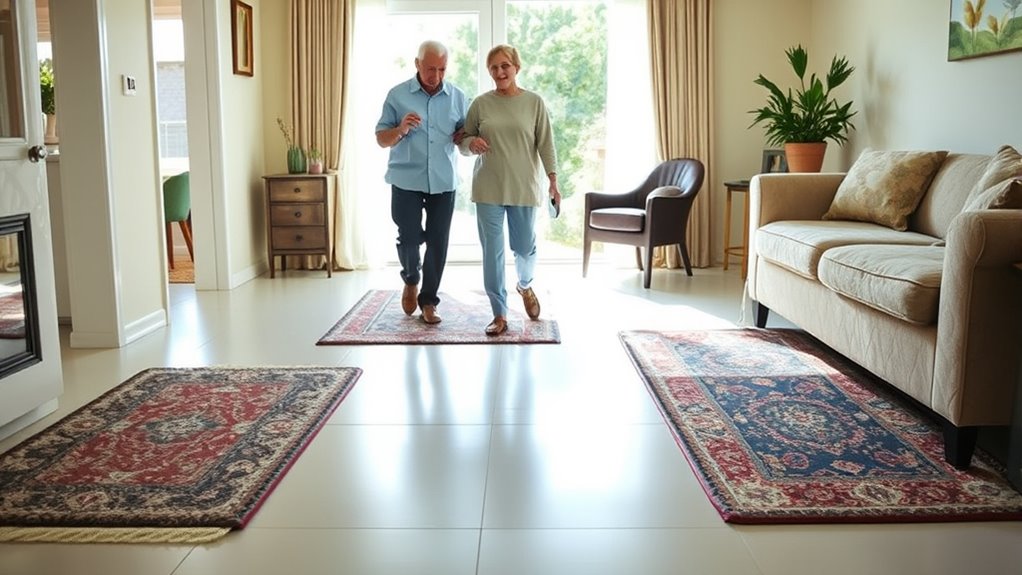
Using non-slip mats and rugs is an effective way to prevent falls around the home. Place non slip rugs in high-risk areas like the kitchen, bathroom, and entryways. Safety mats with rubber backing can keep rugs firmly in place, reducing the risk of slips and trips. Make sure all rugs have non-slip backing or add non-slip pads underneath to prevent sliding. Regularly check for wear and tear, replacing any damaged mats. Keep walkways clear of loose rugs that can bunch up or slip unexpectedly. Secure corners of larger rugs with double-sided tape or rug grips. These simple steps create a safer environment, giving both you and your loved ones peace of mind. Properly secured non slip rugs and safety mats are a proactive measure to prevent falls at home. Additionally, choosing high-quality materials and understanding the cost‑of‑ownership associated with different types of mats can help maintain a safe and cost-effective setup over time. Incorporating professional advice can further ensure that your flooring choices meet safety standards and suit your specific needs. For example, selecting mats with anti-slip properties can enhance safety and reduce ongoing maintenance concerns. Regularly cleaning and inspecting your mats ensures they retain their non-slip features and remain effective over time. It is also beneficial to consider the specific needs of household members, such as non-slip options that cater to elderly or mobility-impaired individuals.
Improve Bathroom Safety With Grab Bars and Elevated Toilets
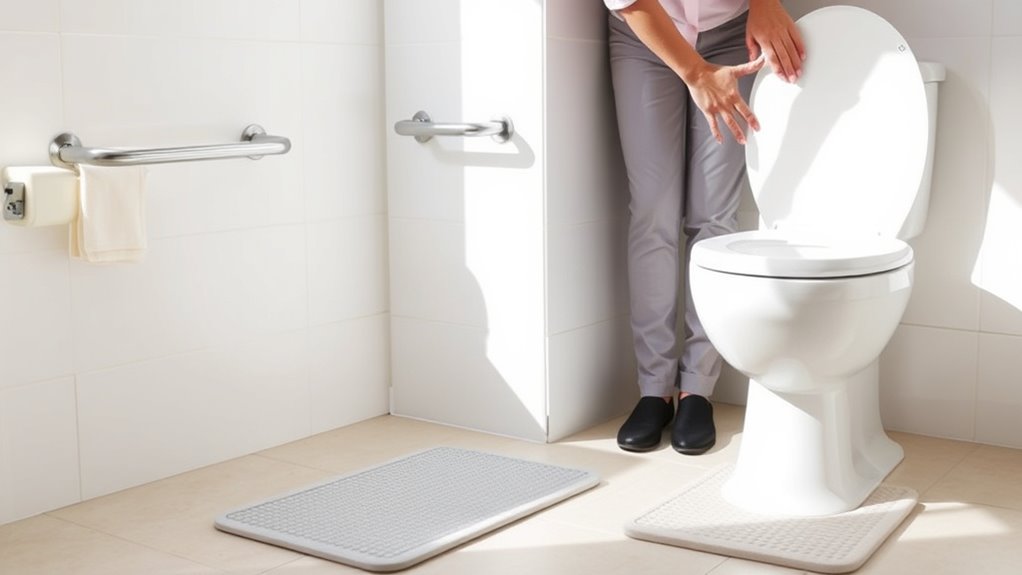
Securing the bathroom environment can considerably reduce fall risks. Installing bathtub grab bars provides sturdy support when entering or exiting the tub, preventing slips. Elevated toilet seats make sitting and standing safer by reducing the effort needed and improving stability. These simple modifications help your loved one feel more confident and secure during bathroom routines.
Consider these tips:
- Install bathtub grab bars on all sides of the tub for extra support
- Use non-slip mats in the shower and bath area
- Choose an elevated toilet seat with rails for added balance
- Ensure grab bars are securely anchored into wall studs
- Keep the bathroom well-lit to avoid accidents
Adjust Furniture for Ease of Movement
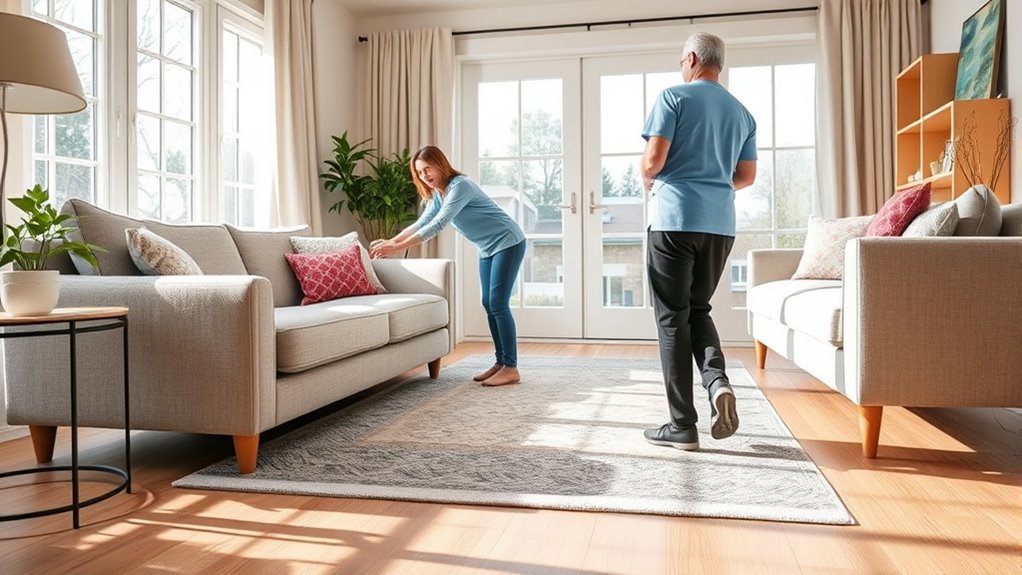
To reduce fall risks, it’s important to arrange furniture so your loved one can move around safely and comfortably. Furniture rearrangement helps create clear pathways, reducing tripping hazards. Keep walkways wide enough for easy navigation and avoid clutter. Make ergonomic adjustments by placing frequently used items within easy reach to prevent unnecessary stretching or bending. Ensure that furniture is stable and doesn’t wobble, which could cause falls. Consider using rugs with non-slip backing or removing loose carpets altogether. Position furniture to allow smooth transitions from one area to another, especially near doorways and exits. Regularly assess the arrangement and make adjustments as needed, especially if your loved one’s mobility changes. These steps promote a safer environment and support independent movement at home.
Encourage Regular Vision and Hearing Checks

Have you scheduled regular vision and hearing checkups for your loved one? Maintaining good vision health and hearing assessments can considerably reduce fall risks at home. When vision or hearing declines, hazards become harder to detect, increasing the chance of accidents. Regular checkups ensure issues are caught early and addressed promptly.
Consider these tips:
- Schedule annual eye exams to monitor vision health
- Arrange hearing assessments to detect impairments early
- Keep glasses and hearing aids updated and in good condition
- Encourage your loved one to report any changes in sight or hearing
- Ensure well-lit spaces and minimize background noise for safety
Prioritizing regular vision and hearing checks helps your loved one stay aware of their surroundings and reduces fall hazards.
Promote Physical Activity to Enhance Strength and Balance

Maintaining good vision and hearing is essential for safety, but staying physically active plays an equally important role in preventing falls. Incorporate balance exercises into daily routines to improve stability and coordination. Simple activities like standing on one foot or heel-to-toe walking can make a difference. Strength training is also crucial; focus on exercises that target leg, core, and back muscles to enhance overall strength and support. Regular physical activity helps increase flexibility, reduces muscle weakness, and boosts confidence in mobility. Encourage your loved one to engage in safe, low-impact activities such as walking, tai chi, or gentle stretching. Consistent movement not only strengthens muscles but also sharpens balance, notably reducing the risk of falls at home.
Review Medications for Side Effects That Increase Fall Risk

Since certain medications can cause dizziness, drowsiness, or balance problems, it’s important to regularly review your loved one’s prescriptions with their healthcare provider. Medication side effects and drug interactions can considerably increase fall risk. By staying informed, you can help prevent accidents.
Here are some key points to think about:
- Discuss any new or worsening side effects with the doctor
- Check if medications cause dizziness or sedation
- Review all prescriptions for potential drug interactions
- Ask about alternatives with fewer side effects
- Ensure dosages are appropriate and regularly updated
Regular medication reviews help identify and address side effects that may impair balance or coordination, reducing the likelihood of falls and keeping your loved one safe at home.
Frequently Asked Questions
How Can I Effectively Communicate Fall Prevention Tips to Seniors?
You can effectively communicate fall prevention tips to seniors by using personalized communication, tailoring your message to their needs and preferences. Incorporate visual aids like pictures or diagrams to make instructions clearer and more engaging. Speak calmly and clearly, encouraging questions and feedback. By combining personalized communication with visual aids, you help seniors understand and remember safety measures, making fall prevention a collaborative effort that feels supportive and respectful.
What Are the Best Types of Footwear for Indoor Safety?
You should choose indoor footwear that emphasizes shoe safety by providing good traction, a secure fit, and a supportive sole. Opt for shoes with non-slip soles, closed toes, and adjustable straps or laces to prevent slipping or tripping. Avoid slippers or loose-fitting shoes that can cause falls. Prioritize comfortable, well-fitting indoor footwear that helps maintain stability and reduces the risk of falls, keeping your loved one safe at home.
How Often Should I Check for Potential Fall Hazards?
You should check for potential fall hazards weekly to maintain home safety. Regular hazard inspections help catch issues early, like loose rugs or clutter, that could cause trips. By staying vigilant, you create a safer environment, reducing the risk of falls. Consistent inspections show you care and help keep your loved ones secure, making your home a safer place every day.
Are There Specific Exercises Recommended for Improving Balance?
You should incorporate balance exercises like heel-to-toe walks and standing on one foot daily to improve stability. Strength training, focusing on leg and core muscles, also helps enhance balance. Consistent practice strengthens your muscles and improves coordination, reducing fall risk. Make sure to start slowly and use support if needed. Regularly engaging in these exercises can make a significant difference in maintaining your independence and preventing falls at home.
How Do I Handle Resistance to Using Safety Equipment?
Imagine trying to teach a cat to use a new litter box; it takes patience. When handling resistance to safety equipment, use motivational strategies and caregiver patience. Explain the benefits, involve them in choosing equipment, and reassure them you’re there to support. Like training that cat, gentle persistence and understanding help your loved one see safety gear as a positive step, easing their fears and encouraging cooperation.
Conclusion
By keeping walkways clear and well-lit, removing hazards, and encouraging regular checkups, you create a safer home. By installing grab bars and using non-slip mats, you provide support and stability. By promoting physical activity and reviewing medications, you strengthen strength and reduce risks. Remember, safety isn’t a one-time effort—it’s about consistent vigilance, regular adjustments, and ongoing care to prevent falls and protect your loved ones every day.