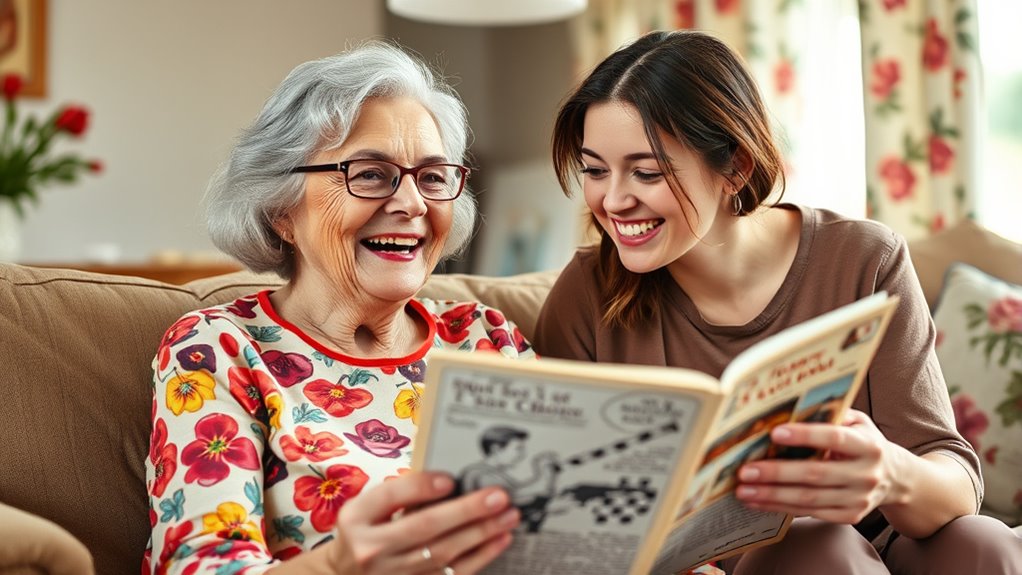

To connect with seniors using humor and reminiscence, focus on creating joyful, meaningful moments by sharing light-hearted jokes, funny stories, and familiar music or photographs from their past. Use these elements as prompts to spark recognition, encourage stories, and foster genuine bonds. Incorporating humor lifts spirits and enhances emotional well-being, while reminiscence reinforces their sense of identity. Keep exploring how combining these approaches can turn interactions into enriching experiences that truly resonate.
Key Takeaways
- Incorporate shared memories and funny stories to foster engagement and strengthen bonds with seniors.
- Use humor, such as jokes or playful teasing, to create a joyful and relaxed atmosphere.
- Utilize memory triggers like photos and music to evoke positive past experiences and facilitate reminiscing.
- Combine humor with reminiscence activities to enhance emotional well-being and cognitive connection.
- Be attentive to individual cues, respecting their life stories while adding light-hearted elements to interactions.

Connecting with seniors can be deeply rewarding, especially when you use humor and reminiscence to build rapport. These approaches create a warm, engaging environment where seniors feel valued and understood. One powerful way to deepen this connection is by tapping into memory triggers—elements from their past that spark recognition and recall. Sharing stories, playing familiar music, or displaying old photographs can ignite memories that bring joy and a sense of identity. When you introduce humor into these moments, it becomes even more effective. Laughter therapy, which involves incorporating light-hearted jokes, funny anecdotes, or playful activities, can help seniors relax and open up more easily. It’s not just about making them laugh; it’s about creating a positive emotional experience that enhances their overall well-being.
Using humor and reminiscence fosters meaningful, joyful connections with seniors, enhancing their well-being and sense of identity.
Using humor helps break down barriers and fosters a sense of companionship. When you tell a funny story or joke tied to a shared experience, you’re not only entertaining but also reinforcing a bond rooted in familiarity. Seniors often enjoy reminiscing because it affirms their life stories and personal history. As they recall cherished memories, they become more engaged and connected. Incorporating humor within these reminiscence sessions adds an element of joy, making the experience memorable and uplifting. For example, if you’re discussing childhood games, sharing a humorous personal story about a funny mishap can encourage them to share their own amusing tales, creating a lively, interactive dialogue. Additionally, understanding the benefits of laughter therapy can help you recognize its positive impact on mental and physical health.
Laughter therapy is also a practical tool for encouraging mental and physical health. It releases endorphins, reduces stress, and can even improve social interactions. When you combine humor with reminiscing, you’re giving seniors a chance to relive positive moments, which can boost their mood and cognitive function. Be attentive to their responses—what makes them laugh or smile? Use these cues to steer conversations toward topics that evoke happiness. Keep the tone light and genuine, and remember that humor doesn’t have to be sophisticated; often, simple, silly jokes or playful teasing do the trick.
Ultimately, using humor and reminiscence isn’t just about entertainment; it’s about creating a meaningful connection that respects their life experiences and celebrates their individuality. Memory triggers serve as gateways to the past, and laughter therapy enhances these journeys into their personal history. When you approach seniors with kindness, humor, and genuine interest, you foster a sense of belonging and joy that can enrich both their lives and yours.
reminiscence therapy photo albums
As an affiliate, we earn on qualifying purchases.
As an affiliate, we earn on qualifying purchases.
Frequently Asked Questions
How Can Humor Help Improve Seniors’ Mental Health?
Humor can considerably boost seniors’ mental health by encouraging joyful engagement and reducing stress. When you incorporate laughter therapy, you create a positive environment that lifts their spirits. Sharing funny stories or jokes helps seniors feel connected and valued, which improves mood and cognitive function. By fostering laughter and lightheartedness, you help them build resilience and enjoy life more fully, ultimately enhancing their overall well-being.
What Are Safe Topics for Reminiscence With Seniors?
You should focus on safe storytelling topics that spark positive memories and avoid sensitive subjects. Use memory triggers like childhood games, family celebrations, or favorite hobbies to encourage seniors to share stories comfortably. Keep the conversation light and respectful, ensuring they feel safe and valued. Asking open-ended questions about happy past experiences helps foster connection and trust, making reminiscence a joyful, safe activity for everyone involved.
How Do I Gauge if a Senior Enjoys a Joke?
You can gauge if a senior enjoys a joke by paying attention to their humor cues—like smiling, laughing, or light-hearted comments. Start with age-appropriate jokes, and if they respond positively, they likely enjoy humor. Don’t be discouraged if they don’t laugh immediately; humor varies. Keep observing their reactions to different jokes, and you’ll quickly learn what makes them smile, helping you connect better through shared laughter.
Are There Specific Humor Styles Suitable for Different Seniors?
You should consider cultural humor and age-appropriate comedy when choosing humor styles for seniors. Some seniors enjoy light, nostalgic jokes, while others prefer witty or clever humor that respects their cultural background. Pay attention to their reactions and comfort level to gauge what suits them best. Adjust your approach accordingly—what’s funny to one person might not be to another, so stay observant and respectful.
How Can Caregivers Incorporate Humor Into Daily Routines?
Think of your daily routine as a garden that needs nurturing. Incorporate humor through laughter therapy and playful activities like silly games or jokes, creating a joyful atmosphere. You brighten their day and foster connection by sharing lighthearted moments. These small, intentional acts make caregiving feel more natural and enjoyable, helping seniors feel valued and engaged. Your playful approach transforms ordinary routines into cherished memories filled with laughter.
As an affiliate, we earn on qualifying purchases.
Conclusion
By blending humor and reminiscing, you build genuine connections with seniors that lift their spirits and foster trust. Sharing a laugh or a fond memory shows you care and creates bonds that stand the test of time. Remember, it’s often the little things that count most—sometimes, a well-timed joke or a shared story can open doors you never knew were locked. After all, a kind heart can turn the tide and make a real difference.
As an affiliate, we earn on qualifying purchases.
humor and reminiscence activity kits for seniors
As an affiliate, we earn on qualifying purchases.
As an affiliate, we earn on qualifying purchases.