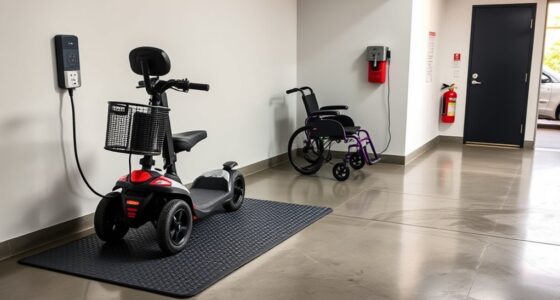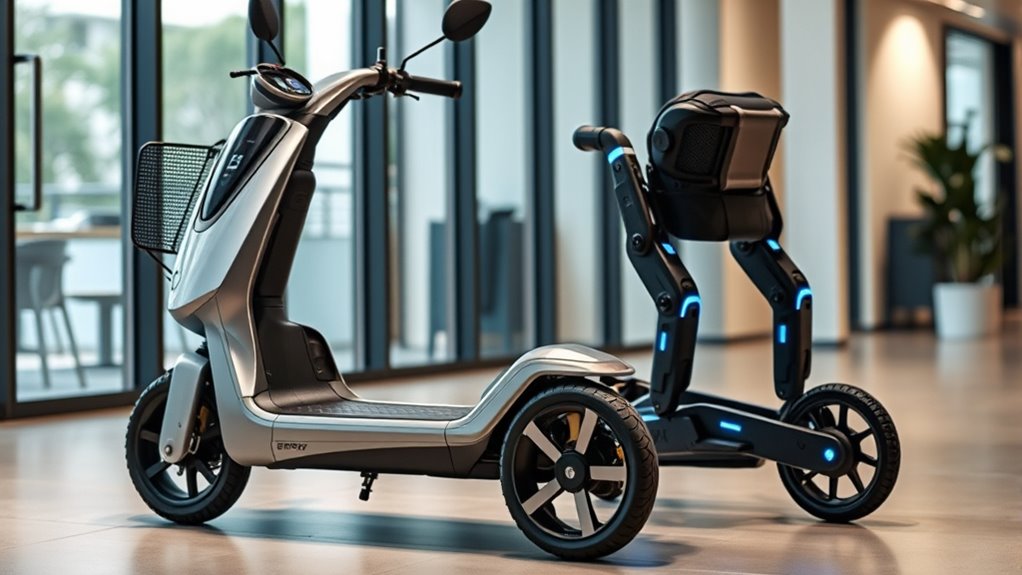

Future high-tech mobility aids for seniors will see smart wheelchairs with sensors and AI that automatically avoid obstacles and adjust speeds, making movement safer and easier. Wearable devices like guidance pendants or wristbands will provide real-time navigation through vibrations or audio cues, helping you in unfamiliar environments. These gadgets will connect seamlessly to ecosystems that manage routes and obstacle avoidance, all securely stored via cloud servers. Keep exploring to discover how these innovations could transform your independence and daily life.
Key Takeaways
- Future mobility aids will feature AI-powered smart wheelchairs with obstacle avoidance and automatic speed adjustments.
- Wearable devices will provide real-time navigation cues, enhancing independence for seniors in unfamiliar environments.
- Integrated ecosystems will enable seamless route planning and obstacle management, reducing user effort and stress.
- Cloud-connected systems will ensure secure data privacy and support personalized, reliable assistive solutions.
- Overall, innovations aim to create intuitive, adaptive mobility gadgets that significantly improve seniors’ quality of life and independence.

Have you ever wondered how technology is transforming mobility for people with disabilities? It’s an exciting time, with innovations that make movement easier, safer, and more independent. One of the most promising developments is smart wheelchair design. Unlike traditional wheelchairs, these advanced models integrate sensors, AI, and connectivity features that adapt to your environment and personal needs. Imagine a wheelchair that can automatically navigate around obstacles or adjust its speed based on your comfort level. Some smart wheelchairs even connect to your smartphone or wearable devices, allowing you to control your movement with simple voice commands or gestures. This integration creates a seamless experience, reducing the physical effort required to get around and boosting confidence.
Smart wheelchairs with sensors and AI are revolutionizing mobility for people with disabilities.
Wearable navigation devices are another game-changer in mobility technology. These compact gadgets are worn on your body—like a wristband or pendant—and provide real-time guidance through haptic feedback, audio cues, or visual signals. If you’re in an unfamiliar place, these devices can help you find your way without relying solely on visual cues, which is particularly helpful for individuals with visual impairments. They work in tandem with GPS and mapping software, offering turn-by-turn directions that you can follow effortlessly. What’s more, wearable navigation devices are designed to be intuitive and easy to use, with minimal setup required. They can also sync with other assistive technologies, creating a holistic system tailored to your mobility needs.
The integration of smart wheelchair design with wearable navigation devices creates a powerful ecosystem that enhances independence. For example, you might use a wearable device to plan your route, and your smart wheelchair follows automatically, avoiding obstacles and adjusting its path as needed. This synergy minimizes the physical and mental effort involved in navigation, allowing you to focus more on your surroundings and activities rather than on controlling your mobility aids. Additionally, these innovations often come with health monitoring features, tracking your activity levels and providing alerts if any issues arise. They empower you to move more freely and confidently, regardless of your environment or mobility challenges. Furthermore, as European cloud servers support the secure data management of these high-tech devices, users benefit from enhanced privacy and reliability.
As these technologies continue to evolve, expect even smarter, more intuitive mobility aids that integrate seamlessly into your daily life. Whether it’s a wheelchair that adapts to your unique needs or wearable devices that guide you effortlessly through complex environments, the future of high-tech mobility is all about enhancing independence and improving quality of life. With these advancements, you’re not just overcoming barriers—you’re redefining what mobility can be in the modern world.
smart wheelchair with obstacle avoidance
As an affiliate, we earn on qualifying purchases.
As an affiliate, we earn on qualifying purchases.
Frequently Asked Questions
How Affordable Are the Latest High-Tech Mobility Aids?
The latest high-tech mobility aids vary in affordability, but generally, they can be costly due to advanced features. A thorough cost analysis shows prices depend on market availability and device complexity. While some options are expensive, more budget-friendly models are emerging as technology advances and competition increases. You should compare different brands and check for rebates or insurance coverage to find the best deal that fits your budget.
Are These Gadgets Compatible With Existing Healthcare Systems?
These gadgets are increasingly compatible with existing healthcare systems, thanks to advancements in integrated healthcare and data interoperability. You’ll find that many devices sync seamlessly with electronic health records and telemedicine platforms, making it easier for healthcare providers to monitor your progress and adjust treatments. As technology evolves, expect even better integration, ensuring your mobility aids work smoothly within your overall healthcare plan and enhancing your safety and independence.
What Training Is Required to Use New Mobility Technology?
Using new mobility technology is like learning to ride a bike—you just need some guidance. Typically, training requirements are straightforward, involving a few sessions with a healthcare professional or tech expert. These sessions help you understand device operation and safety, easing user adaptation. Most seniors find that with a little practice, they become confident and comfortable, making daily activities easier and more independent.
How Secure Is Personal Data Collected by These Devices?
You can feel confident that your personal data is secure with these devices because they prioritize data privacy and use robust device encryption. Manufacturers implement strong security measures to protect your information from unauthorized access. However, it’s wise to stay informed about software updates and privacy policies, ensuring your data remains protected. Regularly reviewing device settings helps you maintain control over your personal information and enhances your overall security.
Can These Gadgets Be Customized for Individual Needs?
Yes, these gadgets can be customized for your individual needs. They often include personalization options and adaptability features, allowing you to tailor settings like sensitivity, support levels, and interface preferences. This customization guarantees the device fits comfortably into your daily routine and addresses your specific mobility challenges. As a result, you gain more independence and confidence, knowing the device works best for your unique requirements.
wearable GPS navigation device for seniors
As an affiliate, we earn on qualifying purchases.
As an affiliate, we earn on qualifying purchases.
Conclusion
Imagine a senior named Margaret who uses a smart cane equipped with GPS and fall detection. One day, it alerts her family after she slips, ensuring quick help. As technology advances, these innovative mobility aids will become more intuitive, personalized, and essential for independence. Embrace these future gadgets, knowing they’ll empower you or your loved ones to stay active, safe, and connected, transforming the way seniors navigate their world.
AI-powered mobility aid for elderly
As an affiliate, we earn on qualifying purchases.
As an affiliate, we earn on qualifying purchases.
cloud-connected assistive mobility device
As an affiliate, we earn on qualifying purchases.
As an affiliate, we earn on qualifying purchases.