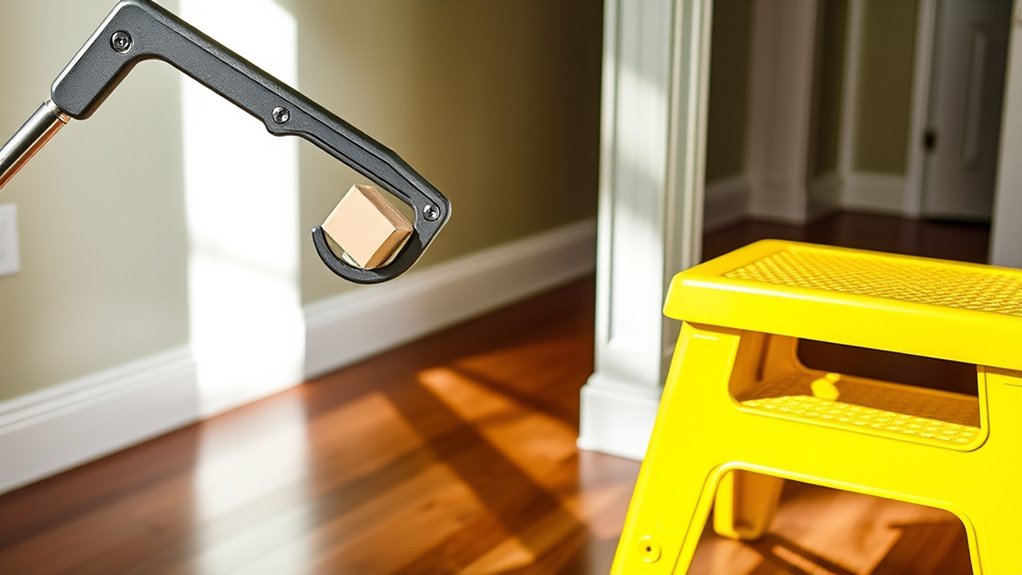

When choosing between grabber tools and step stools for reaching high objects, consider safety and task. Grabbers are great for quick, low-risk retrievals from a distance and are easy to store and transport. Step stools provide stability and safety when you need to work at height, especially for tasks requiring precision. Both options serve different needs—knowing when to use each guarantees you reach safely and effectively. Keep exploring to discover which tool best fits your needs.

Turn quiet afternoons into listening time
- Thousands of audiobooks, podcasts and originals
- Listen on your phone, tablet or Echo — also offline
- Cancel anytime
Key Takeaways
- Grabber tools are ideal for quick, low-risk retrieval of small objects at a distance, minimizing the need for climbing.
- Step stools provide a stable platform for reaching high objects safely, especially for tasks requiring precision or working at height.
- Grabber tools are lightweight and portable, making them easy to store and use for occasional, simple tasks.
- Step stools ensure safety through stability and proper weight distribution, reducing fall risk during high-reach activities.
- Choosing between the two depends on task complexity, safety needs, and whether the goal is quick retrieval or stable access.
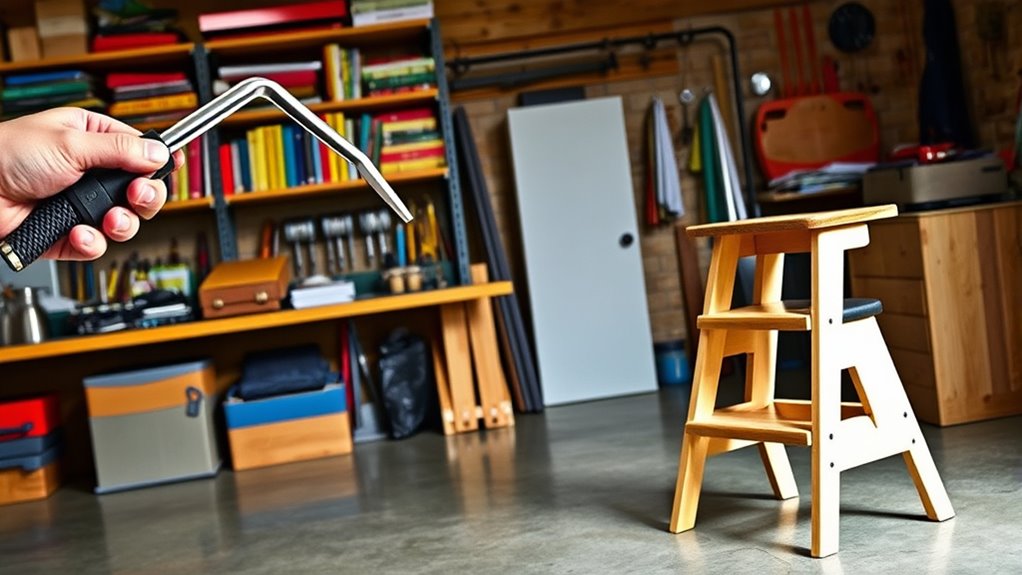
When it comes to reaching high places around your home or workspace, choosing the right tool can make all the difference. Whether you’re grabbing a ceiling light bulb or accessing a high shelf, safety and efficiency are your top priorities. Grabber tools and step stools are common options, but understanding their differences can help you pick the safest, most practical solution.
Grabber tools are designed to extend your reach without requiring you to climb or stand on unstable surfaces. They often feature ergonomic benefits that reduce strain on your arms and shoulders, making repetitive tasks less tiring. Their lightweight design and comfortable grips allow you to control the tool with ease, minimizing the risk of slips or drops. Plus, grabber tools usually come with built-in mechanisms—like trigger controls—that make grabbing and releasing objects simple and precise. When it comes to storage options, grabber tools excel because they are portable and compact. You can easily hang them on hooks or store them in drawers, freeing up space and keeping your workspace tidy. They’re ideal for quick, low-risk tasks, especially when you need to retrieve or place small items from a distance without the hassle of climbing.
Grabber tools extend your reach safely, are ergonomic, lightweight, and easy to store for quick, low-risk tasks.
On the other hand, step stools provide a stable platform that allows you to access high objects directly. They’re best suited for tasks that require more precision or when you need to perform work at a higher level, such as fixing a ceiling fixture or reaching a top shelf. The ergonomic benefits of step stools include better posture and stability, which reduce the likelihood of falls or injuries. They come in various sizes and styles, from lightweight foldable models to more robust, multi-step versions, giving you flexibility based on your needs. Storage options for step stools vary; many fold or collapse for easy storage when not in use, fitting into closets or under beds. Their sturdy design offers a sense of security that grabber tools might not provide when dealing with heavier or more delicate objects. Additionally, choosing a properly rated step stool is crucial for ensuring safety at different heights.
Ultimately, your choice should depend on the task at hand. Grabber tools are perfect for quick, lightweight reach-ins, especially when safety and storage are primary concerns. They don’t require much space and are easy to keep handy. Step stools, however, shine when stability, precision, and higher reach are necessary. They’re a safer choice for climbing and working at height, especially if you need to do more than just grab something. Both tools have their ergonomic benefits and storage options, but selecting the right one will ensure you work safely and efficiently without risking injury or damage.
As an affiliate, we earn on qualifying purchases.
Frequently Asked Questions
Are Grabber Tools Suitable for Outdoor Use?
Yes, grabber tools are suitable for outdoor use if they have good outdoor durability and weather resistance. Look for models made with rust-proof materials and sealed mechanisms to withstand rain, sun, and wind. By choosing a grabber with these features, you guarantee safe, effective use outside, helping you reach high objects without risking damage or injury. Always check the product specifications before use to confirm outdoor suitability.
What Is the Maximum Weight Capacity for Step Stools?
Most step stools have a weight limit between 200 and 300 pounds, depending on their material strength and design. Always check the manufacturer’s specifications to guarantee safety. If your step stool is made of sturdy materials like heavy-duty plastic or metal, it can usually support higher weights. Never exceed the recommended weight limit, as doing so risks accidents and damage. Properly maintained, your step stool provides safe access for everyday tasks.
Can Grabber Tools Be Used for Delicate Objects?
You might think grabber tools are perfect for delicate objects, but they often aren’t designed for fragile items. With their sturdy claws and strong grip, they risk damaging fragile items, making delicate handling tricky. So, if you’re trying to reach sensitive or breakable things, it’s better to use a gentle touch—like hand, tweezers, or soft gloves—rather than relying on a grabber tool that’s built for sturdier tasks.
How Do I Choose the Right Height for a Step Stool?
You should choose a step stool with a height that allows you to reach your target comfortably without overstretching. Measure the height of the object you need to access and add a few inches for safety and ease. Look for a stool with ergonomic design features, such as non-slip steps and stable support, to guarantee safety. The right height minimizes strain and keeps you secure while working at elevated levels.
Are There Safety Tips for Using Both Tools Indoors?
Think of safety as your home’s foundation—you wouldn’t build on shaky ground. When using grabber tools or step stools indoors, follow ergonomics tips like keeping your back straight and avoiding overreaching. Regular maintenance guidelines, such as checking for loose parts or worn-out rungs, keep tools secure. Always make certain your workspace is clear of obstacles, and take your time—safety isn’t a race, it’s the priority.
foldable step stool for high shelves
As an affiliate, we earn on qualifying purchases.
As an affiliate, we earn on qualifying purchases.
Conclusion
When choosing between grabber tools and step stools, consider safety and convenience. Did you know that falls from step stools account for nearly 40% of household injuries? Using a grabber can reduce that risk, especially for light objects, while a step stool gives you stability for heavier or more frequent tasks. Ultimately, pick the option that keeps you safe and reaches high objects effortlessly—your safety is worth it.
As an affiliate, we earn on qualifying purchases.
As an affiliate, we earn on qualifying purchases.
Cold & flu season Picks
humidifiers
As an affiliate, we earn on qualifying purchases.