To improve your home lighting and reduce senior falls, assess your current setup—ensure hallways, stairs, and key areas have enough light and eliminate shadows. Incorporate layered lighting with ambient, task, and accent fixtures, and choose bulbs that provide bright, even illumination. Add night lights in dark areas and use motion sensors for safety. Regularly maintain and upgrade your lighting to keep it effective. Keep exploring simple tips that can make a real difference.
Key Takeaways
- Ensure adequate, layered lighting in hallways, staircases, and key activity areas to eliminate shadows and dark spots.
- Install motion-activated or night lights in common paths and bathrooms for safe navigation during nighttime.
- Use diffused, glare-free fixtures with adjustable brightness to enhance visibility without causing discomfort.
- Keep natural light unobstructed during the day and utilize easy-to-operate blinds to reduce glare.
- Regularly inspect and upgrade lighting fixtures and bulbs to maintain optimal brightness and safety.

L LOHAS LED Motion Sensor Night Light, Motion Sensor Light Indoor, 30/60LM
- Brightness Levels: Adjustable 30LM and 60LM settings
- Lighting Modes: On, Off, Auto modes with motion sensing
- Motion Detection Range: Detects motion within 3-5 meters
As an affiliate, we earn on qualifying purchases.
As an affiliate, we earn on qualifying purchases.
Assessing Your Current Lighting Setup

Before making any improvements, it’s important to evaluate your current lighting setup. Check if your rooms have adequate light for everyday activities, especially in hallways and staircases. Pay attention to color contrast; good contrast helps distinguish steps and obstacles clearly. Natural light plays a crucial role—ensure windows are unobstructed and open during the day to maximize daylight, reducing reliance on artificial lighting. Observe how light interacts with your space; uneven lighting or shadows can cause confusion and increase fall risks. Additionally, proper placement of light fixtures can prevent glare, which can impair vision and lead to accidents. Properly designed lighting schemes that incorporate lighting hierarchy can enhance safety and visibility throughout your home. Incorporating task lighting in specific areas such as reading nooks or kitchens can further improve visibility and safety. Consider adequate brightness in all areas to ensure safety and comfort. Assess whether existing fixtures provide enough brightness or if they create glare, which can impair vision. Taking note of these factors helps identify areas needing improvement and guarantees your home’s lighting supports safety and visibility for seniors.

Vexagyle 12.6inch Flush Mount Ceiling Light Fixture,3-Light Modern Close to Ceiling Light with 2-Layer Linen Fabric Shade,Farmhouse Drum Ceiling Mount Lamp for Bedroom Hallway Living Room
- Stylish Two-Layer Shade: Blends modern and farmhouse charm
- E26 Compatibility: Supports LED and halogen bulbs
- Dimmable with Bulb and Switch: Fully adjustable lighting options
As an affiliate, we earn on qualifying purchases.
As an affiliate, we earn on qualifying purchases.
Incorporating Layered Lighting Techniques

Incorporating layered lighting techniques involves combining different types of lighting to create a balanced and flexible environment. You can achieve this by adding ambient glow lighting that softly illuminates the entire space, reducing shadows and making navigation safer. Overlay this with task lighting in key areas like hallways, stairs, and bathrooms, to provide focused illumination where you need it most. Decorate your space with decorative accents, such as wall sconces or stylish table lamps, which add depth and visual interest while enhancing overall visibility. This layered approach ensures your home is well-lit without harsh glare or dark spots. Proper lighting design plays a crucial role in minimizing hazards and creating a safer environment for seniors. By thoughtfully blending ambient, task, and accent lighting, you create a safer, more comfortable environment that helps prevent falls. Incorporating layered lighting techniques allows you to customize the lighting levels for different times of day and activities, further improving safety and ambiance. Additionally, understanding the importance of lighting levels and how they influence visibility can help you make more informed choices when planning your home lighting. Properly managing light distribution is essential for eliminating shadows that can cause missteps or trips. Exploring automated lighting controls can further enhance safety by adjusting light levels automatically based on time or activity.

Feit Electric Adjustable White A19 LED Light Bulb, 100W Replacement, 5CCT Selectable Color Temperature 2700K-5000K, 1500 Lumens, 17,000 Hour Lifetime, OM100/5CCT/15KLED/2, 2 Pack
- Selectable Color Temperatures: 5 options from 2700K to 5000K
- Bright 100W Equivalent: 1500 lumens of brightness
- Energy-Efficient LED: 16W replaces 100W incandescent
As an affiliate, we earn on qualifying purchases.
As an affiliate, we earn on qualifying purchases.
Choosing the Right Bulbs and Fixtures
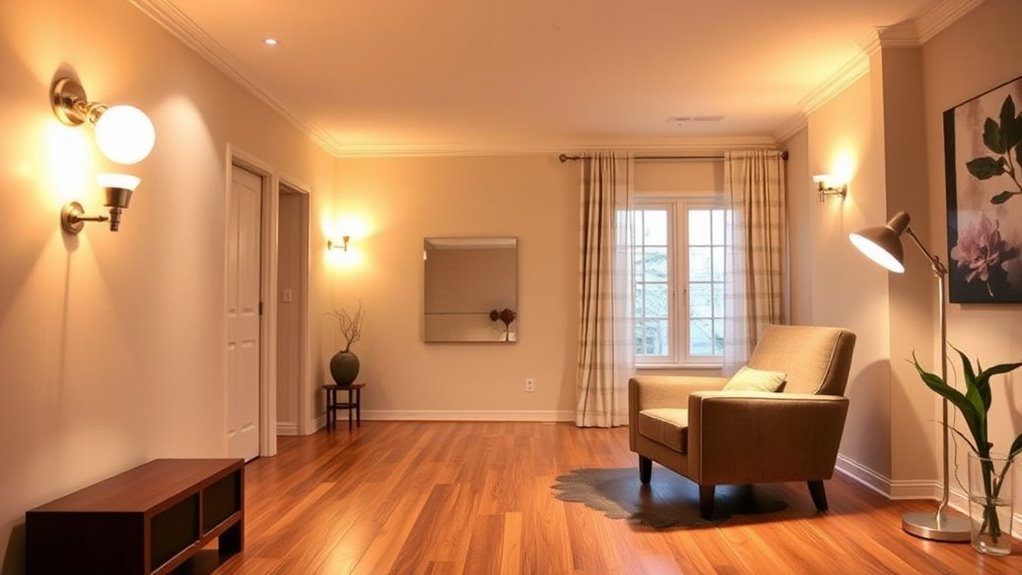
Choosing the right bulbs and fixtures is essential for creating a safe and effective lighting environment in your home. Smart bulb options offer adjustable brightness and color temperatures, helping you tailor lighting to your needs and avoid glare or shadows that could cause falls. When selecting fixtures, consider their placement; guarantee they are positioned to illuminate walkways, stairs, and key areas without creating dark spots. Use fixtures with broad, diffused light to minimize sharp shadows and reduce trip hazards. Opt for fixtures that are easy to operate, preferably with simple switches or remote controls. Proper fixture placement enhances overall visibility and safety, making it easier for you to move around confidently throughout your home. Additionally, choosing appropriate lighting technology can improve energy efficiency and provide consistent illumination, further supporting fall prevention. Incorporating lighting control systems can also streamline adjusting light levels as needed, adding an extra layer of safety. Combining suitable bulbs with strategic fixture placement is a simple but powerful step toward fall prevention.

KOMIGAN Motion Sensor with Daylight Sensor LED Stair Light Kit KMG-45, 16.4FT Warm White 3000K Cuttable LED Strip Light for Indoor Handrail Stair Lights
- Multiple Operating Modes: Motion, daylight, switch, stay-on modes
- Versatile Lighting Effects: Warm white 3000K with 5 effects
- Customizable Brightness & Speed: Adjust pixel, color, brightness, speed, delay
As an affiliate, we earn on qualifying purchases.
As an affiliate, we earn on qualifying purchases.
Enhancing Visibility in Key Areas
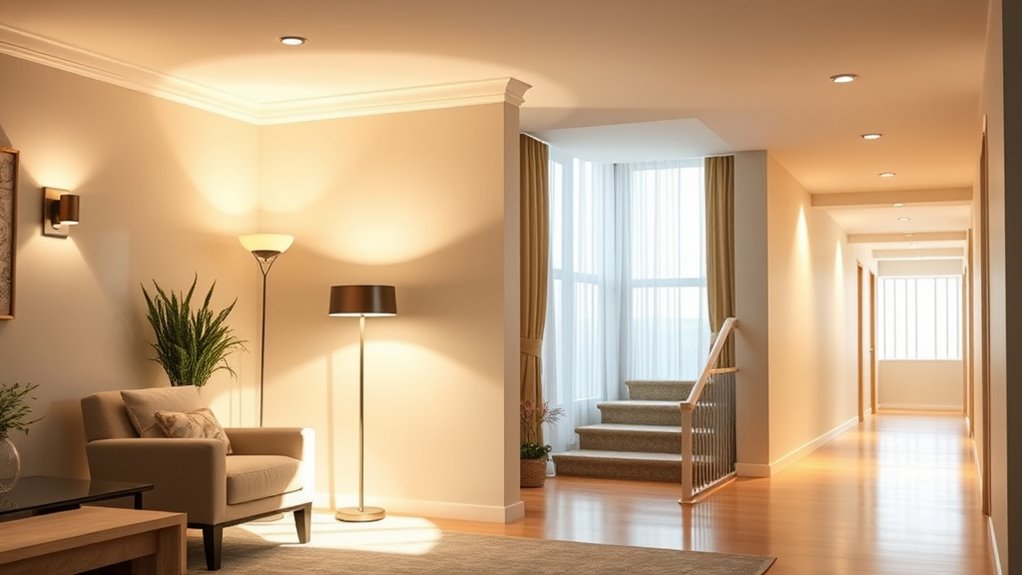
To enhance safety, make certain entryways are well-lit and visible at all times. Install night lights in hallways and bathrooms to prevent accidents during the night. Use task lighting in areas like the kitchen and workspace to ensure you can see clearly and move safely. Additionally, consider investing in trusted lighting providers that offer high-quality fixtures and expert advice to maximize your home’s visibility. Incorporating energy-efficient lighting can also reduce electricity costs while maintaining effective illumination. When selecting lighting, be sure to consider reliable backup power options to keep your lighting system operational during outages, ensuring continuous safety. Choosing appropriate lighting controls can further improve safety by allowing easy adjustment of brightness levels to suit different needs. Implementing smart lighting solutions can provide customizable and automated lighting adjustments to further enhance visibility and safety throughout your home.
Brighten Entryways Regularly
Regularly brightening your entryways guarantees your seniors can see potential hazards clearly as they come and go. Use decorative fixtures like stylish sconces or hanging lanterns to add both illumination and aesthetic appeal. These fixtures should provide ample, even lighting to eliminate shadows and dark corners. Additionally, optimize natural light by keeping windows unobstructed and clean, allowing sunlight to brighten the space during the day. Consider installing blinds or shades that are easy to operate, so you can maximize daylight while reducing glare. Proper lighting in entryways helps seniors navigate safely, especially in low-light conditions, reducing the risk of trips and falls. Incorporating durable, high-quality materials in your lighting fixtures ensures longevity and safety over time. Ensuring proper lighting design and placement is essential for minimizing hazards and creating a safer environment. Well-planned lighting can also help reduce glare and shadows, which are common causes of missteps and falls. Using lighting controls such as dimmers or motion sensors can enhance safety and convenience. When planning your lighting layout, consider ergonomic placement to ensure fixtures are accessible and effective for all users. Consistent, well-planned lighting creates a safer, more inviting space for everyone.
Install Night Lights Strategically
Strategically installing night lights guarantees your seniors can see clearly in key areas during nighttime hours. Place them along hallways, near staircases, and in bathrooms to provide an ambient glow that improves overall visibility without causing glare. This subtle lighting enhances the lighting ambiance, making it easier to navigate safely without disturbing sleep. Focus on areas where falls are most likely to occur, ensuring each space is softly illuminated. Use night lights with automatic sensors if possible, so they turn on when needed. This approach creates a safer environment by reducing shadows and dark spots. Proper placement and gentle illumination help your seniors move confidently at night, lowering the risk of trips and falls. Incorporating lighting strategies can further optimize safety by ensuring appropriate illumination levels throughout the home. Additionally, understanding home lighting design principles can help you choose the most effective fixtures and placement for optimal safety.
Use Task Lighting Effectively
Effective use of task lighting can considerably improve visibility in areas where your seniors perform daily activities. Proper placement ensures they see clearly, reducing trip hazards. Use accent lighting to highlight steps or edges, making them more noticeable. Maximize natural illumination during the day by opening curtains or blinds. For tasks like cooking or reading, add adjustable lamps or under-cabinet lighting, so light is directed exactly where needed. Guarantee all light sources are bright enough but not glaring. Regularly replace bulbs to maintain peak brightness. Incorporate a mix of accent lighting, task lighting, and natural illumination to create a well-lit environment that minimizes fall risks and enhances safety.
Using Motion and Dimming Controls

Using motion and dimming controls can considerably enhance safety in your home by ensuring the right lighting levels when you need them most. Smart lighting systems automatically turn on when you enter a room, reducing the risk of falls in dark areas. Dimming controls allow you to adjust brightness easily, preventing glare and harsh shadows that can cause confusion or missteps. These features also promote energy efficiency by reducing unnecessary electricity use, saving you money and lowering your carbon footprint. With motion sensors, you don’t have to fumble for switches in the dark, which is especially helpful during nighttime trips to the bathroom or kitchen. Overall, integrating motion and dimming controls makes your home safer, more comfortable, and more efficient.
Maintaining and Periodically Upgrading Lighting Systems

Regularly maintaining and upgrading your lighting systems guarantees they continue to function safely and efficiently over time. Proper lighting design ensures your home remains well-lit, reducing fall risks. Schedule routine checks to replace burnt-out bulbs and clean fixtures for essential brightness. Upgrading to energy-efficient LEDs can lower energy costs and improve lighting quality. Consider modern controls like dimmers and timers to enhance safety and convenience. Periodic assessments help identify outdated wiring or fixtures that may compromise safety. Investing in smart lighting systems allows you to adjust brightness easily and ensure consistent illumination. Keeping your lighting system up-to-date maintains optimal visibility, minimizes hazards, and promotes energy efficiency—all vital for reducing fall risks at home.
Frequently Asked Questions
How Can I Measure the Adequacy of My Home Lighting Effectively?
You can measure your home’s lighting adequacy by checking the light intensity in key areas, ensuring it’s bright enough for safe navigation. Use a light meter or app to assess lumen levels, aiming for at least 300 lumens in hallways and stairs. Also, evaluate light distribution to avoid shadows and glare. Properly balanced light throughout your space helps prevent falls and improves overall safety.
Are There Specific Color Temperatures Recommended for Senior-Friendly Lighting?
For senior-friendly lighting, aim for a color temperature around 3000K to 4000K, which provides a warm to neutral light hue. This range helps enhance visibility without causing glare or eye strain. You should select lighting with a soft, inviting glow that makes it easier to see clearly and move safely around your home. Proper color temperature balances brightness and comfort, reducing fall risks and promoting a safer environment.
What Safety Considerations Should I Keep in Mind When Installing New Fixtures?
Imagine installing a new fixture in your hallway; you should make sure electrical wiring is properly grounded and meets safety standards to prevent shocks. When planning fixture placement, keep lights at eye level and avoid glare or shadows that could cause trips. Always turn off power before installation, use appropriate tools, and consider consulting a professional electrician to verify all safety measures are met and wiring is secure.
How Often Should I Replace or Upgrade Lighting Components for Safety?
You should replace bulbs every 1-2 years, depending on their lifespan, to guarantee bright, consistent lighting. Check fixture durability regularly—if you notice flickering or damage, upgrade or repair promptly. Upgrading to energy-efficient LEDs can also improve safety, as they last longer and provide better illumination. Regular maintenance keeps your lighting reliable, reducing fall risks and ensuring a safe environment for seniors.
Can Smart Lighting Systems Help Improve Home Safety for Seniors?
Smart lighting systems can markedly improve home safety for seniors by offering voice control, allowing easy adjustment without bending or reaching. They also enhance mood and visibility, making it easier to navigate safely at night. With features like automatic dimming and remote control, these systems help reduce fall risks and create a comfortable environment. Investing in smart lighting is a practical way to promote independence and safety for seniors at home.
Conclusion
By improving your home lighting, you considerably reduce the risk of senior falls—studies show proper lighting can cut fall-related injuries by up to 50%. You can achieve this by evaluating your setup, layering lights, and upgrading fixtures. Remember to incorporate motion sensors and dimmers for added safety. Regular maintenance ensures your lighting stays effective. Taking these steps creates a safer environment, giving you peace of mind and helping you move confidently through your home every day.