

Understanding Medicare and insurance coverage for wheelchairs and mobility devices means knowing what’s considered medically necessary and ensuring your healthcare provider documents this properly. Medicare typically covers power and manual wheelchairs and their accessories, but coverage depends on proper certification and prescriptions. Private insurance policies can vary, so it’s important to understand their specific rules and limits. Staying organized with documentation and knowing the claims process helps you get the equipment you need—stay with us for more details.
Key Takeaways
- Medicare covers medically necessary wheelchairs and accessories with proper documentation and certification from healthcare providers.
- Coverage varies by wheelchair type (manual, power, pediatric) and must meet medical necessity criteria.
- Proper documentation, including detailed prescriptions, is essential for approval and claims processing.
- Insurance claims often require prior authorization, and appeals may be needed if coverage is denied.
- Understanding policy restrictions, limits, and exclusions helps ensure smooth equipment acquisition and reimbursement.

Serianie Electric Wheelchairs for Adults, Lightweight Electric Wheelchair, Foldable Travel Motorized Wheelchairs for Seniors, Folding Portable Mobility Scooter, Compact Fold Power Wheelchair
Powerful Performance with Extended Range – Upgrade your mobility with our electric wheelchair featuring a 500W motor for…
As an affiliate, we earn on qualifying purchases.
As an affiliate, we earn on qualifying purchases.
How Medicare Covers Wheelchairs and Mobility Devices
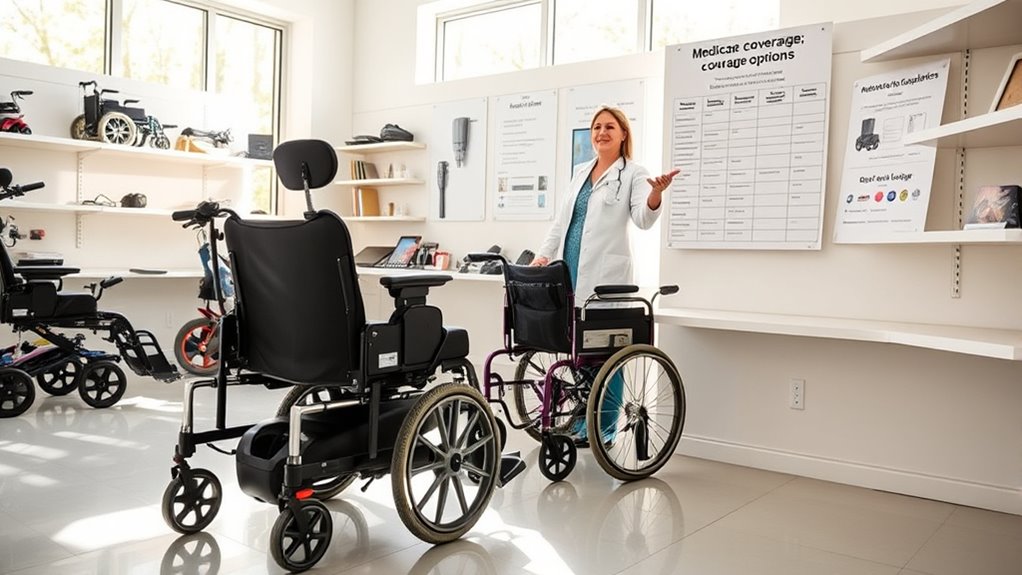
Medicare helps cover the cost of wheelchairs and mobility devices if your healthcare provider determines they are medically necessary. When you qualify, Medicare typically covers 80% of the approved amount after your deductible. This includes the wheelchair itself and any essential wheelchair accessories, such as cushions or mounts, that improve safety and comfort. To guarantee coverage, your provider must submit proper documentation for insurance billing, demonstrating the device’s medical necessity. Keep in mind that Medicare generally covers power wheelchairs, manual wheelchairs, and some accessories, but coverage may vary based on your specific needs and circumstances. Working closely with your healthcare provider helps streamline the approval process and ensures all necessary equipment is included in the coverage. Understanding safe installation practices and proper usage can also help maintain the device’s functionality and safety over time. Being familiar with approved equipment standards can further assist in ensuring compliance and optimal performance. Additionally, being aware of insurance claim procedures can facilitate smoother reimbursement and support your reimbursement process. Knowing maintenance requirements can extend the lifespan of your mobility device and prevent unexpected repair costs. Moreover, staying informed about latest technological advancements can help you choose the most suitable and up-to-date equipment.

ZHCHG Wheelchair Side Bag, Wheelchair Armrest Pouch Accessories with Cup Holder, Storage Bag for Walker, Rollator, Electric Scooter Wheelchairs, Ideal Gift for Mother's Day & Father's Day
【Multiple Pockets Design】Simple and generous appearance, Multiple pockets design for increased flexibility and organization for personal accessories, make…
As an affiliate, we earn on qualifying purchases.
As an affiliate, we earn on qualifying purchases.
Types of Wheelchairs and When They Are Covered

Understanding the different types of wheelchairs, like manual and power models, helps you determine what’s covered. You’ll also want to know if pediatric or adult wheelchairs qualify under your plan. Let’s explore the coverage criteria and limits to see what fits your needs. Additionally, knowing the coverage policies for different wheelchair types is essential for making informed decisions. It’s also helpful to understand how insurance regulations impact what equipment is covered under various plans. Recognizing the role of medical necessity can further clarify eligibility for specific equipment. Being aware of coverage limits can help you plan for any potential out-of-pocket expenses. In some cases, vetted equipment options may be recommended to ensure safety and compliance with insurance standards.
Manual vs. Power Models
Are you trying to decide between a manual or power wheelchair? Manual models are lightweight and rely on your strength to operate, making them more affordable and easier to transport. Power models, on the other hand, feature battery options that provide mobility without physical effort, ideal for users with limited strength. When choosing, consider ergonomic features that enhance comfort, such as adjustable footrests and supportive seating. Medicare typically covers both types if they’re deemed medically necessary, but coverage criteria differ. Manual wheelchairs often require less maintenance and have lower upfront costs, while power chairs offer greater independence and ease of use. Your healthcare provider can help determine the best fit based on your mobility needs and daily activities. Additionally, understanding piercing care and hygiene can be useful for those managing skin sensitivities or healing wounds, ensuring overall comfort and health. Incorporating attention to detail in your selection process can help ensure you choose the most suitable device for your lifestyle. It’s also important to be aware of home accessibility adaptations that can support your mobility device use and improve safety in your living environment. Being informed about medicare coverage criteria can help you navigate insurance options more effectively, especially when considering deep‑sky imaging techniques to broaden your understanding of the night sky.
Pediatric vs. Adult Types
When choosing a wheelchair for yourself or a loved one, it’s important to contemplate whether a pediatric or adult model best fits the user’s age and size. Pediatric adaptations are designed to accommodate smaller bodies, offering features like adjustable seats and growth room. These models support children’s unique needs, ensuring proper support and safety as they grow. Additionally, growth accommodations in pediatric wheelchairs are essential for supporting children’s development. Adult mobility wheelchairs are built for larger users, with sturdy frames and enhanced durability. Medicare typically covers pediatric wheelchairs if they are medically necessary, just like adult models. Understanding the differences helps you select the right wheelchair for comfort, function, and longevity, ensuring the device meets the user’s current needs and supports their mobility effectively. Additionally, whole-house water filtration systems can be an essential consideration for maintaining overall health and well-being in the home.
Coverage Criteria and Limits
Medicare covers different types of wheelchairs based on specific medical criteria, ensuring the device is necessary for your mobility needs. Typically, coverage applies when a wheelchair is essential for activities like daily living or as part of an alternative therapy to improve health. The limits depend on the type of wheelchair prescribed—manual or power—and whether your condition warrants a mobility device to prevent further health decline. Medicare often requires documentation from your healthcare provider showing that lifestyle adjustments alone aren’t sufficient. Keep in mind, coverage may not extend to luxury features or upgrades unless medically justified. Understanding these limits helps you navigate the process confidently, ensuring you receive the right wheelchair to support your mobility, health goals, and overall quality of life. Additionally, Rhythm Failure highlights the importance of understanding the different types of assistive devices available and their appropriate use in various medical contexts.

Medline Kidz Pediatric Wheelchair with 14" Wide Nylon Seat with Seat Belt, 150 lb. Weight Capacity, Telescoping Handles, Swing-Back Desk-Length Arms, Swing-Away Footrests with Calf Straps, Blue
Enhanced Mobility: The Kidz pediatric wheelchair with 14" seat width provides optimal comfort and mobility for children, making…
As an affiliate, we earn on qualifying purchases.
As an affiliate, we earn on qualifying purchases.
Requirements and Documentation for Qualification

To qualify for Medicare coverage of a wheelchair, you must meet specific medical and documentation requirements. First, your healthcare provider needs to certify that your condition warrants a wheelchair for mobility or comfort. You’ll need detailed documentation, including a prescription specifying the type of wheelchair and any necessary wheelchair accessories. Proper documentation should clearly explain how the equipment will improve your condition. Additionally, understanding coverage criteria can help ensure that all necessary conditions are met for approval. It is also important to include documentation of your auditory processing disorder if relevant to your overall health status. Incorporating medical necessity documentation can strengthen your case when submitting claims. Keep in mind, if your insurance claim is denied, understanding the insurance appeals process can help when filing insurance appeals. Providing thorough records and a detailed prescription increases your chances of approval. Staying organized and ensuring all paperwork is accurate and complete is essential to meet Medicare’s strict guidelines and avoid delays in obtaining your wheelchair and accessories. Moreover, incorporating smart home technology can assist in creating a safer and more accessible environment tailored to your mobility needs.

AUVON Ventilation Seat Cushion with Innovation Heat Dissipation Design, Anti-bedsore Wheelchair Cushion with Supportive Memory Foam, Waterproof & Anti-slip Cover, Improve Lower Back & Tailbone Comfort
Innovative Ventilation Seat Cushion: This wheelchair seat cushion is designed to provide innovative comfort through a heat dissipation…
As an affiliate, we earn on qualifying purchases.
As an affiliate, we earn on qualifying purchases.
Understanding Insurance Policies Beyond Medicare

When exploring insurance options beyond Medicare, you’ll need to understand what private insurance covers and where it falls short. Policies can have specific limitations and exclusions that might affect your access to necessary wheelchairs. Knowing these details helps you make informed decisions and avoid unexpected costs. Additionally, coverage for mobility devices varies significantly between plans, so reviewing your policy’s specifics is essential. It’s also important to understand the insurance claim process to ensure you can efficiently access benefits when needed.
Private Insurance Coverage
Have you ever wondered how private insurance plans handle wheelchair coverage? The answer varies widely depending on your policy. Many plans, unlike Medicare, often bundle coverage with other benefits like dental coverage and vision insurance, making it essential to review your policy details carefully. You might find that some plans cover mobility devices more thoroughly, while others require prior authorizations or have specific exclusions. Keep in mind:
- Coverage limits for mobility equipment
- Requirements for medical necessity documentation
- Compatibility with additional benefits like dental and vision plans
Understanding these nuances helps guarantee you get the coverage you need without surprises. Always check your policy’s fine print to see what’s included, especially if you rely on your plan for multiple healthcare needs beyond basic coverage.
Policy Limitations and Exclusions
While many private insurance plans offer coverage for wheelchairs, it’s important to recognize that policies often come with specific limitations and exclusions. These policy limitations can restrict coverage to certain types or models of wheelchairs, or require prior authorization. Coverage exclusions might exclude custom or high-end wheelchairs, or devices deemed non-medically necessary. Understanding these restrictions helps you avoid surprises when filing claims. Here’s a quick overview:
| Policy Limitations | Coverage Exclusions | Additional Restrictions |
|---|---|---|
| Limited wheelchair types | Non-medical devices | Prior authorization needed |
| Usage restrictions | Non-covered accessories | Caps on coverage amount |
| Specific model requirements | Out-of-network providers | Documentation requirements |
| Duration limits | Cosmetic features | Pre-approval processes |
| Age or condition limits | Non-prescribed items | Maintenance coverage caps |
Knowing these helps you navigate your insurance more effectively.
Steps to Obtain Your Mobility Equipment

To obtain your mobility equipment through Medicare or insurance, you should start by consulting your healthcare provider. They will assess your needs and determine if a wheelchair or other device is appropriate. Your provider can also discuss alternative therapy options that might complement your mobility plan. Make sure to gather necessary documentation, including medical records and prescriptions. Next, you’ll need to:
- Obtain a detailed prescription specifying the equipment needed
- Get a face-to-face evaluation if required
- Explore potential home modifications to improve accessibility
Once approved, your insurance or Medicare will guide you through the purchasing process. Remember, proper documentation and clear communication with your provider streamline the journey to secure your mobility equipment efficiently.
Tips for Navigating Insurance Claims and Avoiding Denials

Managing insurance claims can feel overwhelming, but understanding common pitfalls helps prevent denials. First, familiarize yourself with billing procedures to ensure all paperwork is accurate and complete. Double-check that your provider submits correct codes and documentation, as errors can delay or deny your claim. Advocate for yourself by staying informed about your coverage and rights, and don’t hesitate to ask questions or clarify uncertainties with your insurer. Keep detailed records of all communications, receipts, and approvals. If a claim is denied, review the reason carefully and appeal promptly with supporting documentation. Patient advocacy is key—know that you have the right to challenge decisions and seek assistance from patient advocacy groups or your healthcare provider if needed. Staying proactive helps secure the equipment you need without unnecessary setbacks.
Frequently Asked Questions
How Often Can I Replace My Wheelchair Under Medicare?
You can typically replace your wheelchair under Medicare once every five years, but if your condition changes or your wheelchair becomes unusable, you might qualify for an earlier replacement. Insurance policies often cover repairs and maintenance, but full replacements depend on medical necessity. Keep up with wheelchair maintenance and consult your provider to guarantee your equipment remains functional and meets your needs, avoiding unnecessary delays or expenses.
Are There Specific Brands or Models Covered by Insurance?
It’s like the Wild West out there, but Medicare generally doesn’t specify brands or models. Instead, they focus on model coverage and whether the equipment meets medical necessity. You might find some brand limitations, but most approved models are covered if they’re deemed medically necessary. Check with your provider or supplier to verify the specific brand or model you want is covered, avoiding surprises down the road.
Can I Get a Second Wheelchair if My Needs Change?
Yes, you can get a second wheelchair if your needs change. Medicare may cover alternative wheelchair options, especially if your mobility requirements evolve. You can work with your healthcare provider to customize wheelchair features, ensuring it fits your current lifestyle. Keep in mind, insurance typically covers a new wheelchair if it’s medically necessary, so discuss your changing needs with your provider to explore available options.
What Additional Costs Might I Incur Beyond Insurance Coverage?
You might face out-of-pocket expenses for items not fully covered by insurance, like certain accessories or upgrades. Additionally, you’ll need to budget for maintenance costs, such as repairs or replacements over time. Keep in mind that some services, like transportation or delivery fees, may also accrue extra charges. Planning ahead ensures you’re prepared for these potential costs, helping you manage your wheelchair expenses more effectively.
How Do I Appeal a Denied Insurance Claim for Equipment?
To appeal a denied insurance claim for equipment, start an insurance dispute by reviewing the denial letter carefully. Gather all necessary documentation requirements, including medical records and prescription details. Then, submit a written appeal within the deadline, clearly explaining why your claim should be approved. Keep copies of everything you send, and follow up regularly to make certain your appeal is being processed efficiently.
Conclusion
Guiding Medicare and insurance for mobility devices can seem overwhelming, but with the right knowledge, you’re well on your way. Remember, “A journey of a thousand miles begins with a single step,” so gather your documentation, understand your coverage, and don’t be afraid to ask questions. With persistence and patience, you’ll find the support you need to move forward comfortably—because everyone deserves the freedom to explore life’s possibilities.