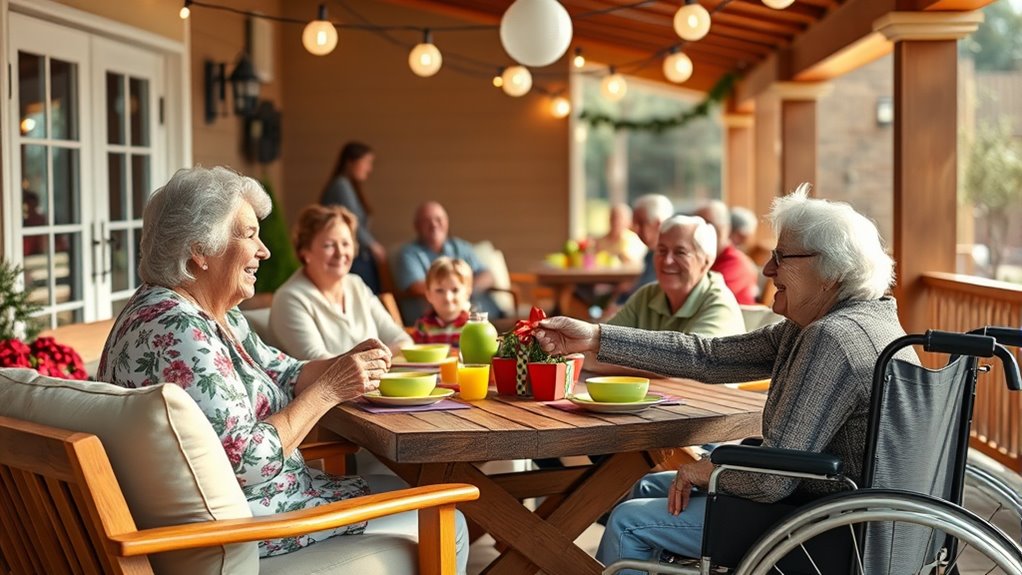

To make holidays senior-friendly and inclusive, focus on creating accessible environments by improving lighting, removing hazards, and adding supportive devices like grab bars. Adapt activities by offering comfortable seating, large-print lyrics, or simple, practical gifts. Involve seniors in planning to respect their preferences and encourage participation. Balance tradition with necessary adjustments to guarantee safety, comfort, and a warm, welcoming atmosphere. If you keep exploring, you’ll discover ways to make every holiday memorable for all generations.

Turn quiet afternoons into listening time
- Thousands of audiobooks, podcasts and originals
- Listen on your phone, tablet or Echo — also offline
- Cancel anytime
Key Takeaways
- Adapt traditions with accessible modifications, such as comfortable seating and easy-to-open gifts, to include seniors comfortably.
- Improve environmental safety by enhancing lighting, removing hazards, and creating obstacle-free pathways.
- Offer comfortable rest areas and assistive devices to support safety and physical comfort during celebrations.
- Involve seniors in planning activities and provide accessible options like large print lyrics or adaptable games.
- Foster a warm, inclusive atmosphere by balancing tradition with necessary accommodations to ensure everyone feels valued.

Holidays are a special time to connect with loved ones, but they can also be overwhelming for seniors if not planned with their needs in mind. To make these celebrations truly inclusive, you need to consider both familiar holiday traditions and the physical environment. Many seniors cherish the traditions that make holidays meaningful—whether it’s decorating the house, singing carols, or sharing special meals. However, it’s vital to adapt these traditions to guarantee everyone can participate comfortably. For example, if you usually host a large family dinner, think about creating a space that’s easy to navigate for someone with mobility challenges. This might mean rearranging furniture or providing sturdy seating options to prevent falls.
Accessibility improvements are vital to making holidays welcoming for seniors. Small changes can make a big difference, like installing better lighting in dim areas or removing tripping hazards such as loose rugs or clutter. If your loved one has difficulty walking or uses a wheelchair, consider setting up a clear, obstacle-free path through the house. You can also incorporate assistive devices, like grab bars in bathrooms or ramps at entrances, to guarantee safety and independence. When planning activities, think about their physical comfort—perhaps offering a quiet space for rest or a comfortable chair for those who need breaks. Additionally, understanding credit card security and implementing safety measures can help protect sensitive information if any financial transactions occur during holiday shopping or gift exchanges.
Another way to honor holiday traditions while being inclusive is to involve seniors in the planning process. Ask them what makes the holiday special for them and how they’d like to participate. This not only fosters a sense of belonging but also helps you tailor the celebration to their needs. For example, if singing holiday songs is a favorite tradition, provide lyrics on large print sheets or use a microphone for those with hearing difficulties. If gift-giving is part of your tradition, consider personalized presents that are easy to open or practical items that meet their needs.
Ultimately, making holidays senior-friendly isn’t about changing the spirit of the celebration; it’s about making sure everyone can enjoy it. Small adjustments to traditions and the environment can create a warm, inclusive atmosphere where seniors feel valued and comfortable. When you prioritize accessibility improvements and adapt holiday traditions thoughtfully, you help ensure that these special moments become cherished memories for all generations.
As an affiliate, we earn on qualifying purchases.
Frequently Asked Questions
How Can I Include Seniors With Mobility Challenges in Holiday Activities?
You can include seniors with mobility challenges by choosing accessible venues and providing adaptive seating options. Guarantee pathways are clear and ramps are available to facilitate easy movement. Offer seating that supports comfort and safety, like sturdy chairs or cushions. Encourage participation in activities suited to their abilities, and consider organizing smaller, more accessible events. Your thoughtful planning creates an inviting environment where everyone feels welcome and engaged during the holidays.
What Are Some Safety Tips for Seniors During Holiday Celebrations?
Picture holiday decorations as delicate glass ornaments—beautiful yet fragile. You should make certain walkways are clear of tangled lights and tripping hazards, especially during gift wrapping. Keep candles and electrical decorations away from seniors’ reach, and remind them to handle gift wrapping tools carefully. Stay attentive to their needs, and always have a plan in case of emergencies. Your vigilance helps create a joyful, safe celebration for everyone.
How Do I Address Sensory Overload for Seniors With Dementia?
To address sensory overload for seniors with dementia, focus on sensory management by creating a calm environment. Use calming techniques like soft lighting, gentle music, and minimizing loud noises or crowded spaces. Offer a quiet corner where they can retreat if overwhelmed. Keep conversations simple, and use familiar objects or scents to soothe. These strategies help reduce stress, making the holiday experience more comfortable and enjoyable for your loved one.
What Are Suitable Holiday Gift Ideas for Seniors With Limited Mobility?
Ever wonder what gifts can brighten a senior’s holiday with limited mobility? Consider holiday crafts they can enjoy, like easy-to-make ornaments or painted keepsakes. Personalized keepsakes, such as photo albums or custom jewelry, bring meaningful joy. These thoughtful gifts celebrate their individuality and create lasting memories. Choose items that are accessible, engaging, and tailored to their interests, making the holiday season warm, inclusive, and filled with love.
How Can I Ensure Dietary Restrictions Are Respected During Holiday Meals?
To guarantee dietary restrictions are respected during holiday meals, you should focus on meal planning that includes dietary accommodations. Communicate with your senior guests in advance to understand their needs, and prepare alternative dishes or modifications. Label dishes clearly, and serve separate portions if necessary. This proactive approach shows you care and helps everyone enjoy the celebration comfortably, celebrating together without worry about dietary concerns.
As an affiliate, we earn on qualifying purchases.
Conclusion
Creating a holiday that’s senior-friendly and inclusive is like tending a garden—you nurture each plant with patience and care, knowing every flower adds beauty to the whole. When you consider their needs, you cultivate an environment where everyone can bloom. Remember, small gestures—like adjusting the lighting or offering gentle conversations—can make a big difference. Just as a gardener’s attention transforms a simple patch into a vibrant oasis, your efforts turn holidays into warm, memorable moments for all.
As an affiliate, we earn on qualifying purchases.
non-slip rugs for elderly safety
As an affiliate, we earn on qualifying purchases.
As an affiliate, we earn on qualifying purchases.
Fall Picks
fall essentials
As an affiliate, we earn on qualifying purchases.