To effectively monitor loved ones from afar, leverage user-friendly technology like cameras and health devices that transmit essential signs. Maintain regular check-ins through calls, video chats, or messages to foster emotional connection. Balance physical health oversight with emotional support by actively listening and sending small gestures of care. Creating a holistic approach ensures safety and well-being. Keep devices updated and maintained for reliable performance. Expect practical tips that help you stay connected and attentive—if you continue exploring, you’ll find more ways to support from afar.

Turn quiet afternoons into listening time
- Thousands of audiobooks, podcasts and originals
- Listen on your phone, tablet or Echo — also offline
- Cancel anytime
Key Takeaways
- Use user-friendly health monitoring devices that transmit real-time vital signs for proactive health management.
- Conduct regular virtual check-ins via calls or video chats to maintain emotional connection and monitor well-being.
- Ensure all devices are properly maintained and updated to guarantee accurate data and reliable performance.
- Foster open communication, encouraging loved ones to share concerns and feelings to support emotional health.
- Combine physical health monitoring with emotional support strategies to create a balanced, holistic caregiving approach.
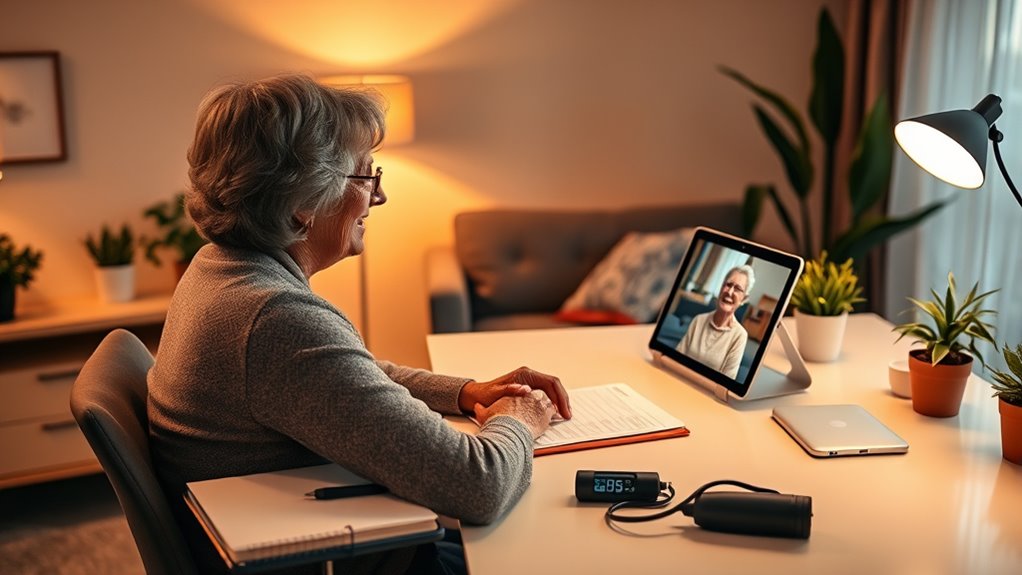
Have you ever wondered how to care for a loved one from miles away? The good news is, with the right approach, you can stay connected, monitor their well-being, and offer meaningful support—even from afar. The key lies in effective technology integration. Today’s tools make it easier than ever to keep an eye on your loved one’s health and safety without being physically present. You can set up cameras in their home to check in visually, or use health monitoring devices that transmit vital signs directly to your phone. These innovations allow you to be proactive, noticing changes early and coordinating assistance when needed. It’s essential to choose user-friendly technology so your loved one feels comfortable using it. Regularly updating devices and ensuring they’re functioning properly prevents unnecessary stress and guarantees that you’re getting accurate information. Proper device maintenance ensures longevity and reliable performance, which is crucial for effective remote caregiving.
But technology isn’t just about gadgets. Emotional support plays an indispensable role in remote caregiving. It can be tempting to focus solely on physical health, but emotional well-being is equally important. Make it a daily habit to call, video chat, or send messages, creating a routine that reassures your loved one they’re not alone. Active listening during these conversations helps you understand their feelings and concerns, fostering a sense of connection despite the distance. Sometimes, just being present through a screen can provide immense comfort. Additionally, encouraging social interactions with friends or community groups can reinforce their emotional resilience. Remember, emotional support isn’t only about words; small gestures like sending care packages, favorite snacks, or a handwritten note can lift spirits and show you care deeply.
Balancing technology integration with emotional support creates a holistic caregiving plan. Use technology to monitor and respond to physical health needs, but don’t neglect the emotional aspects that influence overall well-being. It’s about creating a sense of safety, comfort, and connection, even when miles apart. Keep open lines of communication, and make sure your loved one feels heard and valued. Set up regular check-ins, and be attentive to signs of loneliness or distress. When combined, these practices empower you to provide reliable, compassionate care from a distance, giving both of you peace of mind. Remember, remote caregiving isn’t just about tracking numbers or screens; it’s about nurturing a relationship built on trust, support, and genuine concern.
remote health monitoring devices for seniors
As an affiliate, we earn on qualifying purchases.
As an affiliate, we earn on qualifying purchases.
Frequently Asked Questions
How Can I Ensure My Loved One’s Privacy Is Maintained Remotely?
To guarantee your loved one’s privacy remotely, prioritize data security by using secure, encrypted platforms for communication and monitoring. Always follow consent protocols, explaining clearly what you’ll monitor and obtaining their permission beforehand. Respect their boundaries and regularly check in to confirm they’re comfortable with the arrangements. By combining strong data security measures with transparent consent, you can monitor effectively without compromising their privacy.
What Are the Signs That Remote Monitoring Is Too Invasive?
When you notice your loved one withdrawing or feeling uncomfortable, it might signal that your monitoring crosses emotional boundaries. Privacy concerns can feel overwhelming if they seem to invade personal space or autonomy. Signs include frequent frustration, reluctance to share, or resistance to communication. If these patterns emerge, it’s time to reassess your approach, ensuring you respect their dignity while still offering support without overstepping boundaries.
How Do I Handle Emergencies When I Am Not Physically Present?
When an emergency occurs, you should rely on established emergency protocols and remote first aid techniques. Make certain your loved one knows how to contact emergency services and has access to necessary supplies. Stay calm, guide them through first aid steps over the phone or video call, and coordinate with local responders if needed. Regularly review and practice these protocols to be prepared for any unexpected situation, even from afar.
What Legal Considerations Should I Be Aware of in Remote Caregiving?
Did you know that 60% of remote caregivers face legal liability issues? When monitoring loved ones remotely, you need to understand consent requirements and privacy laws to avoid legal trouble. Always obtain explicit permission before installing monitoring devices, and stay informed about regulations in your state or country. Being transparent and respecting your loved one’s rights helps protect both you and them legally.
How Can I Balance Independence and Safety for My Loved One?
You can balance independence and safety by integrating helpful tech tools that promote autonomy while ensuring security. Use devices like fall detectors or medication reminders, which allow your loved one to stay independent with oversight. Maintain regular emotional support through video calls and check-ins, fostering trust and reassurance. By combining tech integration with genuine emotional connection, you help your loved one feel safe without compromising their independence.
home security cameras for elderly care
As an affiliate, we earn on qualifying purchases.
As an affiliate, we earn on qualifying purchases.
Conclusion
Remember, remote caregiving requires patience and proactive communication. For example, imagine checking in daily via video call and using smart devices to monitor your loved one’s safety. When Sarah’s mother fell, her quick response through remote alerts helped her get help fast. Staying connected and leveraging technology not only guarantees safety but also strengthens your bond. With these practices, you can provide confident, compassionate care from afar, making a real difference in your loved one’s life.
video calling devices for seniors
As an affiliate, we earn on qualifying purchases.
As an affiliate, we earn on qualifying purchases.
As an affiliate, we earn on qualifying purchases.
Fall Picks
fall essentials
As an affiliate, we earn on qualifying purchases.