
To establish a medication reminder system for your elderly loved one, first comprehend their medication needs, including dosages and timing. Choose user-friendly tools like phone alarms, apps, or voice assistants, and establish consistent routines with fixed times. Use visual cues like pill organizers and labels, and involve family or caregivers for support. Regularly review and adjust the system to guarantee it’s effective and safe. Keep exploring for more tips to make this process smoother.
Key Takeaways
- Choose easy-to-use digital or physical reminder tools tailored to your loved one’s comfort level.
- Establish fixed medication times aligned with daily routines, and set alarms or notifications accordingly.
- Organize pills in clearly labeled, accessible pillboxes placed in consistent, visible locations.
- Incorporate visual cues like bright labels or ambient lighting to reinforce medication routines.
- Regularly review and adjust the system to accommodate medication changes and ensure ongoing safety.
Assess Your Loved One’s Medication Needs
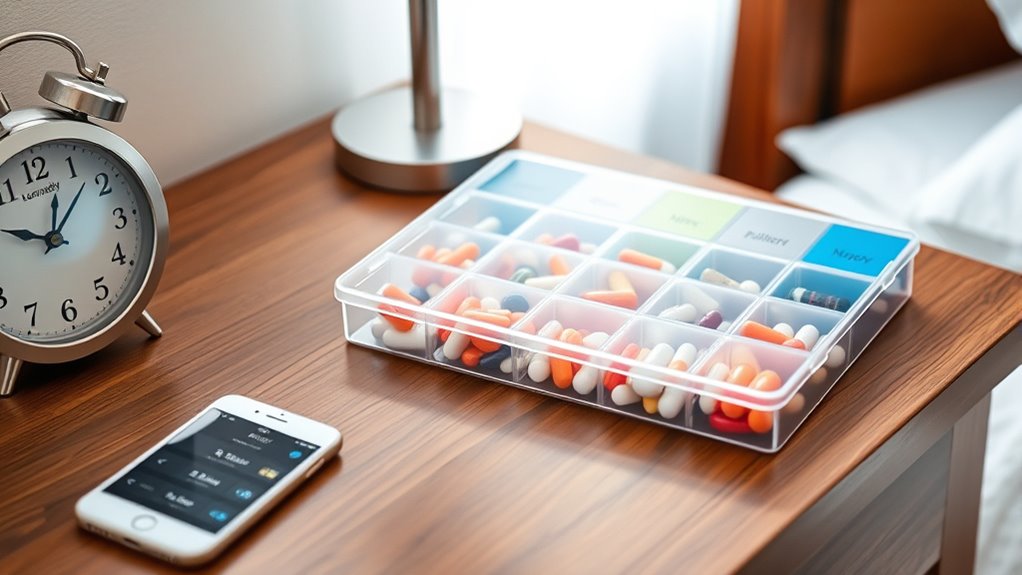
Before setting up a medication reminder system, it’s essential to understand your loved one’s specific medication needs. You need to know their prescribed medications, dosage, and schedule to ensure proper health condition management. Be aware of potential medication side effects that might affect their daily routine or safety, so you can plan accordingly. Talk to their healthcare provider or pharmacist if you’re unsure about how medications interact or what to watch for. Knowing the importance of adherence helps prevent missed doses and adverse effects. Track any special instructions for timing, food, or activity restrictions. Understanding medication management is crucial for creating an effective reminder system that supports your loved one’s health and safety. Additionally, being aware of medication interactions can help prevent adverse effects that may compromise their well-being. Familiarizing yourself with patient education can further empower you to manage their medication regimen confidently. Incorporating study techniques can also improve your ability to stay organized and attentive to your loved one’s needs. Developing a personalized plan tailored to their unique medication regimen ensures better adherence and reduces the risk of errors. This information lays the foundation for choosing effective reminders and ensures your loved one’s health stays on track.
Choose the Right Reminder Tools and Technology

Selecting the right reminder tools and technology is vital to guaranteeing your loved one takes their medications on time. Digital alerts, like phone alarms or app notifications, are effective because they can be customized to suit their routine. Voice assistants, such as Alexa or Google Home, provide hands-free reminders and can answer questions about medication schedules. Consider your loved one’s comfort with technology when choosing tools—simple devices are often best. Confirm the alerts are loud enough and timely, so they aren’t missed. Incorporating user-friendly interfaces and voice prompts can improve adherence, especially for those less familiar with technology. Incorporating automation features can further enhance the system by reducing the chance of missed doses. Combining digital alerts with voice assistants offers redundancy, increasing the chances of medication adherence. Keep in mind that easy-to-use, reliable tools will make the process smoother for both you and your loved one. Choosing the right technology is a vital step toward a successful reminder system. Incorporating backup options ensures the system remains effective even if one method fails. Additionally, integrating smart home devices can help create a more comprehensive and accessible medication management system. For example, integrating medication schedules with other smart home routines can enhance overall safety and convenience.
Establish a Consistent Medication Schedule
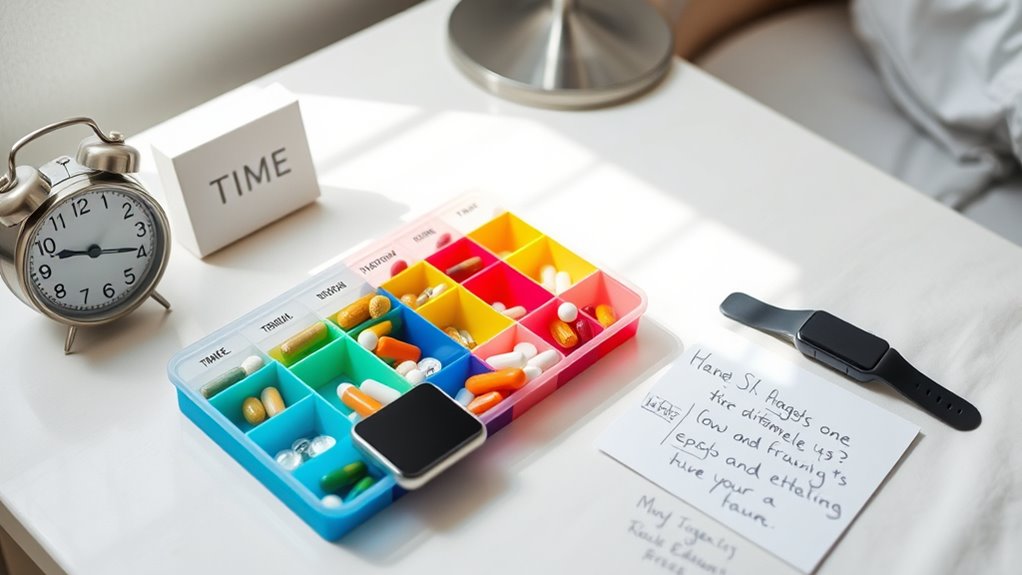
To stay on track, you need to set fixed times for your medications each day. Using reminders effectively helps you remember without stress or confusion. Consistency is key to making your medication routine reliable and easy to follow. Implementing simple systems can make managing medication schedules more straightforward and less overwhelming, especially when considering different reminder methods suitable for your loved one’s needs. Additionally, understanding basic electrical safety principles can help you choose reliable devices that prevent malfunctions or hazards. Incorporating reliable devices with safety features ensures the system remains effective and minimizes potential risks. Being aware of essential oils for health can also aid in supporting your loved one’s overall well-being through natural remedies.
Set Fixed Times
Establishing fixed times for your medication helps create a routine that’s easier to follow consistently. When you set specific times each day, it improves timing consistency, making it less likely you’ll forget doses. Consistent scheduling supports routine adherence, which is vital for your loved one’s health. Choose times that align with daily activities, like breakfast or bedtime, to make reminders natural. Avoid shifting medication times unless absolutely necessary, as irregular timing can reduce effectiveness and cause confusion. Use alarms or calendar alerts to reinforce these fixed times. By establishing clear, unchanging medication times, you help your loved one develop a dependable routine, ensuring medications are taken correctly and on schedule every day. Establishing a medication schedule also enhances overall safety and peace of mind for both you and your loved one.
Use Reminders Effectively
Using reminders effectively can make a big difference in sticking to your loved one’s medication schedule. To improve medication adherence, customize reminders to suit their daily routine and preferences. This might mean setting alarms on their phone, using visual cues, or leveraging voice alerts. Reminder customization helps ensure they notice and respond to each alert promptly. Keep reminders consistent in timing and format so your loved one develops a reliable routine. Avoid overloading them with too many notifications; instead, focus on clarity and simplicity. Regularly review and adjust reminders as needed to accommodate changes in their schedule or medication regimen. Additionally, understanding the balanced designs concept can help create a more conducive environment that supports medication routines and overall well-being. By personalizing and maintaining consistent reminders, you help ensure your loved one takes their medication correctly and on time, supporting their health and well-being.
Create Visual and Physical Cues

Using visual and physical cues can make your medication routine easier to remember. You might label your pills with bright colors, organize them in pillboxes, or place reminders where you’ll see them often. Strategically positioning these cues helps guarantee you don’t miss a dose. Incorporating visual cues can also support better medication adherence by providing clear, immediate reminders. Implementing ambient-light playbooks can enhance visibility and ensure cues are noticeable at different times of day. Additionally, understanding home energy integration can help optimize the placement and visibility of these cues in different environments. Incorporating lighting control strategies can further improve cue visibility and adapt to changing lighting conditions throughout the day. Sleep hygiene practices can also support overall health and improve medication adherence.
Use Colorful Labels
Colorful labels serve as powerful visual cues that make it easier to identify and differentiate medications at a glance. Using color coded labels helps your loved one quickly recognize pills, reducing confusion and missed doses. You can assign different colors based on medication type, time of day, or priority tagging for urgent medications. This simple system creates a clear, intuitive reference that boosts independence and safety. To implement effectively, consider:
- Assigning specific colors to morning, afternoon, and evening doses
- Using bright colors for high-priority or critical medications
- Labeling different medication types with distinct hues
- Ensuring labels are large, legible, and weather-resistant
- Incorporating visual cues to enhance medication management and safety
- Selecting color coding systems that align with established medication management best practices, ensuring consistency and clarity
These visual cues streamline daily routines and support better medication management for your loved one.
Organize With Pillboxes
Organizing medications with pillboxes creates clear visual and physical cues that simplify daily routines. With a variety of pillbox options available, you can select one that suits your loved one’s needs, such as daily, weekly, or multi-dose organizers. Proper organizer placement is key; keep the pillbox in a consistent, easy-to-reach spot, like the kitchen counter or beside the bedside table. This placement reinforces routine and reduces confusion. Use different compartments to separate doses and days, making it easier for your loved one to identify what they need at a glance. Clear labeling or color-coding can further enhance visibility. By thoughtfully selecting a pillbox variety and placing it strategically, you help establish a straightforward, reliable medication routine.
Place Cues Strategically
Placing your loved one’s pillboxes in the right spots creates strong visual and physical cues that support consistent medication habits. Positioning pillboxes near daily activity areas, like the kitchen or bathroom, makes them hard to miss. Use visual cues such as bright labels or contrasting colors to draw attention. Incorporate auditory prompts, like setting alarms or timers, to remind them to take their meds. These cues help reinforce routines without constant supervision. Consider these strategies:
- Place pillboxes on the breakfast table or bathroom counter
- Use brightly colored labels for easy visibility
- Set recurring alarms or phone reminders
- Keep pillboxes near other daily essentials for quick association
Strategic placement and cues guarantee your loved one stays on track with their medication schedule.
Incorporate Medication Management Apps

Incorporating medication management apps can considerably streamline your medication routine and reduce the risk of missed doses. These apps often allow alerts customization, so you can set reminders that suit your loved one’s schedule. Plus, choosing an app compatible with their device ensures seamless use. Before selecting an app, consider key features:
| Feature | Benefit | Compatibility |
|---|---|---|
| Alerts customization | Personalize reminder times and sounds | iOS, Android, or both |
| Medication tracking | Keep a record of doses taken | Smartphone or tablet |
| Refill reminders | Prevent running out of medications | App notifications |
Pick an app that matches their device and offers flexible alert options to support consistent medication adherence.
Organize Medications With Pill Organizers

Using pill organizers makes managing medications simpler by keeping doses clearly separated and readily accessible. Proper organization reduces confusion and ensures medication safety. Choose a pill organizer that offers customization options to fit your loved one’s specific medication schedule. Look for features like multiple compartments for different times of day or days of the week, which help prevent missed or double doses. Always prioritize medication storage safety by keeping organizers in a secure, dry place away from children or pets. Regularly check that the organizer remains clean and intact, replacing it if damage occurs. Consider a labeled or color-coded system to further streamline daily routines. With the right pill organizer, you make medication management more straightforward, safer, and less stressful.
Involve Your Loved One in the Routine

Getting your loved one involved in their medication routine encourages independence and helps guarantee they stay engaged with their health. When they participate actively, they feel empowered and motivated to maintain medication compliance. You can involve them by explaining the importance of each medication and asking for their input on routines. This shared effort fosters trust and reduces feelings of helplessness.
| Engagement Level | Emotional Impact | Caregiver Involvement |
|---|---|---|
| Active participation | Confidence and pride | Support and guidance |
| Sharing responsibilities | Trust-building | Monitoring progress |
| Celebrating milestones | Sense of achievement | Ensuring consistency |
Set up Reminders With Family or Caregivers

Setting up reminders with family or caregivers guarantees that medication schedules stay consistent and reduces the risk of missed doses. Effective family communication and caregiver coordination guarantee everyone stays informed and supports your loved one’s routine. To streamline this process:
- Share medication schedules with all involved parties
- Use a shared calendar or app for real-time updates
- Assign specific times for reminders to avoid confusion
- Keep open lines of communication for adjustments or concerns
This teamwork helps maintain accuracy and accountability. By involving family members or caregivers, you create a support network that reinforces adherence and offers peace of mind. Clear communication and organized coordination are essential to making sure your loved one takes their medication correctly and on time.
Regularly Review and Adjust the System

To guarantee your medication reminder system remains effective, it’s important to review and adjust it regularly. Medication safety depends on how well you monitor whether the system continues to meet your loved one’s needs. Check for any missed doses or confusion, and update reminders if medication schedules change. Maintaining open caregiver communication ensures everyone stays informed and can address issues promptly. Regular reviews help catch potential errors before they become serious, reducing the risk of adverse effects. Adjustments might include changing alert times, switching reminder methods, or updating medication lists. By staying proactive, you ensure the system remains reliable and tailored to your loved one’s evolving health needs, promoting their safety and well-being.
Frequently Asked Questions
How Can I Ensure My Loved One Consistently Uses the Reminders?
You can guarantee your loved one consistently uses the reminders by integrating them into their daily routine and involving family members. Encourage regular check-ins and gentle reminders from family to reinforce the habit. Make the system easy to follow and consistent, so it becomes second nature. Your active involvement and support help build accountability and trust, making it more likely they’ll stick to their medication schedule reliably.
What Are Signs the System Needs to Be Updated or Changed?
Have you noticed your loved one missing doses or showing confusion about their medication schedule? These signs often indicate the system malfunctions or isn’t user-friendly enough. Regularly gather user feedback and monitor their behavior. If they seem frustrated, forgetful, or confused, it’s time to update or change the system. Ensuring the reminders are clear and reliable helps keep your loved one safe and compliant with their medication routine.
How Do I Handle Medication Changes or New Prescriptions?
When your loved one has medication changes or new prescriptions, you should update their system promptly. Check for any medication allergies and inform the pharmacy to guarantee accuracy. Communicate clearly with their healthcare provider about the new medication, and adjust the reminder schedule accordingly. Regularly review the medications, confirm with the pharmacy, and keep detailed notes to avoid missed doses or adverse reactions.
What Privacy Considerations Exist With Medication Management Apps?
You should prioritize data privacy and protect confidential information when using medication management apps. Make sure the app encrypts sensitive data, restricts access, and complies with privacy laws like HIPAA. Read the privacy policy carefully to understand how your loved one’s medical info is stored and shared. Regularly review app permissions and update security settings to prevent unauthorized access, safeguarding your loved one’s privacy and confidentiality.
How Can I Motivate My Loved One to Stay Engaged With the Routine?
Think of their routine as a garden that needs nurturing. Use engagement strategies like positive reinforcement and shared activities to keep motivation techniques alive. Celebrate small victories to boost their confidence, and incorporate familiar routines to make medication times feel comforting. By making it a team effort, you turn a chore into a bonding moment, encouraging your loved one to stay engaged and motivated every step of the way.
Conclusion
By setting up a reliable medication reminder system, you create a safety net that keeps your loved one on track, like a lighthouse guiding ships safely home. Stay involved, adjust as needed, and use the right tools to make sure they never miss a dose. Remember, consistency and support are key. With your proactive approach, you help your loved one stay healthy and independent, proving that a little planning can make a big difference.