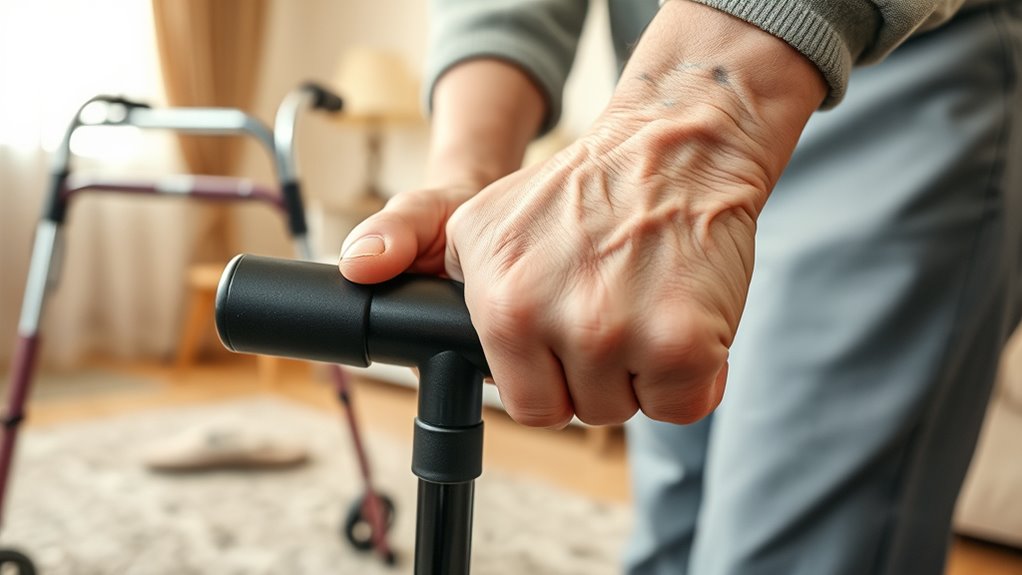

To spot early signs of mobility decline in seniors, watch for subtle changes like slower walking, balance struggles, or increased reliance on support devices. If they find it harder to stand up, sit down, or walk on uneven surfaces, it’s a sign to pay closer attention. Clumsiness, frequent stumbles, or avoiding physical activities also indicate potential issues. Recognizing these signs early can help you support their independence—more helpful tips follow as you continue.
Key Takeaways
- Noticeable slowing or unsteady gait can indicate early mobility decline.
- Increased reliance on support devices like canes or grab bars signals reduced mobility.
- Difficulty during transitions, such as standing or sitting, suggests muscle or joint issues.
- Clumsiness, frequent stumbles, or bumping into objects are early balance problems.
- Longer times to complete daily tasks and decreased physical activity reflect emerging mobility challenges.
Changes in Gait and Balance

Changes in gait and balance often serve as early indicators that your mobility may be declining. You might notice you’re walking more slowly, or your steps feel less stable. These subtle shifts can impact your confidence and willingness to stay socially engaged. Recognizing these early signs allows you to seek support and adapt your routines before more serious issues develop. Being aware of age-related mobility changes can motivate you to take proactive steps toward prevention. Additionally, assistive technology, such as gait aids or balance-enhancing devices, can help you regain stability and prevent falls. Staying socially active encourages movement and keeps your mind alert, which can positively influence your balance. Paying attention to changes in how you walk and balance can help you maintain independence longer, ensuring you stay connected with friends and family. Modern assistive devices can significantly improve safety and mobility, supporting your daily activities with precision and automation.
Increased Use of Support Devices
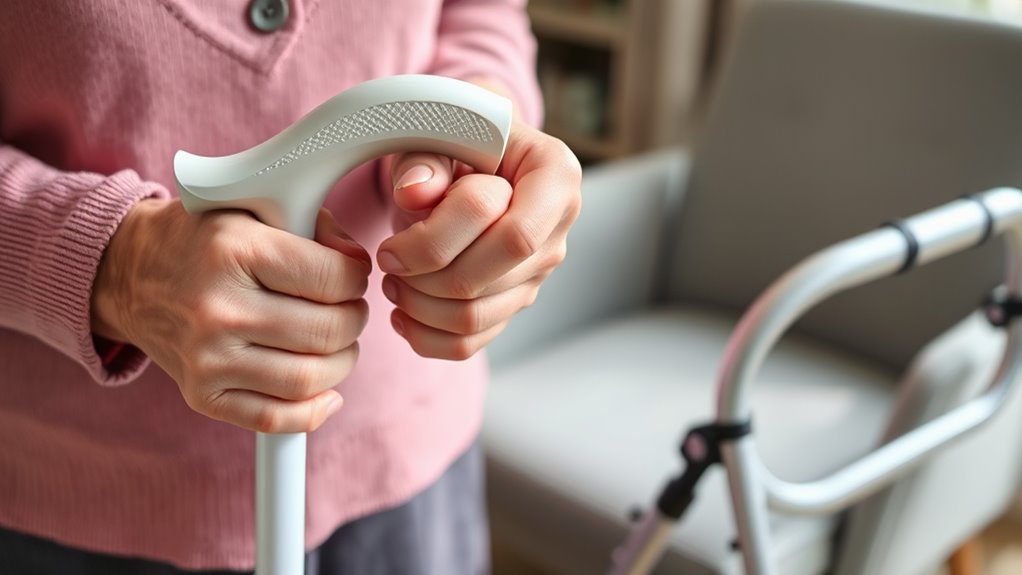
As mobility begins to decline, many people find themselves relying more frequently on support devices like walkers, canes, or grab bars. This increased use of assistive technology can help maintain independence and prevent falls. You might notice a growing dependence on these devices, signaling early mobility issues. Early detection of mobility decline can lead to more effective management and improved safety. Home modifications, such as installing handrails or ramps, also become essential to support safe movement. Recognizing these changes early allows you to seek appropriate interventions and adapt your environment. Incorporating assistive devices and home modifications early on can significantly enhance safety and independence. Relying on support devices and home modifications are practical steps in maintaining quality of life for seniors experiencing mobility challenges. Monitoring these signs helps you address mobility decline proactively, enabling timely home safety improvements that can prevent accidents and support ongoing independence. Additionally, understanding the importance of mobility assessment can help in planning effective strategies to maintain mobility longer. Recognizing early signs can also facilitate access to professional healthcare evaluations, ensuring timely and tailored interventions.
Difficulty Standing Up or Sitting Down

If you notice trouble when standing up or sitting down, it may be a sign of mobility decline. You might find these movements more effortful or feel less confident during shifts. Recognizing these difficulties early can help address underlying issues before they worsen. Implementing appropriate safety measures, such as grab bars or mobility aids, can also reduce the risk of falls during these activities. Being aware of well-sourced name coverage in reference resources can help ensure you access reliable information about mobility issues and safety strategies. Advances in nanotechnology are also contributing to innovative solutions for mobility assistance, such as lightweight, durable aids that enhance independence. Staying informed about early signs of decline and understanding mobility assessment tools can facilitate timely interventions that can improve quality of life.
Struggling With Transitions
Struggling with shifts, such as difficulty standing up or sitting down, can be an early sign that your mobility is declining. This challenge often impacts your daily routines and social engagement, making interactions more difficult. You might find yourself avoiding gatherings because crossings feel overwhelming. Poor mobility can also complicate medication management, as reaching for pills or devices becomes harder. Watch for these signs:
- Increased reliance on support when changing positions
- Extended time to stand or sit
- Avoiding social activities due to mobility fears
- Feeling unsteady during crossings
- Noticing muscle weakness or joint stiffness
- Reduced endurance, making it harder to perform everyday activities comfortably. Early detection of these signs can help you seek preventive strategies that preserve your independence. Recognizing these early signs helps you seek timely assistance. Addressing mobility issues early can maintain independence and prevent further decline. Stay attentive to your body’s cues and prioritize safety in all crossings, especially during mobility transitions.
Increased Use of Support
Noticing that you increasingly rely on support when standing up or sitting down is a clear sign that your mobility may be declining. You might find yourself needing grab bars, sturdy chairs, or other assistive technology to help with these movements. Home modifications, like installing handrails or lowering furniture, can provide added stability and safety. These adjustments make it easier to perform daily tasks without risking falls or injury. If you’re using support more often, it’s a sign to evaluate your environment and consider assistive devices that promote independence. Additionally, understanding proper support techniques can help you maintain balance and prevent accidents. Recognizing this early allows you to make changes that can improve your comfort and safety, helping you stay mobile and confident in your home. Being aware of early mobility decline signs enables timely intervention and proactive solutions. Incorporating community resources can also offer additional support and guidance during this transition. Staying informed about mobility preservation strategies can further empower you to maintain your independence longer.
Reduced Mobility Confidence
Have you found it more difficult to stand up or sit down comfortably? This reduced mobility confidence can make everyday tasks feel intimidating. To build your confidence and stay motivated, consider these key signs:
- Hesitation before standing or sitting
- Frequent use of support like arms or furniture
- Fear of losing balance or falling
- Avoiding certain movements altogether
- Feeling uncertain about your strength or stability
- Unleashing your creativity through simple exercises, proper posture, and reassurance can help restore your confidence. Understanding contrast ratio and its impact on visual clarity can also motivate you to maintain overall health and activity levels. Incorporating mechanical elements inspired by Victorian designs, such as gears or subtle structural supports, can serve as a motivating reminder of resilience. Don’t ignore these cues; addressing them promptly can prevent further decline and keep you active and independent longer.
Reduced Range of Motion

How can you tell if your range of motion is decreasing? You might notice that your joints feel stiffer, making movement more difficult or uncomfortable. Reduced joint flexibility can limit how far you can bend or stretch, affecting daily tasks like reaching for objects or dressing. You may also feel tightness in muscles and tendons, which further restricts movement. Over time, decreased bone density can contribute to joint discomfort and fragility, making it harder to maintain a full range of motion. If you find yourself avoiding certain movements or experiencing pain during activity, these could be signs that your mobility is declining. Staying aware of these changes early on can help you seek appropriate interventions to preserve your independence.
Clumsiness or Frequent Stumbles

Clumsiness or frequent stumbles can be early signs that your balance and coordination are declining. You might notice yourself bumping into furniture, tripping over small objects, or feeling unsteady when walking. These issues can threaten your safety at home and may be linked to medication effects or underlying health conditions. To stay safe, consider these steps:
Early signs of declining balance include bumping into furniture, tripping, and feeling unsteady while walking.
- Keep pathways clear to prevent trips
- Use handrails on stairs and in bathrooms
- Wear sturdy, non-slip shoes
- Review medications with your doctor for side effects
- Install nightlights to improve visibility
Addressing clumsiness early can help you maintain independence and prevent falls. Always consult your healthcare provider if you notice increased stumbling or balance issues, as they can identify underlying causes and recommend appropriate interventions.
Longer Times to Complete Daily Tasks

As balance and coordination decline, completing daily tasks can take longer than usual. You might notice yourself or a loved one struggling with simple activities like dressing, cooking, or cleaning. Cognitive decline and nutrition deficiencies can slow reaction times, making tasks more time-consuming. To visualize, consider this table:
| Task | Common Signs of Decline |
|---|---|
| Dressing | Taking extra minutes, difficulty fasteners |
| Cooking | Slow chopping, forgetting steps |
| Cleaning | Repeated efforts, missed spots |
| Grocery Shopping | Longer decision-making, fatigue |
| Personal Hygiene | Delays in washing or grooming |
If tasks suddenly seem to take considerably longer, it could signal early mobility issues. Addressing cognitive health and nutritional intake may help maintain independence longer.
Avoidance of Physical Activities

When mobility begins to decline, many individuals start avoiding physical activities they once enjoyed or found necessary. This avoidance can lead to social isolation, making it harder to stay connected with friends and family. You might notice a reluctance to walk, exercise, or participate in group activities. Medication side effects, such as dizziness or fatigue, can also discourage movement. As you withdraw from physical activities, your strength and balance may worsen, increasing fall risks. Recognizing this sign early helps prevent further decline.
- Loss of interest in walks or sports
- Staying home more often than usual
- Avoiding social gatherings involving movement
- Feeling more isolated from loved ones
- Experiencing increased feelings of loneliness
Signs of Weakness or Fatigue

Avoiding physical activities can lead to decreased strength, making everyday tasks feel more exhausting. You might notice feeling unusually tired after simple activities or experiencing muscle weakness that wasn’t there before. Changes in your exercise routines, whether due to reduced activity or health issues, can accelerate fatigue. Additionally, medication effects can contribute to feelings of weakness or persistent tiredness, as some drugs cause drowsiness or muscle weakness as side effects. Pay attention if you find yourself struggling to complete tasks you once did easily or feeling more lethargic throughout the day. Recognizing these signs early helps identify potential mobility decline. Addressing fatigue promptly, through adjustments in activity or medication management, can help maintain your strength and independence longer.
Difficulty Navigating Stairs or Uneven Surfaces

If you notice trouble balancing or wobbling when going up or down stairs, it could signal early mobility issues. Muscle weakness and environmental obstacles, like uneven surfaces, often make navigation harder. Recognizing these signs early can help you address underlying problems before they worsen.
Balance and Stability Issues
Have you noticed yourself or a loved one struggling to navigate stairs or uneven surfaces? Balance and stability issues can markedly increase fall risk, impacting daily independence. These problems may stem from inner ear changes, vision issues, or medication effects that impair coordination. To improve fall prevention, be alert to signs like unsteady gait or difficulty maintaining posture.
- Frequent near-falls or loss of balance
- Slower reactions on uneven ground
- Holding onto walls or furniture for support
- Feeling dizzy or lightheaded when standing
- Taking longer to adjust to changes in terrain
If you notice these signs, consult a healthcare professional to review medications and evaluate balance. Addressing these issues early helps maintain safety and reduces the chance of falls or injuries.
Muscle Weakness Signs
Strengthening balance and stability is essential, but muscle weakness can still undermine your ability to navigate stairs or uneven surfaces safely. If you notice yourself hesitating or feeling unsteady when climbing or descending, it could be a sign of muscle atrophy or strength loss. Weak muscles in your legs, hips, or core make it harder to lift your feet properly or maintain control on uneven terrain. You might also find yourself relying more on handrails or feeling fatigued quickly. These signs indicate that your muscles are not supporting your movements effectively, increasing your risk of falls. Addressing muscle weakness early through targeted exercises can improve strength and help you regain confidence on stairs and uneven surfaces.
Environmental Challenges
Traversing stairs and uneven surfaces can become increasingly challenging as mobility declines. This makes home safety a top concern, as falls are more likely and can lead to serious injuries. Struggling with these obstacles may cause you to avoid going outdoors or visiting friends, increasing feelings of social isolation. To address these issues, consider the following:
- Installing handrails and non-slip mats
- Removing loose rugs and clutter
- Improving lighting on stairs and pathways
- Using mobility aids for stability
- Creating a barrier-free, level living space
Reports of Unsteadiness or Feeling of Instability

Many people notice they feel unsteady or unstable before experiencing more serious mobility issues. If you find yourself frequently off-balance or feeling like you might fall, it’s a sign to pay attention. These reports of unsteadiness can be linked to sensory impairments, such as vision or proprioception issues, which affect your balance. Addressing these early signs is vital for fall prevention, helping you avoid serious injuries. You might notice difficulty walking steadily or feeling unsure on your feet, especially on uneven surfaces or in low light. Recognizing these subtle cues allows you to seek help and implement strategies to improve stability. Regular assessments and exercises targeting balance can substantially reduce your risk of falls and support your independence.
Frequently Asked Questions
What Are the Common Early Indicators of Mobility Decline?
You might notice gait changes, like shuffling or unsteady steps, which are early signs of mobility decline. Watch for increased falls risk, especially when balancing or turning. If your loved one hesitates before walking or seems less confident, these are clues their mobility is starting to decline. Addressing these signs early can help prevent falls and maintain independence longer. Stay alert and encourage regular check-ups to catch issues early.
How Can Caregivers Support Seniors Showing Early Mobility Issues?
Like a steady lighthouse guiding ships, you can support seniors with early mobility issues by encouraging use of assistive devices like canes or walkers, which boost confidence and safety. Make home modifications such as grab bars and ramps to prevent falls. Offer gentle encouragement and assist with exercises that improve strength and balance. Your proactive approach helps seniors maintain independence and feel secure in their daily routines.
Are There Preventive Exercises to Maintain Mobility in Seniors?
You can help seniors maintain mobility by encouraging regular balance training and flexibility exercises. Simple activities like standing on one foot or gentle stretching improve stability and range of motion. Incorporate these exercises into daily routines, starting slow and gradually increasing intensity. Consistency is key, so motivate them to stay active, which helps prevent falls and preserves independence as they age.
When Should Mobility Concerns Prompt Medical Consultation?
Think of your mobility as a delicate bridge that needs regular inspections. When you notice increased falls, difficulty walking, or reliance on assistive devices, it’s time to consult a healthcare professional. These signs threaten fall prevention and daily independence. Prompt medical attention helps identify underlying issues early, ensuring your bridge remains sturdy and safe. Don’t wait—address mobility concerns before they lead to more serious problems.
Can Diet Influence Mobility Health in Older Adults?
Yes, your diet can critically influence mobility health in older adults. Nutritional impact plays a vital role in maintaining muscle strength and joint health. By adopting dietary strategies like increasing protein intake, consuming calcium-rich foods, and ensuring adequate vitamin D, you support bone density and muscle function. These choices help prevent decline, improve balance, and promote overall mobility, empowering you to stay active and independent longer.
Conclusion
By paying attention to changes in gait, balance, and strength, you can catch mobility decline early. Notice if you’re using support devices more often, avoiding activities, or feeling unsteady. Recognize signs like clumsiness, fatigue, or difficulty with stairs. Addressing these signs promptly helps maintain independence, prevent falls, and improve quality of life. Stay vigilant, stay proactive, and prioritize your mobility to enjoy a safer, more active future.