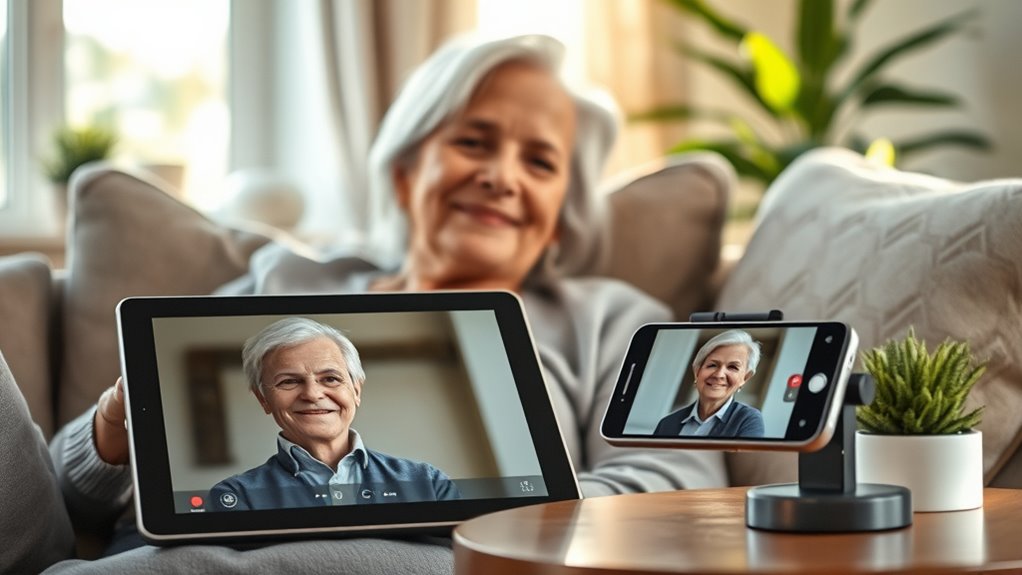

Virtual caregiving uses cameras and apps to keep an eye on seniors remotely, giving you real-time updates and peace of mind. You can install live video feeds, receive activity alerts, and monitor health data effortlessly from your smartphone. These tools help you spot potential issues early and respond quickly, supporting your loved one’s independence and safety. Keep exploring, and you’ll discover how these tech solutions can make caregiving easier and more effective.

Get comfort and care essentials delivered free — and shop member deals
- Fast, free delivery on millions of items
- Access to Prime Big Deal Days deals on October 6–7
- Prime Video, Amazon Music and more included
Key Takeaways
- Virtual caregiving employs cameras and apps for real-time remote monitoring of seniors’ safety and daily activities.
- Devices like motion sensors and door alerts notify caregivers of unusual activity or exits.
- Apps provide activity updates, medication reminders, and emergency contact features to support independence.
- Integration of smart home technology enhances safety, automates routines, and enables proactive health management.
- These tools improve caregiving responsiveness, reduce worries, and promote seniors’ autonomy through accessible remote support.
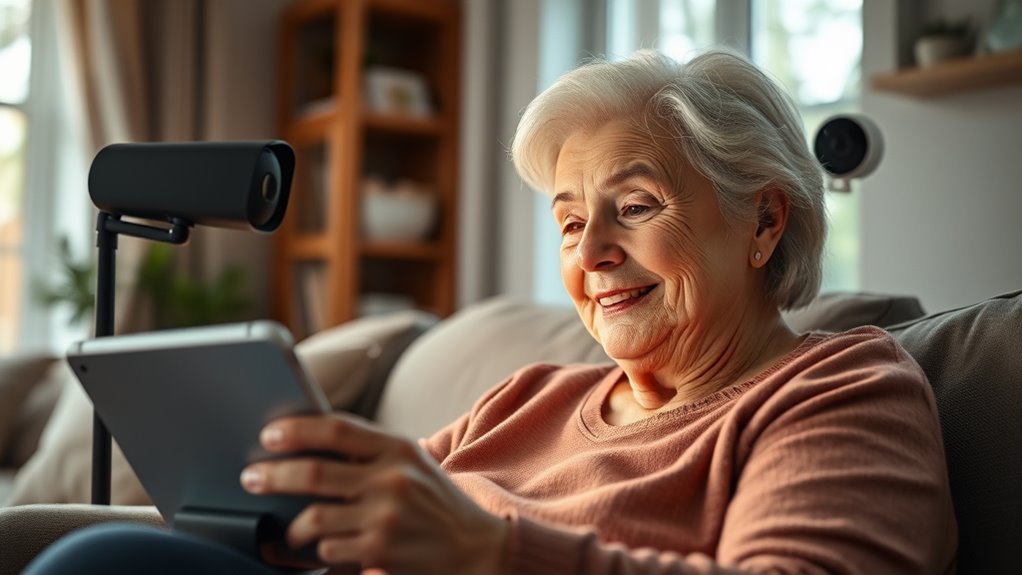
Have you ever wondered how technology is transforming the way we care for loved ones? Today, virtual caregiving leverages tools like cameras and user-friendly apps to help you stay connected with seniors, no matter where you are. This approach, often referred to as remote monitoring, allows you to check in on your loved ones in real-time without being physically present. As more families adopt these innovations, tech adoption has become a crucial part of modern caregiving. It’s not just about convenience; it’s about ensuring safety, promoting independence, and easing worries about your loved ones’ well-being.
With remote monitoring, you can set up cameras inside your senior’s home or use mobile apps that provide live feeds and activity alerts. These devices are designed to be simple to install and operate, making it easy for you to keep an eye on their daily routines. For example, motion sensors can notify you if unusual activity occurs during certain hours, helping you identify potential issues before they escalate. Similarly, door sensors can alert you when your loved one leaves or enters specific areas, adding an extra layer of security. The convenience of these tools means you can receive updates directly to your smartphone, giving you peace of mind whether you’re at work, traveling, or just busy with other responsibilities.
Set up cameras and sensors for real-time alerts, ensuring safety and peace of mind wherever you are.
Tech adoption isn’t just about installing gadgets; it’s about integrating these tools into your caregiving routine seamlessly. Many apps now include features like medication reminders, emergency contact buttons, and health tracking, which can be invaluable for seniors managing chronic conditions. These apps often sync with wearable devices, providing real-time health data that you can review and share with healthcare providers. By embracing these technologies, you’re not only ensuring your loved one’s safety but also empowering them to maintain their independence longer. Plus, many of these tools are customizable, allowing you to tailor monitoring parameters based on your loved one’s specific needs.
The shift toward virtual caregiving also means you’re more proactive rather than reactive. Instead of waiting for an issue to arise, you can spot concerns early and intervene promptly. This proactive approach reduces emergency situations and helps your loved ones feel more secure and supported. As technology becomes more intuitive and affordable, more families are recognizing its benefits and making tech adoption a standard part of their caregiving plans. Ultimately, virtual caregiving through cameras and apps transforms the way you provide support—making it more efficient, responsive, and compassionate. Additionally, integrating smart home technology can further enhance safety and convenience by automating routines and monitoring environmental conditions.
As an affiliate, we earn on qualifying purchases.
Frequently Asked Questions
What Privacy Safeguards Are in Place for Virtual Caregiving Tools?
You’re protected through privacy safeguards like data encryption, which keeps your information secure from unauthorized access. Additionally, you must give explicit user consent before any virtual caregiving tools access your data or cameras. These measures guarantee your privacy is respected and control remains in your hands. Always review privacy policies and settings to stay informed and comfortable with how your data is used and protected.
How Do Virtual Caregiving Apps Handle Emergency Situations?
When an emergency strikes, your caregiving app springs into action, sending instant alerts to you and emergency services. Imagine a loud chime or urgent notification popping up on your screen, guiding you to immediate response. These apps prioritize emergency response by quickly notifying designated contacts, providing location details, and even connecting you directly to help. You stay informed and prepared, ensuring your loved one gets timely assistance when it’s needed most.
Can Virtual Caregiving Replace In-Person Visits Entirely?
Virtual caregiving can’t fully replace in-person visits because it lacks the emotional connection you get from face-to-face interactions. Technology limitations, like connectivity issues or device malfunctions, can also hinder effective care. While virtual tools help you stay connected and monitor your loved ones, they can’t replicate the warmth and reassurance of being physically present. Combining both virtual and in-person visits offers the best balance for all-encompassing senior care.
Are Virtual Caregiving Devices Suitable for All Senior Health Conditions?
Not all senior health conditions are suitable for virtual caregiving devices. You need to take into account device compatibility and user training, as some conditions require in-person care or specialized equipment. For example, cognitive impairments or severe mobility issues may limit device effectiveness. You should assess each senior’s specific needs and ensure they can operate the technology comfortably, otherwise virtual tools might not be enough to meet their healthcare requirements.
What Costs Are Associated With Implementing Virtual Caregiving Solutions?
Implementing virtual caregiving solutions involves costs like subscription fees for apps and ongoing device maintenance. You’ll need to budget for monthly or yearly subscriptions that provide access to monitoring features and data storage. Additionally, consider expenses for device upkeep, updates, or repairs. These costs guarantee the system runs smoothly and securely, giving you peace of mind while monitoring your loved one’s well-being effectively and affordably.
remote monitoring app for seniors
As an affiliate, we earn on qualifying purchases.
As an affiliate, we earn on qualifying purchases.
Conclusion
As you embrace virtual caregiving, remember the camera is more than a lens; it’s a window into their world, a beacon of connection. The apps become your lighthouse, guiding you through moments of uncertainty. Together, these tools form a digital bridge, turning distance into closeness. With each check-in, you’re weaving a safety net of love and vigilance, proving that even in the virtual domain, your care can be as steadfast as a lighthouse guarding a shore.
motion sensor alerts for elderly care
As an affiliate, we earn on qualifying purchases.
As an affiliate, we earn on qualifying purchases.
medication reminder app for seniors
As an affiliate, we earn on qualifying purchases.
As an affiliate, we earn on qualifying purchases.
Halloween Picks
halloween
As an affiliate, we earn on qualifying purchases.