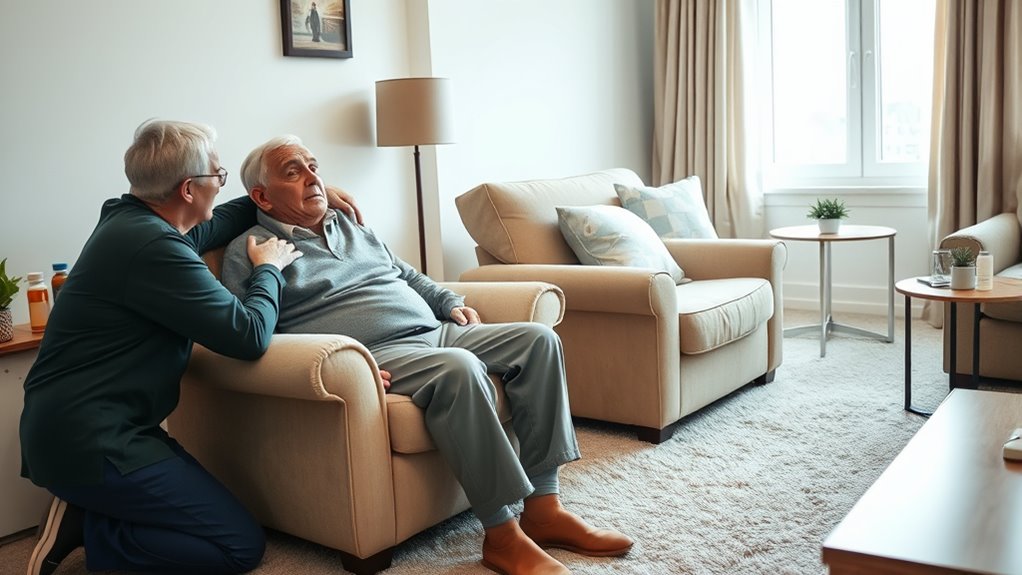

If a senior falls, stay calm and check their responsiveness and breathing. Call emergency services if they’re unresponsive or severely injured. Help them sit or lie quietly without moving too much to prevent further harm. Look for injuries, control bleeding, and reassure them with gentle support. Keep them comfortable and monitor any changes. For more detailed steps and safety tips, you’ll find essential guidance to ensure their well-being and prevent future falls.
Key Takeaways
- Stay calm, assess responsiveness and breathing, and do not move the senior unless in immediate danger.
- Check for injuries, control bleeding, and avoid giving food or medication until medical evaluation.
- Contact emergency services promptly if the senior is unresponsive, severely injured, or shows signs of serious harm.
- Ensure a safe environment by removing hazards, installing grab bars, and improving lighting to prevent future falls.
- Follow up with healthcare providers, monitor for delayed symptoms, and document the incident for ongoing care.

Falls can happen unexpectedly, but knowing what to do immediately afterward can make a big difference in a senior’s recovery. The first step is to stay calm and assess the situation without rushing to move the person unless they are in immediate danger. Check for responsiveness and breathing; if your loved one is unresponsive or not breathing, call emergency services right away and follow their instructions. If they are conscious but in pain, avoid moving them unless necessary to prevent further injury. Providing reassurance helps reduce panic and anxiety, which can be essential for their overall well-being.
Once you’ve confirmed that they’re stable, carefully check for visible injuries like bleeding, bruises, or deformities. If bleeding is present, apply gentle pressure with a clean cloth to control it. Avoid giving them food, drink, or medication until you’re sure there are no serious injuries or unless advised by medical professionals. After ensuring their safety, consider medication management. If your loved one is on medications, review their regimen with their healthcare provider to identify any that could increase fall risk, such as dizziness or hypotension. Proper medication management can help prevent future falls, so stay vigilant about medication schedules and possible side effects.
Next, focus on making the environment safer. Implement home safety modifications immediately if possible. Clear walkways of clutter and loose rugs that could cause tripping. Make sure there’s adequate lighting in all areas, especially stairwells and hallways. Installing grab bars in bathrooms, adding non-slip mats, and ensuring handrails are secure can prevent future accidents. These modifications are essential in reducing hazards and creating a safer space where your loved one can recover comfortably. Additionally, utilizing energy-efficient cloud servers and modern technology can help monitor and alert caregivers about safety concerns remotely.
After addressing immediate safety concerns, contact their healthcare provider for further evaluation. A fall can sometimes indicate underlying health issues, such as balance problems or medication side effects. The provider might recommend physical therapy or specific interventions to improve strength and stability. Keep a record of what happened, including the circumstances of the fall and any injuries sustained, to share with medical professionals. This information can be invaluable in planning future prevention strategies.
Finally, keep a close eye on your loved one’s condition over the following days. Watch for signs of delayed injuries, increased pain, or changes in mental state. Follow through with any recommended treatments or therapy sessions. Ensuring ongoing safety and proper care is key to helping them recover fully and reducing the risk of another fall. Remember, quick and thoughtful action after a fall can profoundly impact their recovery and long-term safety.
Frequently Asked Questions
How Can I Prevent Future Falls for Seniors?
To prevent future falls, focus on enhancing home safety by removing tripping hazards like loose rugs and clutter. Encourage your loved one to use mobility aids such as walkers or canes for better stability. Make sure pathways are well-lit and grab bars are installed in bathrooms. Regularly review their health and mobility, and promote exercises to improve strength and balance. These steps can markedly reduce fall risks for seniors.
When Should I Seek Emergency Medical Care?
You should seek emergency medical care immediately if you notice signs of head injury, such as confusion, vomiting, or severe headache. Also, if the senior shows unusual drowsiness or difficulty breathing, don’t wait. Consider medication interactions that might worsen symptoms, especially if they have started new medications recently. When in doubt, it’s safest to obtain professional help to rule out serious issues and ensure proper treatment.
What Are Common Injuries From Falls?
Falls often cause injuries like bruises, fractures, or head trauma. To help prevent these, consider home modifications such as removing tripping hazards and adding grab bars. Also, review medications with your doctor, as some can increase fall risk. If you notice pain, swelling, or dizziness after a fall, seek medical attention promptly. Taking these steps can reduce injury severity and promote safer living environments for seniors.
How Can I Support an Injured Senior at Home?
You can support an injured senior at home by ensuring a safe environment that minimizes fall risks through home safety adjustments. Offer emotional support by listening and reassuring them, helping boost their confidence. Assist with daily tasks gently and patiently. Keep emergency numbers handy and encourage medical follow-up. Your presence and reassurance help them feel secure, fostering recovery and emotional well-being during this challenging time.
Are There Fall Prevention Programs Available Locally?
Yes, there are fall prevention programs nearby that can be your safety net. These programs often connect you with community resources and guide you through home modifications, transforming your space into a fortress against falls. Think of them as a team of skilled artisans, tailoring your environment to support your independence and peace of mind. Reach out to local senior centers or health departments—they’re your first step toward a safer, more secure home.
Conclusion
Remember, falls happen more often than you think—about one in four seniors experiences a fall each year. Staying calm and evaluating their condition is vital. Always call for medical help if needed, and avoid moving them unless absolutely necessary. Taking quick, appropriate action can make a huge difference in their recovery. By staying vigilant and prepared, you guarantee your loved one gets the support and care they need to stay safe and healthy.