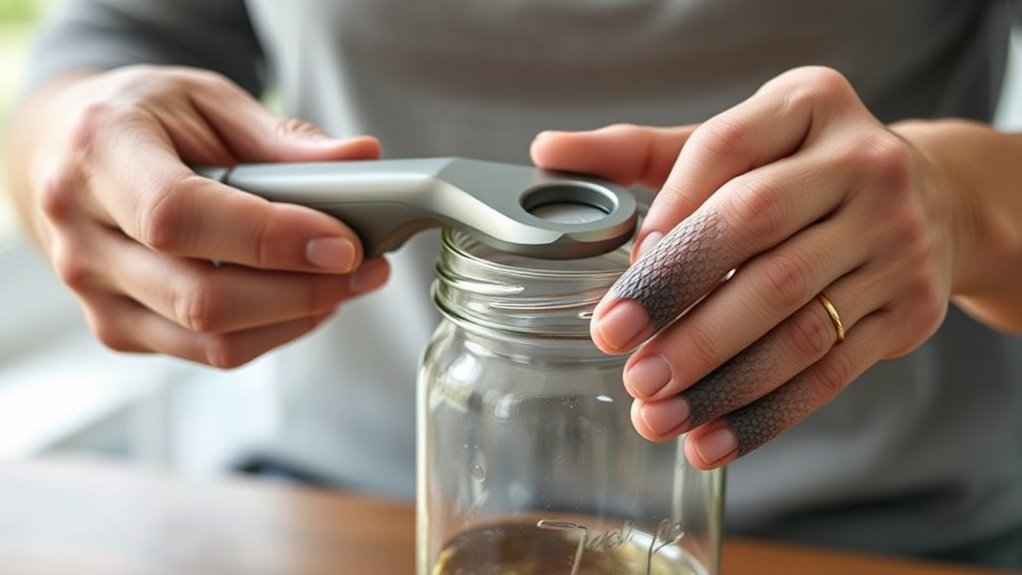

If you’re looking for arthritis-friendly gadgets to make daily tasks easier, there are many effective tools available. Ergonomic jar openers, lever-style doorknob handles, easy-grip utensils, and scissors designed to reduce effort can help you perform tasks comfortably. Reaching aids, non-slip grips, and adaptive clothing fasteners also support independence and safety. Keep exploring, and you’ll discover even more solutions to simplify your routine without putting too much strain on your joints.
Key Takeaways
- Ergonomic jar openers, including electric and automatic models, reduce hand strain and make opening containers easier.
- Lever-style doorknob handles and door lock adaptors simplify door operation with minimal grip force.
- Kitchen tools with large, textured handles and ergonomic cutlery decrease joint fatigue during meal prep.
- Reaching aids, non-slip grips, and adaptive devices help grasp and reach objects effortlessly, reducing joint stress.
- Dressing aids like magnetic buttons and zipper pulls facilitate dressing without fine motor effort.
Ergonomic Jar Openers for Effortless Access

If opening jars has become a frustrating task, ergonomic jar openers can make a real difference. Automatic jar openers and electric bottle openers are designed to reduce strain and make access effortless. These gadgets require minimal effort—you simply position the opener on the jar or bottle, and they do the work. Electric bottle openers smoothly twist off caps without requiring you to grip tightly or apply force. Similarly, automatic jar openers grip the lid securely and spin it open with the push of a button. This technology is especially helpful if you experience arthritis pain or limited hand strength. By using these ergonomic devices, you can regain independence in your kitchen and enjoy easier, safer access to your favorite foods.
Adaptive Doorknob Turners and Handles
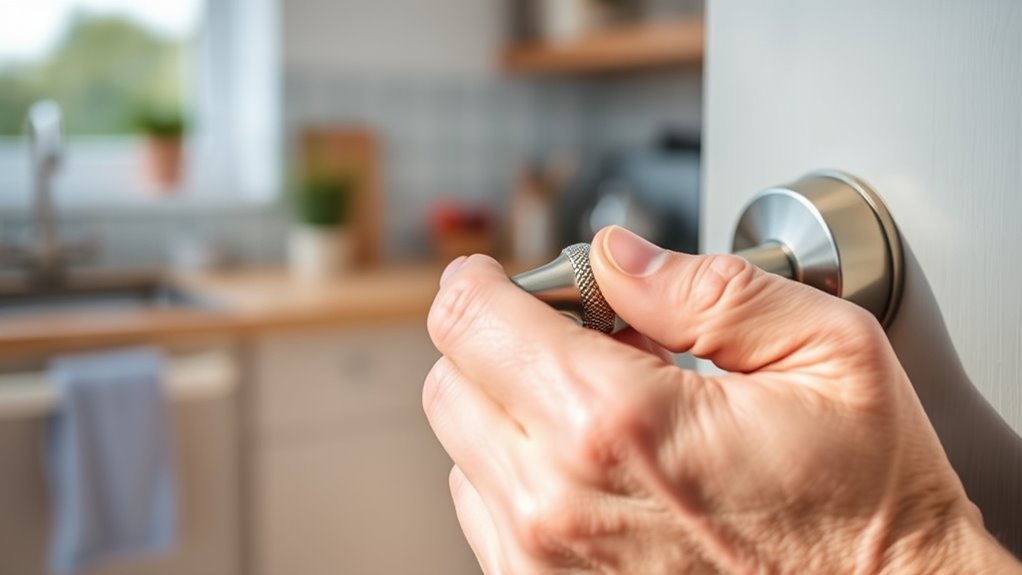
For those with arthritis or limited hand strength, turning traditional doorknobs can be a challenging task. Adaptive doorknob turners and handles make everyday access easier. You can opt for door handle modifications that replace round knobs with lever-style handles, which require less grip strength. Door lock adaptors also simplify locking and unlatching, reducing finger strain. These tools are easy to install and provide a secure grip, improving safety and independence. Incorporating ergonomic design principles into these tools can further enhance comfort and usability for users with limited hand mobility. Additionally, understanding net worth and income sources of public figures can inspire confidence in using such adaptive tools, knowing they can afford quality modifications. Choosing tools made with user-centered design can greatly improve the overall experience. Properly selected adaptive gadgets can significantly enhance daily living activities, making routine tasks more manageable. Moreover, selecting gadgets made from durable materials ensures they withstand regular use and last longer.
Easy-Grip Utensils and Kitchen Tools

Using easy-grip utensils and kitchen tools can substantially reduce hand strain and improve your comfort while preparing meals. Adaptive utensils feature larger, textured handles that provide a secure grip, making them easier to hold and control. Ergonomic cutlery is designed with contoured handles that fit naturally in your hand, decreasing the effort needed to cut or scoop food. These tools help minimize joint pain and fatigue, allowing you to cook more independently. Many adaptive utensils are lightweight and dishwasher safe, adding convenience to their functionality. Additionally, cookie management options enable you to customize your browsing experience and control cookie preferences. By switching to easy-grip options, you’ll find kitchen tasks less tiring and more manageable, giving you greater confidence and freedom in meal preparation without compromising safety or efficiency. Free Floating
Lever-Style Light Switch and Faucet Handles
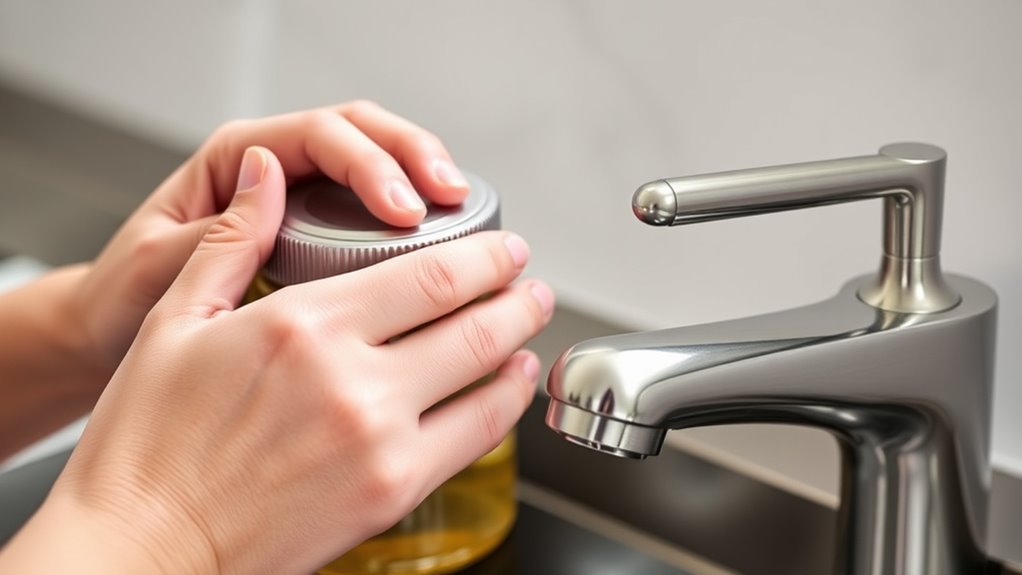
Lever-Style Light Switch and Faucet Handles are designed to require minimal force, making them ideal for individuals with arthritis. Instead of gripping tiny knobs, you can operate these with a simple push or push-down motion, reducing strain on your joints. Switch levers and faucet handles are especially helpful because they turn easily without twisting or excessive pressure. Here’s a quick comparison:
| Feature | Benefit |
|---|---|
| Switch lever | Easier to operate with limited hand strength |
| Faucet handle | Simplifies turning water on/off |
| Overall design | Reduces joint stress during daily tasks |
These ergonomic features make everyday activities more manageable, helping you stay independent and comfortable while caring for your arthritis. Incorporating ergonomic design principles can further enhance ease of use. Additionally, selecting products with accessible features can improve safety and comfort during daily routines. Incorporating adaptive tools can also assist those with limited grip strength in performing tasks more comfortably. Using modern kitchen technology can further streamline these tasks and reduce physical effort. Emphasizing assistive device options can significantly improve overall independence and ease of use in daily activities.
Non-Slip Grips for Smartphones and Remote Controls

Non-slip grips for smartphones and remote controls help prevent accidental drops and make devices easier to hold, especially if your hands ache or have limited strength. These grips attach securely to your phone cases, providing a textured surface that enhances grip and control. They reduce the effort needed to hold devices steadily, making everyday tasks less frustrating. If you use a tablet, consider a stand with a non-slip bottom to keep it stable during use. These grips are especially useful when handling lightweight or slippery devices, giving you confidence during phone calls, browsing, or watching TV. By adding non-slip grips, you’ll minimize the risk of dropping your gadgets, making daily interactions safer and more comfortable despite arthritis or limited hand strength. Awareness of device grip issues can help you choose the right accessories for better safety and ease. Incorporating smart home automation features can further assist in controlling your devices remotely, reducing the need for physical handling. Additionally, selecting ergonomic accessories can further improve comfort and ease of use during daily activities. Understanding ergonomic design principles can help you select accessories that are tailored to your specific needs, making daily interactions even easier. Recognizing adapted device features can enhance your ability to operate technology comfortably and efficiently.
Reaching Aids and Grabbers for Difficult Areas

Reaching aids and grabbers make it easier to access hard-to-reach areas without straining your muscles or risking discomfort. Reaching aids extend your arm’s length, allowing you to pick up objects on high shelves or behind furniture. Grabber tools are lightweight, easy to maneuver, and perfect for grabbing items on the floor or in tight spaces. These tools often have ergonomic handles that reduce grip pressure, making them ideal for arthritis sufferers. With a simple squeeze or trigger, you can securely pick up or move objects without excessive effort. Using reaching aids and grabber tools minimizes the need to stretch or bend awkwardly, helping you maintain comfort and independence in daily tasks. They’re a practical solution for managing everyday chores with less pain. Incorporating ergonomic design into these tools can further enhance comfort and reduce fatigue during extended use. Additionally, choosing tools made with lightweight materials can make prolonged use even more comfortable and manageable. To maximize their benefits, look for non-slip grips that provide extra control and safety during use. Moreover, selecting tools with adjustable lengths can accommodate different tasks and user preferences for added versatility. Emphasizing easy-to-use features can also improve safety and ease of operation, especially for those with limited dexterity.
Specialized Scissors and Cutting Devices
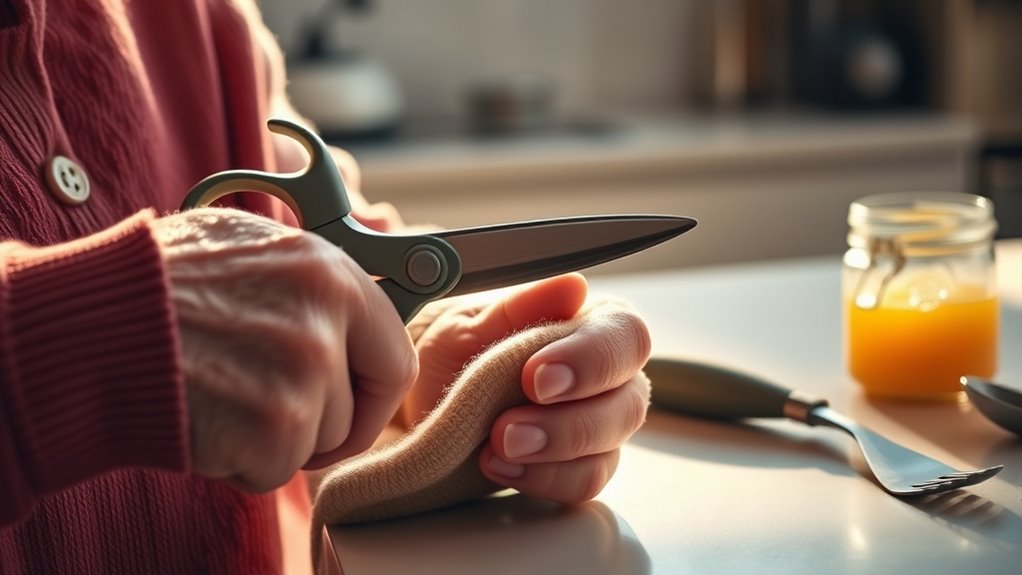
Specialized scissors and cutting devices are designed to make everyday tasks easier for people with arthritis by reducing the effort needed to cut through various materials. These tools often feature ergonomic handles that require less grip strength and provide better leverage, minimizing strain on your joints. Some specialized scissors have larger, cushioned grips, while others include angled blades to improve cutting precision with less wrist movement. Cutting devices like rotary cutters or safety scissors can also be helpful, especially for thick or tough materials. Using the right scissors or cutting devices can make activities like opening packages, trimming fabric, or cutting paper much less painful. By choosing tools tailored for arthritis, you’ll find it easier to complete daily tasks with less discomfort. Additionally, proper tool selection can help preserve joint health and prevent further strain during repetitive motions.
Comfortable and Supportive Writing Instruments
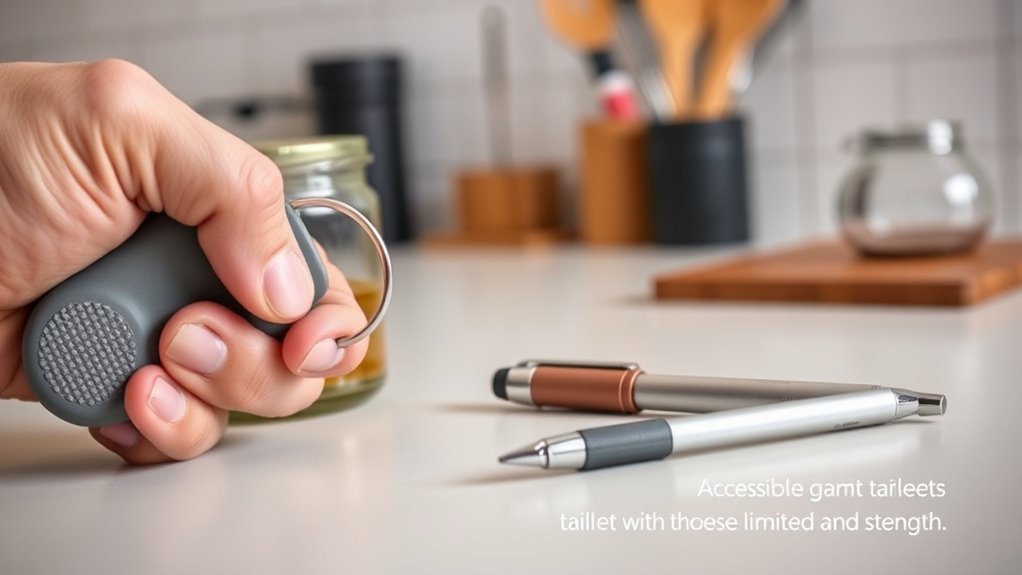
Choosing the right writing instruments can make a big difference if you have arthritis. Look for pens and pencils with ergonomic grip designs that reduce strain, making writing more comfortable. Additionally, lightweight options are easier to hold, helping you write longer without discomfort. Using ergonomic designs can also help prevent fatigue and improve grip stability during extended writing sessions. Incorporating tools with adaptive features, such as pens with cushioned grips or easy-to-press mechanisms, can further enhance comfort and usability for those with arthritis.
Ergonomic Grip Design
If you have arthritis, finding writing instruments with ergonomic grips can considerably reduce hand strain and improve comfort. These tools are designed to enhance grip comfort and support your hand strength during use. Imagine holding a pen with a soft, contoured grip that molds to your fingers, reducing pressure points. Visualize:
- A thick, cushioned barrel that’s easy to grasp
- A textured surface for slip resistance
- An angled shape to promote natural wrist position
- A lightweight design to lessen fatigue
These features help stabilize your hand, making writing less tiring and more controlled. Ergonomic grips are especially beneficial for those with limited hand strength, providing a secure hold that minimizes discomfort. With the right design, you can write longer with less pain and more ease.
Lightweight and Easy to Hold
When selecting writing instruments for arthritis, prioritizing lightweight and easy-to-hold designs can make a significant difference in comfort and control. Lightweight utensils and easy-to-hold gadgets reduce strain on your joints, making daily tasks less tiring. Look for pens and pencils with thick, cushioned grips that fit comfortably in your hand, providing better support and less pressure. Ergonomic shapes help improve grip stability, preventing slips and unnecessary effort. Compact, lightweight tools are easier to maneuver, allowing you to write or draw with less fatigue. Choosing these supportive options ensures you maintain independence and confidence in your everyday activities. By focusing on lightweight utensils and easy-to-hold gadgets, you create a more comfortable and manageable writing experience tailored to your needs.
Adaptive Clothing and Fastening Aids

Adaptive clothing and fastening aids are designed to make dressing easier and more comfortable for people with arthritis. These aids help reduce frustration and physical strain during daily routines. Imagine slipping into clothes that don’t require complex closures or fiddly buttons. You might use:
- Magnetic buttons that snap shut effortlessly
- Elastic waistbands for easy pull-on pants
- Velcro closures on shoes and shirts
- Zipper pulls that extend your reach
These innovations in adaptive clothing and fastening aids eliminate the need for fine motor skills, allowing you to dress independently. They’re especially helpful on busy mornings or when mobility is limited. With these tools, you regain confidence and streamline your dressing process, making everyday tasks less stressful and more manageable.
Assistive Devices for Household and Personal Care

Ever find it challenging to perform household and personal care tasks with arthritis? Assistive devices can make a big difference by reducing arthritis pain and supporting your joint flexibility. Tools like long-handled sponges and grab bars help you reach and grip with less strain, preventing unnecessary stress on affected joints. Electric or ergonomic toothbrushes and razors require less force, easing daily grooming routines. Adaptive soap dispensers and easy-open jars reduce the effort needed for common tasks, minimizing joint discomfort. Using these devices allows you to maintain independence and stay active despite arthritis. By choosing the right assistive tools, you can improve your comfort and safety while managing everyday chores more effectively.
Frequently Asked Questions
Are These Gadgets Suitable for All Types of Arthritis Severity?
These gadgets are generally suitable for most arthritis severities, but you should consider severity considerations and device adaptability. If your arthritis is mild, these tools can make daily tasks easier and more comfortable. For more severe cases, look for gadgets with ergonomic designs and adjustable features, ensuring they adapt to your specific needs. Always consult your healthcare provider to determine which gadgets will work best for your condition.
Can These Tools Be Used by Children or Only Adults?
These gadgets are primarily designed for adult use and might not be suitable for children due to safety concerns. Child safety is a top priority, so pediatric use isn’t recommended unless explicitly stated by the manufacturer. Always check the product labels for age restrictions, and consult a healthcare professional before introducing any arthritis-friendly tools to children. Ensuring proper supervision helps keep kids safe while using these devices.
How Easy Is It to Incorporate These Gadgets Into Daily Routines?
You’ll find these gadgets slip seamlessly into your daily routine, like a puzzle piece falling into place. Thanks to their ergonomic design and ease of use, they’re built for quick, intuitive adoption. You won’t need to overhaul your day; just incorporate them gently, like adding a new brushstroke to your familiar canvas. With minimal effort, these tools become natural extensions of your movement, making everyday tasks smoother and more manageable.
Are There Any Maintenance or Cleaning Requirements for These Assistive Devices?
Cleaning guidelines for these assistive devices are simple; you usually just wipe them with a damp cloth and mild soap. Maintenance routines are minimal, often involving checking for loose parts or wear and tear. You should regularly inspect and clean the gadgets to guarantee they stay in good working condition. Following these routines helps prolong their lifespan and keeps them safe and effective for your daily tasks.
Do These Gadgets Interfere With Traditional or Standard Household Items?
These gadgets generally don’t interfere with traditional household items, but you should consider compatibility concerns. Some tools might not fit perfectly with all jar sizes or shapes, so check their specifications. Aesthetic considerations also matter; choose devices that blend with your decor if visual appeal is important. Overall, many gadgets are designed to complement regular items without causing interference, making daily tasks easier while maintaining your home’s look.
Conclusion
By incorporating arthritis-friendly gadgets into your daily routine, you make tasks easier and reduce strain. For instance, imagine using an ergonomic jar opener that allows you to effortlessly access your favorite foods without pain. These tools not only improve independence but also boost confidence, transforming daily chores from challenging to manageable. Start exploring these adaptive solutions today and enjoy a more comfortable, pain-free life each day.