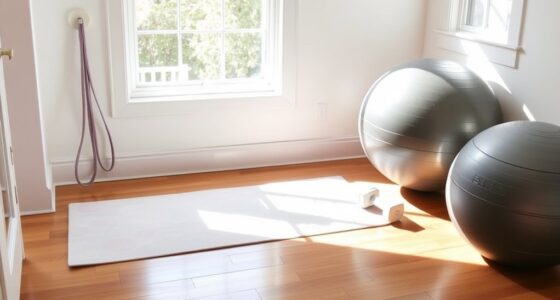
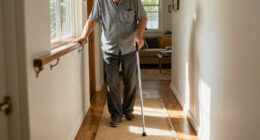
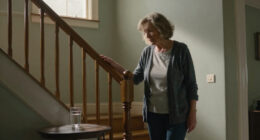
To organize a senior’s living space for convenience, focus on creating clear, unobstructed pathways with clutter-free walkways and easy-to-reach storage. Incorporate assistive devices like grab bars, raised toilet seats, and motion-sensor lighting seamlessly into the environment. Keep essential items nearby, label cabinets, and make certain safety devices such as smoke alarms are functional. Prioritizing these steps helps promote independence and safety—continue exploring to discover practical tips that make daily living easier and more secure.

Turn quiet afternoons into listening time
- Thousands of audiobooks, podcasts and originals
- Listen on your phone, tablet or Echo — also offline
- Cancel anytime
Key Takeaways
- Incorporate assistive devices like grab bars, raised seats, and motion-sensor lighting for safety and accessibility.
- Keep walkways clear and store frequently used items within easy reach to prevent falls and simplify routines.
- Use labels or color coding on cabinets and drawers for quick identification and efficient organization.
- Create a structured layout that promotes ease of movement and minimizes hazards for limited mobility.
- Ensure emergency preparedness with accessible exits, well-stocked kits, and visible contact information.

Organizing a senior’s living space can substantially improve safety, comfort, and independence. When you create a well-structured environment, you make daily routines easier and reduce the risk of accidents. One of the key steps is incorporating assistive devices, which can include grab bars, raised toilet seats, and motion-sensor lighting. These tools help seniors move around more confidently and reduce the likelihood of falls. Position these devices strategically—grab bars should be near the toilet and in the shower, while lighting should illuminate pathways and stairs. By integrating assistive devices seamlessly into the space, you guarantee they’re accessible when needed without cluttering the environment.
Emergency preparedness is another vital aspect of organizing a senior’s living space. You want to make sure that help is easily reachable in case of an emergency. Keep a well-stocked emergency kit in a central location, including essentials like water, non-perishable snacks, a flashlight, batteries, a first aid kit, and a charged cell phone. It’s also wise to have a list of emergency contacts visible or stored in a prominent spot. Consider installing a simple communication device, such as a medical alert system, that allows the senior to call for help with the push of a button. Creating clear, unobstructed pathways to exits and ensuring that escape routes are easy to identify can save precious time during an emergency.
Furthermore, organize the living space to minimize hazards that could compromise safety during emergencies. For example, keep walkways free of clutter to prevent trips and falls. Store frequently used items within easy reach to avoid unnecessary bending or stretching, especially for seniors with limited mobility. Use labels or color coding for drawers and cabinets to help identify contents quickly, which can be invaluable during stressful situations. When planning for emergency preparedness, also consider the placement of safety alarms—smoke detectors and carbon monoxide alarms should be installed on every level and tested regularly to guarantee they work correctly. Additionally, proper air quality devices such as HEPA filters can help reduce airborne hazards and promote a healthier environment.
In essence, organizing a senior’s living space isn’t just about tidiness; it’s about creating a safe, functional environment that promotes independence. By thoughtfully incorporating assistive devices and prioritizing emergency preparedness, you make everyday life safer and more manageable. These adjustments not only protect but also empower seniors to navigate their homes confidently, knowing help is accessible and their environment is optimized for their needs.
Products Worth Considering

Garmin Venu 3 Fitness Smartwatch, 45 mm, Black

Bowflex SelectTech 840 Adjustable Kettlebell

Levoit Core 400S-P Smart Air Purifier for Large Rooms
As an affiliate, we earn on qualifying purchases.
Frequently Asked Questions
How Can I Ensure Safety in a Senior’s Living Space?
To guarantee safety in a senior’s living space, you should focus on emergency preparedness and technology integration. Install easy-to-access emergency buttons and smoke detectors, and keep a list of emergency contacts nearby. Use technology like smart sensors and security systems to monitor activity and alert you to potential hazards. Regularly review safety protocols, ensure clear pathways, and educate your loved one on how to use safety devices confidently for a secure environment.
What Are the Best Storage Solutions for Limited Space?
Think of your senior’s space as a cozy, well-tended garden—every corner needs careful nurturing. Use decorative storage to hide clutter like hidden treasures, adding charm while saving space. Opt for compact furniture with built-in storage, transforming furniture into multi-tasking marvels. These solutions maximize limited space, making rooms feel open yet functional, ensuring safety and convenience. With thoughtful organization, your loved one’s home becomes a sanctuary of comfort and ease.
How Do I Personalize the Environment Without Clutter?
You can personalize the environment by adding decorative accents like framed photos, artwork, or meaningful keepsakes that reflect their personality. Use personalized organization by labeling storage bins with names or icons, making it easier to find items without clutter. Keep surfaces clear by dedicating small areas for their favorite items, ensuring the space feels warm and unique without becoming overwhelming. This approach balances personalization with a tidy, functional living space.
What Lighting Options Improve Visibility and Safety?
Did you know good lighting reduces fall risks by 50%? You can improve visibility and safety by using smart bulbs that adjust brightness automatically and task lighting in key areas like the kitchen and reading spots. These options guarantee well-lit spaces, making it easier for seniors to see clearly and move safely. Incorporate these lighting solutions to create a safer, more comfortable environment that promotes independence and peace of mind.
How Can I Make the Space More Accessible for Mobility Aids?
To make the space more accessible for mobility aids, you should install grab bars in key areas like the bathroom and next to beds. Also, add wheelchair ramps at entrances and thresholds to eliminate barriers. Keep pathways wide and clear, ensuring at least 36 inches of space for easy navigation. These modifications help seniors move safely and comfortably, promoting independence and reducing fall risks.
Conclusion
By organizing your loved one’s living space, you create safety, foster independence, and promote comfort. By simplifying clutter, enhancing accessibility, and ensuring order, you help them live confidently. When every item has a purpose, every space promotes ease. By taking these steps, you not only improve their daily life but also show your care. Because a well-organized space is more than just tidy—it’s a foundation for dignity, a sanctuary for peace, and a reminder of your love.