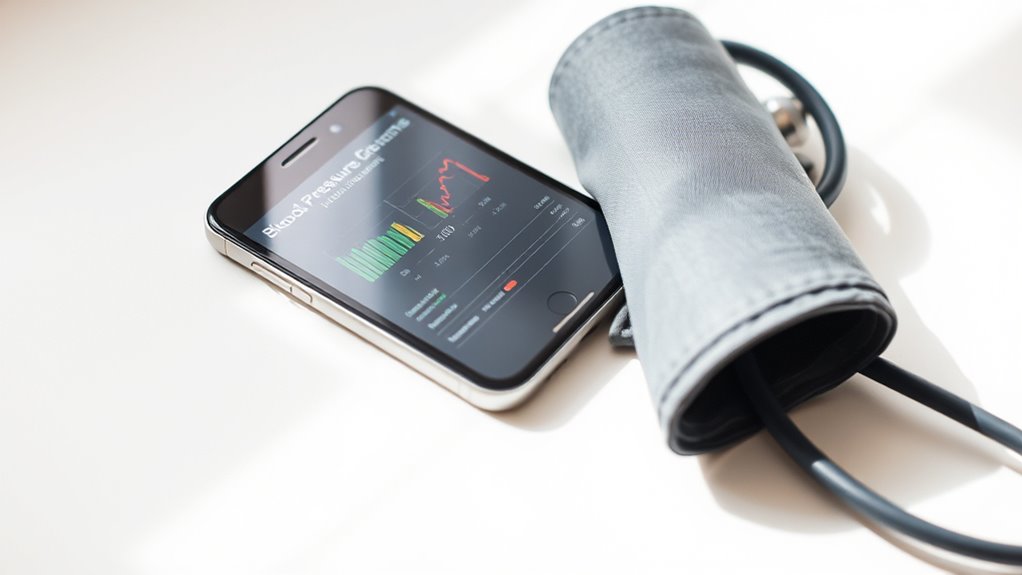

Using blood pressure apps on your phone can’t fully substitute a cuff-based monitor yet. Many apps lack scientific validation and rely on sensors or cameras that aren’t always reliable. While some apps show promise with advanced algorithms, they still need proper validation and certification. For now, they’re better used to track trends rather than replace clinical measurements. Keep reading to discover what you can do to guarantee accurate and trustworthy blood pressure monitoring.
Key Takeaways
- Most phone-based blood pressure apps do not yet meet clinical validation standards to fully replace cuffs.
- Reliable blood pressure measurement requires validated devices; many apps lack proper certification.
- Apps are useful for trend tracking but should complement, not replace, traditional cuff measurements.
- Regular calibration with clinically validated cuffs ensures ongoing accuracy of app-based readings.
- Advances in sensor technology are improving app reliability, but users should verify validation status before relying solely on them.
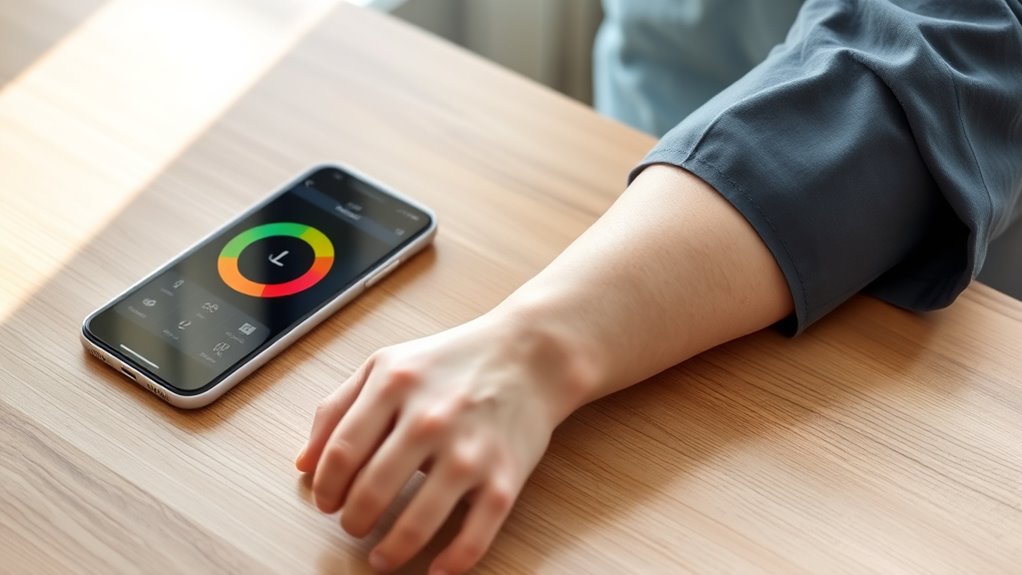
Blood pressure apps have become valuable tools for tracking and managing your health from the comfort of your home. With just your smartphone, you can monitor your blood pressure regularly, making it easier to spot trends and share data with your healthcare provider. However, one of the most important considerations when using these apps is their monitoring accuracy. Not all apps are created equal, and their ability to provide precise readings can vary considerably. Some apps rely on your phone’s camera or sensors to estimate blood pressure, but these methods are often less reliable than traditional cuff-based measurements. To trust the readings from a blood pressure app, you need to guarantee it has been validated against clinical standards and has a proven track record of accuracy. Checking reviews, certifications, and scientific validations can help you determine if an app offers good monitoring accuracy. App reliability is another key factor you should consider. Dependable apps maintain consistent performance over time and across different devices, so you can depend on them for your health tracking without worrying about sudden glitches or inaccurate data. An unreliable app might give inconsistent readings or crash unexpectedly, which can undermine your confidence and potentially lead to incorrect health decisions. When choosing an app, look for ones that have positive user feedback specifically about their stability and consistency. Also, pay attention to updates and customer support; a trustworthy developer actively maintains the app and responds to user concerns. Remember, while many apps claim to measure blood pressure accurately, they should complement, not replace, traditional cuff measurements, especially if you have hypertension or other health issues. Regular calibration with a clinically validated blood pressure cuff can help guarantee the app’s readings stay trustworthy. It’s also wise to consult your healthcare provider about using a blood pressure app to monitor your health. They can advise you on which apps are trustworthy and how to interpret your readings correctly. Keep in mind that technology is improving, and some newer apps with advanced algorithms and better sensors are approaching clinical accuracy. Advances in sensor technology are making some apps more reliable than ever for personal health monitoring. Still, they should be used as part of a broader health management plan rather than the sole method of monitoring. In essence, choosing a blood pressure app with high monitoring accuracy and app reliability is vital for trustworthy health tracking. Always verify the app’s validation status and reliability before depending on its readings. When used properly, these apps can be a valuable supplement to your routine, but they shouldn’t fully replace traditional cuff-based measurements, especially for managing serious health conditions.
validated blood pressure monitor cuff
As an affiliate, we earn on qualifying purchases.
As an affiliate, we earn on qualifying purchases.
Frequently Asked Questions
Are Blood Pressure Apps Fda-Approved for Medical Diagnosis?
Blood pressure apps aren’t generally FDA-approved for medical diagnosis. You should know that regulatory approval is essential for ensuring medical accuracy, so many apps lack this certification. While some apps can help monitor trends, they shouldn’t replace professional medical devices or advice. Always verify if an app has FDA approval before relying on it for critical health decisions, and consult a healthcare professional for accurate diagnosis and treatment.
How Accurate Are Smartphone Blood Pressure Readings Compared to Traditional Cuffs?
Your smartphone blood pressure readings are like trying to catch lightning in a bottle—they can vary. Validation studies show that user accuracy with these apps isn’t always reliable, often less precise than traditional cuffs. While convenient, they shouldn’t replace medical-grade devices, especially if you’re managing health conditions. Trust the proven technology of a cuff for critical measurements, and use apps as supplementary tools for general awareness.
Can Blood Pressure Apps Detect Hypertensive Emergencies?
Blood pressure apps can’t reliably detect hypertensive emergencies on their own. They lack the ability for emergency detection and can’t accurately monitor blood pressure variability during critical moments. If you experience severe symptoms like chest pain, vision changes, or dizziness, seek immediate medical attention instead of relying solely on your phone. These apps are helpful for regular monitoring but aren’t substitutes for professional evaluation during emergencies.
Do Blood Pressure Apps Require Calibration With a Cuff First?
Like tuning a finely-strung instrument, blood pressure apps need calibration with a cuff first. Without this step, their accuracy can be shaky, like a boat in choppy waters. Calibration ensures your app’s readings are reliable, anchoring it firmly in real blood pressure numbers. So, yes, calibration with a cuff is essential initially, making sure your app’s measurements stay true and trustworthy on your health journey.
Are Blood Pressure Apps Suitable for Children or Pregnant Women?
Blood pressure apps aren’t typically suitable for children or pregnant women, as they often lack pediatric validation and pregnancy safety testing. You should consult your healthcare provider before relying on an app for monitoring blood pressure in these groups. These devices may not provide accurate readings for kids or during pregnancy, so using a traditional cuff and professional guidance guarantees better health management for both children and expectant mothers.
home blood pressure monitor with app connectivity
As an affiliate, we earn on qualifying purchases.
As an affiliate, we earn on qualifying purchases.
Conclusion
So, next time you’re feeling brave, ditch the cuff and trust your phone’s fancy app. Who needs a real blood pressure monitor when your device can *predict* your health, right? Just imagine, a tiny gadget that turns your phone into a medical miracle—because what could possibly go wrong? Remember, while apps might seem like magic, they’re more like a clown at a medical circus. Stick with the professionals—or at least a real cuff.
clinically validated blood pressure device
As an affiliate, we earn on qualifying purchases.
As an affiliate, we earn on qualifying purchases.
blood pressure monitor calibration kit
As an affiliate, we earn on qualifying purchases.
As an affiliate, we earn on qualifying purchases.