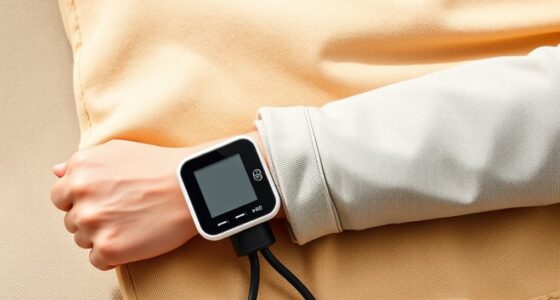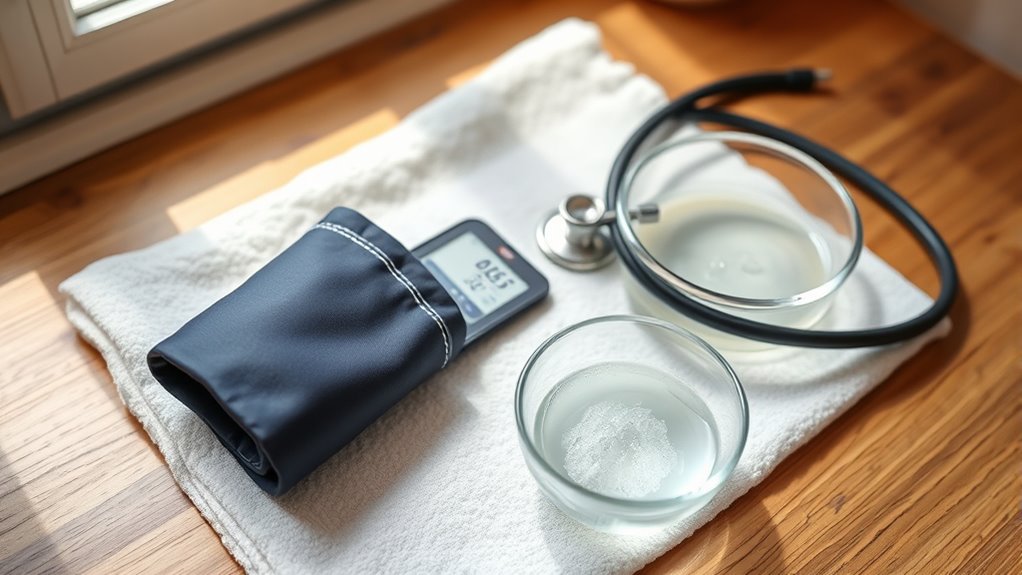

To clean your blood pressure cuff, wipe it with a damp cloth and mild disinfectant or follow the manufacturer’s instructions, ensuring it stays dry and intact. For your stethoscope, disinfect the earpieces, tubing, and chest piece with alcohol wipes (≥70%) after each use, avoiding immersion unless specified. Store your equipment properly to prevent damage and contamination. To keep everything germ-free and in good shape, continue exploring more detailed cleaning tips.
Key Takeaways
- Wipe the blood pressure cuff with a damp cloth and mild detergent or disinfectant after each use, following manufacturer instructions.
- Clean stethoscope earpieces, tubing, and chest piece with alcohol wipes (≥70%) after each patient.
- Periodically disinfect the entire stethoscope by immersing it in a suitable disinfectant solution if permitted.
- Wash hands thoroughly before and after cleaning devices to maintain infection control.
- Store both devices in a clean, dry area away from sunlight and chemicals to prevent damage and contamination.

Ever wondered how to keep your blood pressure cuff and stethoscope clean and safe? Proper device maintenance is essential not just for extending the lifespan of your equipment but also for ensuring effective infection control. When you regularly clean and disinfect your medical tools, you reduce the risk of cross-contamination and protect yourself and others from potential infections. This is especially important if you’re using the same equipment on multiple patients or family members. Implementing a consistent cleaning routine is simple but critical.
Regular cleaning of blood pressure cuffs and stethoscopes prevents cross-contamination and promotes safe, effective care.
Start by inspecting your blood pressure cuff and stethoscope before and after each use. Look for any signs of damage, such as tears or buildup of dirt. For device maintenance, always follow the manufacturer’s instructions for cleaning. Most cuffs are made of fabric or vinyl, which can be wiped down with a damp cloth and a mild detergent or disinfectant. Some cuffs are machine washable—check the label to confirm. When cleaning, avoid harsh chemicals that might degrade the material. Instead, opt for gentle, hospital-grade disinfectants or solutions recommended for medical devices.
The stethoscope requires a slightly different approach. After each use, wipe the earpieces, tubing, and chest piece with alcohol wipes containing at least 70% alcohol. This not only cleans but also disinfects, reducing bacteria and viruses. Be sure to get into the crevices around the earpieces and the diaphragm to remove any residue or germs. For thorough device maintenance, deep clean your stethoscope periodically. Submerge the tubing and chest piece in a disinfectant solution for a few minutes, then wipe dry with a clean cloth. Never immerse the entire scope in liquid unless the manufacturer explicitly states it’s safe to do so.
Infection control is your top priority. Always wash your hands thoroughly before and after cleaning your equipment. Store your blood pressure cuff and stethoscope in a clean, dry place to prevent dust and microbial buildup. Keep the items away from direct sunlight and chemicals that could deteriorate the materials. Using disposable or single-use covers for cuffs can add an extra layer of protection, especially during times of heightened concern about contagious diseases.
Frequently Asked Questions
How Often Should I Disinfect My Blood Pressure Cuff and Stethoscope?
You should sterilize your blood pressure cuff and stethoscope after each patient use to maintain hygiene and extend their device lifespan. Regular cleaning, ideally daily or after every use, helps prevent cross-contamination. By keeping to this cleaning frequency, you ensure the devices stay in good condition and safe for continued use. Consistent disinfection also minimizes the risk of infection transmission, protecting both you and your patients effectively.
Can I Use Alcohol Wipes on All Parts of the Devices?
Did you know that using the right disinfectant can reduce infection risk by over 80%? You can use alcohol wipes on most parts of your blood pressure cuff and stethoscope, but it’s important to consider alcohol safety and the device material. Stick to 70% isopropyl alcohol, and avoid harsh disinfectant types that might damage sensitive parts. Always check manufacturer instructions before disinfecting to ensure safety and effectiveness.
Are There Specific Cleaning Agents to Avoid?
You should avoid harsh chemicals like bleach solutions and abrasive cleaners when cleaning your blood pressure cuff and stethoscope. These substances can damage the materials and compromise their accuracy. Instead, stick to mild soap and water or alcohol wipes with at least 70% alcohol. Always check the manufacturer’s instructions, and steer clear of any cleaning agents that contain harsh chemicals or bleach solutions to keep your devices safe and effective.
How Do I Prevent Damage During Cleaning?
To prevent damage during cleaning, you should use gentle cleaning methods and avoid harsh chemicals. Opt for mild soap and water, and gently wipe the cuff and stethoscope. Make sure to rinse thoroughly and use a soft cloth for proper drying to avert moisture buildup. Avoid soaking or scrubbing aggressively, which can harm the materials. Proper drying ensures the equipment stays in good condition and functions accurately.
Should I Sterilize My Blood Pressure Cuff and Stethoscope Regularly?
Yes, you should sterilize your blood pressure cuff and stethoscope regularly to guarantee safety and avoid infections. Follow recommended cleaning frequency based on usage; typically, after each patient or weekly for personal use. Store your devices properly in a clean, dry place to maintain hygiene. Regular sterilization keeps your device in good condition and ensures accurate readings, so make it part of your routine cleaning and device storage practices.
Conclusion
By regularly cleaning your blood pressure cuff and stethoscope, you’re practicing the kind of care that keeps health and hygiene in harmony, much like a well-tuned orchestra. Just as a maestro ensures each instrument is spotless for a flawless performance, your diligence prevents the spread of germs and maintains your equipment’s integrity. With simple routines, you become the vigilant conductor of your own health, striking a balance between prevention and peace of mind.