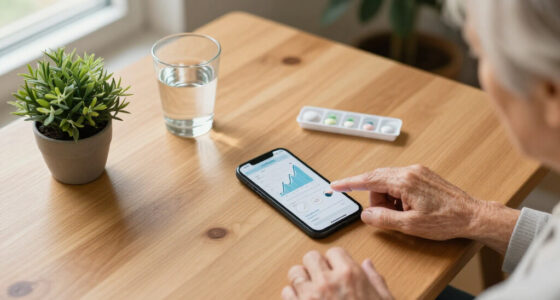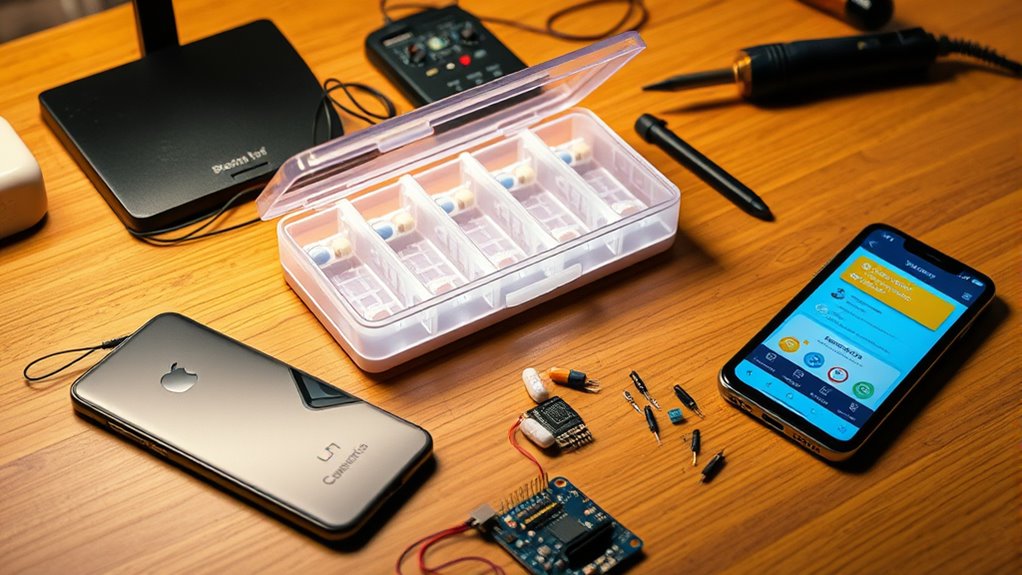

To create a DIY smart pillbox, start by selecting a compartmental container with labeled sections for each dose. Use a microcontroller like Arduino or Raspberry Pi to control sensors such as weight or proximity detectors that confirm pill access. Program alerts like buzzers or app notifications for missed doses, and connect your device via Bluetooth or Wi-Fi. Carefully assemble everything, test for reliability, and optimize settings. Keep exploring to discover tips for making your medication reminder system more effective.

Turn quiet afternoons into listening time
- Thousands of audiobooks, podcasts and originals
- Listen on your phone, tablet or Echo — also offline
- Cancel anytime
Key Takeaways
- Select a multi-compartment container with easy labeling and access for each medication dose.
- Integrate sensors like weight or proximity sensors to detect pill presence and confirm doses taken.
- Program microcontrollers (Arduino or Raspberry Pi) to schedule reminders and monitor sensor inputs.
- Add alert systems such as buzzers, LEDs, or app notifications via Bluetooth or Wi-Fi for real-time alerts.
- Assemble and test the device, optimizing sensor sensitivity and notification settings for reliable medication management.
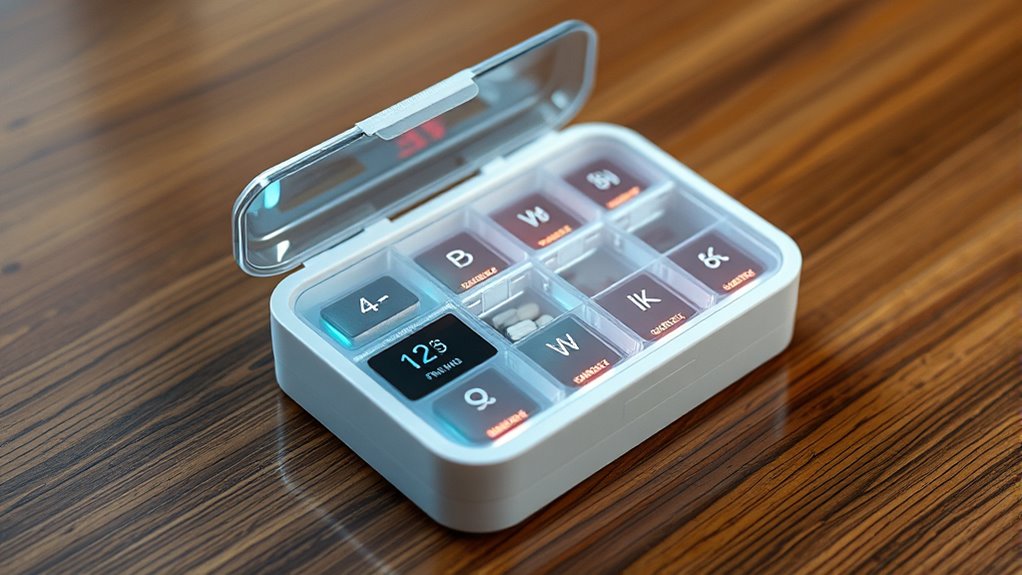
Have you ever worried about forgetting to take your medication on time? It’s a common concern, but with a DIY smart pillbox, you can turn that worry into confidence. Building your own device allows you to customize it to your routine and needs, ensuring better digital organization and health monitoring. Instead of relying solely on traditional pillboxes, a smart version can send reminders, track doses, and even alert you if you miss a dose. The key is integrating simple tech components that work together seamlessly.
Start by choosing a container with compartments for each dose, preferably one that’s easy to open or label. Next, gather a microcontroller like an Arduino or Raspberry Pi, which will act as the brain of your smart pillbox. These boards are affordable, widely supported, and perfect for beginners. Connect a few basic sensors, such as a proximity sensor or a weight sensor, to detect whether your pills are in place. This helps with health monitoring by ensuring you’ve taken your medication or reminding you if a dose is missed. For alerts, incorporate a buzzer, LED indicator, or even connect it to your phone via Bluetooth or Wi-Fi. This way, you get real-time notifications on your smartphone, making it easier to stay on schedule.
Programming your device involves writing simple code that schedules reminders at specific times, checks the sensor status, and triggers alerts if necessary. You can use platforms like Arduino IDE or Python, which are beginner-friendly and well-documented. Setting up a digital calendar or app integration can further streamline your routine, sending push notifications or alarms when medication time approaches. This combination of digital organization and health monitoring creates a reliable system that keeps you accountable without requiring constant manual checks.
Powering your smart pillbox can be straightforward—use batteries or a small power supply, depending on your setup. Make sure your device is energy-efficient so it can run independently for days or weeks. Also, consider adding a backup power option, like a portable charger, to prevent interruptions. Once assembled, test your device thoroughly to ensure it reliably sends reminders and correctly detects pill presence. Fine-tuning the sensors and notifications will make your system more effective.
Additionally, understanding the contrast ratio of your components can help improve the visibility of indicator lights and screens, making alerts easier to notice in various lighting conditions. In the end, creating your own smart pillbox isn’t just about technology; it’s about taking control of your health with a personalized tool. It combines digital organization and health monitoring, making medication management simpler and more reliable. With a little effort, you’ll have a custom device that helps you stay consistent and confident in your daily routine.
As an affiliate, we earn on qualifying purchases.
Frequently Asked Questions
What Safety Features Should I Include in My DIY Pillbox?
You should include a tamper-proof design to prevent accidental or unauthorized access, ensuring safety. Add emergency alerts that notify you or caregivers if the pillbox is opened unexpectedly or if medication isn’t taken on time. Incorporate secure locking mechanisms, alerts for missed doses, and a sturdy build. These features help protect your medication, promote adherence, and provide peace of mind knowing you’re promptly informed of any issues.
How Can I Ensure My Smart Pillbox Is Weatherproof?
Imagine your pillbox as a sturdy fortress against the elements. To guarantee it’s weatherproof, you need reliable weatherproof sealing around all openings, preventing water and dust infiltration. Use durable, waterproof materials like silicone or rubber gaskets, and consider adding a protective outer shell made from waterproof plastics or metals. These steps enhance environmental durability, making your smart pillbox resilient to rain, humidity, and temperature changes, safeguarding your medications effectively.
What Are the Best Power Sources for Continuous Operation?
You should choose reliable battery types like lithium-ion or rechargeable NiMH for continuous operation, as they offer long-lasting power. Incorporate effective power management strategies, such as low-power components and sleep modes, to extend battery life. Regularly monitor battery levels and consider backup power options like small solar panels or external power supplies. This guarantees your smart pillbox stays operational without interruptions, providing consistent medication reminders.
How Can I Customize Reminders for Multiple Users?
You can customize reminders for multiple users by setting up personalized scheduling and user-specific alerts on your DIY smart pillbox. Assign each user their own medication times and alert preferences, ensuring notifications are tailored to individual needs. Use a simple interface or coding platform to create distinct profiles, so each person receives timely reminders that suit their medication routine, improving adherence and safety for everyone involved.
What Privacy Considerations Are Involved in Data Collection?
Think of your data as a precious keepsake; you want to protect it fiercely. When collecting data, you must prioritize user consent, ensuring users agree to what’s being gathered. Implement data encryption to guard information against breaches. Just like locking a treasure chest, these steps preserve privacy, prevent misuse, and build trust. You’re responsible for safeguarding sensitive health info, respecting boundaries, and maintaining transparency in your smart pillbox project.
Raspberry Pi medication reminder device
As an affiliate, we earn on qualifying purchases.
As an affiliate, we earn on qualifying purchases.
Conclusion
Now that you’ve learned how to create your own smart pillbox, imagine the possibilities it opens for your daily routine. But wait—there’s one more feature you haven’t discovered that could revolutionize your medication management even further. Are you ready to take your DIY project to the next level and guarantee you never miss a dose again? Stay tuned, because this simple device might just change the way you think about staying healthy. The best is yet to come.
Bluetooth enabled pill organizer
As an affiliate, we earn on qualifying purchases.
As an affiliate, we earn on qualifying purchases.
As an affiliate, we earn on qualifying purchases.
Fall Picks
fall essentials
As an affiliate, we earn on qualifying purchases.