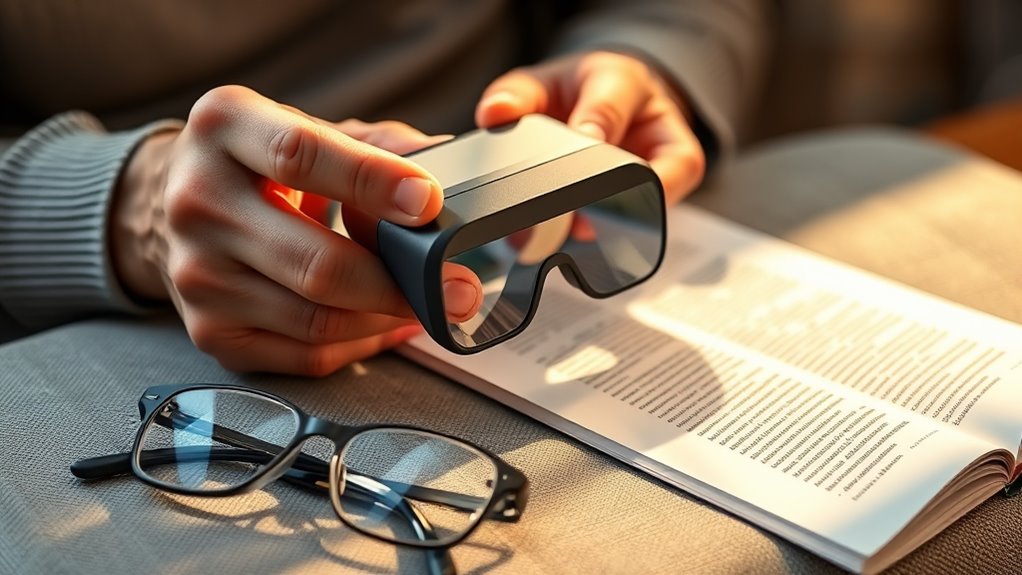
Magnifiers and reading aids help you see better despite macular degeneration. Handheld and stand magnifiers enlarge text and images, making them easier to see. Electronic video magnifiers offer adjustable contrast and magnification, fitting different needs. Combining these tools with proper lighting enhances clarity and reduces eye strain. Choosing the right device can boost your independence and confidence. If you continue exploring, you’ll find useful tips to create a comfortable and effective visual environment tailored for your needs.
Key Takeaways
- Handheld, stand, and electronic magnifiers can enlarge text and images to improve readability for seniors with macular degeneration.
- Electronic magnifiers offer adjustable contrast, brightness, and magnification to customize visual support.
- Combining magnifiers with proper lighting reduces eye strain and enhances visual clarity during reading.
- Selecting lightweight and appropriately sized magnifiers ensures ease of use and comfort for seniors.
- Using magnifiers alongside environmental modifications, like proper task lighting, maximizes their effectiveness.
If you’re a senior with macular degeneration, finding ways to see clearly can be challenging. This condition affects your central vision, making it difficult to read, recognize faces, or see fine details. Fortunately, there are strategies and tools that can help you maintain independence and stay engaged. One of the most important aspects is optimizing your environment with proper lighting solutions. Bright, glare-free lighting can considerably improve your ability to see. Using adjustable lamps or task lighting that directs light where you need it most can reduce eye strain and enhance contrast, making reading easier. Avoid harsh overhead lights that cause glare, and consider using soft, diffuse lighting instead. Additionally, sitting near natural light or adding multiple light sources can make a big difference. Proper lighting isn’t just about brightness; it’s about creating a well-lit space that minimizes shadows and enhances visibility. Incorporating modern lighting technologies designed for low vision can further enhance your environment and improve your visual comfort.
Alongside lighting solutions, visual therapy can play an essential role in managing macular degeneration. Visual therapy involves exercises and techniques designed to strengthen your remaining vision and adapt to changes. These exercises can help you develop better scanning skills, improve contrast sensitivity, and learn to use your peripheral vision more effectively. Working with a low-vision specialist, you can learn how to maximize your visual capabilities and discover new ways to approach everyday tasks. Visual therapy isn’t a cure, but it can improve your quality of life by helping you adapt to your visual changes and maintain independence.
Magnifiers and reading aids are also vital tools in your arsenal. Handheld magnifiers, stand magnifiers, and electronic video magnifiers can enlarge text and images, making reading more manageable. When selecting a magnifier, consider the size, weight, and magnification level that best suits your needs. Some electronic devices even offer adjustable contrast and brightness settings, which can be tailored to your comfort. Combining these aids with good lighting solutions creates a more effective reading environment. For example, using a magnifier under a well-lit task lamp can considerably reduce eye strain and improve clarity. Remember, the goal is to make your reading and daily activities as comfortable and accessible as possible, so don’t hesitate to explore different tools and techniques to find what works best for you.
Frequently Asked Questions
Can Magnifiers Help Improve Vision for Everyday Activities?
Magnifiers can greatly improve your vision for everyday activities. To get the best results, use proper lighting tips, like bright, even light to reduce glare. Keep your magnifier well-maintained by cleaning the lenses regularly and checking for damage. This guarantees clear, sharp images. With the right magnifier and attention to lighting and maintenance, you’ll find it easier to read, cook, and handle daily tasks confidently.
Are There Digital Magnifiers Suitable for Seniors?
Yes, there are digital magnifiers suitable for seniors. These digital options often feature user-friendly interfaces, making them easy to operate. You can adjust magnification levels, contrast, and lighting with simple controls, helping you see better for reading, hobbies, or daily tasks. Many models are portable and designed specifically for seniors, ensuring you get the support you need without frustration.
How Do I Choose the Right Magnifier for My Needs?
Did you know that over 90% of seniors with macular degeneration find magnifiers helpful? To choose the right magnifier types, consider your specific vision needs, portability, and ease of use. Use selection tips like trying different magnifier styles—handheld, stand, or digital—and check for adjustable magnification levels. Prioritize comfort and clarity to make sure you pick a device that truly enhances your daily reading experience.
What Is the Cost Range of High-Quality Magnifiers?
High-quality magnifiers typically cost between $50 and $300, depending on features and brand. You should do a cost comparison to find options that fit your budget while offering the features you need. More advanced models with adjustable magnification, built-in lights, and ergonomic designs tend to be pricier. Remember, investing in a quality magnifier can greatly improve your reading experience and eye comfort over time.
Are There Any Safety Considerations When Using Magnifiers?
Yes, there are safety considerations when using magnifiers. You should always follow safety precautions, such as ensuring proper handling to avoid dropping or damaging the device. Good lighting helps prevent eye strain, and taking regular breaks reduces fatigue. Make sure the magnifier is clean and free of scratches for clear viewing. By handling it properly and observing safety tips, you can use magnifiers effectively and safely.
Conclusion
Now that you know your options, don’t wait to take action. Magnifiers and reading aids can truly turn the page for you, restoring your independence and joy in everyday tasks. Remember, it’s never too late to seek help and improve your quality of life. With the right tools, you can face each day with confidence, proving that where there’s a will, there’s a way. Take that first step—you’re not alone in this journey.