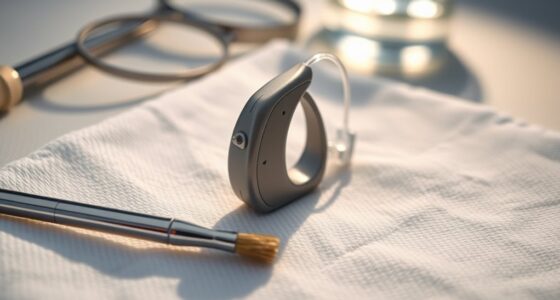
Choosing between a medical alert watch and a pendant depends on your style, daily routine, and preferences. Watches are practical, providing quick access and a modern look, while pendants resemble jewelry and offer longer battery life and discreet wear. Consider how comfortable you feel with each option and how easily you want to use it in emergencies. Keep exploring to find out which device suits your lifestyle best and makes you feel safest.
Key Takeaways
- Watches offer quick access and double as regular accessories, while pendants are discreet jewelry options.
- Pendants generally have longer battery life and require less frequent charging compared to watches.
- Watches are ideal for those seeking a modern, functional look and easy wrist access in emergencies.
- Pendants are versatile, stylish, and suitable for those who prefer jewelry-like devices or have sensitivities.
- Style preferences, daily habits, and maintenance needs should guide the choice between the two options.
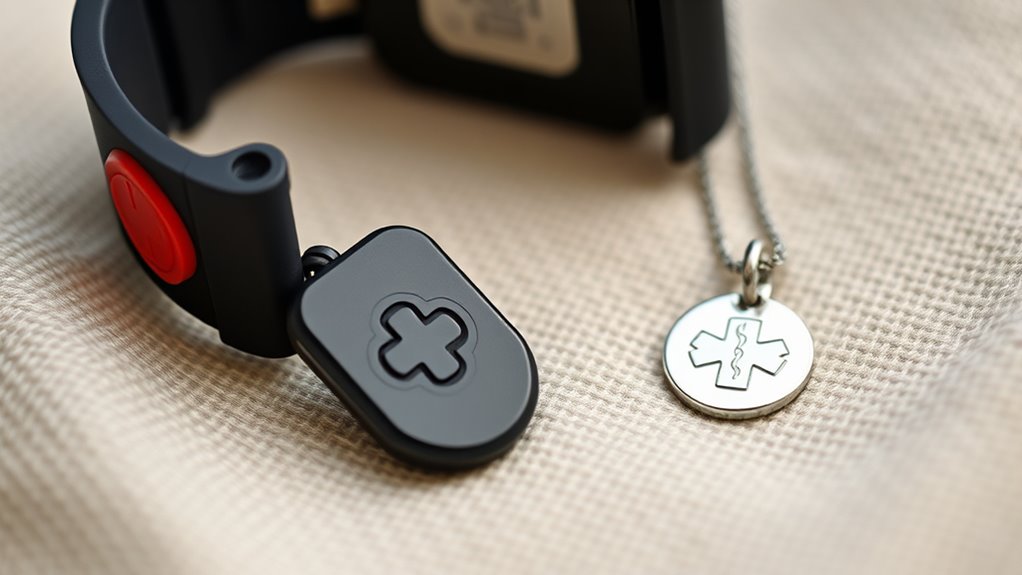
When choosing a medical alert device, you might wonder whether a watch or a pendant best suits your needs. One of the first factors to contemplate is design aesthetics. If you prefer something that blends seamlessly with your daily wardrobe, a watch might appeal more because it looks like a regular accessory. Many medical alert watches are sleek, modern, and come in various styles to match different tastes. They can be discreet and stylish, making it less obvious that you’re wearing a health device. On the other hand, pendants often resemble jewelry, which can be appealing if you want something that looks elegant or personalized. Some pendants are designed with decorative elements or customizable charms, allowing you to express your personality while maintaining practicality. Additionally, advancements in nanotechnology are opening new possibilities for creating more durable, lightweight, and stylish medical alert devices, which could influence future choices.
Another important aspect to consider is battery life. Medical alert watches typically have shorter battery lives because they often include more features like digital displays, GPS tracking, and connectivity options. This means you’ll need to charge them more frequently, sometimes daily or every few days, depending on usage. If you prefer a device with longer battery life, a pendant may be more suitable since they generally have simpler technology. Pendants usually operate on standard batteries that last several months before needing replacement. Choosing a device with longer battery life can mean less hassle and fewer interruptions, especially if you’re not keen on frequent charging routines.
Beyond aesthetics and battery considerations, think about how you want to wear and access your device. Watches are convenient because they are worn on your wrist, where they’re always within reach and easy to activate in an emergency. They can also double as a regular timepiece, which is a practical advantage. Pendants, worn around the neck, can be hidden under clothing or worn as a statement piece, making them versatile for different outfits and occasions. Some people find pendants more comfortable, especially if they dislike wearing watches or have skin sensitivities.
Ultimately, your choice depends on what matters most to you—whether it’s style, ease of use, or maintenance. If you want a device that doubles as jewelry and offers longer battery life, a pendant might be your best bet. If you prefer a more functional look, with quick access and modern features, then a watch may better fit your lifestyle. Both options provide essential safety and peace of mind, so consider your daily habits and preferences before making a decision.
Frequently Asked Questions
Are Medical Alert Watches More Durable Than Pendants?
Medical alert watches are generally more durable than pendants due to their material strength and design. They’re built to withstand daily wear and tear, including accidental drops and water exposure. The durability comparison favors watches because they often use stronger materials like stainless steel or reinforced plastics. So, if you’re looking for something that lasts longer and handles active lifestyles, a medical alert watch is likely the better choice for durability.
Can Both Devices Be Used for Non-Emergency Daily Activity Tracking?
Yes, both devices can be used for non-emergency daily activity tracking. Medical alert watches often come with fitness tracking features, allowing you to monitor steps, heart rate, and sleep. Pendants, while primarily for emergencies, may also include basic activity monitoring. You can use either device for daily activity tracking, but watches generally provide more extensive fitness data, making them better suited for ongoing health and activity monitoring.
Do Medical Alert Watches Have Better Battery Life Than Pendants?
If you’re choosing between a medical alert watch and a pendant, you’ll find that watches typically have better battery life, offering longer device longevity. For example, Sarah’s smartwatch lasted five days on a single charge, while her pendant needed daily charging. This means a watch can reduce daily hassle and guarantee you’re always protected. So, if battery life matters most, a medical alert watch is usually the better choice for reliable, continuous use.
Are There Style Options That Combine Watch and Pendant Features?
Yes, you can find style options that combine watch and pendant features. Many brands offer fashion-forward designs with customizable options, allowing you to select styles that match your personal taste while incorporating essential medical alert functions. These hybrid designs provide a sleek, discreet look, blending practicality with fashion. You get the convenience of a watch and pendant in one stylish device, giving you peace of mind without sacrificing your style.
How Do Costs Compare Between Medical Alert Watches and Pendants?
You’ll find that the cost comparison between medical alert watches and pendants varies. On average, watches tend to be more expensive, with prices ranging from $150 to $500, while pendants typically cost between $50 and $200. This pricing difference stems from the added features and technology in watches. Keep in mind, investing in a device fits your lifestyle and budget best, ensuring you get the most value for your money.
Conclusion
Ultimately, choosing between a medical alert watch and a pendant depends on your lifestyle and personal preferences. Do you prefer the convenience of a smartwatch or the simplicity of a pendant? Both options provide essential safety features, so consider which one feels more natural and accessible for your daily routine. Whichever you pick, remember that the right device can offer peace of mind—are you ready to prioritize your safety today?