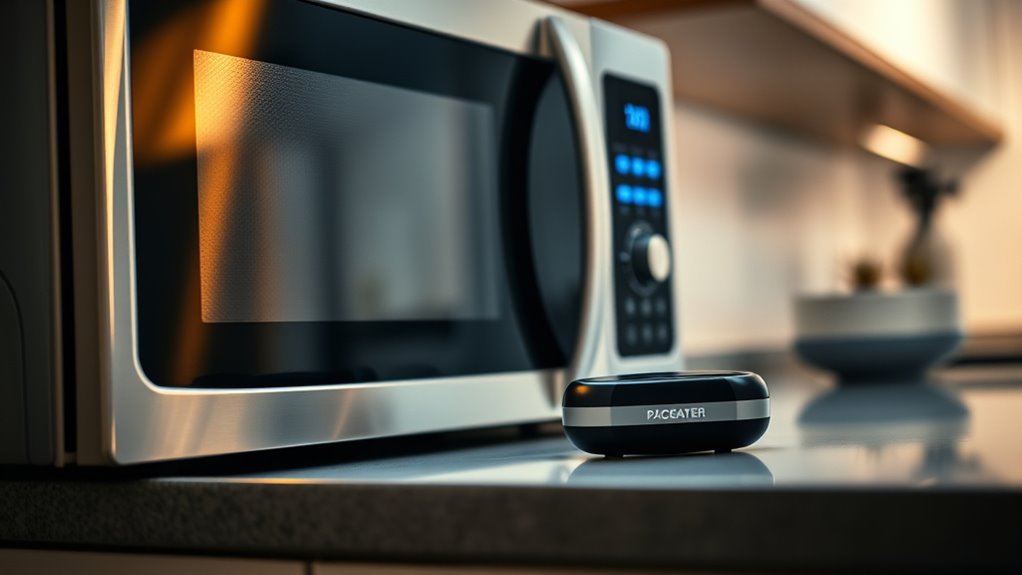

You can generally feel confident using your microwave around your pacemaker because modern devices are designed to resist electromagnetic interference from household appliances. Microwaves emit signals at safe levels that usually don’t disrupt pacemaker function. To stay safe, keep a distance of about one to two feet when the microwave is running, and follow any specific advice from your doctor or device manufacturer. If you want to know more about how your devices work together, there’s useful information ahead.
Key Takeaways
- Modern pacemakers are designed to resist typical household electromagnetic interference, including signals from microwaves.
- Microwaves emit electromagnetic fields within safety standards, making them unlikely to affect pacemaker function.
- Maintaining a distance of one to two feet from the microwave during operation minimizes interference risk.
- Household appliances adhere to electromagnetic safety standards, ensuring safe electromagnetic emissions around medical devices.
- Proper use and adherence to manufacturer guidelines help ensure pacemaker safety around everyday home appliances like microwaves.

Have you ever wondered how your home appliances might affect your pacemaker? It’s a common concern, especially when it comes to everyday devices like microwaves. While modern pacemakers are designed with safety in mind, understanding how wireless interference and electromagnetic safety come into play can help you feel more confident in your home environment. Microwaves operate using electromagnetic fields to heat food, but their frequency is typically well outside the range that would directly interfere with your pacemaker’s signals. Still, it’s wise to be cautious, as strong electromagnetic fields can sometimes cause wireless interference, temporarily disrupting the device’s functioning. Manufacturers test pacemakers extensively to ensure they are resistant to typical electromagnetic interference, including that from household appliances. This means that, under normal use, a microwave isn’t likely to cause any issues. However, it’s important to keep a safe distance — usually about a foot or two — when the microwave is in operation. This distance minimizes any potential electromagnetic interference that could affect your pacemaker temporarily. Additionally, understanding the electromagnetic safety standards that govern household appliances can provide reassurance about their safety around medical devices.
Frequently Asked Questions
Can Microwaves Interfere With Pacemaker Signals?
Microwaves can cause electromagnetic interference that might affect your pacemaker, especially if it’s highly sensitive. However, modern pacemakers are designed to minimize this risk. To stay safe, keep a safe distance from the microwave when it’s operating and avoid placing any electronic devices directly on or near your pacemaker. Always consult your doctor or pacemaker manufacturer for specific guidelines related to electromagnetic interference and your device’s sensitivity.
Are Older Pacemaker Models More Vulnerable to Appliance Interference?
Older pacemaker models are generally more vulnerable to appliance interference because they often lack advanced pacemaker shielding and updated technology for better appliance compatibility. You should be cautious around older devices, as they might not effectively block electromagnetic signals from appliances like microwaves or other electronics. To stay safe, consult your healthcare provider about your specific pacemaker model and guarantee you follow recommended safety guidelines around common household appliances.
Do All Home Appliances Pose the Same Level of Risk?
Not all home appliances pose the same level of risk to your pacemaker. You should prioritize appliance safety by understanding which devices generate strong electromagnetic fields. Household risks vary; for example, microwave ovens and certain power tools can interfere more than others. To stay safe, keep a safe distance from high-risk appliances, follow manufacturer guidelines, and consult your doctor if you’re unsure about specific household risks related to your pacemaker.
Should I Avoid Standing Near a Microwave While It’s Operating?
You should stay a few feet away from a microwave while it’s operating to guarantee microwave safety. Although modern microwaves are designed to prevent significant emissions, standing close might increase the risk of pacemaker interference. To stay safe, keep a safe distance, especially if you have a pacemaker. Most importantly, follow the manufacturer’s safety guidelines to avoid any potential health risks related to microwave radiation.
How Can I Test if My Appliance Affects My Pacemaker?
You might notice your pacemaker acting oddly when nearby appliances are on, but to be sure, perform electromagnetic testing with a specialized device. Use appliance shielding to see if the device’s operation impacts your pacemaker. Always consult your doctor before testing, and consider professional assessments to guarantee safety. This way, you can identify if specific appliances interfere, giving you peace of mind while using your home devices.
Conclusion
So, when it comes to microwaves and pacemakers, think of your device as a loyal friend who’s cautious but not overly paranoid. While modern technology has made many appliances safer, it’s smart to keep a little distance—like giving a good friend space when they’re feeling under the weather. By staying aware and following safety tips, you can keep your home’s appliances and your heart’s rhythm dancing in harmony, like a well-rehearsed symphony.