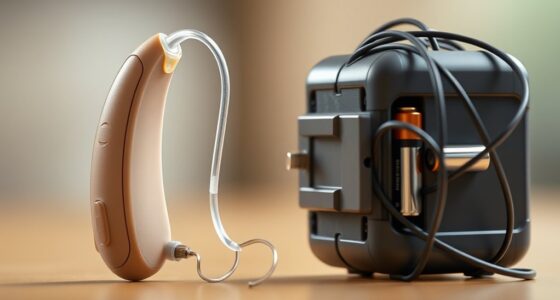
To protect your hearing as a senior, keep the volume of your devices below 70%. Listen at moderate levels, especially for music, TV, or calls, and avoid loud environments whenever possible. Use earplugs or noise-canceling headphones in noisy settings to reduce sound exposure. Taking regular breaks can also prevent ear fatigue. Following these simple tips helps safeguard your hearing now and into the future—continue exploring ways to keep your ears healthy.
Key Takeaways
- Keep volume levels below 70% on devices to prevent hearing damage over time.
- Use high-quality, comfortable earplugs in noisy environments to reduce sound exposure.
- Take regular breaks from loud sounds to allow ears to rest and avoid cumulative damage.
- Maintain safe distances from loud sources like speakers or TVs to minimize noise impact.
- Educate seniors on noise exposure risks and encourage routine hearing protection practices.

Have you ever wondered how everyday noise can impact your hearing over time? As you age, your ears become more vulnerable to damage from loud sounds, making it essential to pay attention to how much noise you’re exposed to daily. Protecting your hearing isn’t just about avoiding sudden loud noises; it’s about managing consistent exposure and using proper noise reduction techniques. One of the most effective ways to do this is by incorporating earplug safety into your routine. When you’re in noisy environments—whether at concerts, sporting events, or even noisy workplaces—wearing earplugs can considerably reduce the risk of long-term damage. But not all earplugs are created equal. Look for high-quality, comfortable earplugs designed for noise reduction, and make sure you insert them correctly to maximize their effectiveness. Proper earplug safety involves understanding how to use them properly, replacing them when they become dirty or damaged, and avoiding reusing single-use options. Combining earplug safety with effective noise reduction techniques ensures that you’re actively taking steps to shield your ears from harmful sound levels. Additionally, staying informed about noise exposure guidelines can help you better manage your environment and protect your hearing health. Learning to control your environment and your exposure to loud sounds is key. For example, if you’re attending a noisy event, keep a safe distance from the speakers or stage, and use earplugs to lessen the volume reaching your ears. When listening to music or watching TV, maintain a moderate volume—ideally below 70% of the device’s maximum—and take regular breaks to give your ears a rest. This habit helps prevent cumulative damage caused by prolonged exposure to high volumes. Additionally, consider using noise-canceling headphones in loud settings, which can provide effective noise reduction without requiring you to turn up the volume excessively. These devices are especially helpful if you find yourself in environments with unpredictable or fluctuating noise levels.
Frequently Asked Questions
How Can Seniors Test Their Hearing at Home Safely?
You can test your hearing at home safely by using online hearing assessments or smartphone apps designed for this purpose. Make sure to follow safety precautions, like testing in a quiet environment and keeping volume levels moderate. Avoid listening at high volumes for extended periods, and consider consulting a healthcare professional if you notice any issues. Regular hearing assessments help maintain your hearing health and catch problems early.
Are There Specific Hearing Aids Recommended for Volume Safety?
Did you know over 70% of seniors benefit from hearing aids with advanced volume control technology? When choosing hearing aids, look for models with customizable volume control features, allowing you to adjust sound levels safely. These devices help prevent further hearing loss by giving you precise control over volume. Opt for hearing aids that include user-friendly volume control technology, so you can enjoy clearer sound while protecting your hearing health.
How Does Exposure to Loud Environments Affect Seniors Differently?
Loud environment effects can hit seniors harder because age-related hearing loss makes their ears more vulnerable. Exposure to loud sounds can accelerate hearing decline, cause discomfort, or even lead to permanent damage. You might notice ringing or muffled hearing afterward. To protect yourself, avoid prolonged exposure to loud environments, wear hearing protection if needed, and stay aware of your hearing health to prevent further damage.
What Are Signs of Hearing Damage From High Volume?
You might notice overexposure symptoms like ringing in your ears, difficulty understanding speech, or a feeling of fullness. Hearing loss indicators include muffled sounds, needing louder volumes for TV or conversations, and trouble hearing high-pitched tones. If you experience these signs, it’s a clear indication that high volume levels have damaged your hearing. Protect your ears by lowering volume and taking breaks to prevent further damage.
Can Certain Medications Impact Hearing Volume Safety?
Yes, certain medications can impact hearing volume safety through medication interactions and ototoxic effects. When you take medications like antibiotics, chemotherapy drugs, or high doses of aspirin, they may damage your inner ear, leading to hearing loss or ringing. Always check with your healthcare provider about potential ototoxic effects before starting new medications. Monitoring your hearing and reporting any changes early helps prevent further damage.
Conclusion
By keeping the volume low, you’re shielding your hearing like a gentle shield, allowing soft melodies and familiar voices to dance around you. Imagine a quiet pond, rippling peacefully without disturbance—this is how your hearing stays vibrant and clear. Protecting your ears isn’t just about sound; it’s about preserving the symphony of life’s moments. So, turn down the volume and let your senses stay sharp, filling your world with clarity and comfort.