
To keep hallways safe and accessible for wheelchair users, regularly remove obstacles like clutter, furniture, and equipment from the pathways. Make certain doorways are wide enough and free from obstructions, and install automatic openers if possible. Keep lighting bright and consistent to improve visibility, and fix any damaged flooring or hazards immediately. Use high-contrast signage to guide navigation. If you want to learn practical tips to enhance safety and accessibility, continue exploring effective strategies and solutions.
Key Takeaways
- Regularly remove clutter, furniture, and obstacles from main walkways to ensure unobstructed access.
- Maintain wide, level doorways (minimum 32 inches) and ensure smooth thresholds for easy wheelchair passage.
- Install proper lighting and signage to improve visibility and guide wheelchair users safely through hallways.
- Conduct routine safety inspections to identify and fix hazards like loose rugs, damaged flooring, or obstructions.
- Incorporate universal design principles, including accessible features and obstacle-free routes, to promote safety and independence.
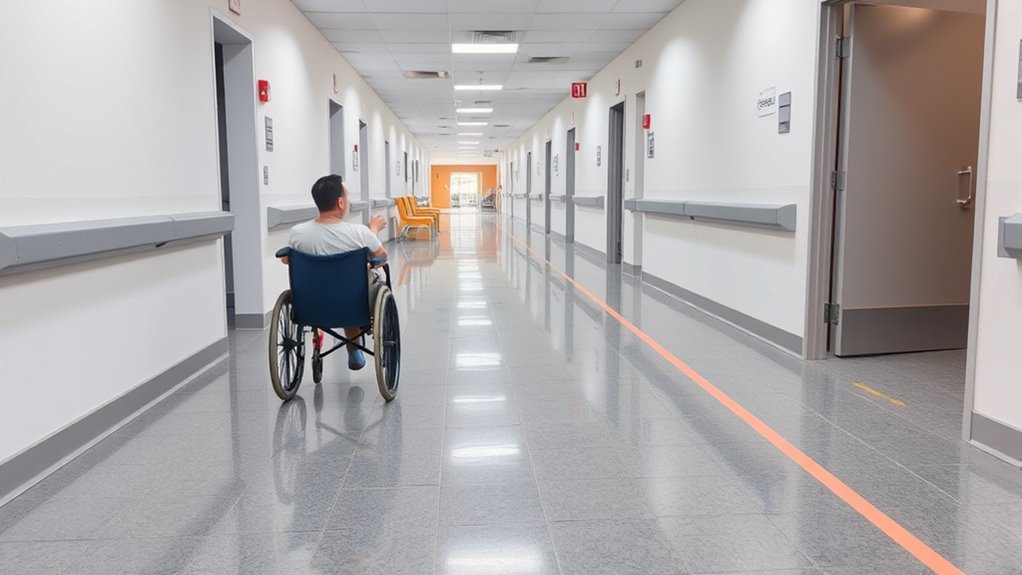
Have you ever wondered if your hallways are truly safe for wheelchair users? Ensuring safety starts with making sure that every part of the pathway is accessible and easy to navigate. One of the most important aspects is having accessible doorways. These should be wide enough to accommodate wheelchairs comfortably, typically at least 32 inches wide, and free from obstructions. If doorways are too narrow or cluttered, they can become dangerous barriers. You should check that doors are equipped with automatic openers or easy-to-use handles, so users don’t have to struggle or risk injury trying to open them. Smooth thresholds are essential as well; raised or uneven thresholds can cause wheelchairs to tip or get stuck. By maintaining accessible doorways, you help prevent accidents and make sure everyone can move freely without feeling restricted or unsafe.
Clear signage is another essential element to keep hallways safe. Proper signs help guide wheelchair users through spaces confidently, avoiding confusion or hesitation. Use high-contrast, easy-to-read signs that indicate accessible routes, entrances, exits, and any potential hazards. Position signs at eye level and ensure they are visible from a distance, so users can plan their path ahead of time. Clear signage also includes indicating the location of accessible amenities, elevators, or ramps. When signage is confusing or missing, wheelchair users might inadvertently enter unsafe areas, get lost, or have difficulty finding suitable routes. Regularly inspecting signs for visibility and accuracy is necessary. If signs are faded or obstructed, replace or reposition them promptly to maintain clarity.
In addition to accessible doorways and clear signage, keeping hallways free from clutter is essential. Remove any objects, carts, or equipment that could block the path or cause someone to trip. Make sure that furniture, boxes, or maintenance supplies are stored away from the main walkways. Good lighting also plays a role in safety; well-lit hallways help users see obstacles and navigate confidently. Consider installing motion sensors or brighter bulbs to eliminate dark spots. Regular maintenance checks can identify hazards before they become serious issues, such as loose rugs or damaged flooring. When hallways are tidy, well-marked, and accessible, you create an environment where wheelchair users feel safe and confident moving around. It’s about removing barriers—both physical and visual—that could compromise their safety or independence.
Ultimately, keeping hallways safe for wheelchair users involves thoughtful design and ongoing attention. Prioritize accessible doorways, clear signage, and clutter-free spaces. These steps don’t just meet safety standards—they foster inclusivity and respect for everyone’s mobility needs. Incorporating universal design principles ensures that the environment accommodates diverse users and promotes long-term safety and accessibility. When you focus on these details, you make sure that all individuals can navigate your space comfortably and securely, promoting independence and peace of mind for everyone involved.
Frequently Asked Questions
How Do I Handle Emergency Evacuations in Wheelchair-Accessible Hallways?
During emergency evacuations in wheelchair-accessible hallways, you should follow established emergency protocols and conduct regular evacuation drills. Make sure wheelchair users have clear, unobstructed pathways and know designated safe zones. Assist them calmly and efficiently, using accessible exit routes. Keep communication clear, and ensure staff are trained. Practicing these procedures in drills helps everyone respond swiftly, minimizing risks and guaranteeing a safe evacuation for all individuals.
What Are the Best Materials for Non-Slip Hallway Flooring?
Imagine walking down a hallway where your steps feel secure, thanks to the perfect grip beneath your feet. For non-slip flooring, choose materials like textured vinyl, rubber, or epoxy coatings. These options offer excellent slip resistance and durability, ensuring safety for wheelchair users. They withstand heavy foot traffic and resist wear, maintaining their grip over time. Prioritize these materials to create a safe, accessible environment that everyone can navigate confidently.
How Often Should Hallway Accessibility Features Be Inspected?
You should inspect hallway accessibility features at least quarterly, aligning with regular maintenance schedules and accessibility audits. Regular inspections help you identify potential hazards like loose handrails, uneven flooring, or obstructions that could compromise safety. By staying proactive and conducting thorough audits, you guarantee that features such as ramps, doorways, and flooring remain accessible and safe for wheelchair users, preventing accidents and promoting inclusive environments.
Can Hallway Lighting Be Optimized for Better Visibility?
You can optimize hallway lighting for better visibility by focusing on effective lighting design that minimizes shadows and glare. Studies show proper lighting enhances safety and navigation for wheelchair users. To boost visibility, install bright, evenly distributed lights, and consider using motion sensors for energy efficiency. Regularly maintaining and upgrading lighting fixtures guarantees consistent illumination, making hallways safer and more accessible for everyone, especially those with limited mobility.
How to Address Stubborn Obstacles in Shared Hallways?
You should prioritize obstacle removal by regularly inspecting shared hallways and promptly clearing any clutter or barriers. Guarantee signage clarity so everyone understands the importance of keeping pathways open. Encourage staff and residents to report obstacles immediately. Use clear, visible signs to remind everyone of hallway safety protocols. Consistent maintenance and clear communication make it easier to address stubborn obstacles, creating a safer environment for all, especially wheelchair users.
Conclusion
By keeping hallways clear and accessible, you create a safer world where wheelchair users can move freely without feeling like they’re maneuvering a maze of obstacles. Every small effort you make can transform an everyday space into a barrier-free zone, making a huge difference in someone’s life. Remember, your actions can turn a simple corridor into a runway of independence and confidence—truly an unstoppable force for good! Keep up the great work and champion accessibility everywhere you go.