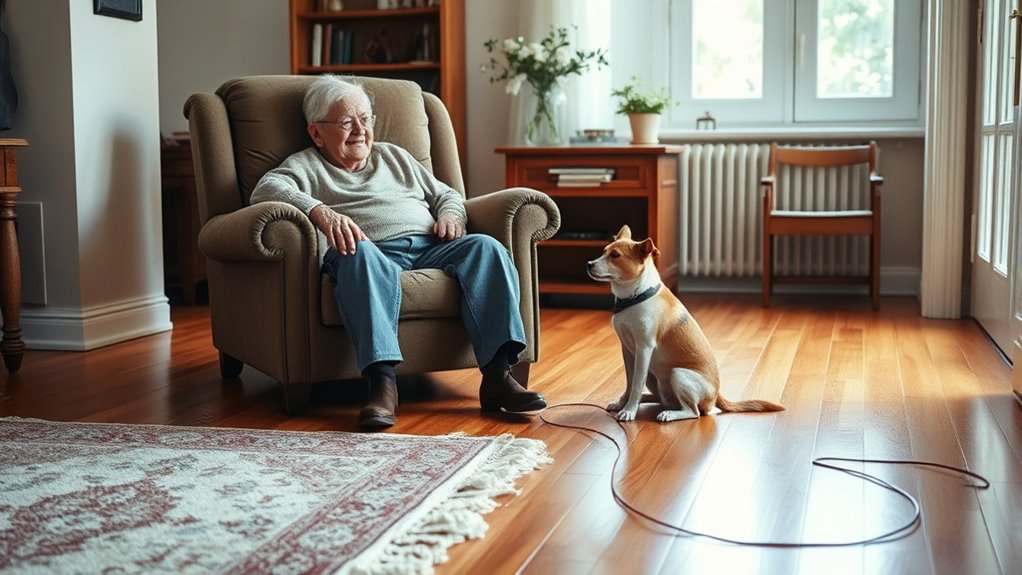

To keep your home safe for seniors with pets, organize your living space by securing pet supplies and removing clutter that could cause trips. Use non-slip rugs and mats in high-traffic areas, and install barriers or gates to restrict pets from risky zones. Regularly check for loose rugs or cords, and train pets to avoid hazardous spots. Managing these hazards will substantially reduce fall risks and improve safety for both of you—exploring more tips can help create an even safer environment.
Key Takeaways
- Regularly secure loose rugs and carpets with non-slip mats to prevent tripping.
- Keep pet supplies, toys, and cords organized and away from walkways.
- Install barriers or gates to restrict pet movement in high-risk areas.
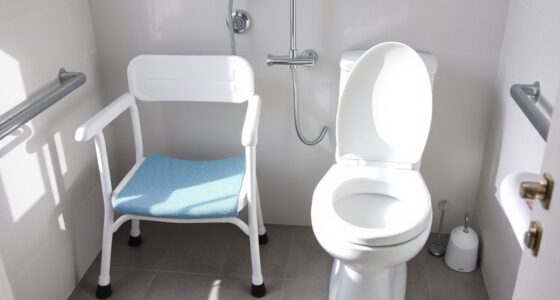
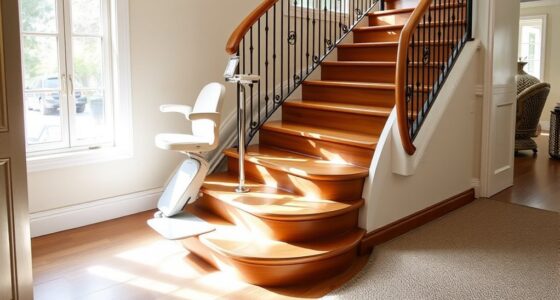
- Use mobility aids and home modifications to support senior stability around pets.
- Conduct routine safety inspections to identify and eliminate potential tripping hazards.

Having a pet can greatly enhance a senior’s quality of life, offering companionship and emotional support. However, ensuring pet safety is essential to prevent accidents that could jeopardize both your well-being and your pet’s. One of the most common hazards for seniors is tripping over pet-related items or the pet itself, which can lead to serious injuries. To maintain good mobility and prevent falls, it’s important to create a safe living environment where pet ownership doesn’t compromise your safety.
Start by organizing your space to minimize tripping hazards. Keep pet toys, bowls, and supplies in designated areas that are easy to access but don’t clutter walkways. Regularly check for loose rugs or carpets, which can easily catch your foot and cause a fall. If you have a small pet or a dog that moves around the house, think about using non-slip rugs or mats to improve stability. This not only protects your senior mobility but also creates a safer environment for your pet.
Organize your space with accessible pet supplies, secure loose rugs, and use non-slip mats for safer mobility.
When it comes to pet safety, it’s crucial to be aware of your pet’s habits and surroundings. For instance, if your pet tends to hide under furniture or dash across rooms unexpectedly, you might need to adjust your space or train your pet to avoid these hazards. Installing baby gates or barriers can help contain pets in specific areas, preventing sudden movements that could cause you to trip. Keep cords, wires, and other clutter away from walking paths, as they pose a risk for both your pet and you. Managing these elements will help you maintain your mobility while keeping your pet safe.
Another aspect to think about is your own mobility limitations. As a senior, you might have reduced strength or balance issues, which makes it more important to be mindful of your surroundings. Using helpful aids like handrails, sturdy furniture, or walking sticks can give you extra support while moving around with your pet. Training your pet to stay in a designated area during certain times can also reduce unexpected movements that might cause you to stumble. Additionally, considering electric bikes or scooters for mobility can help you stay active and independent without overexerting yourself.
Finally, routine checkups with your healthcare provider can help you manage mobility challenges and adapt your home accordingly. Regularly inspect your environment for potential hazards, and don’t hesitate to ask for assistance in making modifications that enhance pet safety and your ability to move confidently. Remember, a little extra attention to your space can go a long way in ensuring both you and your pet enjoy a safe, happy life together.

Bath Mat Non-Slip, Ultra Thin Bathroom Rugs with Rubber Backing, Absorbent,Quick Dry Machine Washable, Home Decor Accessories Cozy Cloth Bathroom Rugs fit Under Door/Sink/Tub/Shower,Gray,17×27 Inch
[Ultra Thin Design and Soft] Our bathroom rug adopted ultra-thin design, with only 0.2 inches thickness ensuring it…
As an affiliate, we earn on qualifying purchases.
As an affiliate, we earn on qualifying purchases.
Frequently Asked Questions
How Can I Train My Pet to Avoid Tripping Hazards?
You can train your pet to avoid tripping hazards by using consistent training techniques that reinforce safe pet behavior. Start with positive reinforcement, rewarding your pet when they stay clear of clutter or dangerous areas. Use commands like “leave it” or “stay.” Regularly supervise, redirect their attention, and create a safe environment. Over time, your pet will learn to navigate safely, reducing the risk of trips and falls.
What Are the Best Pet-Friendly Flooring Options for Seniors?
You should consider non-slip flooring options like cork, rubber, or textured vinyl for senior-friendly spaces. These surfaces provide better traction, reducing trip risks during daily activities like walking to the dog park or pet grooming. They’re gentle on joints and easy to clean, making your home safer and more comfortable for aging pets and seniors alike. Always check for smooth, even surfaces to prevent tripping hazards.
How Do I Manage Pet Shedding to Prevent Slips?
To manage pet shedding and prevent slips, you should focus on regular pet grooming to reduce loose fur. Use a vacuum designed for pet hair frequently on your floors and furniture, especially in high-traffic areas. Implement shed management techniques like brushing your pet outside and providing designated grooming spots. These steps help keep your floors clear of pet hair, minimizing slip hazards and maintaining a safer, cleaner environment for you.
Are There Specific Pets Better Suited for Seniors’ Safety?
Small, calm pets like cats or gentle lap dogs often suit seniors best because they’re easier to manage and less likely to cause tripping hazards. When considering pet compatibility, focus on animals that match your activity level and living space. Opt for pets with minimal shedding to reduce slipping risks. By choosing the right pet size and temperament, you create a safer, more comfortable environment for yourself.
How Can I Keep Pet Toys From Creating Tripping Risks?
You can prevent pet toys from causing trips by organizing and storing them properly—think of it as creating a fortress of safety! Regularly groom your pets to reduce shedding and loose fur, which can add to clutter. Use dedicated toy storage bins and encourage your pet to play in designated areas. This keeps pathways clear and minimizes the risk of tripping over stray toys, making your home safer and more comfortable.

MYPET North States Paws Portable Pet Gate: 26-40" Wide. Pressure Mount. No Tools Needed. Made in USA, 23" Tall, Expandable, Durable Dog Gates for Doorways, Fieldstone Gray
[Worry-Free Safety]: Our expandable dog gate is great for doorways and blocking off other indoor spaces to keep…
As an affiliate, we earn on qualifying purchases.
As an affiliate, we earn on qualifying purchases.
Conclusion
Taking steps to keep your home safe means you’re not only protecting yourself but also ensuring your furry friend can be part of your life without risks. Clear clutter, secure loose rugs, and keep walkways well-lit—simple actions that make a big difference. Remember, safety is a two-way street, and with a little effort, you and your pet can enjoy each other’s company without stepping into danger. After all, safety is no accident.

Secbolt Cord Protectors from Pets No Chew, 10ft – 1/2 inch Ultra Durable Cord Covers for Pets, Bite-Resistant Cable and Wire Protector for Cats, Dogs, Rabbits – Black
Easy To Install – Split design, easy to wrap around cords without any hassle and the cord protector…
As an affiliate, we earn on qualifying purchases.
As an affiliate, we earn on qualifying purchases.

Adjustable Small Dog Wheelchair – Mobility Aid for Disabled Pets,Small Dog Wheelchair for Back Legs, Leg Brace & Hip Support (Medium)
Important Size Note:For this dog wheelchair for back legs, please measure your dog and refer to the size…
As an affiliate, we earn on qualifying purchases.
As an affiliate, we earn on qualifying purchases.