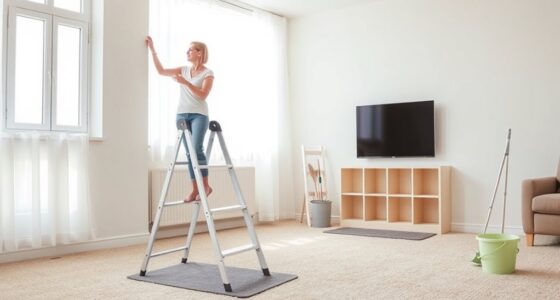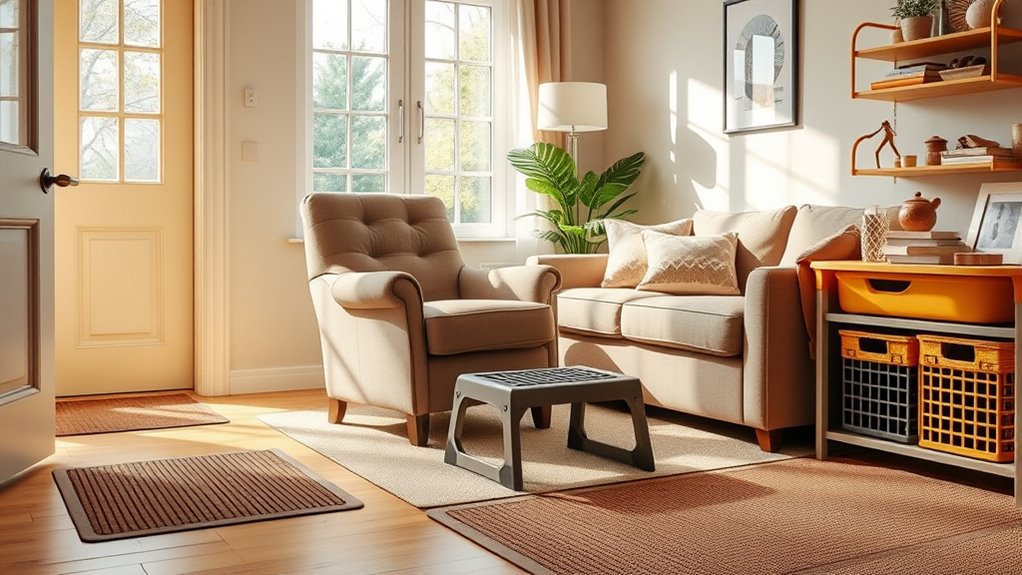

To make your home senior-friendly on a budget, start by installing grab bars in bathrooms and adding non-slip rugs in high-risk areas. Improve lighting throughout your home to prevent falls and replace door knobs with lever handles for easier use. Keep pathways clear of clutter for safe navigation. For extra support, add sturdy handrails along stairs and hallways. Want to see more simple, affordable upgrades? Keep going to discover even more ways to boost safety at home.
Key Takeaways
- Install grab bars in bathrooms and non-slip rugs in high-risk areas for fall prevention.
- Improve lighting throughout the home and add motion sensors for better visibility and safety.
- Widen doorways and replace door knobs with lever handles to enhance accessibility.
- Keep pathways clear and arrange furniture to allow easy, unobstructed movement.
- Use affordable upgrades like better lighting and non-slip mats to significantly boost safety and independence.
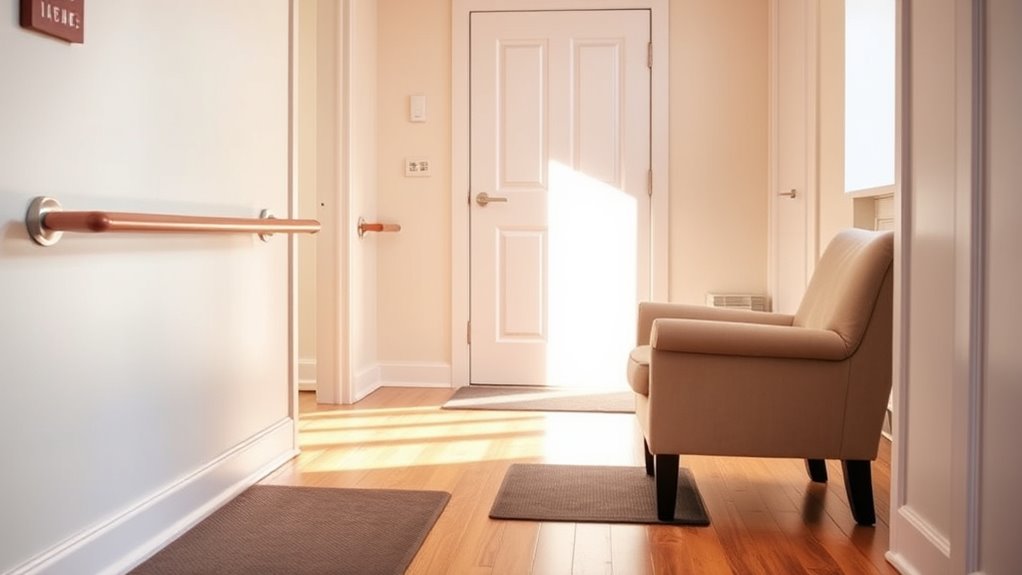
Fixing up your home doesn’t have to break the bank. Making your house more senior-friendly can be simple and affordable when you focus on key updates that enhance safety and accessibility. These improvements not only help prevent accidents but also make daily life easier for your loved ones. Start by evaluating your home for potential hazards and think about how small adjustments can make a big difference. Adding safety enhancements like grab bars in the bathroom, non-slip rugs, and improved lighting can drastically reduce the risk of falls, which are a common concern for seniors. These upgrades are cost-effective and straightforward to install, providing peace of mind without draining your budget.
Making your home safer and more accessible for seniors doesn’t have to be expensive or complicated.
Accessibility improvements are equally crucial. Consider widening doorways or installing lever-style door handles, which are easier to operate than traditional knobs. These modifications allow for smoother movement, especially for those using walkers or wheelchairs. Changeover strips between different flooring types are another inexpensive way to eliminate tripping hazards and create a seamless surface. You can also add a sturdy handrail along staircases or in hallways to provide extra support where needed. These minor adjustments promote independence and confidence, reducing the likelihood of accidents and making everyday routines more manageable.
You might also explore converting or adding main floor amenities to minimize stair use, such as placing the laundry or sleeping areas on the ground level. This simple change can considerably improve accessibility. Additionally, replacing traditional switches with rocker or touch-activated options makes it easier for seniors with arthritis or limited dexterity to operate lights and appliances. Installing motion sensors in hallways and bathrooms can further enhance safety by automatically turning on lights when someone enters, preventing accidental trips in the dark.
When planning these updates, prioritize the areas where seniors spend most of their time, like the bathroom, kitchen, and entrances. Keep pathways clear of clutter and ensure furniture is arranged to allow easy navigation. Incorporating home safety technology can also significantly improve security and peace of mind. These small, cost-effective changes collectively create a more senior-friendly environment that emphasizes safety and accessibility without requiring a major renovation. Remember, the goal is to make everyday living safer and more comfortable, giving your loved ones the independence they deserve. With a little effort and smart choices, you can transform your home into a safer, more accessible space that meets their needs while staying within your budget.
Frequently Asked Questions
How Can I Assess My Home’s Overall Safety for Seniors?
You can evaluate your home’s safety for seniors by conducting a thorough home hazard identification. Start with a safety checklist development, noting potential risks like loose rugs, poor lighting, or uneven floors. Walk through each room, paying close attention to these hazards. Enlist a family member or a professional for an extra opinion. Regularly updating your safety checklist ensures your home remains a secure environment for seniors.
What Are the Best Budget-Friendly Tools for Home Modifications?
You should consider affordable gadgets like grab bars, non-slip rugs, and motion sensor lights to enhance safety. DIY essentials such as simple tools, adhesive hooks, and adjustable tools make modifications straightforward and cost-effective. These budget-friendly options help you create a more senior-friendly environment without breaking the bank, ensuring safety and accessibility. With a little effort, you can easily upgrade your home using these practical, inexpensive solutions.
How Often Should I Review Safety Features in a Senior-Friendly Home?
You should review safety features at least every six months, especially since falls are the leading cause of injury among seniors. Regular checks help guarantee fall prevention measures, like grab bars and non-slip mats, are secure, and emergency preparedness plans are up-to-date. Think of it as routine maintenance for peace of mind—staying proactive keeps your home safe and ready should an emergency happen.
Are There Any Government Programs Offering Free or Discounted Home Safety Upgrades?
Yes, there are government programs offering free or discounted home safety upgrades. You can access financial assistance through programs like the U.S. Department of Housing and Urban Development (HUD) or local senior services. Eligibility depends on factors like income and age, so check program eligibility requirements. These programs aim to help seniors improve safety without financial strain, making your home safer and more accessible.
How Can I Involve Seniors in Choosing the Most Suitable Modifications?
You can involve seniors in choosing modifications by using participation strategies like discussing options openly and asking for their preferences. Encourage their decision-making process by presenting clear, simple choices and listening actively to their concerns. Make sure they feel empowered and comfortable sharing their opinions. This approach helps guarantee the modifications truly meet their needs, fostering a sense of control and satisfaction in the home improvements.
Conclusion
Making your home senior-friendly doesn’t have to break the bank. With simple fixes like adding grab bars or improving lighting, you’re creating a safer space that feels welcoming. Think of it like planting a garden—you start with small seeds, and over time, those little changes flourish into a secure, comfortable haven. Just like tending a garden, caring for your home today guarantees peace of mind for tomorrow.