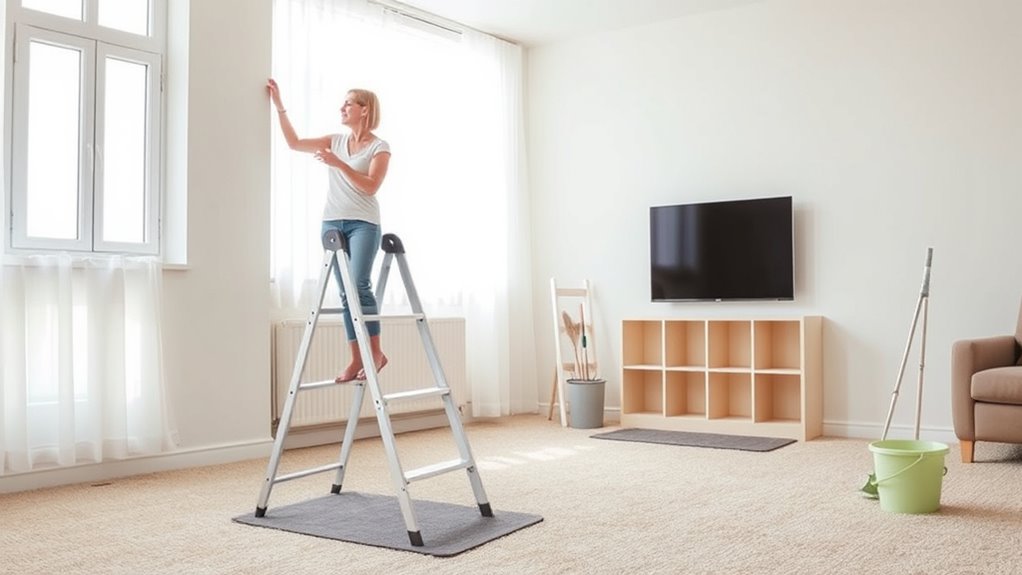
To avoid falls and injuries during house cleaning, wear non-slip shoes and keep floors dry and clutter-free. Use sturdy ladders or step stools on stable surfaces, and avoid overreaching by using extension tools. Store supplies properly to prevent tripping hazards, and clean spills immediately. Incorporate safety checks and involve others in safety practices. Stay alert and take your time; you’ll discover more effective tips for a safer cleaning routine.

Turn quiet afternoons into listening time
- Thousands of audiobooks, podcasts and originals
- Listen on your phone, tablet or Echo — also offline
- Cancel anytime
Key Takeaways
- Wear sturdy, non-slip shoes and gloves to prevent slips and protect hands during cleaning activities.
- Use stable ladders or step stools on level ground and avoid overreaching to prevent falls.
- Keep walkways clear of clutter and promptly clean up spills to reduce tripping and slipping hazards.
- Organize cleaning supplies and cords properly to minimize tripping risks around the home.
- Establish a regular cleaning schedule and involve household members to promote safety awareness and routine hazard checks.
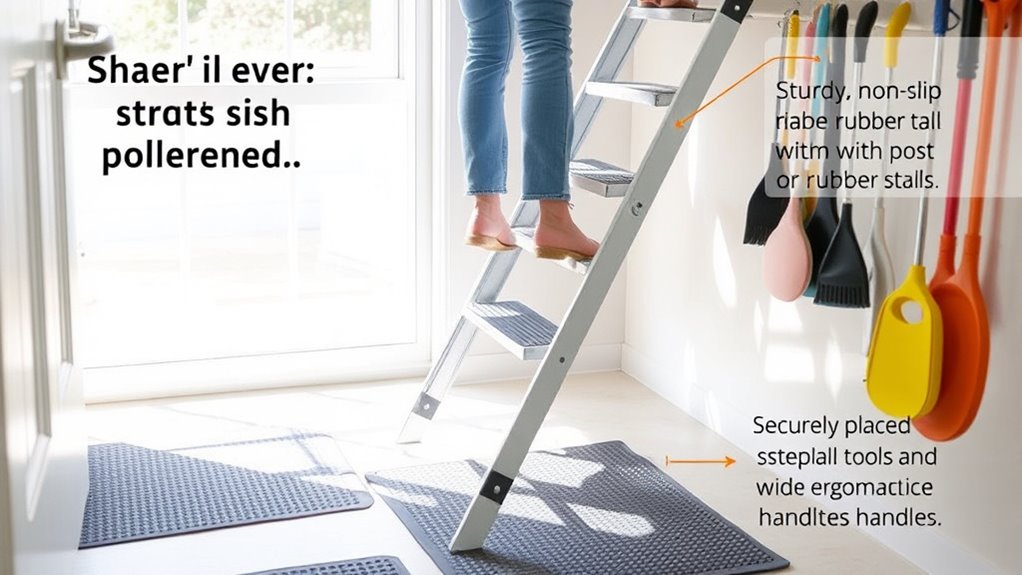
Keeping your home spotless can feel overwhelming, but with a few simple house cleaning tips, you can make the task more manageable. One essential aspect often overlooked is guaranteeing safety during your cleaning routines. Investing in proper safety equipment is vital to prevent falls and injuries. Wear sturdy, non-slip shoes that provide good grip, especially when mopping or working on slippery surfaces. Use gloves to protect your hands from harsh chemicals and prevent accidents caused by accidental slips. If you’re using ladders or stepping stools, always guarantee they’re stable and placed on level ground. Keep your workspace clear of clutter to reduce tripping hazards, and never overreach when cleaning high places—use an extension pole or ladder instead.
Prioritize safety with non-slip shoes, gloves, stable ladders, and clutter-free spaces during cleaning routines.
Establishing and sticking to consistent cleaning schedules can also minimize risks. When your cleaning routine is well-organized, you’re less likely to rush and make careless mistakes that could lead to falls. For example, assign specific days for deep cleaning tasks, so you’re not scrambling to complete everything in a hurry. Regularly scheduled cleaning keeps surfaces free of dust and spills, which can cause slips. It also ensures that clutter doesn’t accumulate in walkways or stairways, reducing trip hazards. When you plan your cleaning schedule, include time for inspecting and maintaining safety equipment—like checking the condition of your gloves, mops, and ladders. Additionally, understanding the importance of proper safety protocols can significantly enhance your injury prevention efforts.
Another key tip is to keep your cleaning supplies organized and stored properly. When cleaning supplies are scattered around, you risk tripping over bottles, buckets, or cords. Use designated storage bins or shelves for your cleaning tools and chemicals. Make sure the floors are dry before walking on them; mop or wipe up spills immediately to avoid slipping. If you’re cleaning in areas prone to water or moisture, consider using anti-slip mats to add extra grip.
Involving others in your household in your cleaning schedule can also boost safety. Share responsibilities to prevent fatigue and rushing, which often lead to accidents. Teach family members or roommates about the importance of safety equipment and proper procedures. When everyone is aware of potential hazards and follows a routine, you create a safer environment for everyone. Remember, consistent use of safety equipment combined with a well-planned cleaning schedule helps you stay ahead of hazards, making your home a safer place and your cleaning routine more effective.
As an affiliate, we earn on qualifying purchases.
Frequently Asked Questions
How Can I Prevent Slips on Wet Floors During Cleaning?
To prevent slips on wet floors during cleaning, you should use proper mop techniques to avoid excess water and always place slip-resistant mats in high-traffic or wet areas. Make sure to wring out your mop thoroughly and change the water frequently. Additionally, drying the floor with a clean towel or squeegee helps reduce wetness. These steps minimize the risk of slips and keep your cleaning safe and effective.
Which Footwear Provides the Best Grip While Cleaning?
You need non-slip shoes or gripping footwear to stay safe while cleaning. Imagine slipping and tumbling like a domino—scary, right? That’s why sturdy, rubber-soled shoes with excellent grip are your best bet. Look for footwear designed specifically for slip resistance, with deep treads and non-slip soles. These shoes give you the traction you need to stay steady, even on wet or oily surfaces, keeping you safe and confident.
Are There Specific Tools to Reduce Strain and Injury?
Yes, using ergonomic tools and injury-reducing equipment can substantially lower your risk of strain and injury. Opt for lightweight, adjustable mops and brooms with ergonomic handles that reduce wrist and back stress. Consider tools with long handles to avoid excessive bending and strain. Additionally, padded gloves and supportive footwear help protect your hands and feet. These tools make cleaning safer and more comfortable, helping you finish your chores without unnecessary pain.
How Should I Organize Cleaning Supplies Safely?
You can organize your cleaning supplies safely by using effective storage solutions like sturdy, lightweight shelves and bins. Implement labeling systems to clearly identify each item, reducing the risk of accidents and making your cleaning routine more efficient. Keep heavy or frequently used supplies at waist level to prevent strain. Regularly check and tidy your supplies to avoid clutter, ensuring everything stays accessible and safe to use.
What Are Quick Ways to Identify Potential Fall Hazards?
To quickly identify fall hazards, scan your space for trip hazards like loose rugs, clutter, or cords that could cause you to trip. Check for poor lighting in hallways, staircases, and corners, as inadequate illumination increases fall risk. Move or secure loose items, and improve lighting where needed. Regularly inspecting these areas helps you spot potential dangers early, keeping your home safer and reducing fall injuries.
As an affiliate, we earn on qualifying purchases.
Conclusion
So, there you have it—cleaning can be a real thrill, especially when you dodge slips and trips. Who knew staying safe was as simple as watching your step? Ironically, the very act of tidying up could turn into a tumble if you’re not careful. But hey, with these tips, you’ll be so cautious, you might just turn your cleaning routine into a safe, stress-free dance. Now, go on and clean—safely, of course!
As an affiliate, we earn on qualifying purchases.
As an affiliate, we earn on qualifying purchases.
Fall Picks
fall essentials
As an affiliate, we earn on qualifying purchases.